Air Filter Replacement Estimator
Air Filter Calculator
Results
Enter your details above to see when to replace your air filter
Recommended Replacement
Miles: miles
Time: months
Tip: Based on your conditions, replace your filter every . Remember:
Most drivers don’t think about their air filter until the engine starts acting up or the AC blows dusty air. But changing your air filter regularly isn’t just a maintenance checkbox-it’s one of the cheapest ways to save money, boost performance, and keep your car running smoothly. So how often should you actually change it? The answer isn’t one-size-fits-all. It depends on your car, your driving habits, and where you live.
Engine Air Filter vs. Cabin Air Filter: Know the Difference
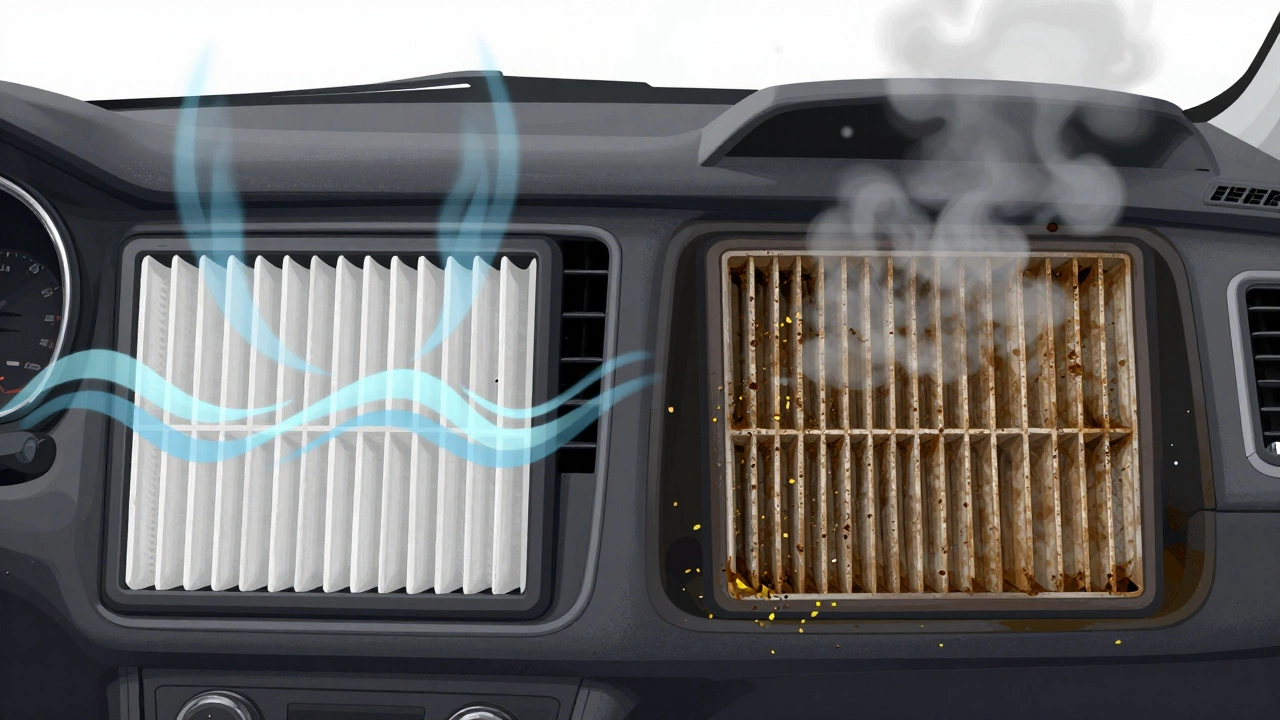
There are two air filters in your car, and they do completely different jobs. The engine air filter sits in the engine bay and cleans the air going into your engine. If it gets clogged, your engine struggles to breathe, which can hurt fuel economy and reduce power. The cabin air filter sits behind the glove box or near the dashboard and cleans the air coming into your passenger compartment. A dirty cabin filter makes your AC smell musty and can trigger allergies or asthma.
They don’t get changed at the same time. Most people forget about the cabin filter entirely. But both need attention. Check your owner’s manual to find out which one is which and how to access them. Many newer cars make it easy-no tools needed.
General Guidelines: When to Replace Your Air Filters
Manufacturers usually recommend replacing the engine air filter every 12,000 to 15,000 miles. That’s about once a year for the average driver. The cabin air filter often needs replacing every 15,000 to 30,000 miles, or once a year if you drive in dusty or polluted areas.
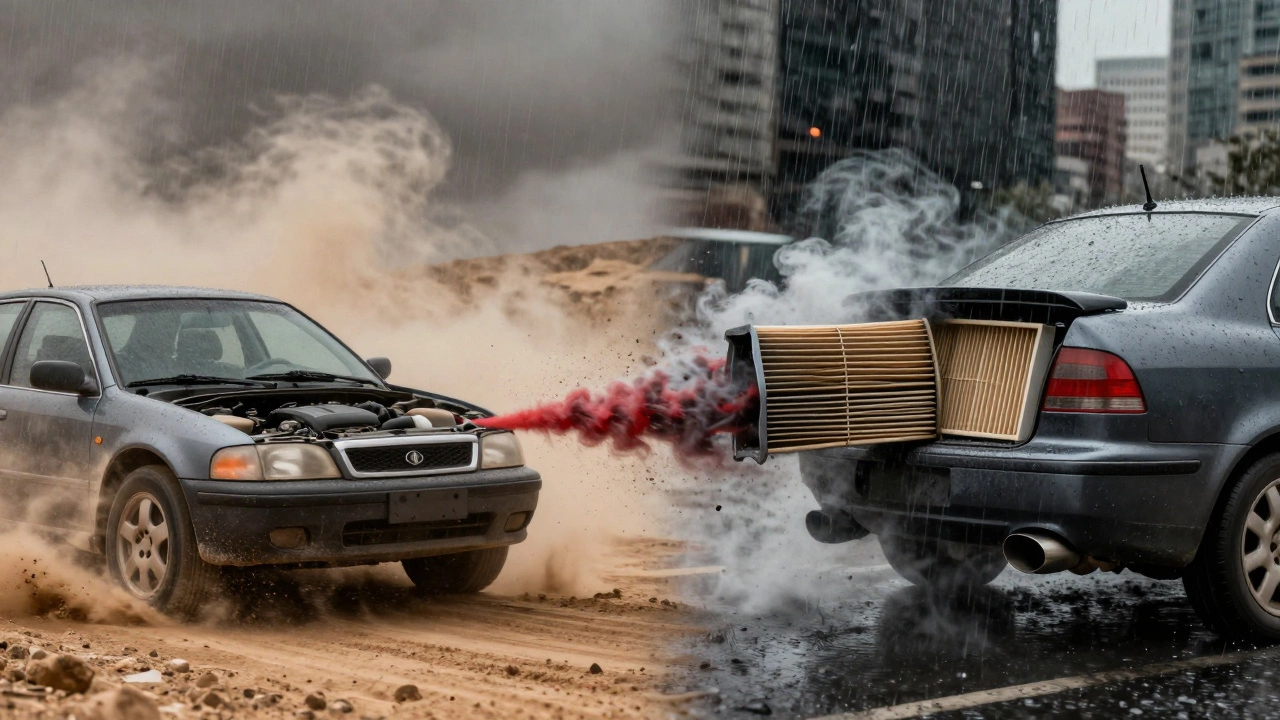
But here’s the catch: those numbers are based on ideal conditions. If you drive on dirt roads, in heavy traffic, near construction zones, or in areas with high pollen or wildfire smoke, you might need to swap them out every 6,000 to 10,000 miles. In extreme cases-like living near a desert or farming region-some drivers replace filters every 3 months.
Signs Your Air Filter Needs Changing
You don’t always need to count miles. Look for these real-world signs:
- Your engine feels sluggish or hesitates when accelerating
- Check Engine light comes on (a clogged filter can trigger this)
- Reduced fuel economy-drop of 5% to 10% is common with a dirty filter
- Unusual smells from the vents, like mildew or dust
- Weak airflow from the AC or heater
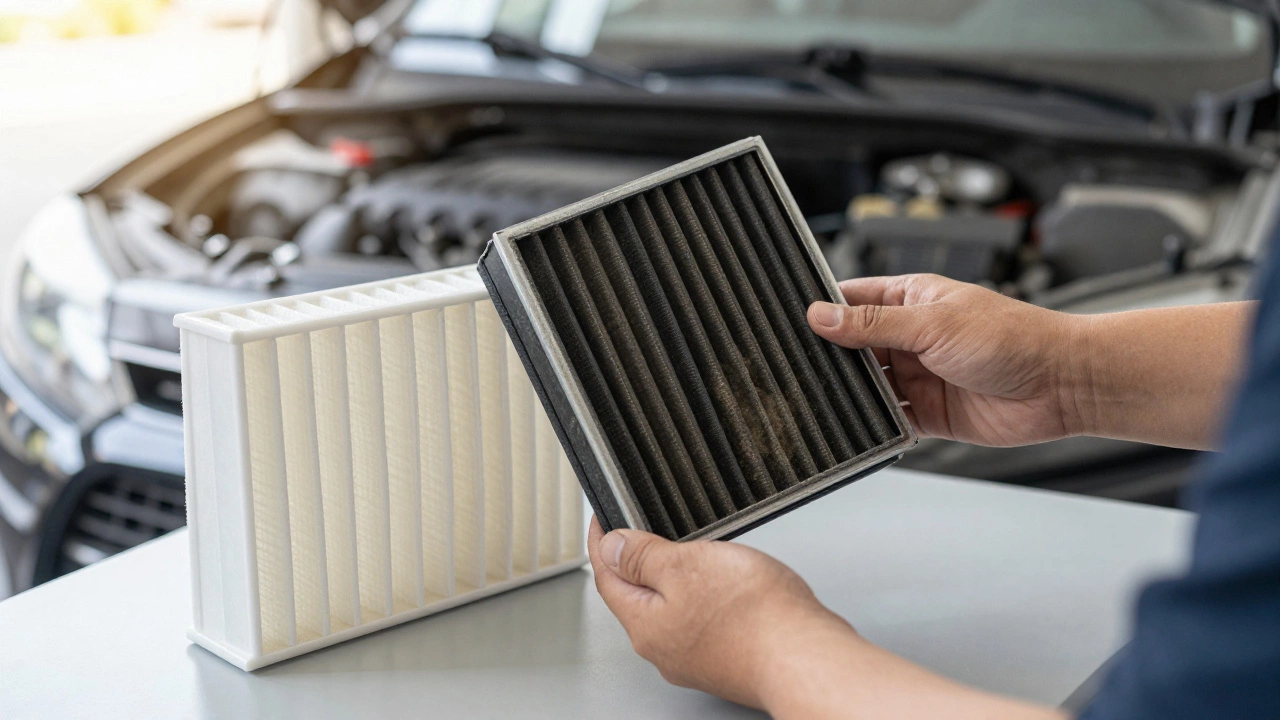
- Visible dirt or debris when you hold the filter up to the light
One quick test: pull out the engine air filter. Hold it up to a bright light. If you can’t see light through it, it’s time to replace it. If it looks like a sponge full of mud, don’t wait.
Driving Conditions That Change the Schedule
Your environment matters more than you think. Here’s how different conditions affect your filter life:
- Dusty or rural roads: Replace every 6,000-10,000 miles. Dust gets into filters fast.
- City driving with heavy traffic: Pollutants and exhaust build up. Change cabin filter every 12,000 miles.
- High pollen seasons: If you’re sneezing every time you turn on the AC, your cabin filter is full. Replace it mid-season.
- Wildfire smoke: Air quality plummets. Swap both filters after a major event, even if you’re not due.
- Winter snow and salt: Moisture and road grime clog filters faster. Check after the first big snowstorm.
There’s no magic number. A driver in Phoenix will need to change filters twice as often as someone in Seattle. Track your mileage and note when you last changed them. Write it on a sticky note inside the driver’s door if you have to.
What Happens If You Don’t Change Them?
Skipping air filter changes might not break your car right away-but it wears it down over time.
A clogged engine air filter forces the engine to work harder to pull in air. That leads to a richer fuel mixture, which means wasted gas. Studies by the U.S. Department of Energy show a clean air filter can improve fuel economy by up to 10%. That’s $15-$25 saved per month if you drive 1,000 miles monthly.
Worse, dirt can sneak past a dirty filter and scratch internal engine parts. Over time, that causes premature wear on pistons, cylinders, and valves. Replacing a $20 filter is cheaper than rebuilding an engine.
For the cabin filter, the risks are more about comfort and health. Mold, pollen, and exhaust fumes build up. People with allergies report fewer symptoms after replacing a dirty cabin filter. One 2023 study in the Journal of Environmental Health found that drivers with chronic allergies saw a 40% drop in symptoms after switching to a new cabin filter.
How to Check and Replace Them Yourself
Changing both filters takes less than 15 minutes and costs under $40 total. Here’s how:
- Locate the air filter housing. The engine filter is usually in a black plastic box near the top of the engine. The cabin filter is behind the glove box or under the dashboard.
- Open the housing. Most use clips or screws-no tools needed for most cars.
- Take out the old filter. Note its direction (airflow arrows point toward the engine).
- Compare the old filter to the new one. They should match in size and shape.
- Insert the new filter the same way the old one was positioned.
- Close the housing securely.
YouTube has short videos for almost every car model. Search: “2023 Toyota Corolla cabin air filter replacement.” You’ll find a 3-minute walkthrough.
Filter Types: Foam, Paper, or Cotton?
Most cars come with a paper filter. It’s cheap, effective, and disposable. Reusable filters-like cotton gauze or foam-are marketed as “performance” upgrades. They can be washed and reused, but they’re not always better.
Reusable filters can offer slightly better airflow, which might help high-performance engines. But for daily drivers? Paper filters work fine. They trap smaller particles more effectively. And they cost $10-$15. A reusable filter costs $50-$80 and requires special cleaning oil. For most people, the extra cost and hassle aren’t worth it.
Stick with OEM-style paper filters unless you’re racing or modifying your car.
Pro Tips for Better Air Filter Longevity
- Keep your hood seal clean. A cracked or missing seal lets dust in.
- Don’t clean a dirty filter with compressed air. That pushes dirt deeper into the fibers.
- Replace both filters at the same time if you’re doing maintenance anyway.
- Keep a spare filter in your trunk for emergencies.
- Mark your calendar or set a phone reminder every 10,000 miles.
One driver I know replaces his filters every fall-right before winter. He says it’s easier than remembering miles. And he never has to worry about it again until next year.
FAQ
Can I drive without an air filter?
No. Driving without an air filter lets dirt, dust, and debris enter your engine. Even a short drive can cause serious internal damage. You might not notice right away, but over time, it leads to expensive repairs. Always keep a filter installed.
Do I need to change the air filter if I don’t drive much?
Yes. Air filters degrade over time, even if the car isn’t moving. Moisture, pollen, and pollutants can clog them. Most manufacturers recommend replacing them at least once a year, regardless of mileage. A filter sitting unused for two years is just as bad as one with 20,000 miles on it.
Can a dirty air filter cause the check engine light to come on?
Yes. A severely clogged engine air filter can disrupt the air-fuel ratio, triggering the oxygen sensor and turning on the Check Engine light. Code P0171 (System Too Lean) is common in these cases. Replacing the filter often fixes it-but always have a mechanic scan the code to rule out other issues.
Is it better to change the cabin air filter more often than the engine filter?
It depends. Cabin filters get dirty faster if you drive in cities or during allergy season. Many people replace the cabin filter annually and the engine filter every 15,000 miles. If you’re allergic or live in a dusty area, change the cabin filter every 6-12 months, even if the engine filter still looks fine.
What happens if I use the wrong air filter size?
Using the wrong size can be dangerous. A filter that’s too small lets unfiltered air into the engine. A filter that’s too big can’t fit properly and may get sucked into the intake system. Always match the part number exactly. Your owner’s manual or an auto parts store can confirm the right size.
Next Steps
Check your owner’s manual for the manufacturer’s recommended schedule. Then, look at your driving habits. If you’re unsure, pull out the filter and take a look. If it’s dark gray or covered in dust, replace it. Don’t wait for a problem to happen.
Changing your air filters is one of the easiest, cheapest, and most effective things you can do for your car. It’s not glamorous-but it keeps your engine alive, your air clean, and your wallet full. Do it now, and you won’t have to worry about it again for months.