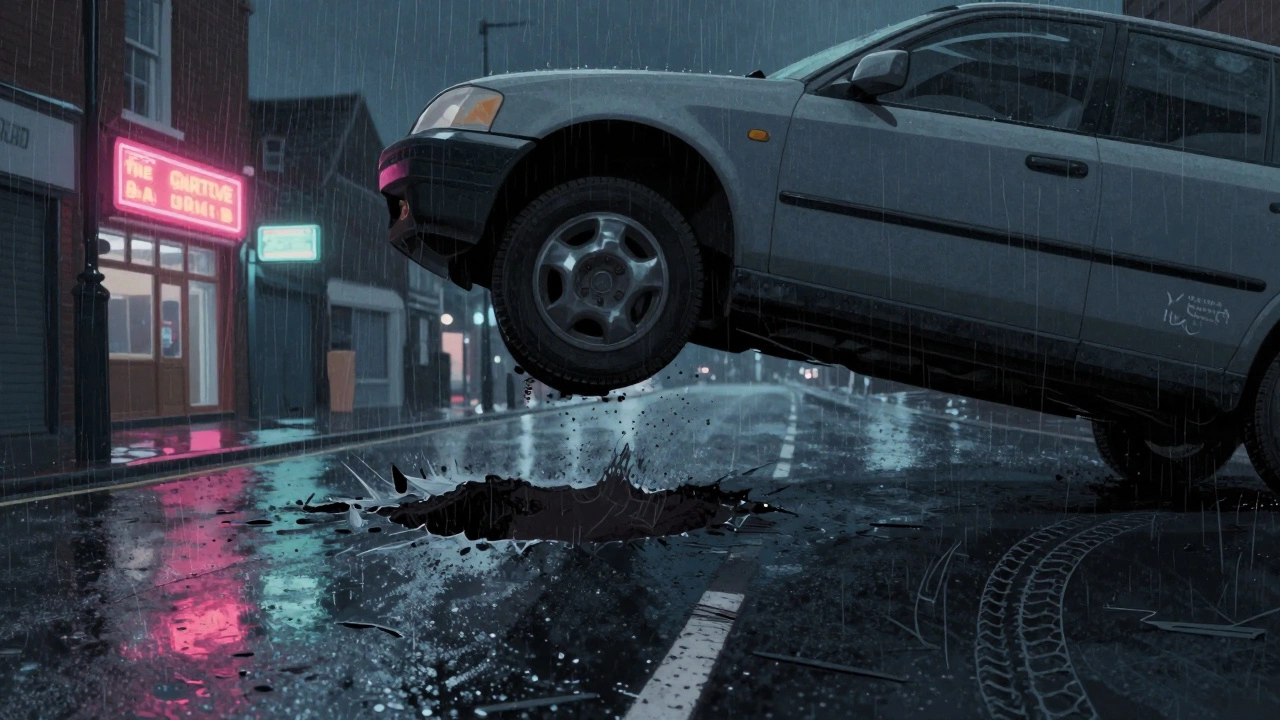
Ever hit a pothole and felt your car bounce like a pogo stick afterward? Or noticed it leaning badly when you turn? Those aren’t just quirks-they’re red flags. Your car’s suspension isn’t just there to make the ride smooth. It’s a critical safety system that keeps your tires on the road, helps you steer, and stops your car effectively. If it’s failing, you’re not just dealing with a bumpy ride-you’re risking control, braking distance, and even tire wear. So how do you know for sure if your suspension needs replacing? Here’s what to look for, based on real-world signs mechanics see every day in Bristol and beyond.
Excessive Bouncing or Rocking
Try this simple test: push down hard on one corner of your car and let go. If the car bounces more than once or twice, your shocks or struts are worn out. A healthy suspension should absorb the push and settle quickly. If it keeps going up and down like a spring, those components are losing their ability to control movement. This isn’t just annoying-it’s dangerous. Worn shocks mean your tires lose contact with the road when you hit bumps, reducing grip and making sudden stops or turns risky. Most manufacturers recommend replacing shocks between 50,000 and 100,000 miles, but if you drive on rough roads often, they may need replacing sooner.
Uneven or Premature Tire Wear
Look at your tires. If you notice one side wearing down faster than the other, or if the tread looks scalloped-like little dips around the edge-you’ve got a suspension problem. This is called cupping or feathering. It happens when the suspension can’t keep the tire flat against the road. The tire bounces slightly with every rotation, scraping unevenly. This isn’t normal wear. It’s a direct result of worn control arms, ball joints, or bushings. Replace your tires without fixing the suspension, and you’ll wear out the new ones just as fast. I’ve seen drivers replace tires three times in a year because they ignored the suspension.
Car Pulling or Drifting to One Side
If your car pulls to the left or right when you’re driving straight-even on a flat, smooth road-it’s not just an alignment issue. Sure, alignment can cause this, but if the problem came on suddenly or came back after an alignment, look at the suspension. A broken spring, a bent control arm, or a worn-out steering linkage can throw off your car’s balance. You might also feel the steering wheel vibrate or tug in your hands. This isn’t just inconvenient; it makes highway driving stressful and unsafe. If you’re constantly correcting your steering just to stay in your lane, don’t ignore it.
Noisy Suspension
Clunking, knocking, or squeaking sounds when you go over bumps? That’s not normal. These noises usually come from worn-out bushings, loose mounting bolts, or failing sway bar links. Bushings are rubber or polyurethane parts that cushion metal components. Over time, they crack, dry out, and fall apart. When they do, metal hits metal-and you hear it. A clunk when you hit a speed bump? That’s often a bad strut mount. A squeak when you turn? Could be dry ball joints. These sounds are early warnings. Left unchecked, they lead to bigger, more expensive damage. I’ve had customers come in with a clunk, and six months later, they had a broken control arm and a damaged wheel.
Front End Dives During Braking
When you brake hard, your car should stay level. If the front end dips way down-like the car is trying to nose-dive into the road-you’ve got weak shocks or struts. This happens because the suspension can’t resist the weight transfer. The front compresses too much, which reduces rear tire grip and increases stopping distance. In wet or icy conditions, this can mean the difference between stopping in time and sliding into something. This isn’t a minor issue. It’s a direct safety concern. If your car feels like it’s diving every time you tap the brakes, get it checked.
Steering Feels Loose or Unresponsive
Does your steering feel vague, like the car isn’t responding right away? Or does it take too much effort to turn? That could be worn-out steering components-tie rod ends, idler arms, or rack-and-pinion seals. These parts connect the steering wheel to the wheels. When they wear, you lose precision. You might also notice play in the steering wheel-if you can move it more than an inch without the wheels turning, that’s a sign of wear. This isn’t just about comfort. It affects how quickly you can react to hazards. In an emergency, every fraction of a second counts.
Fluid Leaks Around Struts
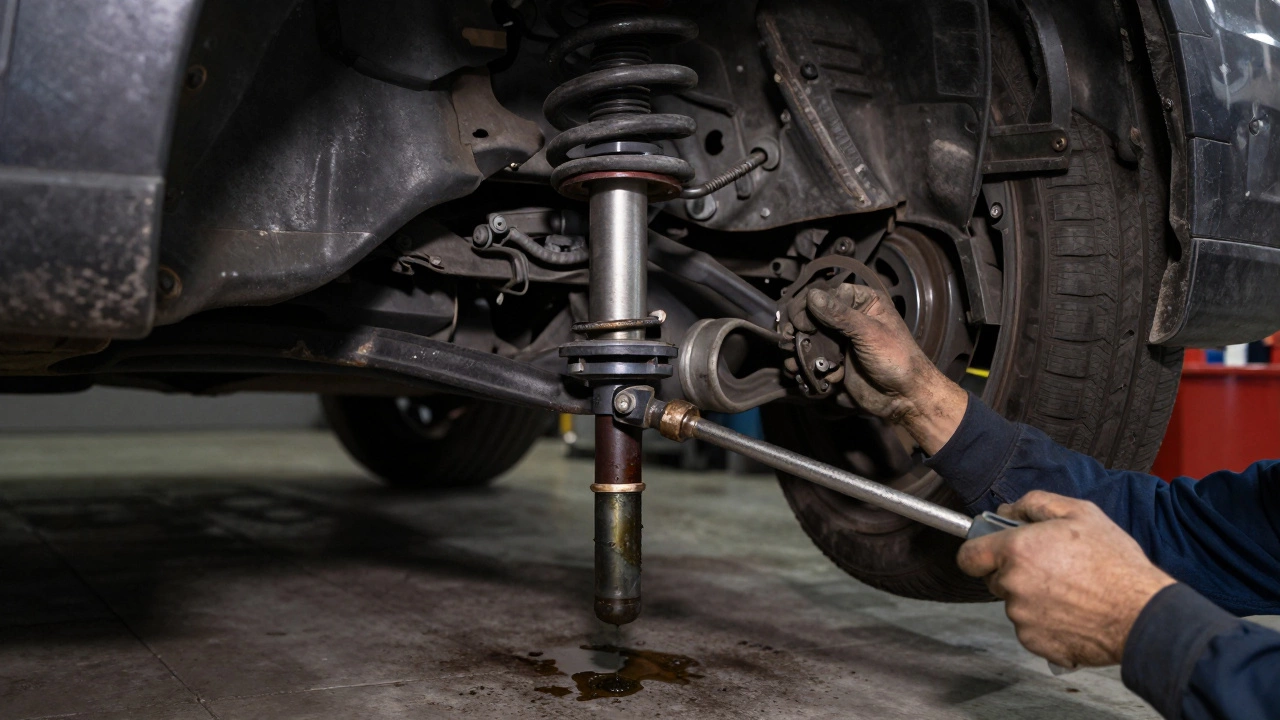
Look under your car near the wheels. If you see oil or grease on the outside of the strut or shock absorber, that’s a clear sign of failure. Shocks and struts are filled with hydraulic fluid. When the seals wear out, fluid leaks out. Once it’s gone, the shock can’t dampen movement anymore. You’ll notice the car feels floaty, especially on highways. This isn’t something you can fix with a quick top-up. The entire unit needs replacing. A small leak today can become a complete failure in weeks.
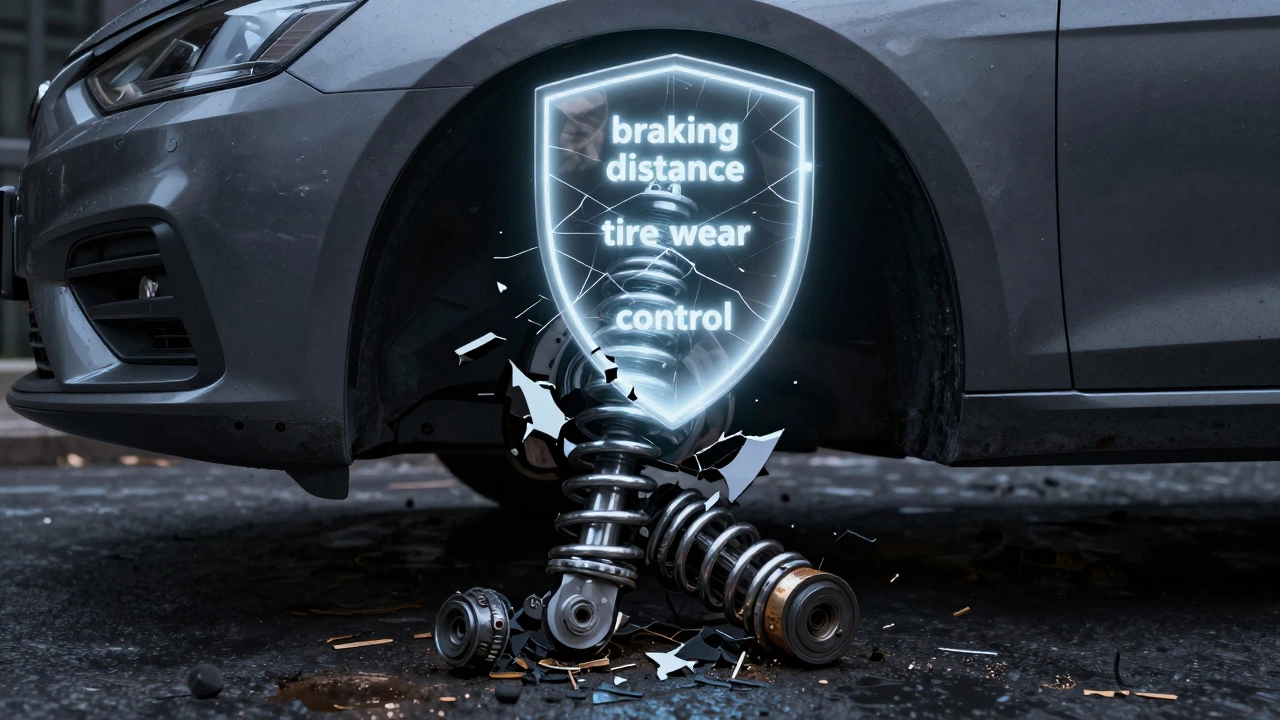
Vehicle Sitting Lower Than Usual
If your car looks like it’s slouching-especially on one side-it’s time to check the springs. Springs support the weight of the car. Over time, they can sag, crack, or break. A broken spring is easy to spot: one corner of the car will be noticeably lower. A sagging spring is subtler but still dangerous. It throws off your alignment, causes uneven tire wear, and can damage other suspension parts. If you’ve noticed your car seems lower than it used to be, don’t wait for it to hit the ground.
How Long Does Suspension Last?
There’s no one-size-fits-all answer. Shocks and struts typically last 50,000 to 100,000 miles. But if you drive on rough roads, carry heavy loads, or tow regularly, they’ll wear out faster. In places like Bristol, where roads are full of potholes and weather changes quickly, many drivers need replacements closer to 60,000 miles. Control arms, bushings, and ball joints can last longer-sometimes up to 120,000 miles-but they’re often worn out by the time shocks go. The best rule? Don’t wait for failure. Get your suspension inspected every 20,000 miles or once a year, whichever comes first.
What Happens If You Ignore It?
Ignoring suspension problems doesn’t just make your ride uncomfortable. It makes your car dangerous. Worn suspension leads to:
- Longer stopping distances
- Poor handling in rain or wind
- Increased tire wear (costing you hundreds in replacements)
- Damage to other parts like wheel bearings or steering components
- Higher risk of losing control during emergency maneuvers
One customer in Bristol came in after a near-accident. She swerved to avoid a deer, but her worn shocks couldn’t keep the car stable. She ended up in a ditch. Her car was totaled. Her suspension had been making noise for over a year. She thought it was "just the road."
What to Do Next
If you’ve noticed any of these signs, don’t guess. Take your car to a trusted mechanic for a full suspension inspection. They’ll check:
- Shocks and struts for leaks and movement
- Coil springs for cracks or sag
- Control arms and bushings for wear
- Ball joints for play
- Tie rods and steering linkage
- Stabilizer bars and links
Most shops offer this inspection for free. If you’re replacing one component, it’s smart to replace related ones at the same time. For example, if you’re replacing shocks, you should also replace the strut mounts and bump stops. It saves money in the long run and ensures everything works together.
| Symptom | Most Likely Cause | Urgency Level |
|---|---|---|
| Excessive bouncing | Worn shocks or struts | High |
| Uneven tire wear | Worn bushings, ball joints, or alignment | High |
| Car pulling to one side | Broken spring, bent control arm | High |
| Clunking or knocking noises | Worn bushings, sway bar links | Medium-High |
| Front end dives when braking | Failing shocks | High |
| Loose steering | Worn tie rods, ball joints | High |
| Fluid leaks on struts | Failed shock seal | High |
| Car sitting lower than normal | Sagging or broken springs | High |
Can I drive with a bad suspension?
Technically, yes-but you shouldn’t. Driving with worn suspension reduces your control, increases stopping distance, and puts stress on other parts like tires and steering components. In wet or icy conditions, it can lead to loss of control. It’s not worth the risk. If you notice any symptoms, get it checked within a few days.
How much does it cost to replace suspension parts?
It varies. Replacing a pair of shocks or struts typically costs between £300 and £700, depending on the car. Control arms and ball joints can run £150 to £400 per side. Labor adds another £100 to £200. If you’re replacing multiple parts, expect £800 to £2,000 total. Getting a full inspection first helps avoid unnecessary repairs.
Do I need to replace all suspension parts at once?
Not always, but it’s often smarter. If one shock is worn, the other side is likely close behind. Replacing both at once keeps the car balanced. Same with ball joints or control arms-if one is worn, the other probably is too. Doing it in pairs prevents uneven handling and saves on labor costs later.
Can I check my suspension myself?
You can do basic checks: the bounce test, looking for leaks, checking tire wear, and listening for noises. But a full inspection requires lifting the car and checking components that aren’t visible from the ground. Mechanics use specialized tools to measure play in ball joints and bushings. If you’re unsure, get a professional opinion.
How often should I get my suspension checked?
Every 20,000 miles or once a year, whichever comes first. If you drive on rough roads, carry heavy loads, or live in an area with lots of potholes (like Bristol), check it every 10,000 miles. Many mechanics include a quick suspension check during routine services-ask for it.