Fuel Pump Safety Calculator
Assess Your Situation
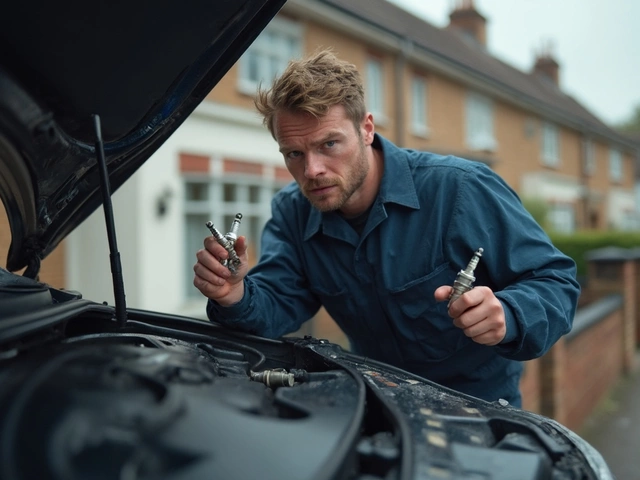
If your car turns over but won’t start, and you’ve checked the battery and spark plugs, the culprit might be a failing fuel pump. It’s not rare-especially in older cars or vehicles with over 100,000 miles. A bad fuel pump doesn’t always die suddenly. Often, it struggles first: sputtering on the highway, hesitation when accelerating, or that frustrating moment when the engine cranks but refuses to catch. You’re stuck at the side of the road, and you need to get moving. Here’s what actually works when your fuel pump is on its way out.
Confirm it’s the fuel pump
Before you do anything drastic, make sure it’s really the fuel pump. Other problems-like a clogged fuel filter, bad relay, or dead fuel injector-can mimic the same symptoms. The easiest way to check: listen. When you turn the key to the ‘on’ position (before cranking), you should hear a low humming sound from the rear of the car, near the fuel tank. If you hear nothing, the pump isn’t running. If you hear a weak whine or clicking, it’s struggling.
Another quick test: spray a little starting fluid into the air intake (remove the air filter housing first). If the engine fires up for a second or two, then dies, you’ve got a fuel delivery issue. That points squarely at the pump, filter, or lines-not ignition or compression.
Try the tap method (temporary fix)
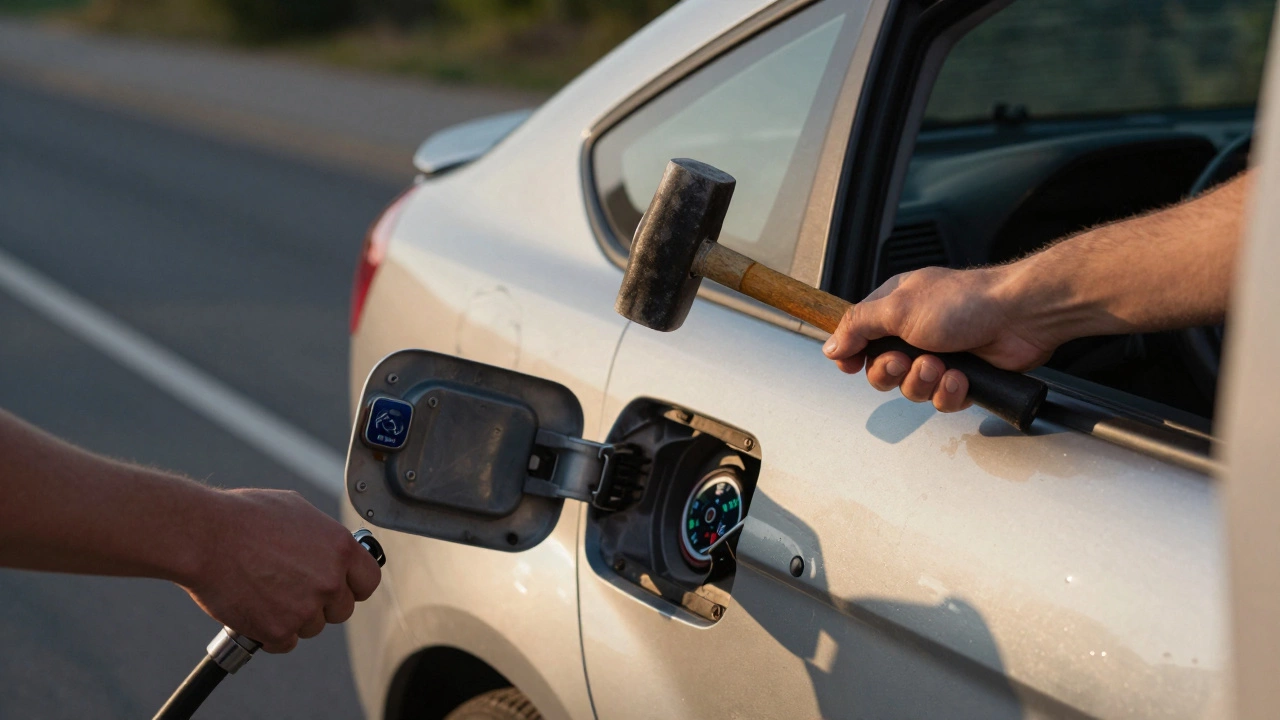
Here’s a trick that works more often than you’d think. Get a rubber mallet or the handle of a screwdriver. Go to the fuel tank area-usually under the back seat or in the trunk, depending on your car. Give the tank a few firm, sharp taps. Not hard enough to dent it, but enough to jar the pump. Sometimes, a stuck brush or worn arm inside the pump gets freed up by vibration. It’s not a repair-it’s a lifeline.
I’ve seen this work on a 2010 Ford Focus with 142,000 miles. The driver tapped the tank three times while cranking, and the engine roared to life. She drove it 12 miles to the garage. It lasted another six months before the pump gave out completely. That’s the goal: get to safety, not a permanent fix.
Check the fuel pump relay
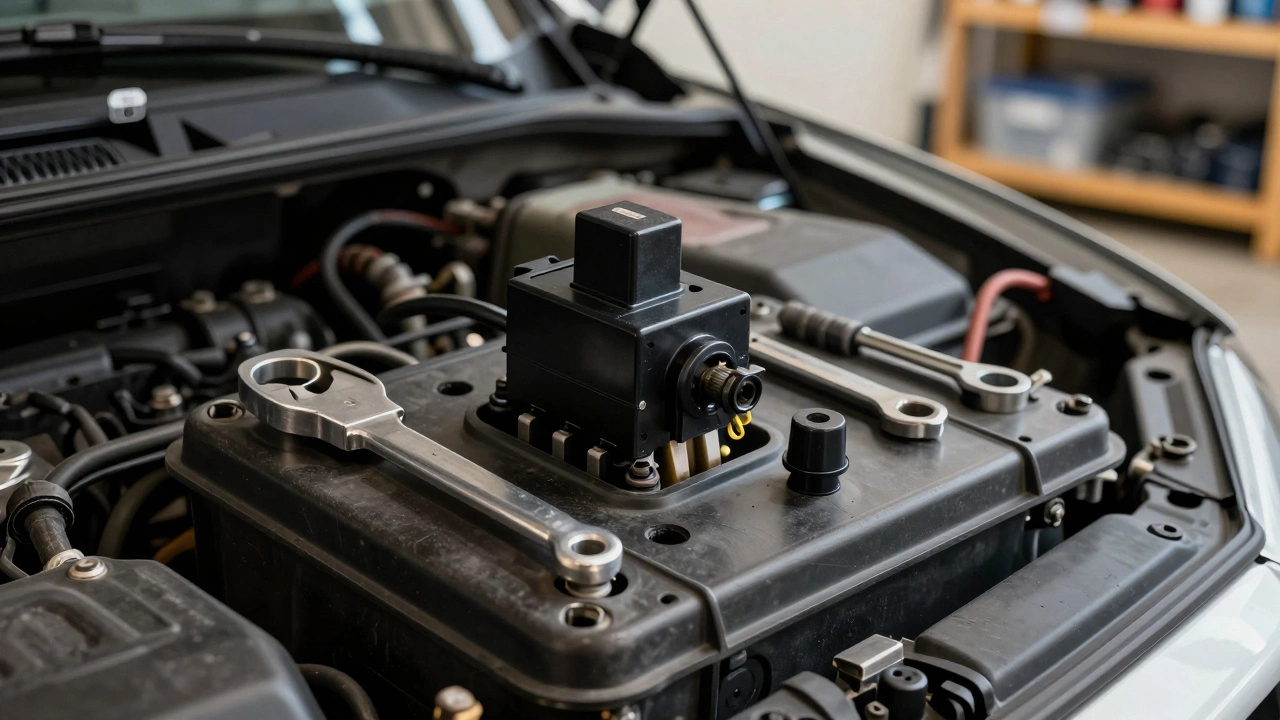
Before you assume the pump itself is dead, check the relay. It’s a cheap, easy swap. Most cars have the fuel pump relay in the fuse box under the hood or inside the cabin. Look for a small, black, square component labeled ‘FUEL PUMP’ or ‘FP’. Pull it out and swap it with another identical relay-like the horn or AC relay. If the car starts after the swap, you found your problem. Relays cost under £10 and fail often, especially in humid climates like the UK.
Don’t just assume it’s the pump. A bad relay is the #1 false alarm. I’ve seen three fuel pump replacements in the last year that weren’t needed-the relay was the issue.
Use the key cycle trick
Turn the ignition to ‘on’ (don’t start), wait five seconds, then turn it off. Do this three or four times in a row. Why? This primes the fuel line. A weak pump might not build enough pressure on the first try, but repeated cycles let it slowly fill the line. It’s like giving the pump a running start.
This works best in cars with electric fuel pumps that sit inside the tank. It’s less effective in diesel vehicles or older cars with mechanical pumps. But for most petrol cars made after 2000, it’s worth trying. I’ve had customers get their Honda Civics and Toyota Corollas running with this method when they were about to call a tow truck.
Keep the tank at least half full
Running on fumes stresses the fuel pump. The fuel acts as a coolant and lubricant. When the tank is low, the pump runs hotter and wears faster. If you suspect the pump is failing, keep the tank above half full. It won’t fix the pump, but it might buy you time.
Also, avoid driving on rough roads or steep hills if you can. Extra vibration and load make a weak pump fail faster. Drive gently. Slow acceleration. No hard stops. You’re not racing-you’re extending your last few miles.
What to do when none of this works
If tapping, relay swaps, and key cycling don’t get your car running, it’s time to accept the truth: the pump is dead. You can’t jump-start a fuel pump like a battery. No tricks will make it work forever. At this point, you have two options: tow it or replace it.
Replacing a fuel pump isn’t a weekend DIY job for most people. It requires dropping the tank, disconnecting fuel lines, and dealing with pressurized fuel. Safety first: relieve fuel pressure before you start. Disconnect the battery. Use proper tools and fire-resistant gloves. If you’ve never done it, hire a mechanic.
But if you’re handy, here’s what you need: a new OEM or high-quality aftermarket pump (Bosch, Denso, or Delphi), a new fuel filter, and a torque wrench. Don’t buy the cheapest pump you can find. Cheap pumps fail in under 6 months. The cost difference is £50-£80, but the reliability gap is huge.
Preventing future fuel pump failure
Once you get your car running again, avoid repeating the same mistake. Fuel pumps don’t die from age-they die from neglect.
- Always use quality fuel. Cheap gas has more contaminants that clog the pump’s filter screen.
- Replace the fuel filter every 30,000-40,000 miles. It’s cheap insurance.
- Never run the tank below a quarter full. Especially in winter-condensation builds up, and water kills pumps.
- Check the electrical connections to the pump. Corrosion on the wiring harness is a silent killer.
Most fuel pumps last 100,000-150,000 miles. If yours failed before 80,000, something else was wrong. Fix the root cause, not just the symptom.
When to replace vs. when to tow
Ask yourself: Can you get parts today? Are you near a garage? Do you have tools and time? If the answer is yes, and you’re comfortable with mechanical work, replace it. If you’re unsure, or it’s raining, or you’re in the middle of nowhere-call a tow truck. A bad fuel pump won’t hurt your engine if you don’t drive it. But forcing it to start repeatedly can damage the starter motor or flood the engine.
And don’t be fooled by online videos claiming you can ‘fix’ a fuel pump with a magnet or a battery charger. Those are myths. Fuel pumps are sealed units. Once they fail internally, there’s no repair. Only replacement.
What happens if you ignore it
Ignoring a bad fuel pump doesn’t make it better. It makes it worse. The pump might overheat and seize, leaving you stranded on the motorway. Or, it could leak fuel into the engine bay-fire risk. Or, it might send metal shavings into your fuel injectors, which cost £400 to clean or replace.
It’s not a ‘maybe’ problem. It’s a ‘when’ problem. The only question is when you’ll pay for it: now, with a £200 repair, or later, with a £1,200 engine rebuild.