Radiator Health Checker
This tool helps you identify potential radiator issues based on symptoms you're experiencing and your vehicle's maintenance history. Enter your information below to get a diagnosis and recommendations.
When your car starts overheating on a cold morning, and steam rises from under the hood, it’s rarely a coincidence. More often than not, the culprit is a failing radiator. It’s one of those parts you never think about-until it breaks. And when it does, it doesn’t just leave you stranded. It can wreck your engine, cost you thousands, and leave you wondering how something so simple could go wrong so fast.
Old Coolant Isn’t Just Dirty-It’s Dangerous
Coolant doesn’t last forever. Most manufacturers say it should be changed every 30,000 to 60,000 miles, or every 2-5 years. But many drivers ignore this. They top off the reservoir when it looks low and call it good. That’s a mistake.
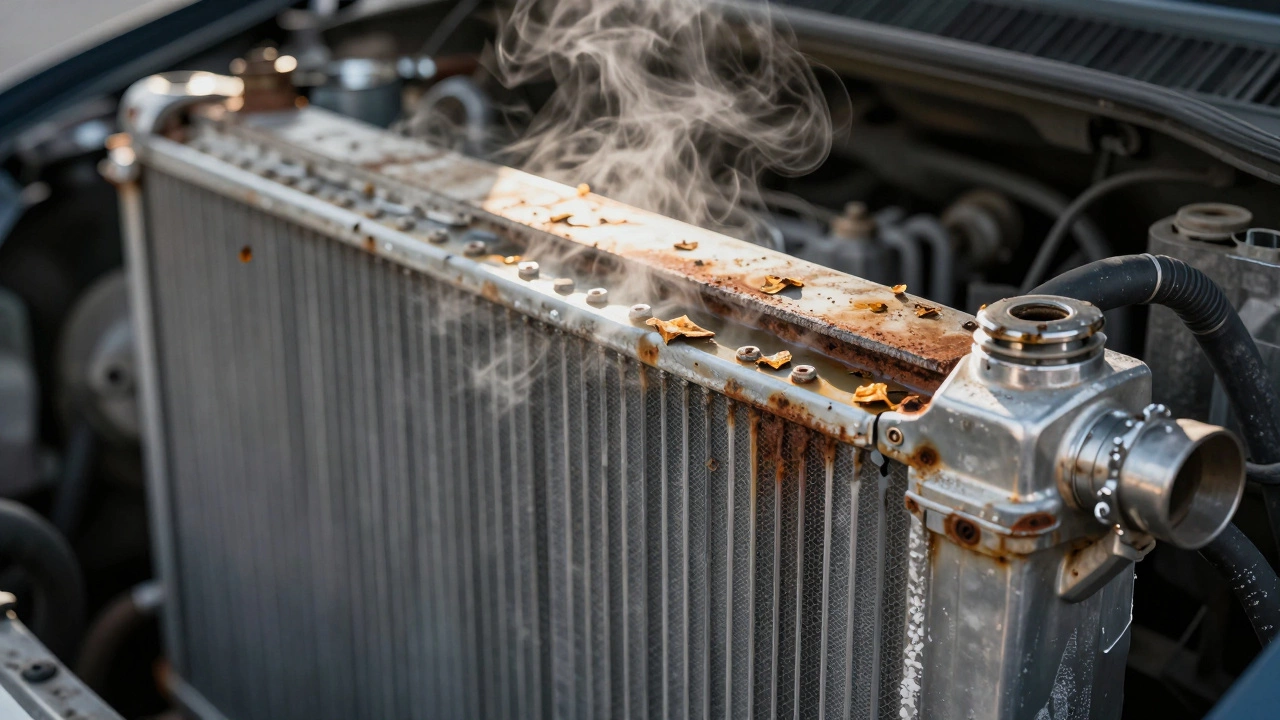
Coolant breaks down over time. The additives that prevent rust, lubricate the water pump, and stop boiling start to vanish. What’s left is just water with a hint of dye. That water starts eating away at the metal inside the radiator-especially aluminum parts, which are common in modern cars. Corrosion builds up, clogs narrow passages, and creates tiny holes. You won’t see it until coolant starts dripping under your car. By then, the damage is done.
Real-world example: A 2018 Honda Civic in Bristol came in with a slow leak. The owner said he’d never changed the coolant. After flushing the system, technicians found rust flakes the size of rice grains clogging the radiator core. The radiator was beyond repair. Replacement cost £420. A simple coolant change at £65 would’ve prevented it.
Leaking Seals and Hoses Are Silent Killers
The radiator doesn’t work alone. It’s connected to plastic and rubber hoses, plastic end tanks, and rubber gaskets. These parts harden with age and heat. One hot summer day, a cracked hose or a loose clamp can spray coolant everywhere. You might not notice at first. Just a small puddle under the car after parking. But over time, the system loses pressure. The engine runs hotter. The radiator works harder. And eventually, it cracks.
Most radiator leaks start at the seams-where the plastic end tanks meet the metal core. Heat cycles cause the plastic to expand and contract. Over years, that stress creates hairline fractures. You won’t see them unless you pressure-test the radiator. But you can spot the signs: white, crusty residue around the radiator cap or hoses. That’s dried coolant. It looks like chalk dust. If you see it, don’t wait. Get it checked.
Contaminated Coolant = Internal Damage
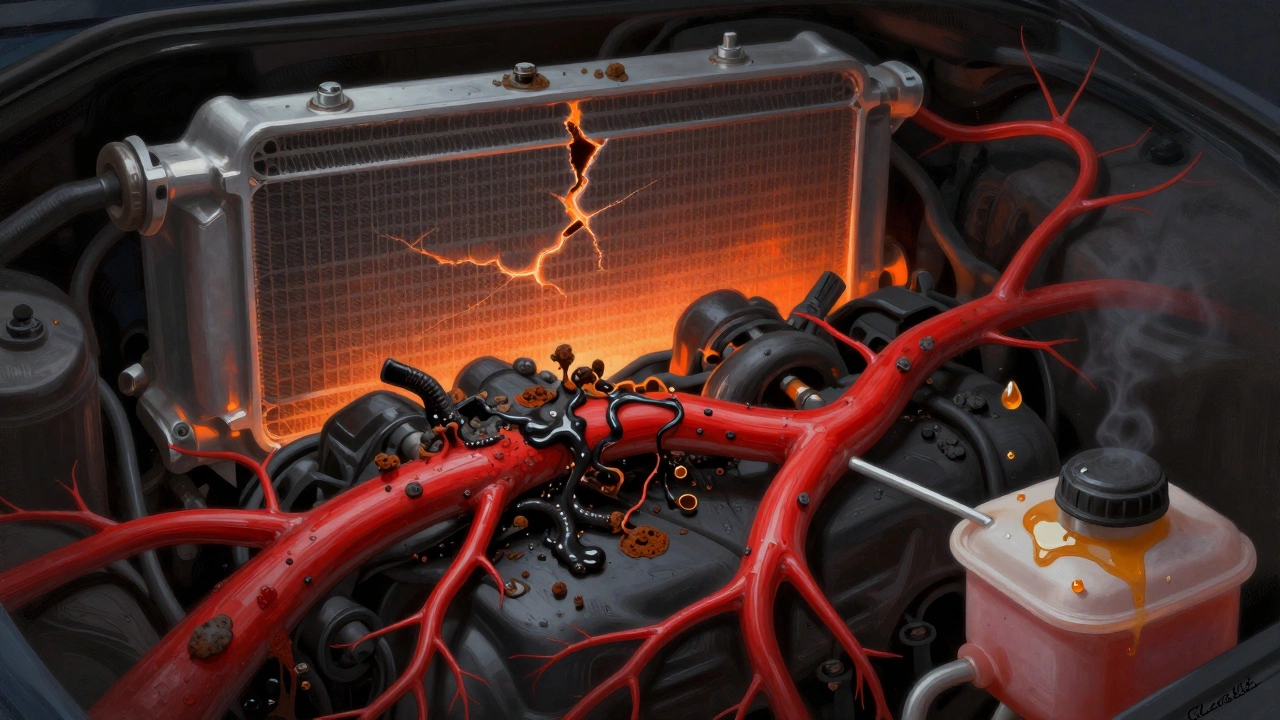
Have you ever seen oil mixed with coolant? That’s not normal. It’s a red flag. Oil and coolant should never touch. If they do, it means there’s a blown head gasket, a cracked cylinder head, or a failed oil cooler. When oil gets into the radiator, it turns the coolant into a thick, greasy sludge. That sludge clogs the radiator’s tiny tubes. It stops flow. Heat builds up. The radiator overheats-and then fails.
This isn’t just a radiator problem. It’s a sign of a bigger engine issue. But if you ignore it, the radiator will die first. And when it does, the engine will follow. A 2019 Ford Focus in Bristol had a head gasket leak. The owner kept adding coolant every week. After six months, the radiator was completely blocked. Engine repair? £2,100. Radiator replacement? £350. But the head gasket was the real problem. Fixing the radiator alone wouldn’t have helped.
Physical Damage from Road Debris
Think your radiator is protected inside the front bumper? It’s not. A stone kicked up by a truck, a curb you clipped, or even a bad parking job can crack the radiator core. Aluminum is lightweight, but it’s not tough. A single impact can bend or puncture the thin fins and tubes inside. You might not notice right away. The car runs fine. But over time, coolant slowly leaks out. The engine overheats. The radiator fails.
Check your radiator after any front-end collision-even a small one. Look for bent fins, dents, or visible cracks. If you see damage, don’t assume it’s just cosmetic. A radiator with damaged fins can lose 30% of its cooling efficiency. That’s enough to trigger overheating on a hot day or when climbing a hill.
Overheating from a Faulty Thermostat
The thermostat controls coolant flow. When the engine is cold, it stays closed. When it’s hot, it opens. If it sticks shut, coolant can’t reach the radiator. The engine overheats. The radiator doesn’t get a chance to cool the fluid. So it’s forced to handle extreme heat without proper flow. That stresses the metal. It warps. It cracks.
Many people blame the radiator when the thermostat fails. But the radiator isn’t the problem-it’s the victim. If your car overheats quickly after starting, or if the temperature gauge spikes and then drops suddenly, the thermostat is likely stuck. Replace it early. It’s cheap. It’s easy. And it protects your radiator from unnecessary strain.
Using the Wrong Coolant or Water
Some drivers think any liquid will do. Tap water? Sure. Distilled water? Fine. Antifreeze from a discount store? Why not?
Wrong. Tap water has minerals. Those minerals turn into scale inside the radiator. Scale builds up like limescale in a kettle. It insulates the metal. Heat can’t escape. The radiator overheats. Even distilled water, without proper coolant additives, offers no protection against corrosion or freezing.
Modern cars need specific coolant formulas-often OAT (organic acid technology) or HOAT (hybrid organic acid technology). Mixing types can cause chemical reactions that form gunk. That gunk clogs the radiator. Always use the coolant type listed in your owner’s manual. If you’re unsure, check the cap or ask a mechanic. Don’t guess.
Water Pump Failure Drains the Radiator’s Lifespan
The water pump pushes coolant through the engine and into the radiator. If the pump’s impeller breaks, the bearings wear out, or the seal leaks, coolant flow slows or stops. The radiator gets hot coolant but no movement. That’s like trying to cool a cup of coffee without stirring it. It doesn’t work.
Many water pumps are driven by the timing belt. When the belt snaps, the pump stops. The engine overheats in seconds. Radiators don’t handle that kind of shock. They crack. That’s why replacing the water pump when you change the timing belt is a smart move-even if it still looks fine. It’s cheap insurance.
How to Spot Trouble Before It’s Too Late
You don’t need to wait for steam to know your radiator is failing. Watch for these early signs:
- Temperature gauge creeping into the red zone, even on short drives
- White, chalky residue around the radiator cap or hoses
- Low coolant level that keeps dropping, even with no visible leaks
- Sludge or oily film in the coolant reservoir
- Unusual smells-sweet, syrupy odor when driving
- Overheating that happens only in traffic or uphill
If you notice one or more of these, don’t ignore it. A radiator can fail in a single day. But if you catch it early, you might just save yourself a £500 repair.
What to Do If Your Radiator Fails
If your car overheats and shuts down, turn off the engine immediately. Don’t open the radiator cap. The pressure inside can spray boiling coolant. Wait at least 30 minutes. Then check the coolant level. If it’s empty, don’t refill and drive. You’ll cause more damage.
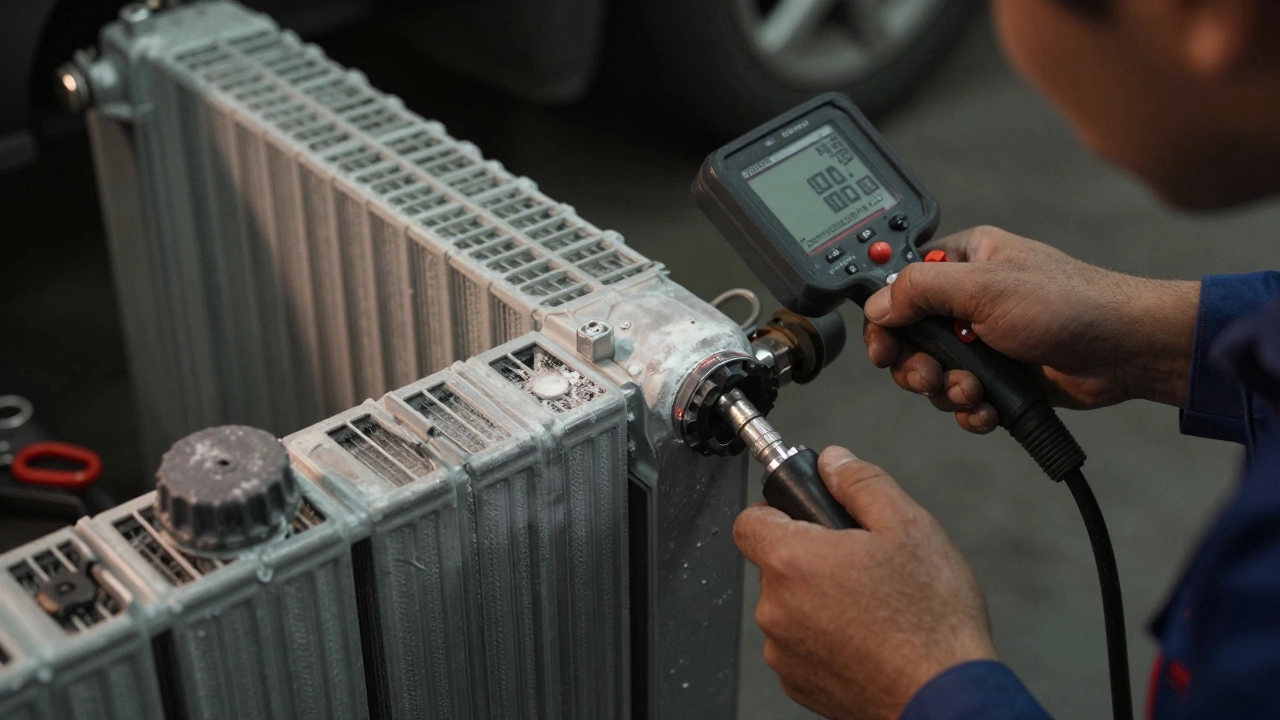
Call a tow truck. Get the car to a mechanic. They’ll pressure-test the radiator, check for leaks, inspect the hoses and thermostat, and test for oil contamination. Most shops offer free diagnostics. Use it. Don’t assume the radiator is the problem-unless they confirm it.
Replacing a radiator isn’t always the answer. Sometimes it’s just a hose. Or a thermostat. Or a bad cap. Fix the root cause. Otherwise, the new radiator will fail too.
How to Prevent Radiator Failure
Prevention is simple. Just follow these steps:
- Change coolant every 30,000 miles or 2-5 years-whichever comes first
- Use only the coolant type specified in your owner’s manual
- Inspect hoses and clamps every 12 months for cracks or soft spots
- Check the coolant level monthly-don’t wait for warning lights
- Replace the thermostat every 60,000 miles or when replacing the radiator
- Flush the system every 2 years to remove sludge and rust
- Never mix coolant types
These steps cost less than £150 a year. A radiator replacement? £400-£800. The math is clear.