Exhaust Size Estimator
Select your vehicle specifications to determine whether a 4-inch or 5-inch exhaust system is recommended for optimal performance and drivability.
Performance Impact
Sound & Driveability
You walk into a shop or scroll through online forums, and the debate is always there: "Go big or go home." When it comes to exhaust systems, many enthusiasts assume that bigger is automatically better. They slap on a 5-inch exhaust system with massive tips and deep rumble, expecting their daily driver to suddenly feel like a race car. But here’s the harsh truth: if you put a 5-inch pipe on a stock 2.0-liter engine, you might actually lose power in the lower RPM range. It sounds counterintuitive, right? Why would more room for air hurt performance?
The answer lies in fluid dynamics and how your engine breathes. Choosing between a 4-inch exhaust and a larger diameter option isn’t just about aesthetics or noise levels; it’s about matching the exhaust flow velocity to your engine’s displacement and power band. Get it wrong, and you end up with a sluggish low-end response, a droning cabin, and wasted money. Get it right, and you unlock smoother power delivery and a soundtrack that matches your driving style.
| Feature | 4-Inch Exhaust | 5-Inch Exhaust |
|---|---|---|
| Ideal Engine Size | Naturally Aspirated (NA) 6-cylinders, Turbocharged 4-cylinders | V8s, Highly Modified Engines (>500 hp) |
| Power Band Impact | Retains mid-range torque; good top-end flow | Loses low/mid-range torque; maximizes high-RPM peak |
| Exhaust Velocity | Maintains scavenging effect at moderate RPMs | Velocity drops significantly until very high RPMs |
| Cabin Noise | Aggressive but manageable drone | Deep tone; potential for excessive drone in NA engines |
| Cost & Weight | Lighter, cheaper materials | Heavier, requires more expensive stainless steel to prevent rust |
Understanding Exhaust Flow and Back Pressure
To make the right choice, you need to understand what’s happening inside those pipes. Many people talk about "back pressure" as if it’s the enemy. In reality, a certain amount of back pressure is necessary for low-end torque. Think of it like drinking through a straw. If the straw is too wide (like a 5-inch pipe on a small engine), the liquid doesn’t move fast enough unless you suck really hard. In an engine, this means the exhaust gases exit slowly, failing to create the vacuum needed to pull fresh air-fuel mixture into the cylinders efficiently during the overlap phase of the valve cycle.
This phenomenon is called scavenging the process where outgoing exhaust gases help draw in incoming intake charge. A properly sized pipe maintains high gas velocity, which creates negative pressure behind the exiting pulses, helping to evacuate the cylinder completely. A 4-inch exhaust typically maintains this velocity well for engines producing up to 400-450 horsepower. Once you exceed that, or if you’re pushing a large-displacement V8, the volume of gas becomes so great that a 4-inch pipe restricts flow, choking the engine at high RPMs. That’s when the 5-inch exhaust shines-it removes the restriction, allowing the engine to breathe freely at the top of its rev range.
When to Choose a 4-Inch System
If you drive a modern turbocharged four-cylinder or a naturally aspirated six-cylinder, the 4-inch route is usually the sweet spot. Let’s look at real-world scenarios. Take a Subaru WRX STI or a Ford Mustang EcoBoost. These engines rely heavily on turbo spool-up. A 5-inch system here often results in turbo lag because the exhaust gases lose velocity before they can effectively spin the turbine. You’ll notice slower throttle response off the line.
With a 4-inch system, you strike a balance. You get enough flow to support significant power gains from tuning and bolt-ons, without sacrificing the daily drivability. The sound is aggressive but rarely intrusive. Most dyno tests show that moving from a restrictive stock cat-back to a quality 3.5- or 4-inch system yields noticeable gains across the entire curve, not just at the redline. This makes it the preferred choice for street cars that see occasional track days.
- Turbocharged Applications: Essential for maintaining turbine efficiency.
- Daily Drivers: Less likely to cause cabin drone compared to oversized pipes.
- Budget Builds: Cheaper to fabricate and install due to smaller material requirements.
Why Go Big with a 5-Inch Exhaust?
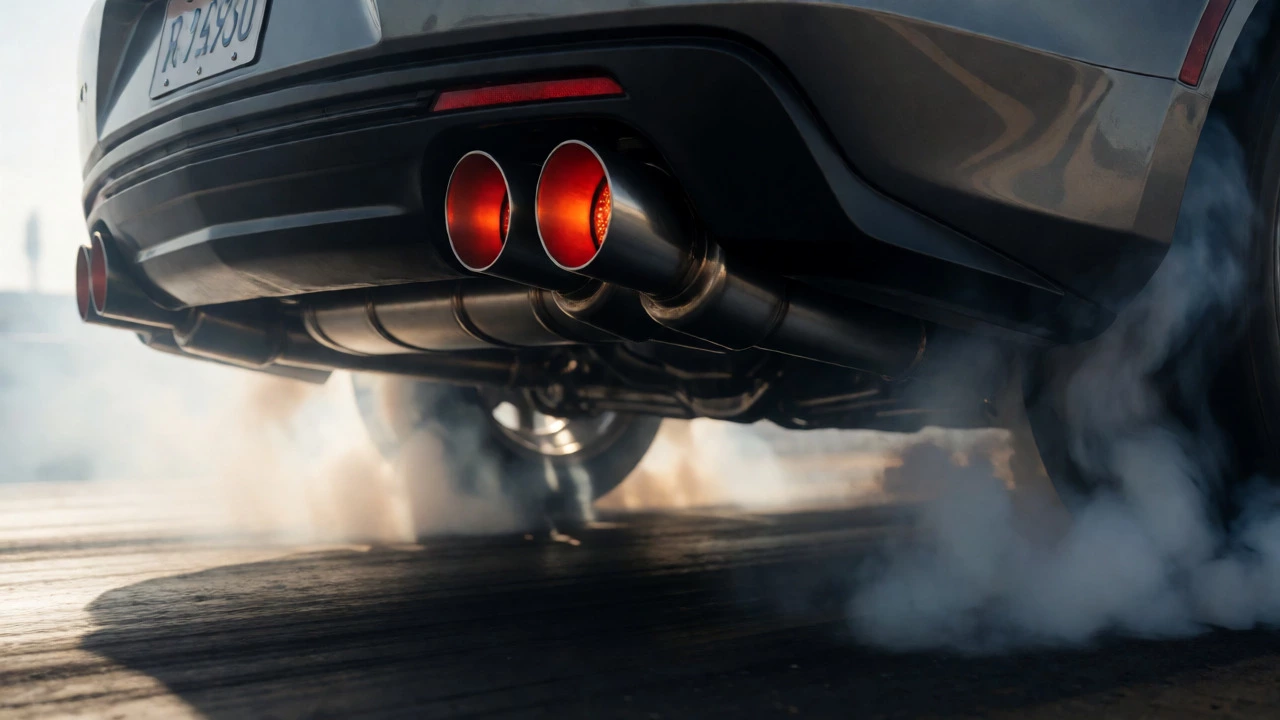
So, who actually needs a 5-inch pipe? Generally, we’re talking about serious muscle. If you have a LS-powered Camaro or a Coyote V8 Mustang making over 500 wheel horsepower, a 4-inch system starts to become a bottleneck. At these power levels, the sheer volume of exhaust gas produced per second overwhelms a smaller diameter. The engine has to work harder to push the waste out, stealing horsepower that could be used for acceleration.
A 5-inch system reduces this restriction dramatically. However, there’s a catch: you must tune the vehicle correctly. Because the exhaust velocity is lower at low RPMs, the oxygen sensors may read leaner than expected, or the ECU might struggle to maintain idle stability if the system is too open. Proper tuning compensates for fuel trims and ignition timing adjustments required by the freer-flowing exhaust. Without a tune, a 5-inch swap on a marginal engine can lead to check engine lights and poor fuel economy.
Another factor is weight. Stainless steel is the standard for longevity, but a full 5-inch setup weighs significantly more than a 4-inch one. For drag racers, every pound matters, but for street cruisers, the weight penalty is negligible compared to the acoustic satisfaction. Yes, let’s be honest-part of the appeal is the sound. A 5-inch system on a V8 delivers a deep, chest-thumping rumble that a 4-inch simply cannot replicate at the same volume level.
The Role of Resonators and Mufflers
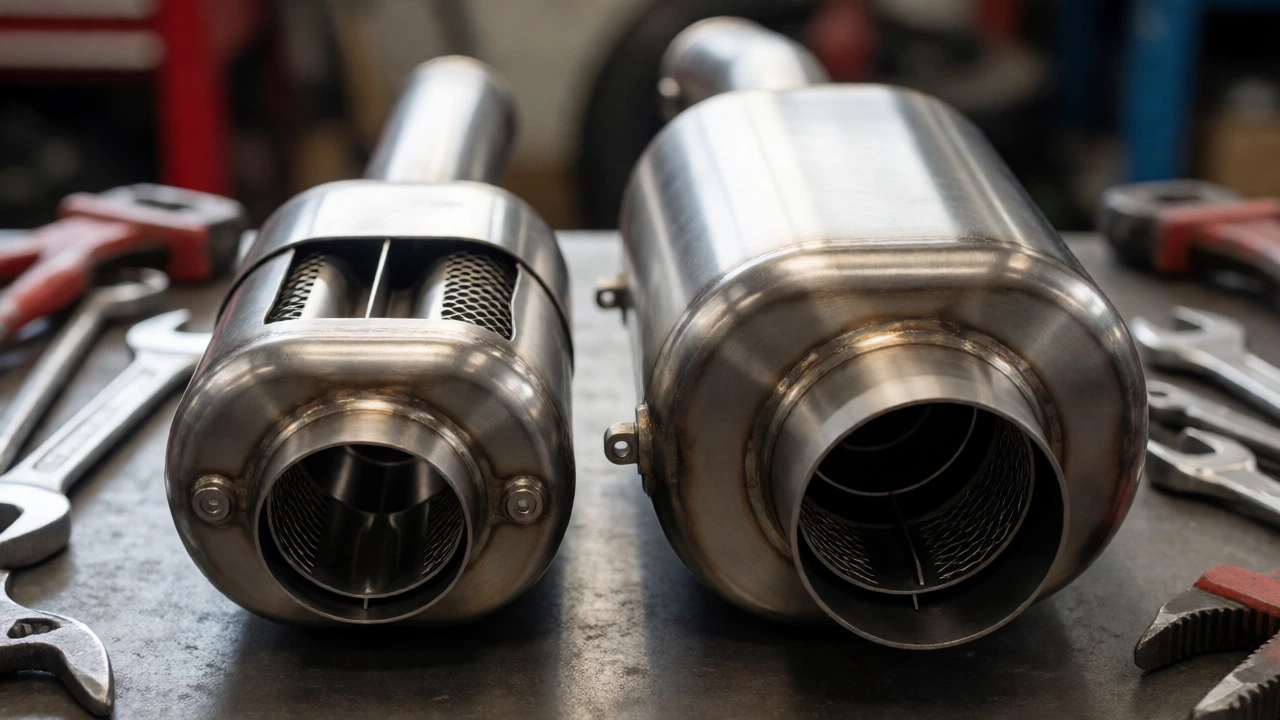
Pipe diameter is only half the battle. The components you attach to that pipe dictate whether your car sounds like a race car or a broken tractor. With a larger exhaust, you have more space to incorporate effective sound deadening. A common mistake is pairing a 5-inch pipe with a cheap, straight-through glasspack muffler. This often leads to a hollow, boomy drone that vibrates the rearview mirror at highway speeds.
Instead, consider using chambered resonators devices designed to cancel specific frequencies of noise upstream of the main muffler. On a 5-inch system, dual resonators are almost mandatory for street use. They target the low-frequency boom while letting the higher-pitched notes pass through. Conversely, a 4-inch system often requires less aggressive sound management. A single high-quality chambered muffler, like a Borla S-Type or MagnaFlow Street Series, is usually sufficient to keep things civilized yet sporty.
Remember, the goal is to manage frequency, not just volume. If you hate drone, don’t blame the pipe size alone; blame the lack of proper internal baffling. Investing in better mufflers often solves the noise issues associated with larger diameters far better than downgrading the pipe size itself.
Installation Tips and Common Pitfalls
Before you cut your old exhaust off, check your clearance. Larger pipes take up more space under the chassis. In tight engine bays or cars with subframe connectors, fitting a 5-inch tailpipe might require cutting into the bumper cover or modifying the rear valance. Always test-fit the new system before welding or clamping permanently.
Also, pay attention to hangers and brackets. Stock rubber hangers are often too soft to support the increased weight and vibration of a heavy stainless steel 5-inch system. Upgrade to polyurethane hangers to reduce vibration transfer into the cabin. This simple step can eliminate much of the perceived "drone" issue.
Finally, never ignore the check-engine light after installation. Modern cars monitor O2 sensor readings closely. If you remove catalytic converters along with the exhaust change, you’ll need an O2 sensor simulator or a custom tune to avoid error codes. Even with cats intact, a sudden change in flow characteristics can confuse the ECU temporarily. A quick reset or a short break-in period usually resolves minor idling quirks.
Will a 5-inch exhaust add more horsepower than a 4-inch?
Not necessarily. On engines producing under 400 horsepower, a 5-inch exhaust may actually reduce low-to-mid-range torque due to decreased exhaust gas velocity. It only adds horsepower on high-output engines (typically 500+ hp) where the 4-inch pipe becomes a physical restriction to airflow.
Is a 4-inch exhaust too loud for daily driving?
Generally, no. A 4-inch system with quality mufflers provides an aggressive tone that is acceptable for most daily drivers. Excessive noise is usually caused by poor muffler design or missing resonators, rather than the pipe diameter itself.
Do I need a tune if I switch to a 5-inch exhaust?
It is highly recommended. Changing exhaust diameter alters oxygen sensor readings and exhaust scavenging characteristics. A custom tune ensures the engine runs optimally, preventing lean conditions, check engine lights, and ensuring you realize the potential power gains.
Which is heavier, a 4-inch or 5-inch exhaust?
A 5-inch system is significantly heavier due to the increased amount of metal required for the piping and mufflers. For a full stainless steel cat-back, the difference can be 15-25 pounds, which matters primarily in competitive racing applications.
Can I mix 4-inch and 5-inch pipes?
Yes, many hybrid systems start with a 4-inch mid-pipe for scavenging benefits and transition to 5-inch tailpipes for reduced backpressure at the rear. This compromise aims to retain low-end torque while maximizing top-end flow and sound depth.