Radiator & Head Gasket Risk Calculator
Your radiator is your engine's first line of defense. This tool calculates your risk of head gasket failure based on radiator condition and maintenance history. A failing radiator can lead to costly repairs of £1,200-£2,500.
When your engine starts running hot and the temperature gauge climbs into the red, it’s easy to panic. But here’s the real question: can a bad radiator cause a blown head gasket? The short answer is yes - and it’s one of the most common reasons engines fail without warning.
How a Radiator Keeps Your Engine Cool
Your radiator isn’t just a metal box under the hood. It’s the main cooling system component that pulls heat away from the engine. Hot coolant flows from the engine into the radiator, where air passing through the fins cools it down before it cycles back. If this loop breaks, your engine temperature spikes fast.
A working radiator needs clean coolant, intact fins, no leaks, and a functioning thermostat. If any of these fail, heat builds up. And heat is the #1 enemy of your head gasket.
What Is a Head Gasket, and Why Does It Matter?
The head gasket sits between the engine block and the cylinder head. It seals combustion chambers, coolant passages, and oil galleries. It’s made of layered metal or composite material designed to handle extreme heat and pressure - up to 1,500 psi in some engines.
But it’s not invincible. When the engine runs too hot for too long, the metal expands unevenly. The cylinder head can warp. The gasket loses its seal. Coolant leaks into the combustion chamber. Oil mixes with coolant. Compression drops. And suddenly, your engine won’t start - or it smokes, overheats, and loses power.
How a Failing Radiator Leads to Head Gasket Failure
Here’s how it usually plays out in real life:
- You notice your car is running warmer than usual - maybe the temperature needle creeps up on the highway, but drops back down in traffic. You ignore it.
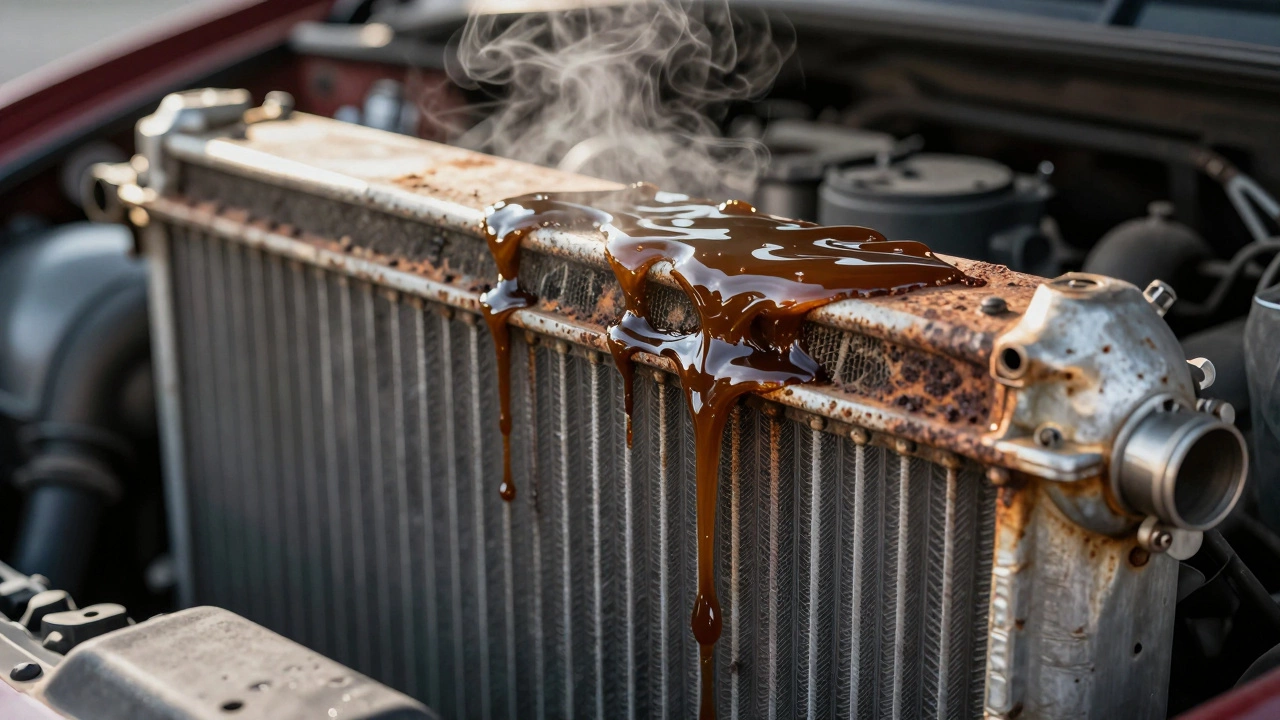
- Over time, the radiator gets clogged with rust or debris. The coolant flow slows. The thermostat can’t regulate temperature properly.
- On a hot day, or during a long drive, the engine hits 220°F, then 240°F, then 260°F. The coolant starts boiling inside the system.
- The head gasket, already under stress from repeated overheating cycles, begins to break down. Tiny cracks form where the metal meets the gasket material.
- Eventually, coolant leaks into the cylinders. You see white smoke from the exhaust. The oil turns milky. The engine misfires.
- Then - the head gasket blows. Full failure.
This isn’t rare. In the UK, over 40% of head gasket failures in cars older than 8 years trace back to chronic overheating from cooling system issues - and radiators are the most common culprit.
Signs Your Radiator Is Failing (Before It Kills Your Head Gasket)
You don’t need to wait for the engine to smoke. Look for these early warnings:
- Coolant level drops frequently, even with no visible leaks
- Rusty or dirty coolant (should be bright green, red, or orange - not brown or sludgy)
- Overheating at low speeds but cooling at highway speeds (airflow helps, but the radiator isn’t doing its job)
- Bubbles in the coolant reservoir when the engine is running (combustion gases leaking into the cooling system)
- Steam or sweet-smelling vapor coming from under the hood
These aren’t "maybe" signs. They’re red flags. A radiator that’s 10 years old or more, especially in areas with hard water like Bristol, is at high risk of internal corrosion. Even a small blockage can turn into a disaster.
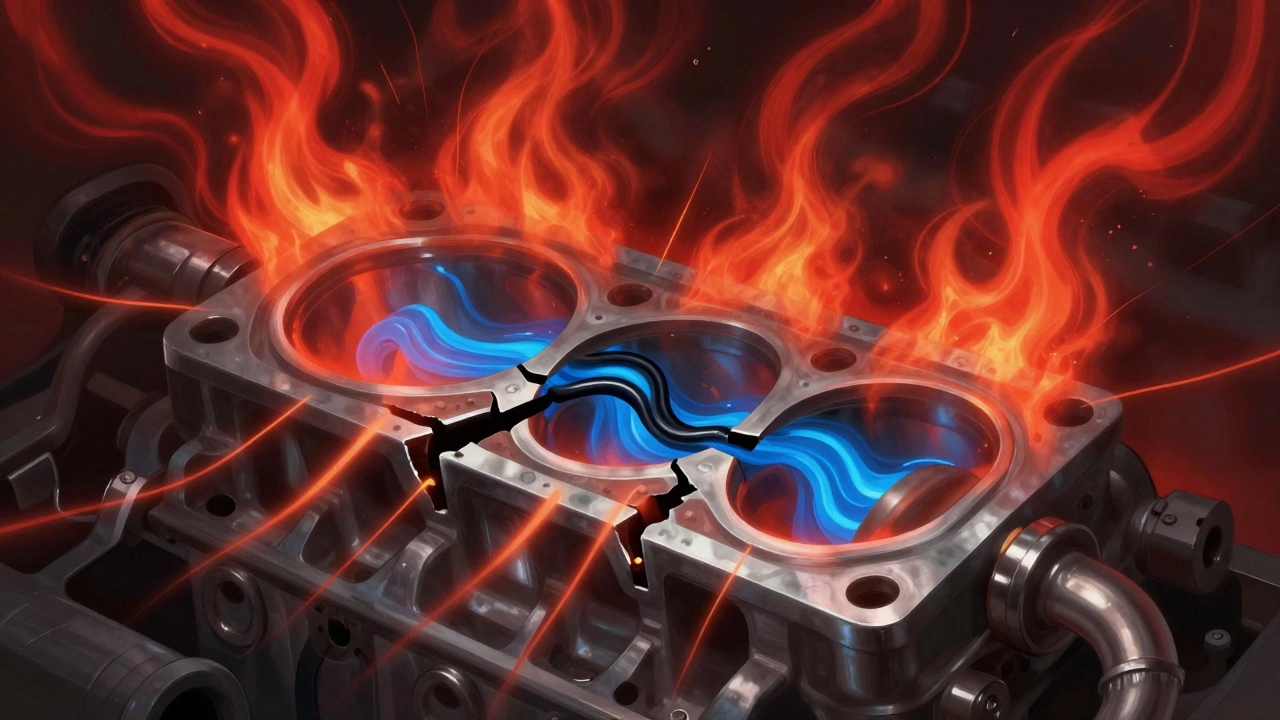
What Happens When the Head Gasket Blows
If your radiator fails and you keep driving, here’s what you’ll face:
- White smoke from the tailpipe - coolant burning in the cylinders
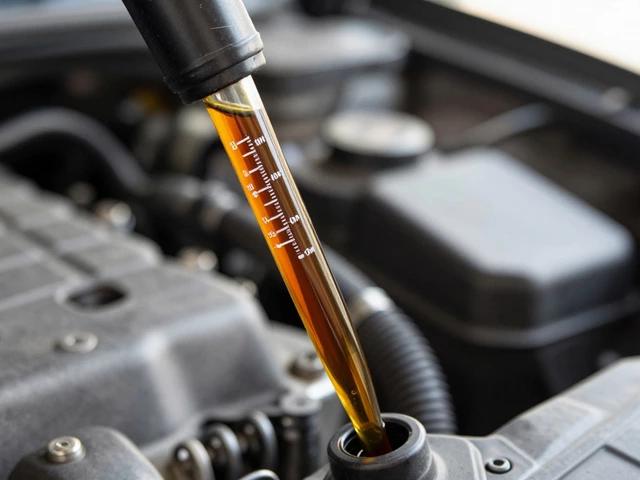
- Milky oil on the dipstick - coolant mixing with engine oil
- Bubbling in the radiator or coolant reservoir
- Loss of power, rough idling, or engine misfires
- Engine won’t start, or starts but shuts off after a few minutes
At this point, you’re looking at a repair that costs between £1,200 and £2,500 in the UK - depending on the car. That’s because replacing a head gasket isn’t just swapping a part. The cylinder head must be removed, checked for warping, resurfaced, and reinstalled with new bolts. Labor alone can take 8-12 hours.
Can You Fix It Without Replacing the Head Gasket?
Some people try sealant products like Blue Devil or K-Seal. They claim to "fix" a blown head gasket by plugging leaks from the inside.
Here’s the truth: sealants rarely work on serious failures. They might temporarily stop a small coolant leak into the oil, but they don’t fix the root problem - the gasket is destroyed. Worse, they can clog your radiator or heater core, making the overheating problem even worse.
If your radiator is already failing and your head gasket is blown, sealants are a waste of money. You’re just delaying the inevitable.
How to Prevent This From Happening
Prevention is cheaper than repair. Here’s what you should do:
- Check coolant levels every time you fill up with fuel. Top off with the correct type - don’t mix brands or colors.
- Flush and replace coolant every 40,000 miles or every 3 years - whichever comes first. Old coolant turns acidic and eats metal.
- Inspect the radiator for leaks, cracked tanks, or bent fins. A visual check takes 2 minutes.
- Replace the thermostat every 60,000 miles. It’s a cheap part (£20-£40) that can save you thousands.
- Don’t ignore warning lights. If the temperature gauge goes past the halfway mark, pull over and turn off the engine.
Many drivers in the UK think their car is "fine" because it starts and drives. But engines don’t fail suddenly - they fail slowly. A radiator that’s leaking a little, or clogged with scale, is ticking time bomb.
Real-World Example: A Bristol Driver’s Story
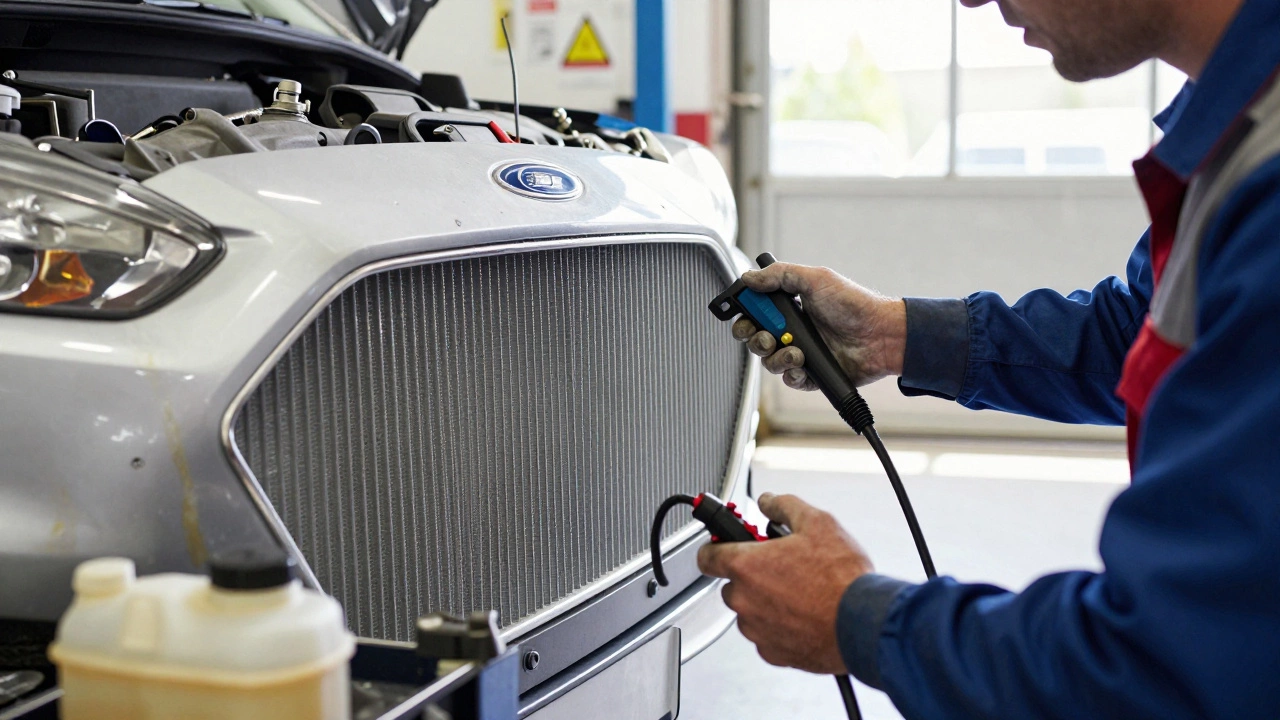
A customer came in last year with a 2015 Ford Focus. He said it was "just overheating a bit." He’d been topping up coolant every week for months. He ignored the warning light because "it went back down."
When he brought it in, the radiator was 80% clogged with rust. The coolant was thick like syrup. The head gasket had blown - coolant was in the oil, and the engine had lost compression on two cylinders.
He paid £1,800 for the repair. He could’ve spent £120 on a radiator flush and new coolant 6 months earlier - and avoided the whole mess.
Bottom Line: Your Radiator Is Your First Line of Defense
A bad radiator doesn’t just make your car run hot. It puts your engine’s most critical component - the head gasket - under deadly stress. Once that seal breaks, repair costs skyrocket and your car’s reliability plummets.
If your radiator is old, dirty, or leaking - don’t wait for the engine to smoke. Get it checked. Replace it if needed. It’s one of the cheapest ways to protect your engine.
Think of your radiator like your heart. If it stops working, everything else follows. Don’t ignore the signs. Fix it before it’s too late.
Can a clogged radiator cause a blown head gasket?
Yes. A clogged radiator restricts coolant flow, causing the engine to overheat. Repeated overheating warps the cylinder head and breaks the head gasket seal. This is one of the most common causes of head gasket failure in older cars.
How long does it take for a bad radiator to blow a head gasket?
There’s no fixed timeline. It can happen in days if the engine runs very hot continuously - like with a completely blocked radiator or a failed water pump. More often, it takes weeks or months of mild overheating. The damage builds up slowly until the gasket finally fails.
Will a radiator flush fix a blown head gasket?
No. A radiator flush cleans the cooling system but won’t repair a damaged head gasket. If the gasket is already blown, flushing the radiator might remove debris, but the engine will still overheat and lose compression. The gasket must be replaced.
Can you drive a car with a bad radiator?
You can, but you shouldn’t. Even short drives with a failing radiator risk overheating. That can warp the cylinder head, crack the block, or blow the head gasket. If your radiator is leaking or the temperature gauge is high, stop driving and get it checked.
How much does it cost to replace a radiator and head gasket?
Replacing just the radiator costs £200-£500, depending on the car. Replacing a blown head gasket costs £1,200-£2,500 because of the labor involved. If both need replacing, expect £1,500-£3,000 total. Fixing the radiator early saves you thousands.
What to Do Next
If you’re unsure about your radiator’s condition, take it to a trusted mechanic. Ask them to:
- Check coolant condition with a refractometer
- Test radiator flow with a pressure tester
- Inspect for internal corrosion or blockages
- Look for signs of past overheating (warped head, discolored metal)
Don’t wait for the engine to fail. A simple inspection now could save you from a £2,000 repair later.