Brake Pad Replacement Calculator
Brake Pad Condition Analysis
This tool helps determine whether you should replace all four brake pads based on your current pad thickness and driving conditions.
- Front pads typically wear 70-80% faster than rear pads
- Uneven pads cause dangerous braking imbalance
- Reusing old pads on new rotors damages rotors
Risk Level
When your brakes start squealing or the car pulls to one side when you stop, it’s natural to wonder: should I replace just the front pads, or do I need to change all four at once? The answer isn’t as simple as "yes" or "no," but skipping one set can cost you more in the long run - and put your safety at risk.
Why Brake Pads Wear at Different Rates
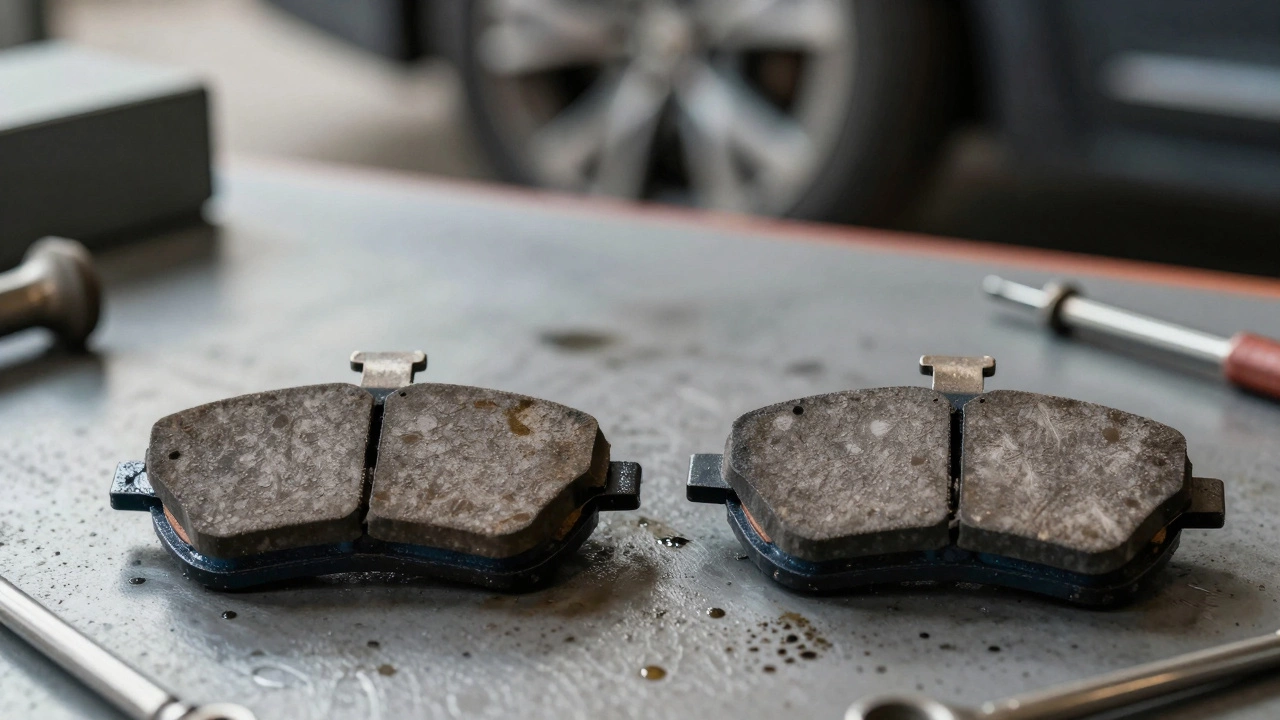
Not all brake pads wear the same. In most cars, the front pads take 70% to 80% of the stopping load. That’s because weight shifts forward when you brake. So it’s common to see front pads worn down to 2mm while the rears are still at 6mm. That doesn’t mean you can ignore the rears.
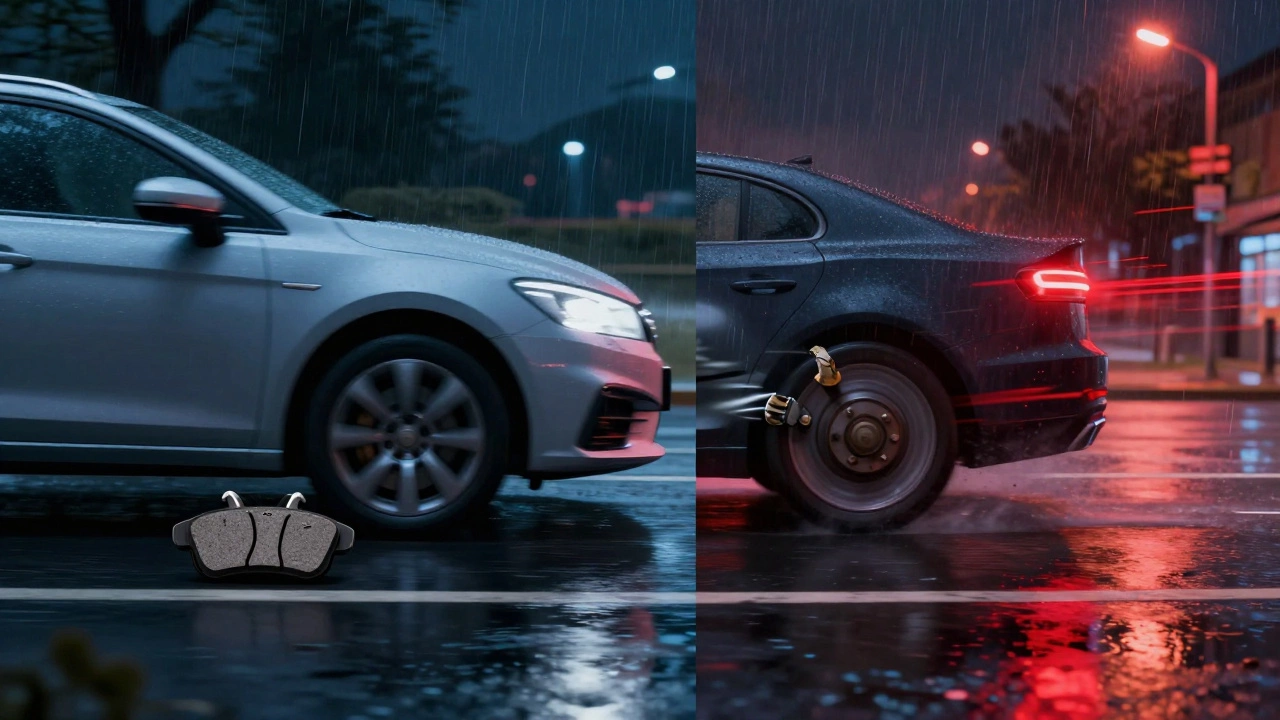
Brake systems are designed to work as a matched set. If you replace only the fronts, you’ll create uneven braking force. The new front pads will grab harder than the old rears, which can cause the car to dip forward more sharply or even lock up the rear wheels under hard stops. That’s not just uncomfortable - it’s dangerous.
What Happens If You Only Replace Two Pads?
Some drivers think they’re saving money by replacing only the worn pair. But here’s what really happens:
- Uneven braking: The car pulls to the side with the newer, grippier pads. This feels like driving on ice when you need to stop fast.
- Reduced stopping power: The system can’t generate full pressure if the pads aren’t balanced. Your brake pedal may feel spongy or require more force.
- Damage to rotors: Old pads have grooves and glazing from wear. When they rub against new rotors (or even new pads), they create hot spots and warping. Replacing pads without addressing old ones can ruin your rotors in just a few thousand miles.
- Voided warranties: Many brake manufacturers require full axle replacement for warranty coverage. If you replace just two and something fails later, you might not be covered.
There’s one exception: if you’re replacing pads as a temporary fix before a long trip and you’re certain the other pads still have 70% or more life left. But even then, you should inspect them properly - not just guess.
When You Can Get Away With Replacing Just Two
There’s no perfect rule, but here’s when replacing only two might make sense:
- Front pads are at 2mm, rears are at 7mm: If your rear pads are still thick and show no signs of cracking, glazing, or uneven wear, you can delay replacing them - but only if you plan to check them again in 2,000 miles.
- One side is worn out due to a stuck caliper: If a caliper seized and wore only one front pad, you might replace just that side - but only after fixing the caliper. Otherwise, the new pad will wear out in weeks.
- High-mileage vehicle with budget constraints: If you’re driving a 15-year-old car with 200,000 miles and you’re on a tight budget, replacing the front pair first may be your only option. But schedule the rears within 3 months.
Even in these cases, you’re not saving money - you’re just delaying the cost. And every mile you drive with mismatched pads is a gamble with your safety.
Why Replacing All Four Is the Smart Choice
Replacing all four brake pads at once isn’t just about balance - it’s about predictability. Here’s why it’s the standard practice among mechanics and safety experts:
- Consistent stopping: All four pads respond the same way. No pulling, no jerking, no surprises.
- Longer rotor life: New pads bed in evenly across all four rotors. No hot spots. No warping.
- One service visit: You avoid two separate visits, two sets of labor charges, and the hassle of scheduling again.
- Peace of mind: You know your brakes are matched and reliable. No guessing if the rears will fail next week.
In the UK, where wet roads and sudden stops are common, brake performance isn’t a luxury - it’s a legal and moral responsibility. The Highway Code requires your brakes to stop your vehicle safely. Uneven pads can make that impossible.
How to Tell If Your Brake Pads Need Replacing
You don’t need to be a mechanic to spot warning signs:
- Squealing or grinding: A high-pitched squeal means the wear indicator is rubbing. A metallic grinding sound means metal is hitting metal - stop driving immediately.
- Longer stopping distance: If you feel like you’re braking later than you used to, your pads are thinning.
- Brake warning light: Some cars have sensors that trigger a dashboard light when pads are below 3mm.
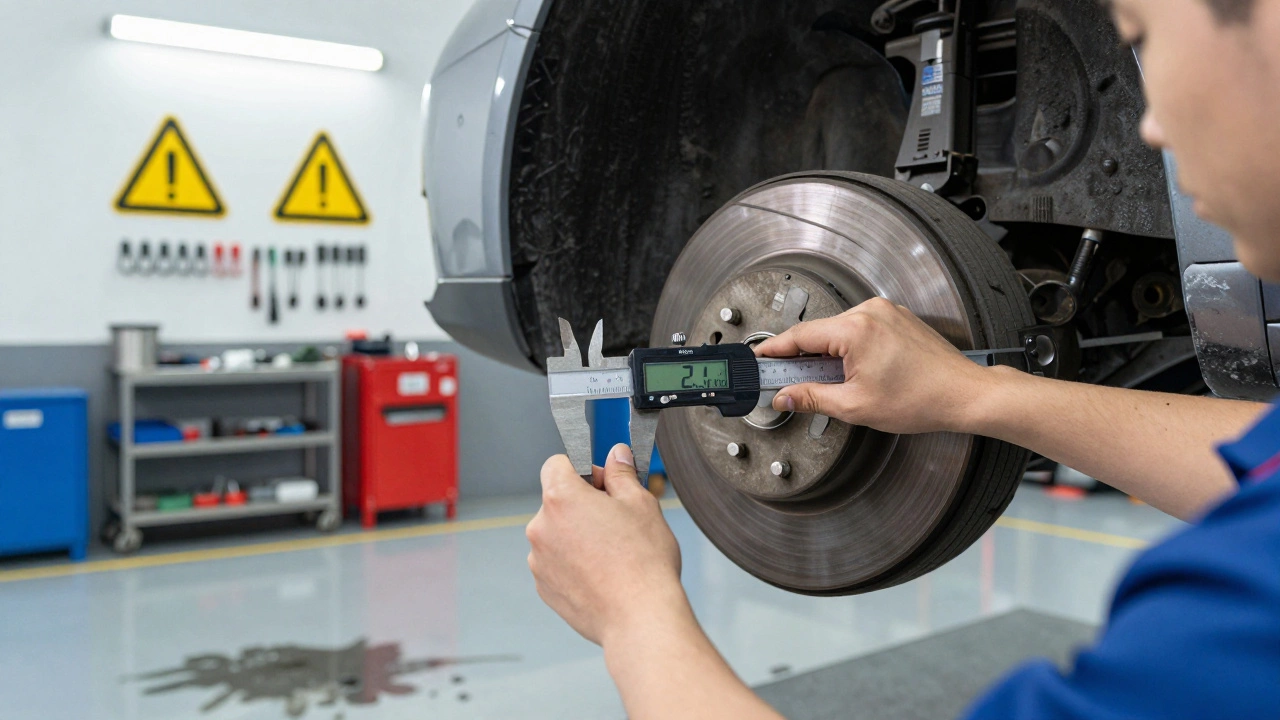
- Visible wear: Look through the wheel spokes. If the pad material is less than 4mm thick, it’s time to replace.
- Vibration in the pedal: A pulsing brake pedal usually means warped rotors - which often come from worn or mismatched pads.
Don’t wait for the noise. Check your pads every 10,000 miles - especially if you drive in city traffic or hilly areas like the Cotswolds or Lake District.
What Else Should You Replace With the Pads?
Brake pads don’t live in isolation. When you’re replacing them, check these too:
- Rotors: If they’re scored, warped, or thinner than the manufacturer’s minimum thickness, replace them. New pads on old rotors = bad news.
- Calipers: Stickiness or leaks can cause uneven wear. If one pad is worn more than the other on the same axle, the caliper might be faulty.
- Brake fluid: Old fluid absorbs moisture and loses effectiveness. Flush it every 2 years or 24,000 miles - especially in damp climates like Bristol.
- Hardware kits: Brake pad clips, shims, and anti-rattle springs wear out too. Replacing them prevents noise and uneven pressure.
Many shops offer a "full brake service" that includes all of this. It costs more upfront, but it’s cheaper than replacing rotors twice because you skipped the hardware.
Real-World Cost Comparison
Let’s say you’re in the UK and your brake pads cost £45 per pair. Here’s what you’re really paying:
| Option | Parts Cost | Labor Cost | Total Cost | Risk |
|---|---|---|---|---|
| Replace front only | £90 | £80 | £170 | High - uneven wear, rotor damage, safety risk |
| Replace front + rear later | £180 | £160 | £340 | Very high - two visits, twice the labor, higher chance of failure |
| Replace all four at once | £180 | £120 | £300 | Low - balanced system, one visit, long-term safety |
You save £40 by doing all four at once - not because parts are cheaper, but because labor is more efficient. And you avoid the risk of needing a second visit when the rears finally fail.
Final Recommendation
Replace all four brake pads at the same time - unless you’re a professional mechanic with a brake lathe, a torque wrench, and a full inspection report showing the rears are still in perfect condition. For 99% of drivers, that’s not the case.
Brakes are your car’s most important safety system. Don’t cut corners on them. A full replacement costs more than half a tank of petrol. But it’s cheaper than a crash, a repair bill, or a court fine for unsafe brakes.
When in doubt, get them checked. A good garage will show you the wear on your pads with a caliper and explain what’s going on - no pressure, just facts. That’s the kind of service you want when your life depends on it.
Do I need to replace all four brake pads at once?
Yes, you should. Even though front pads wear faster, replacing only two creates uneven braking, increases the risk of rotor damage, and reduces stopping power. Replacing all four ensures balanced performance and long-term safety.
Can I replace just the front brake pads?
Technically, yes - but it’s not recommended. If you replace only the front pads, the older rear pads won’t match in friction level, causing the car to pull during braking. This can lead to loss of control, especially on wet roads. Always check the rear pads before deciding.
How do I know if my brake pads are worn out?
Look for squealing noises, longer stopping distances, a vibrating brake pedal, or visible wear under the wheel. If the pad material is less than 3mm thick, it’s time to replace them. Some cars have warning lights that come on when pads are too thin.
How often should brake pads be replaced?
Brake pads typically last between 25,000 and 50,000 miles, depending on driving style and conditions. City driving with frequent stops wears them faster than highway driving. Check them every 10,000 miles, especially if you drive in hilly or wet areas.
Is it safe to drive with worn brake pads?
No. Driving with worn brake pads reduces stopping power and can damage rotors or calipers. If you hear grinding, your pads are gone - and metal is touching metal. This can cause brake failure. Stop driving and get them replaced immediately.