Oil Level Calculator
How Much Oil to Add
Use this calculator to determine the correct amount of oil to add based on your dipstick reading.
Oil Level Visualization
See how your current oil level compares to the ideal range.
Ever pulled into a gas station, noticed the oil light flickering, and wondered - can I add oil to my car if it's low? It’s a common question, and the short answer is yes. But doing it wrong can cost you more than just a few quid in oil. Let’s cut through the noise and show you exactly how to do it safely - no garage needed.
Why Oil Levels Drop
Engine oil doesn’t just disappear. If your oil level is low, something’s going on. Normal wear means your engine burns a tiny bit of oil over time - about a quart every 3,000 miles for older cars. Newer engines are tighter, so they use less. But if you’re topping up every 1,000 miles or less, that’s a red flag. Leaks, worn piston rings, or a failing valve seal could be the real issue. Adding oil fixes the symptom, not the cause.Check your owner’s manual. Most manufacturers say you should check oil every 1,000 miles or once a month. If you drive in stop-and-go traffic, haul heavy loads, or live in extreme heat, check it more often. Oil breaks down faster under stress.
How to Check Oil Properly
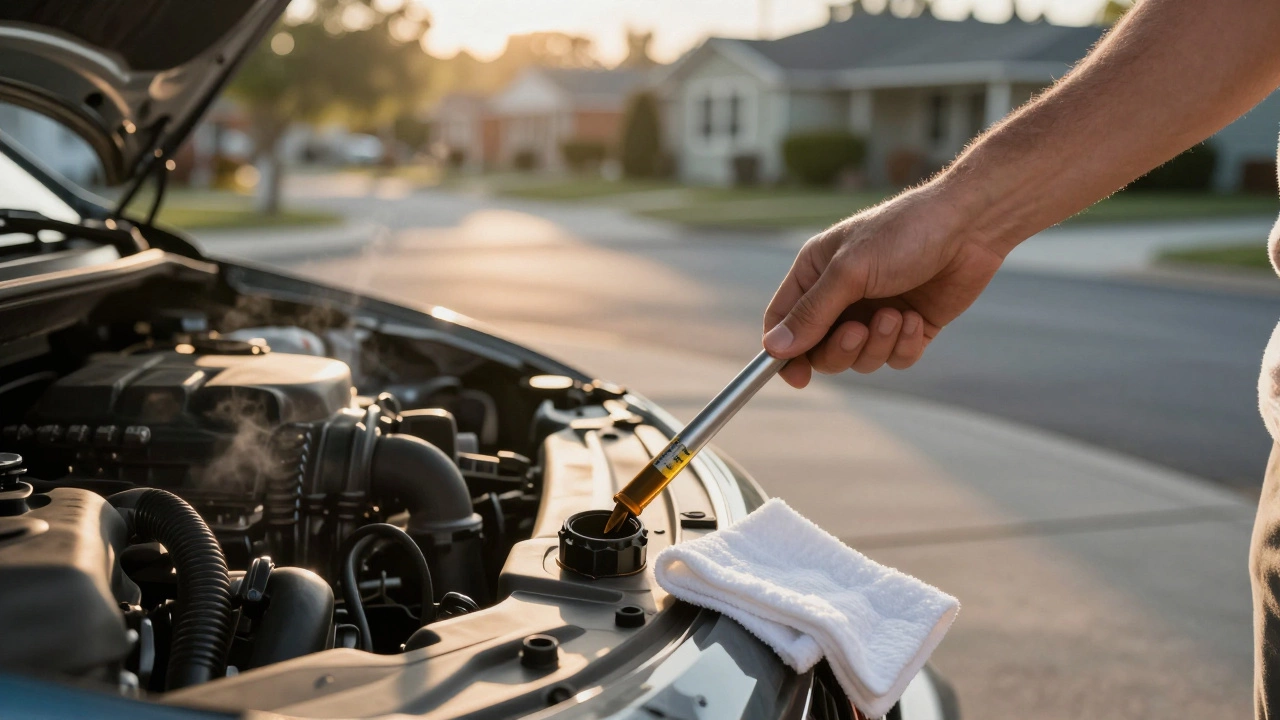
Before you add anything, you need to know where you stand. Here’s how to do it right:- Turn off the engine and wait 5 minutes. Oil needs to settle back into the pan.
- Park on level ground. A slope gives false readings.
- Pull the dipstick, wipe it clean with a rag, then reinsert it fully.
- Pull it out again. Look for the two marks - usually "Min" and "Max". If the oil is between them, you’re fine. If it’s below the minimum, you need to top up.
Don’t guess. Don’t rely on the dashboard warning alone. Those sensors can be slow or faulty. Always use the dipstick. It’s the only real way to know.
Choosing the Right Oil
Not all oils are the same. Using the wrong type can damage your engine. Your car’s manual will tell you exactly what to use. Look for:- Viscosity grade (like 5W-30 or 10W-40)
- API service rating (like SN or SP)
- Manufacturer approvals (like BMW LL-12 or VW 502.00)
Most modern cars use synthetic oil. It lasts longer, flows better in cold weather, and handles heat better than conventional oil. If your car originally had synthetic, never switch to conventional. Mixing them is okay in a pinch, but it’s not ideal.
Check the label on the oil bottle. If it says "for all vehicles" or "universal", that’s a sign it’s a low-grade product. Stick to brands like Mobil 1, Castrol, Shell Helix, or Total. You’re not saving money by buying cheap oil - you’re risking engine damage.
How to Add Oil Safely
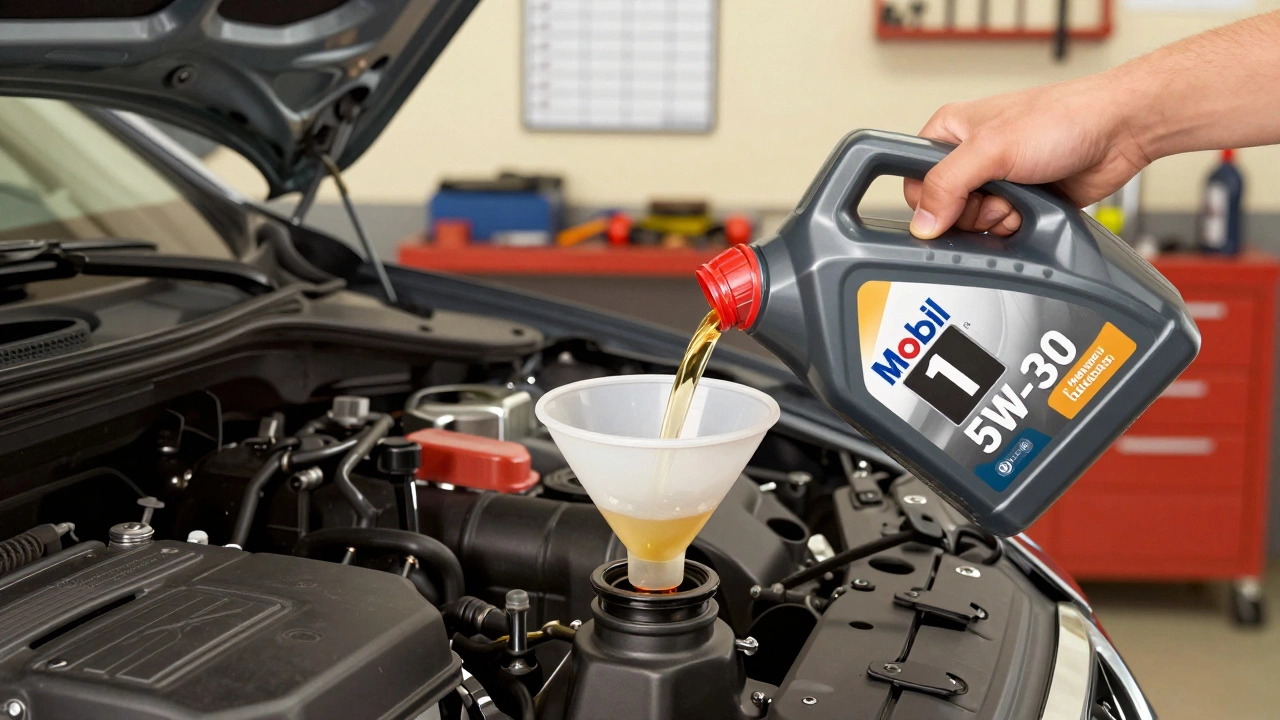
If you’re low, here’s how to top up without making things worse:- Locate the oil filler cap. It’s usually on top of the engine, marked with an oil can symbol.
- Use a funnel. Spills on the engine can smoke, catch fire, or attract dirt.
- Add oil slowly - half a quart at a time.
- Wait 30 seconds after each addition, then recheck the dipstick.
- Stop when you reach the "Max" line. Overfilling is just as bad as being low.
Overfilling causes oil to foam. Foamy oil doesn’t lubricate well. It can also get sucked into the PCV system or even into the combustion chamber, leading to carbon buildup or a misfire. I’ve seen engines fail because someone poured in a full quart thinking "more is better".
What Happens If You Ignore Low Oil
Oil is the lifeblood of your engine. Without enough, metal parts grind against each other. Bearings, pistons, camshafts - they all need a film of oil to glide smoothly. When oil runs low:- Engine temperature spikes
- Friction increases, wearing parts faster
- Oil pressure drops, triggering the warning light
- Eventually, the engine seizes - and that’s a $5,000 repair
There’s no magic number. Some engines last 100 miles with low oil. Others fail in 10. You can’t predict it. That’s why checking regularly isn’t optional - it’s insurance.

When to Change Oil Instead of Just Topping Up
Topping up is a band-aid. It doesn’t fix old, dirty oil. If your oil is dark, gritty, or smells burnt, it’s time for a full change. Fresh oil cleans and protects. Old oil just grinds.Most manufacturers recommend an oil change every 7,500 to 10,000 miles with synthetic oil. But if you drive short trips (under 5 miles), stop and go in the city, or tow trailers, change it every 5,000 miles. Short trips don’t let the oil heat up enough to burn off moisture and contaminants. That’s why oil turns sludge.
Don’t wait for the light. That light comes on when the system is already stressed. Keep a log. Note your last oil change and mileage. Set a phone reminder.
Common Mistakes People Make
Here’s what not to do:- Adding oil while the engine is hot - it gives a false reading and can cause burns.
- Using motor oil for your transmission - different fluids, different purposes.
- Adding too much at once - it’s easy to overfill. Go slow.
- Ignoring leaks - if you’re topping up often, find the leak. It’s usually the valve cover gasket or oil pan seal.
- Using the wrong oil - 10W-40 instead of 5W-30? That’s asking for trouble in winter.
One guy I know in Bristol added diesel engine oil to his petrol car. Said he "thought it was stronger." His engine died 200 miles later. Cost him £3,200 to replace. Don’t be that guy.
Final Advice
Yes, you can add oil if it’s low. But don’t make it a habit. Use it as a temporary fix while you plan a proper oil change or get the leak checked. Keep a spare bottle of the right oil in your trunk. A small funnel and a rag too. It takes 5 minutes and could save you thousands.Check your oil monthly. Not when the light comes on. Not after you hear a knock. Just do it. Like checking your tires or washing your windows. It’s part of owning a car.
And if you’re not sure? Take it to a mechanic. A quick oil check costs £10-£15. A seized engine costs £5,000. The math isn’t hard.
Can I just keep adding oil instead of changing it?
No. Adding oil doesn’t clean out dirt, metal particles, or sludge. Old oil loses its ability to lubricate and cool. Over time, it turns into abrasive paste. That’s why you need a full oil change - not just top-ups. Think of it like replacing your toothpaste every few months instead of just adding more to the tube.
What happens if I overfill the oil?
Overfilling causes the crankshaft to whip the oil into foam. Foamy oil can’t lubricate properly, leading to overheating and bearing failure. It can also leak past seals or get sucked into the intake, causing smoke, misfires, or even catalytic converter damage. Always stop at the "Max" line.
Can I mix synthetic and conventional oil?
Yes, in an emergency. But it’s not ideal. Synthetic oil has better additives and stays stable longer. Mixing them dilutes those benefits. If you’re topping up with conventional oil, plan to do a full synthetic change soon after. Don’t make it a regular habit.
How often should I check my oil level?
Check it every 1,000 miles or once a month - whichever comes first. If you drive in tough conditions (hot weather, stop-and-go traffic, towing), check every 500 miles. Modern cars have sensors, but they’re not perfect. The dipstick is your best tool.
Is it normal for my car to use oil?
A little is normal. Most engines burn a small amount over time - up to a quart every 3,000 miles. But if you’re adding a quart every 1,000 miles or less, something’s wrong. Check for leaks, worn piston rings, or valve seals. Don’t ignore it.
Bottom line: Oil is cheap. Engine repairs aren’t. Keep it topped up. Change it on time. And never assume the car will tell you when it’s too late.