Oil Level Simulator & Top-Off Advisor Interactive
1. Check Current Level
Use the slider to set where the oil film ends on your dipstick. The red dashed line indicates the 'MIN' mark.
2. Visual Dipstick View
Level is in the safe zone.
Recommended Action
Your oil level is perfect. No action required at this time.
You’re driving down the highway when that little orange can icon lights up on your dashboard. Your heart skips a beat. Do you pull over immediately? Or do you just pop the hood, grab a bottle of oil from the trunk, and keep going? It’s a question almost every driver asks at least once. The short answer is yes, you can add oil, but it’s not always the right move. Sometimes, topping off is a temporary fix for a serious problem. Other times, it’s exactly what your engine needs to survive another few thousand miles.
Understanding when to simply add oil versus when to schedule a full service saves you money and prevents expensive engine damage. Let’s break down how this works, what goes wrong when we ignore the warning signs, and how to do it safely without making a mess.
Why Does Your Car Lose Oil?
Your engine doesn’t usually "lose" oil like water leaks out of a bucket. Instead, it consumes or escapes it through specific mechanical processes. Knowing the difference helps you diagnose the issue before you even open the hood.
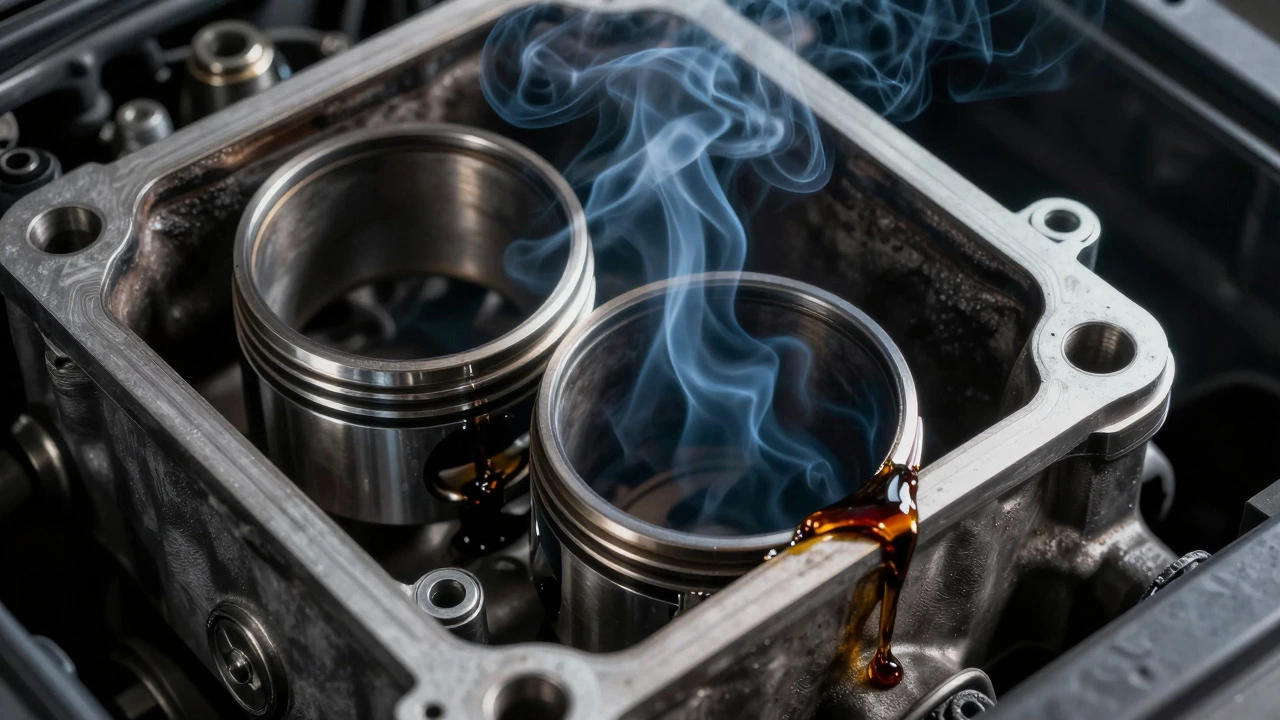
- Burning Oil: This happens when oil seeps past worn piston rings or valve stem seals into the combustion chamber. If you see blueish smoke coming from the exhaust, especially during cold starts, your engine is likely burning oil. This is common in high-mileage vehicles with over 100,000 miles.
- External Leaks: Gaskets, seals, and drain plugs degrade over time due to heat cycles. A slow drip under the car is a classic sign. Check the oil filter housing and the valve cover gasket first, as these are frequent failure points.
- PCV System Failure: The Positive Crankcase Ventilation system recirculates gases back into the engine. If the valve sticks closed, pressure builds up and forces oil out through weak seals. This often looks like a leak but is actually an internal pressure issue.
- Normal Consumption: Believe it or not, all engines consume a small amount of oil. Manufacturers typically allow for about one quart per 1,000 miles. If you're within this range, you don't have a repair problem; you just need to maintain your level.
The Risk of Ignoring the Low Oil Light
Here is where many drivers make a critical mistake. They see the low oil warning light and assume they have weeks to fix it. In reality, the margin between "low" and "catastrophic failure" is thinner than you think.
When oil levels drop below the minimum mark on the dipstick, the oil pump starts sucking air along with the fluid. Air bubbles compress, unlike liquid oil. This means your moving parts-crankshaft bearings, camshafts, and pistons-are no longer fully coated. Metal-on-metal contact begins. Within minutes of running dry, you can score your crankshaft journals. Replacing a scored crankshaft costs thousands more than a simple oil change or even a new oil pump.
If the light comes on, treat it as urgent. Pull over safely if possible. Check the dipstick. If it's empty, do not drive the car. Call a tow truck. If it's slightly low, you can carefully drive to a mechanic, but avoid hard acceleration or long highway speeds.
How to Check Your Oil Level Correctly
Before you add a single drop, you need to know where you stand. Many modern cars have digital sensors, but most still rely on a physical dipstick. Here is the proper procedure to get an accurate reading:
- Park on level ground. Slopes give false readings because the oil pools to one side of the pan.
- Turn off the engine and wait at least five minutes. This allows the oil to drain back into the oil pan from the upper engine components. Checking hot, circulating oil gives a lower reading than it should be.
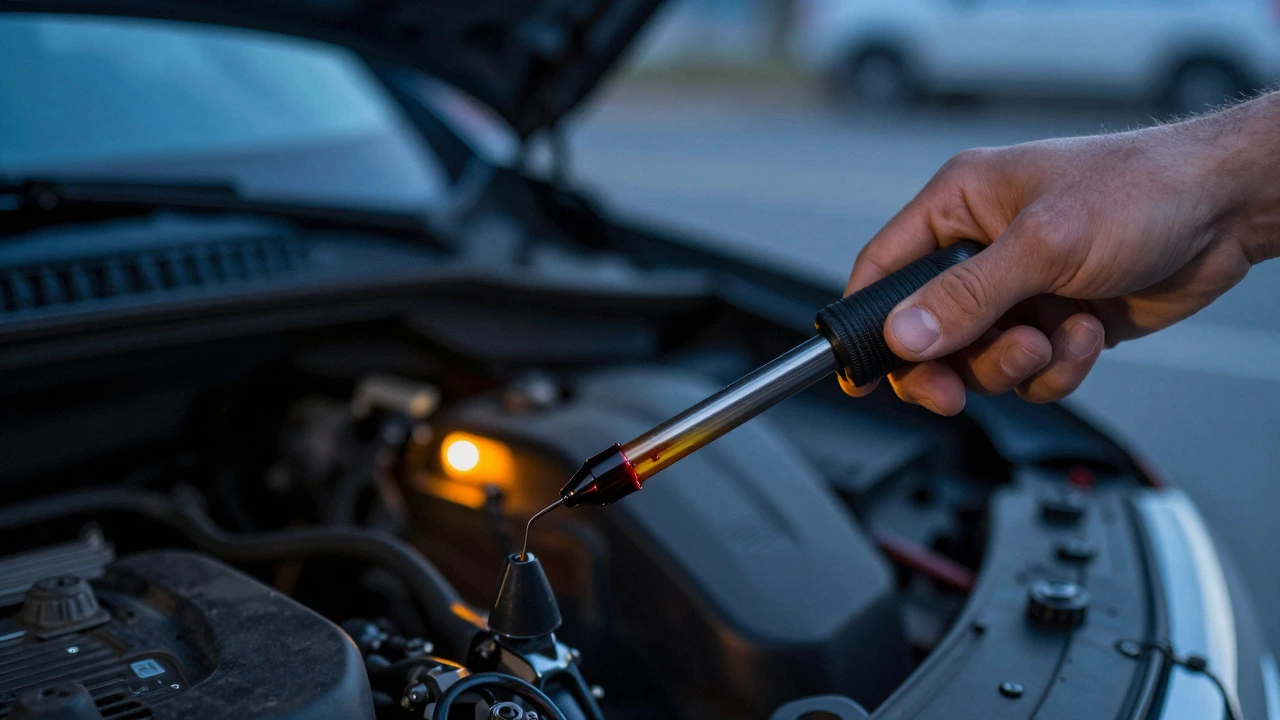
- Pull the dipstick, wipe it clean with a rag or paper towel, reinsert it fully, and pull it out again.
- Look at the tip. You will see two marks: 'MIN' and 'MAX'. Some cars use dots or crosshairs. Aim for the middle. If it's below the bottom mark, you need to add oil. If it's above the top mark, you might have overfilled it, which causes foaming and loss of lubrication.
Choosing the Right Oil for a Top-Off
This is where confusion reigns supreme. You’re standing in the parking lot of an auto parts store, holding four different bottles. Which one do you pick? Mixing oils isn't fatal, but using the wrong viscosity can hurt performance.
Always check your owner’s manual for the recommended specification. However, if you don't have it handy, look at the cap of your current oil filler. It usually lists the approved viscosities (e.g., 5W-30, 0W-20). Stick to that number. Using a thicker oil in a tight-tolerance modern engine can cause poor flow at startup. Using a thinner oil in an older, worn engine might lead to faster consumption.
What about synthetic vs. conventional? You can mix them. Synthetic blends are compatible with conventional oils. If you normally use full synthetic, adding a bit of conventional won't ruin the engine. It just dilutes the protective properties slightly. For a temporary top-off, any correct viscosity will do. But for a full change, stick to your preferred type.
| Viscosity Grade | Best For | Typical Engine Age |
|---|---|---|
| 0W-20 | Fuel economy, newer compact cars | Under 50,000 miles |
| 5W-30 | All-around protection, most SUVs/trucks | Any age |
| 5W-40 | High-performance, European imports | Varies |
| 10W-30 | Older engines, high mileage | Over 100,000 miles |
Step-by-Step: How to Add Oil Safely
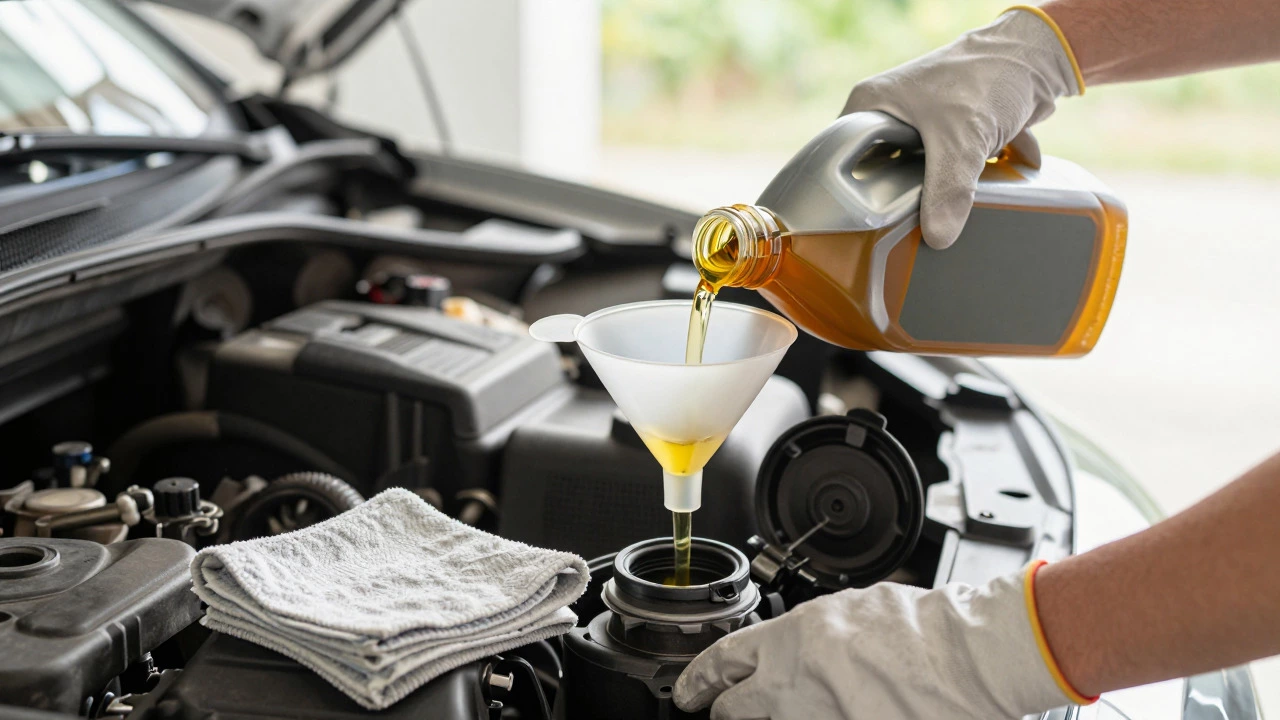
Adding oil is one of the simplest maintenance tasks you can do yourself. You don’t need fancy tools, just a funnel and patience. Here is how to do it without spilling everywhere:
- Gather your supplies: You need the correct oil, a funnel (preferably one with a flexible neck), and rags. Wear gloves if you have sensitive skin.
- Locate the filler: Open the hood. Look for the cap labeled "Oil" or with an oil can symbol. Remove it.
- Insert the funnel: Place the funnel into the opening. Make sure it sits securely so oil doesn't spill onto the battery or hoses.
- Add slowly: Pour in half a quart at a time. Don't dump the whole bottle in unless you are certain you are very low. Overfilling is easier than underfilling.
- Recheck the level: Wait a minute for the oil to settle. Check the dipstick again. Repeat until you reach the middle of the safe zone.
- Clean up: Wipe any spills. Spilled oil on rubber hoses can cause them to swell and crack over time. Close the cap tightly.
When Topping Off Isn't Enough
If you find yourself adding a quart of oil every month, you have a problem. Normal consumption is rare outside of high-performance or very old engines. Frequent top-offs signal a leak or excessive wear.
Don't just keep buying oil. Use the top-off as a diagnostic clue. If the oil smells burnt, you have burning issues. If there is wet oil on the ground, you have a leak. Schedule a compression test or a smoke test to pinpoint the source. Ignoring these signs turns a $50 gasket replacement into a $3,000 engine rebuild.
Also, remember that adding oil does not reset your oil life monitor. The oil you added is fresh, but the old oil in the pan is still degraded. If you topped off 500 miles ago, you still need a full oil change soon. The contaminants remain.
Frequently Asked Questions
Can I add water to my engine oil if I run out?
No. Never add water to engine oil. Water and oil do not mix well. Water can turn into steam inside the hot engine, causing pressure spikes and hydro-locking the pistons. If you run completely dry, stop the engine and call for help. Do not try to dilute the remaining oil with anything other than more oil.
Is it bad to mix different brands of oil?
It is generally safe to mix different brands as long as the viscosity and API specifications match. Modern oils are chemically similar enough that mixing won't cause immediate damage. However, for best results, stick to one brand and type for full oil changes. Mixing is only recommended for emergency top-offs.
How much oil should I add at a time?
Add oil in increments of half a quart (about 473 ml). After each addition, wait a minute and check the dipstick. This prevents overfilling, which can cause oil to enter the intake manifold and burn, leading to fouled spark plugs and smoke.
Does adding oil reset the oil change light?
Usually, no. Most cars track oil life based on mileage, time, and engine operating conditions, not just volume. Adding oil replenishes the quantity but does not remove the sludge and contaminants from the old oil. You still need a full drain and refill to properly maintain your engine.
What if my dipstick is missing?
Some modern vehicles lack a physical dipstick and rely solely on electronic sensors. In this case, use your vehicle's infotainment screen to check the oil level. If you have a dipstick but it fell into the engine bay, retrieve it carefully. If it broke, replace it with a universal dipstick from an auto parts store, ensuring it matches your engine's length requirements.