
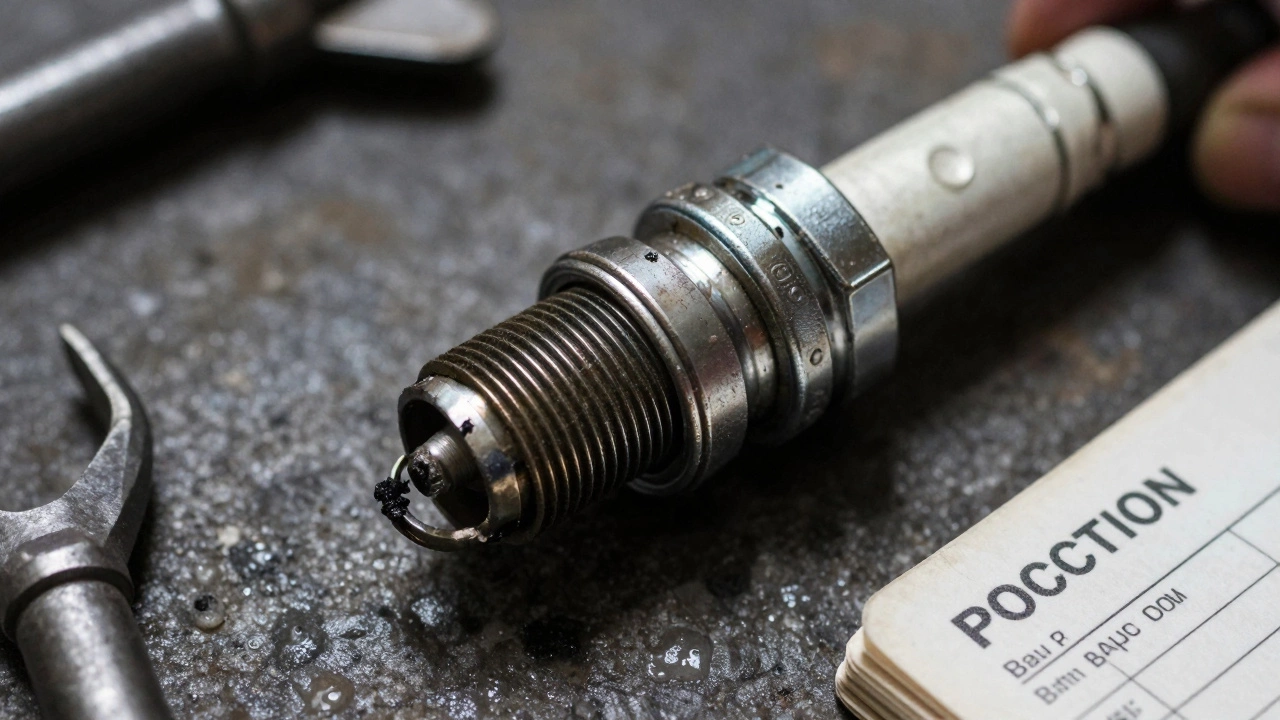
Spark Plug Replacement Calculator
Your spark plugs might need replacement even if you haven't reached the manufacturer's suggested mileage. This calculator determines your ideal replacement interval based on your driving habits and vehicle age.
Your car sputters on cold mornings. It hesitates when you press the gas. You hear a strange knocking sound from the engine. These aren’t just odd noises-they could be your spark plugs screaming for help. Spark plugs might be small, but they do the heavy lifting in your engine. If they fail, your car doesn’t just run poorly-it might not run at all. Knowing when to replace them isn’t just about following a schedule; it’s about listening to what your car is telling you.
What Spark Plugs Actually Do
Every time your engine fires up, spark plugs create a tiny electric arc that ignites the fuel-air mixture in the combustion chamber. That’s it. No fancy mechanics, no complex systems. Just a simple gap between two metal electrodes, jumping a spark at just the right moment. But when that spark weakens or stops, everything else falls apart. Modern engines use iridium or platinum-tipped plugs that can last 60,000 to 100,000 miles. Older copper ones? Maybe 20,000 to 30,000. But mileage isn’t the only factor. Driving habits, fuel quality, and engine conditions all change how fast they wear out.
Signs Your Spark Plugs Are Failing
- Engine Misfires - This is the most obvious red flag. If your engine stutters, coughs, or loses power suddenly-especially under load or when accelerating-it’s often because one or more cylinders aren’t firing. You might feel it as a jerking motion or hear a popping noise from the exhaust.
- Hard Starting - If your car takes longer than usual to start, especially in cold weather, worn spark plugs could be to blame. They’re not producing enough spark to ignite the fuel efficiently.
- Reduced Fuel Economy - A bad spark plug means incomplete combustion. That means fuel is being wasted. If you’ve noticed your tank empties faster than normal and you haven’t changed your driving habits, spark plugs could be the hidden culprit.
- Sluggish Acceleration - When you press the pedal and the car responds slowly, it’s not just the transmission. Weak spark = weak power. Your engine struggles to build torque, and you feel it as a delay between pressing the gas and the car moving.
- Check Engine Light - Modern cars link spark plug issues directly to the engine control unit. Codes like P0300 (random misfire) or P0301-P0308 (cylinder-specific misfires) often point to failing spark plugs. Don’t ignore this light. It’s not always a sensor glitch.
Visual Inspection: The Real Test
Reading the condition of your spark plugs is one of the most telling diagnostics you can do. Remove one and look at the electrode. Here’s what to look for:
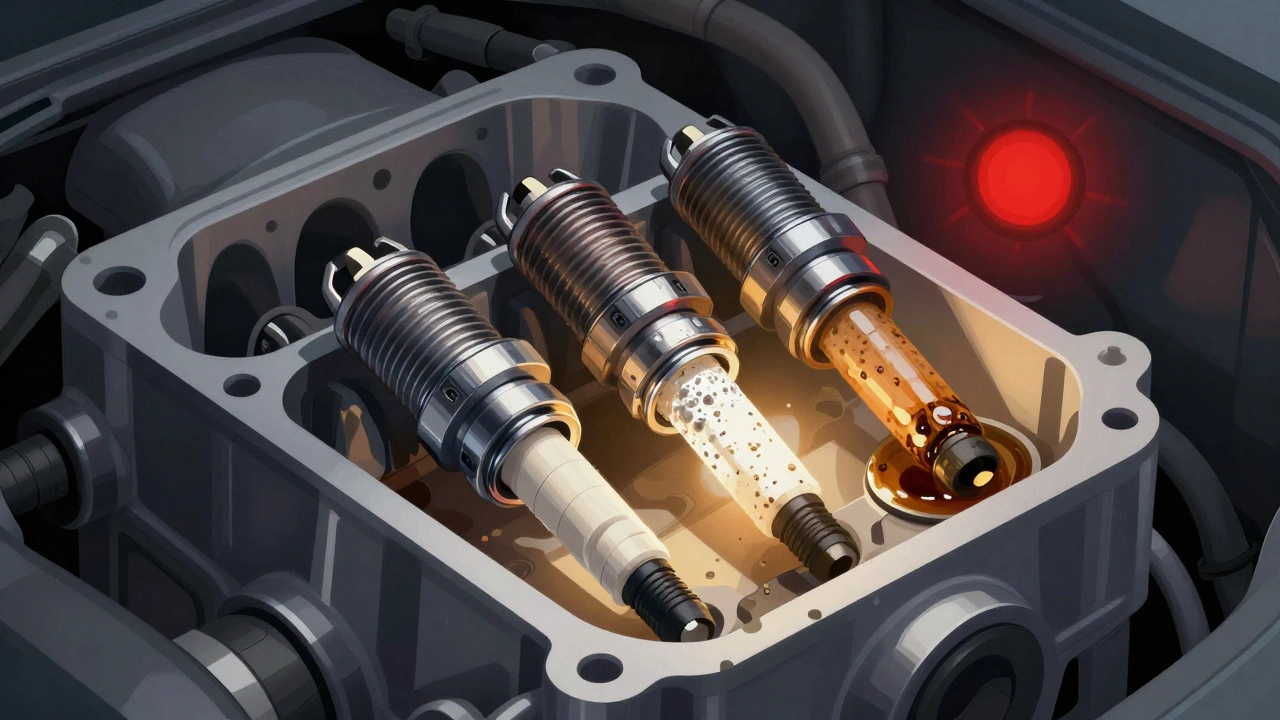
- Normal Wear - Light brown or grayish deposits on the electrode. This means everything’s working as it should.
- Black, Sooty Deposits - Indicates a rich fuel mixture, possible vacuum leak, or long-term underperformance. The plug’s been flooded with unburned fuel.
- White or Blistered Electrode - Overheating. Could mean the plug is the wrong heat range for your engine, or you’re running lean (not enough fuel). This is serious-overheating can damage pistons.
- Oil Coating - If the plug is oily or greasy, you’ve got an internal engine leak. Valve seals or piston rings are failing. Replacing the plug won’t fix this-you need to address the root issue.
- Worn or Eroded Electrode - The gap between the center and ground electrode has widened too much. That’s natural wear. If it’s wider than the manufacturer’s spec (usually printed on the plug box), it’s time to replace them.
When to Replace Based on Time and Mileage
Most manufacturers recommend replacing spark plugs every 60,000 to 100,000 miles. But here’s the catch: that’s a guideline, not a rule. If you drive mostly short trips in city traffic, your plugs wear faster. Why? The engine never reaches full operating temperature, so fuel and moisture build up in the combustion chamber. That leads to carbon buildup and corrosion. If you’re doing 10-mile commutes every day, consider replacing them at 40,000 miles. On the other hand, if you drive long highway stretches regularly, your plugs might last longer than the manual says.
Age matters too. Even if your car hasn’t hit the mileage, spark plugs degrade over time. Rubber insulation can crack. Metal components corrode. If your car is older than 8 years and you’ve never changed the plugs, don’t wait for symptoms. Replace them proactively.
What Happens If You Ignore Them
Ignoring worn spark plugs doesn’t just hurt performance-it can cost you thousands. A misfiring cylinder can send unburned fuel into the catalytic converter. That overheats it and melts the internal honeycomb structure. Replacing a catalytic converter? That’s a £1,000+ repair. Worse, prolonged misfires can damage valves, pistons, or even the cylinder head. In extreme cases, you might end up with a seized engine. That’s not a repair-it’s a total loss.
How to Check Your Own Spark Plugs
You don’t need to be a mechanic to check them. Here’s how:
- Let the engine cool completely. Hot engines can burn you.
- Disconnect the battery for safety.
- Remove the ignition coil or spark plug wire from one plug.
- Use a spark plug socket (usually 5/8 inch) and ratchet to unscrew the plug.
- Inspect the electrode and insulator.
- Compare what you see to the descriptions above.
- Repeat for at least two other plugs.
If you see signs of wear or damage, replace all the plugs at once. Mixing old and new plugs causes uneven performance. Always use the exact type specified in your owner’s manual. Don’t guess.
What to Look for When Buying New Plugs
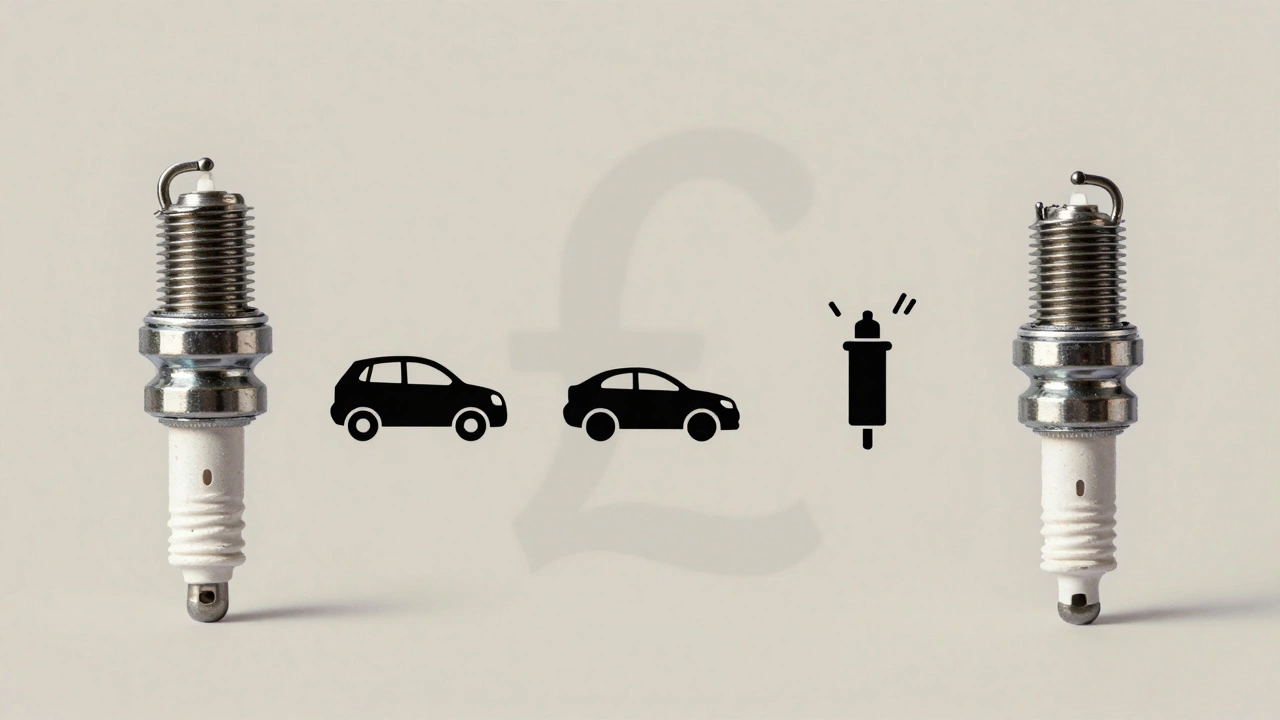
Not all spark plugs are created equal. Here’s what matters:
- Heat Range - Too hot, and the plug overheats. Too cold, and it fouls. Your manual will specify the correct number.
- Electrode Material - Copper is cheap but wears fast. Platinum lasts longer. Iridium is the best-longer life, better performance, and more consistent spark. For most drivers, iridium is worth the extra cost.
- Gap Size - Some plugs come pre-gapped. Others need adjustment. Use a wire gap tool to set it to the manufacturer’s spec. Too wide or too narrow = poor ignition.
Common Myths About Spark Plugs
- Myth: More expensive plugs always mean better performance. - Not true. If your car was designed for copper plugs, putting in iridium won’t make it faster. It just lasts longer.
- Myth: You can clean and reuse old plugs. - Cleaning them might look like a good idea, but it doesn’t restore the electrode wear. The gap won’t be accurate, and the insulator is likely cracked.
- Myth: Spark plugs last forever. - Even the best iridium plugs wear out. They’re not meant to last the lifetime of the car.
Final Advice
If you notice any of the symptoms listed here-misfires, hard starts, poor fuel economy, or a check engine light-it’s time to act. Don’t wait until your car won’t start on a rainy Tuesday morning. Replacing spark plugs is one of the easiest and cheapest fixes you can do to keep your engine running smoothly. Most people can do it in under an hour with basic tools. The cost? Around £30-£80 for a full set. Compare that to a £1,200 catalytic converter replacement. You don’t need to be a mechanic to save money-you just need to pay attention.
How often should spark plugs be replaced?
Most modern spark plugs last between 60,000 and 100,000 miles. Older copper plugs may need replacing every 20,000 to 30,000 miles. But if you drive mostly short trips, city traffic, or use low-quality fuel, replace them sooner-around 40,000 miles. Age also matters: if your car is over 8 years old and you’ve never changed them, replace them even if mileage is low.
Can I drive with a bad spark plug?
You can drive for a short time, but it’s risky. A single misfiring plug can cause unburned fuel to flood the catalytic converter, leading to expensive damage. It can also strain the engine, increase emissions, and reduce fuel efficiency. If you notice symptoms like rough idling, hesitation, or the check engine light, get it fixed as soon as possible.
Do I need to replace all spark plugs at once?
Yes. Even if only one plug looks bad, the others are likely worn too. Mixing old and new plugs causes uneven performance, misfires, and puts extra stress on the ignition system. Replacing all of them ensures consistent spark across all cylinders and smooth engine operation.
What happens if I use the wrong spark plug?
Using the wrong heat range or gap size can cause serious problems. A plug that’s too hot can overheat and melt the electrode or damage the piston. A plug that’s too cold will foul with carbon buildup. Incorrect gap size leads to weak sparks or misfires. Always use the exact type specified in your owner’s manual. Don’t substitute based on price or brand.
Can spark plugs cause the check engine light to come on?
Yes. Faulty spark plugs are one of the most common reasons for the check engine light. Codes like P0300 (random misfire) or P0301-P0308 (cylinder-specific misfires) often point directly to spark plug failure. If the light comes on and you haven’t had your plugs checked recently, they’re a likely cause.