Spark Plug Savings Calculator
Enter your vehicle details to see how much money new spark plugs could save you annually by improving fuel efficiency.
--
There is a persistent myth in the automotive world that swapping out your spark plugs for high-performance ones will instantly turn your daily driver into a track-ready machine. You might see videos online where someone installs iridium plugs and claims their acceleration has doubled. But does changing spark plugs actually improve performance in real-world driving conditions?
The short answer is yes, but with significant caveats. If your current plugs are worn out, new ones will restore lost power and efficiency. If they are already in good condition, upgrading to premium plugs offers negligible gains for most drivers. Understanding the mechanics of combustion and how these small components affect your engine’s behavior helps you decide whether this maintenance task is worth your time and money.
How Spark Plugs Affect Engine Power
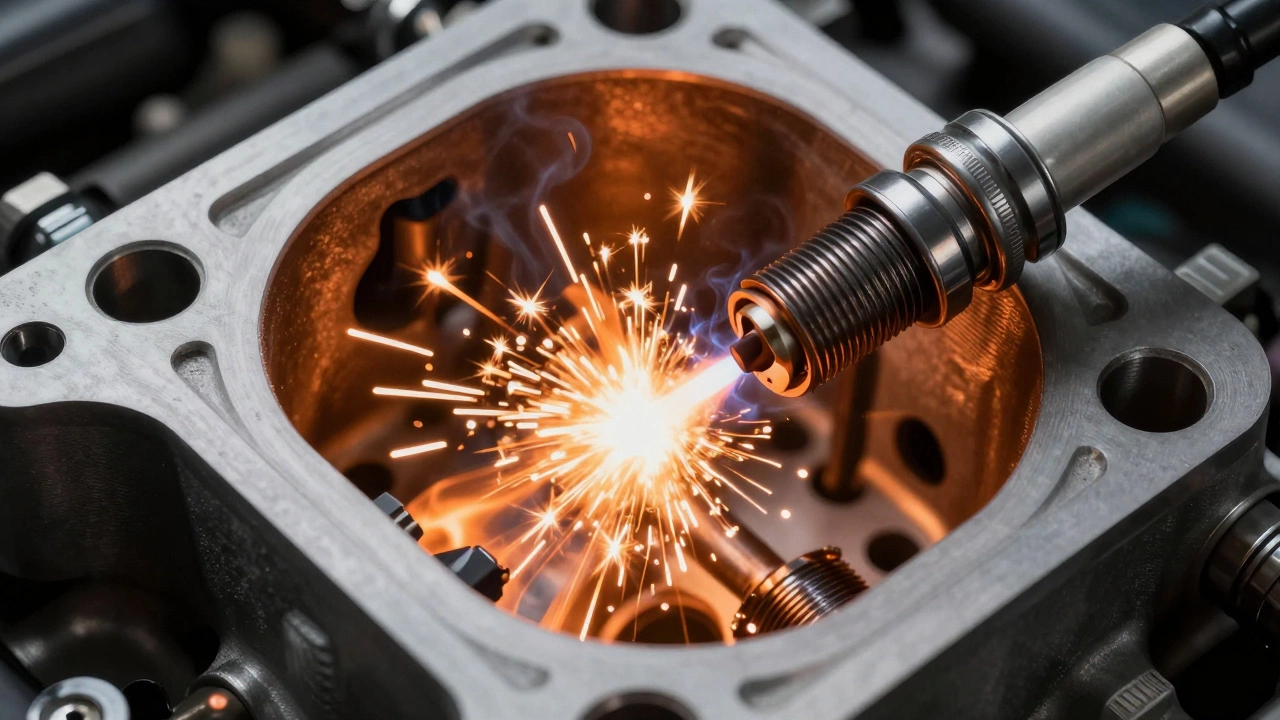
To understand performance, you first need to understand what a spark plug actually does. It is not just a passive component; it is the trigger for the entire combustion process. Inside your engine’s cylinders, air and fuel mix together. This mixture is highly pressurized by the pistons. Without a spark, nothing happens. The plug fires an electrical arc across its gap, igniting the mixture. This explosion pushes the piston down, turning the crankshaft and ultimately moving your wheels.
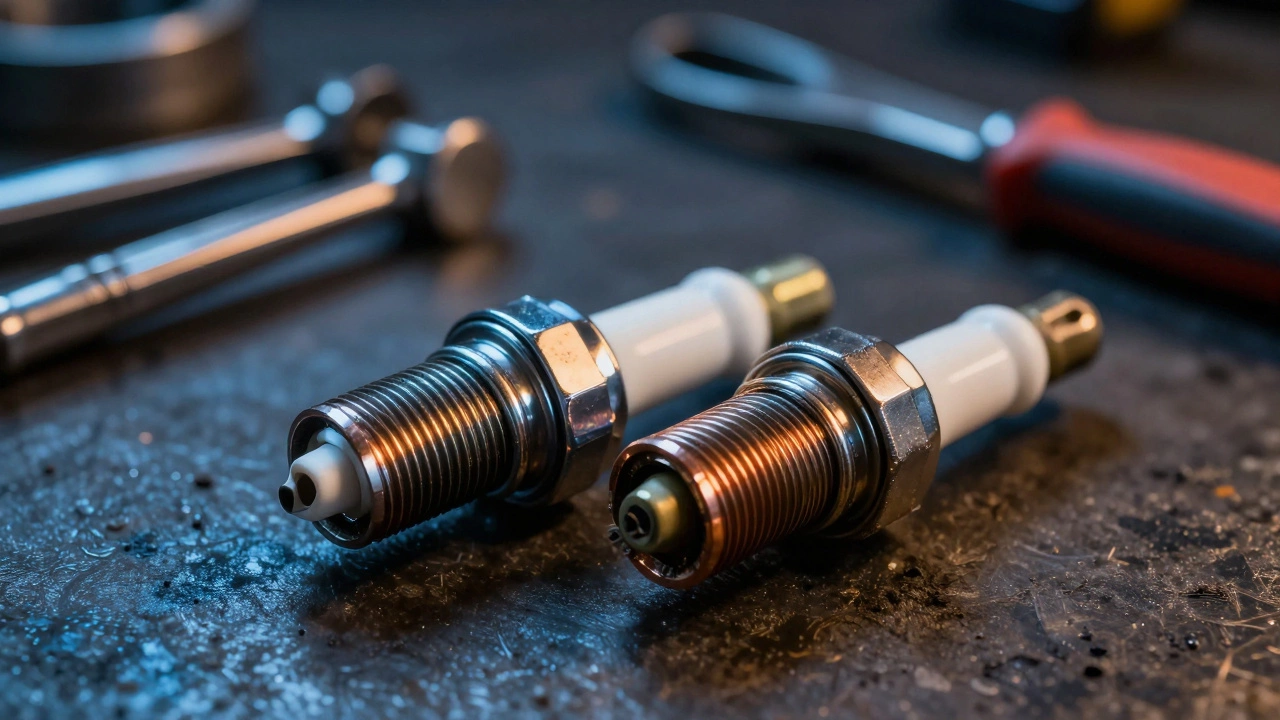
When a spark plug is old or fouled, the spark becomes weak or inconsistent. Imagine trying to light a damp firewood log with a match versus a dry one. The damp log takes longer to catch, burns unevenly, and produces less heat. Similarly, a weak spark leads to incomplete combustion. Not all the fuel burns efficiently. Some of it exits through the exhaust unburned, wasting energy. This results in a noticeable loss of horsepower and torque. By replacing worn plugs, you ensure a strong, consistent spark every single cycle. This restores the engine to its factory-designed output level.
For high-performance engines, the quality of the spark matters even more. These engines run at higher RPMs and compressions. They require a spark that can bridge larger gaps under extreme pressure. Standard copper plugs may fail to deliver a reliable spark under these conditions, leading to misfires. Upgrading to materials like platinum or iridium can maintain that critical spark integrity, preventing power loss during hard acceleration.
Fuel Efficiency: The Hidden Performance Gain
Performance isn't just about speed; it is also about efficiency. One of the most tangible benefits of changing spark plugs is improved fuel economy. When combustion is complete, your engine gets more energy from every drop of gasoline. Your car doesn’t have to work as hard to maintain speed, which means the computer injects less fuel.
Studies from the U.S. Department of Energy suggest that vehicles with faulty ignition systems can see fuel economy drops of up to 30%. While that is an extreme case, a modest improvement of 1% to 5% is common when switching from heavily worn plugs to new ones. Over a year of driving, this adds up. You spend less at the pump, and your engine runs smoother. For many drivers, this financial saving outweighs the desire for extra horsepower.
Better combustion also reduces emissions. Unburned hydrocarbons are a major pollutant. By ensuring the fuel burns completely, you help keep your tailpipe cleaner. This is particularly important if you live in areas with strict emission tests. A failing spark plug can cause your car to fail an MOT or smog check, regardless of how fast it goes.
Signs Your Spark Plugs Are Hurting Performance
You don’t need to guess if your plugs are affecting your drive. Your car will tell you. Pay attention to these specific symptoms:
- Rough Idling: If the engine shakes or feels uneven when stopped at a red light, one or more cylinders may be misfiring due to bad plugs.
- Hesitation on Acceleration: Pressing the gas pedal should result in immediate response. If there is a lag or jerkiness, the ignition timing is likely off.
- Poor Fuel Economy: If you find yourself filling up the tank more frequently without changing your driving habits, check the plugs.
- Difficulty Starting: Cold starts become harder when the spark is weak. The engine cranks longer before catching.
- Check Engine Light: Codes like P0300 (random misfire) or P0301-P0308 (cylinder-specific misfire) often point directly to ignition issues.
If you experience any of these, replacing the plugs is not an upgrade; it is a repair. Restoring them to working order will immediately improve the driving experience.
Copper vs. Iridium: Does Material Matter?
Not all spark plugs are created equal. The electrode material determines longevity and spark quality. Here is how the common types compare:
| Material | Lifespan | Performance Benefit | Cost |
|---|---|---|---|
| Copper | 20,000 - 30,000 miles | Excellent conductivity, best for older/simple engines | Low |
| Platinum | 60,000 miles | More durable, stable gap | Medium |
| Iridium | 100,000+ miles | Finer electrode, stronger spark, better for modern direct injection | High |
If you have a modern vehicle with direct injection or turbocharging, the manufacturer likely specifies iridium or platinum plugs. These engines operate at higher temperatures and pressures. Copper plugs would erode too quickly, causing the gap to widen and performance to drop. In this context, using the correct premium plug maintains performance over a longer period. However, switching from factory-specified iridium to aftermarket "racing" iridium plugs rarely yields measurable gains on the street. The engine management system is calibrated for the stock specifications.

When Upgrades Actually Help
There are specific scenarios where changing spark plugs provides a clear performance boost beyond restoration:
- Engine Modifications: If you have added a cold air intake, tuned the ECU, or installed a supercharger, your engine runs hotter and faster. Stock plugs may not handle the increased stress. High-heat range plugs prevent pre-ignition (knocking), allowing the engine to safely produce more power.
- Track Use: Racing engines demand maximum reliability. Multi-electrode or specialized racing plugs provide consistent firing under extreme G-forces and RPMs. For weekend track days, this consistency translates to better lap times.
- Older Vehicles with Modified Engines: Classic cars with rebuilt heads or larger valves may benefit from custom-gapped plugs that optimize the flame front propagation.
For the average commuter driving a stock Toyota Camry or Ford Focus, the difference between OEM and aftermarket performance plugs is minimal. You might save a few tenths of a second in a quarter-mile race, but you won’t feel it in traffic. The biggest gain comes from simply having clean, correctly gapped plugs.
Maintenance Tips for Optimal Performance
Changing spark plugs is straightforward, but doing it right matters. Here are some practical tips:
- Check the Gap: Even new plugs can arrive with incorrect gaps. Use a feeler gauge to verify the distance matches your owner’s manual. An incorrect gap causes weak sparks or coil damage.
- Use Anti-Seize Carefully: Apply a tiny amount of anti-seize compound to the threads only if recommended. Too much can insulate the plug, causing overheating.
- Torque Correctly: Overtightening can crack the ceramic insulator. Undertightening can lead to compression leaks. Use a torque wrench set to the manufacturer’s specification (usually 10-20 ft-lbs).
- Replace in Sets: Never replace just one plug. All plugs wear at similar rates. Mixing old and new plugs creates uneven combustion, hurting performance and fuel economy.
Regular maintenance prevents the gradual decline in performance. Don’t wait for the check engine light to come on. Follow the interval in your manual, typically every 30,000 to 100,000 miles depending on the plug type.
Will new spark plugs make my car faster?
Only if your old plugs were worn out. New plugs restore lost power and smoothness. If your plugs are already good, new ones will not significantly increase top speed or acceleration.
How often should I change spark plugs?
It depends on the material. Copper plugs last 20,000-30,000 miles. Platinum lasts around 60,000 miles. Iridium plugs can last 100,000 miles or more. Check your owner’s manual for the specific recommendation for your vehicle.
Can bad spark plugs damage my engine?
Yes. Unburned fuel can wash away oil from cylinder walls, increasing wear. Misfires can also overload the catalytic converter, potentially destroying it. Replacing plugs promptly protects expensive engine components.
Is it worth buying expensive iridium spark plugs?
If your manufacturer recommends them, yes. They last longer and maintain performance better than copper. For standard engines, the cost per mile is often lower because you replace them less frequently.
What is the best brand of spark plugs?
Stick with the Original Equipment Manufacturer (OEM) brand specified in your manual. Brands like NGK, Denso, and Bosch supply most factories. Aftermarket "performance" brands are rarely necessary unless you have modified your engine.