Exhaust Size Calculator
Vehicle Information
Results
Enter your vehicle information to see recommendations
Ever seen a car with a big, rumbling exhaust and wondered if that 3 inch pipe is just for show-or if it actually makes the car faster? It’s a common question among car owners looking to tweak their ride. The short answer: yes, a 3 inch exhaust can make a difference, but not always in the way you think. It’s not magic. It’s physics. And whether it helps your car depends on what you’re driving, what else you’ve changed, and what you actually want from it.
What does exhaust size really affect?
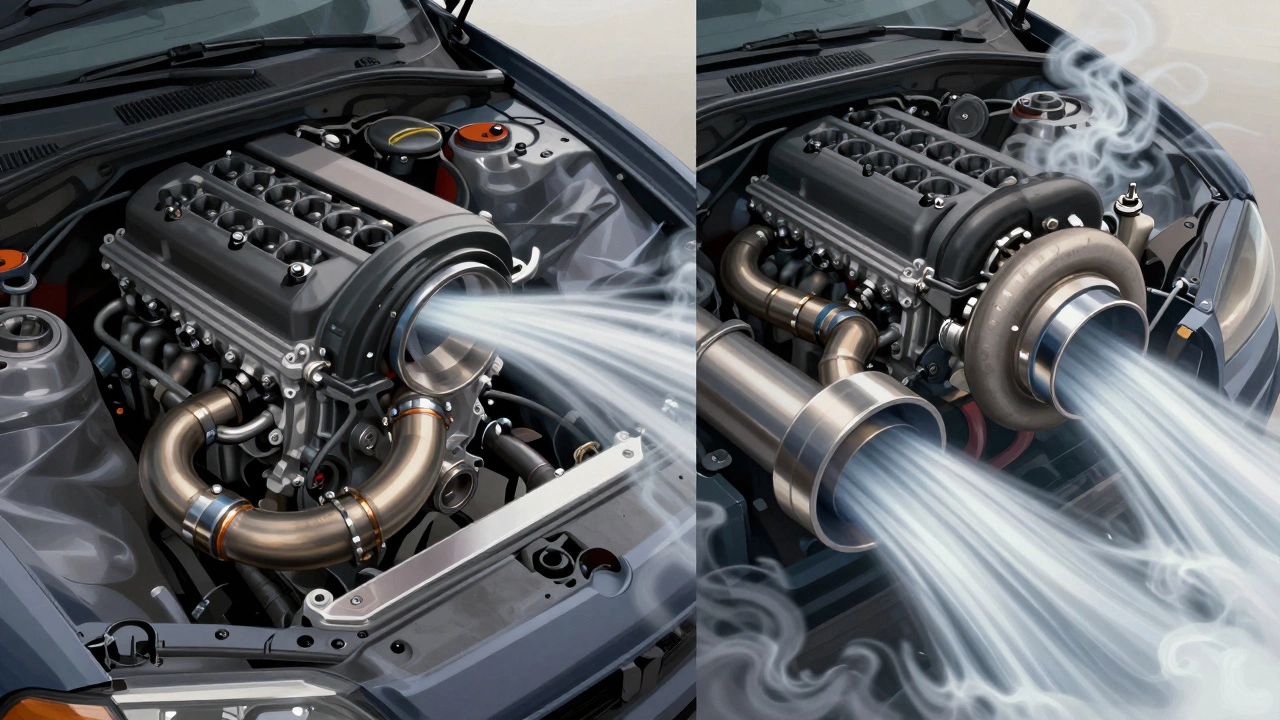
Exhaust systems don’t just get rid of fumes. They manage pressure. When your engine burns fuel, it creates hot gases that need to escape quickly. If those gases can’t flow out easily, they build up pressure behind the pistons. That’s called backpressure. Too much of it, and your engine has to work harder to push exhaust out-wasting power.
A 3 inch exhaust reduces that restriction. It gives exhaust gases more room to move. That’s why it’s common on modified cars with bigger engines, turbochargers, or high-RPM setups. But here’s the catch: a 3 inch pipe only helps if your engine is producing enough exhaust to fill it. A stock 2.0L four-cylinder? It doesn’t make enough gas to use that much pipe. In fact, going too big can hurt performance at low RPMs because the gases lose speed and pressure too early.
When does a 3 inch exhaust help?
Think of exhaust flow like water through a hose. A small hose works fine for a garden sprinkler. But if you hook it up to a fire engine, you need a bigger pipe. Same idea.
Most street cars with factory engines make peak exhaust flow around 5,000 to 6,000 RPM. A 2.5 inch exhaust is often enough here. But if you’ve added a turbo, a performance cam, or a bigger intake, your engine is breathing harder. Now you’re pushing 600+ cubic feet of exhaust per minute. That’s where a 3 inch system starts to pay off.
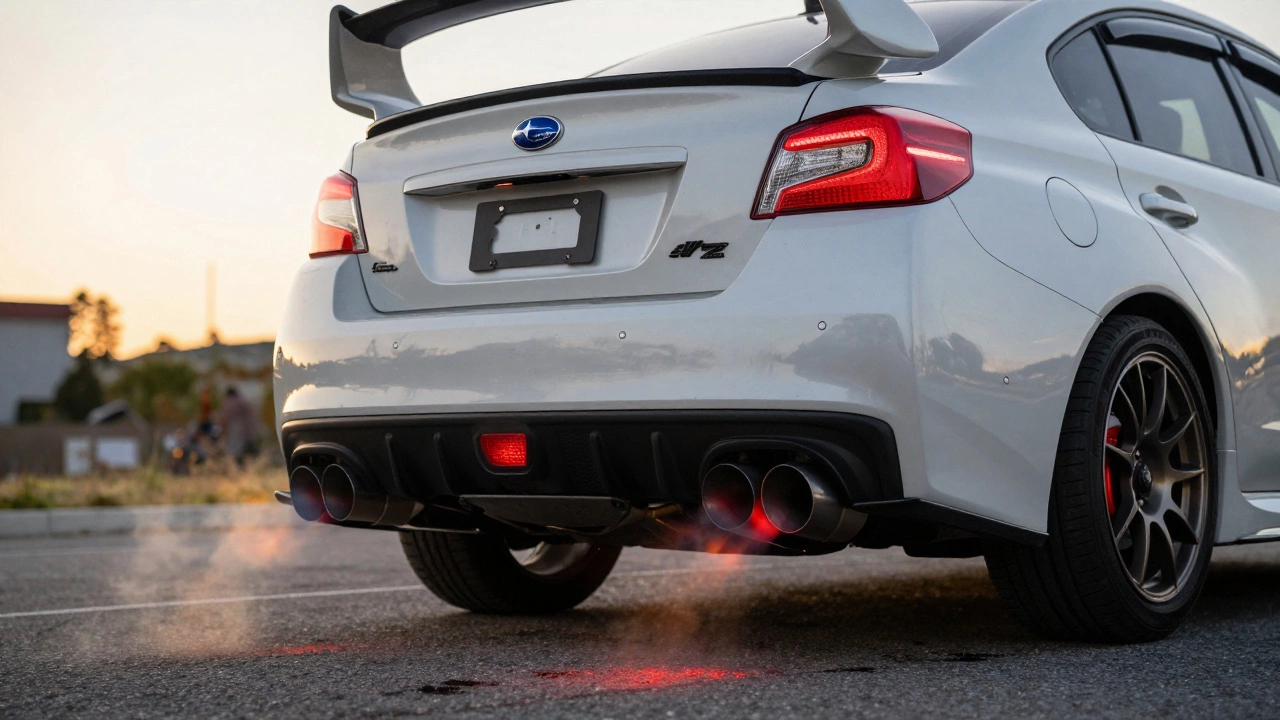
Real-world examples: A tuned Subaru WRX with a 2.5L turbo makes about 300 horsepower stock. Swap to a 3 inch cat-back exhaust and you might gain 8 to 12 horsepower at the wheels-mostly above 4,500 RPM. On a 5.0L V8 Mustang with a supercharger? You could see 15 to 20 horsepower gains. The bigger the engine, the more benefit you get.
Sound: It’s not just about power
Let’s be honest-most people upgrade to a 3 inch exhaust for the sound. And yeah, it makes a difference there too. Larger pipes reduce backpressure, which means exhaust pulses aren’t crushed as much. That creates a deeper, richer tone. No more tinny, high-pitched noise. You get that low, throaty growl people associate with muscle cars.
But don’t blame the pipe size alone. The muffler design matters just as much. A straight-through performance muffler with a 3 inch pipe will sound aggressive. A chambered muffler with the same size pipe will be quieter but still deeper. You can have a 3 inch system that’s barely louder than stock-or one that’s so loud your neighbors call the police.
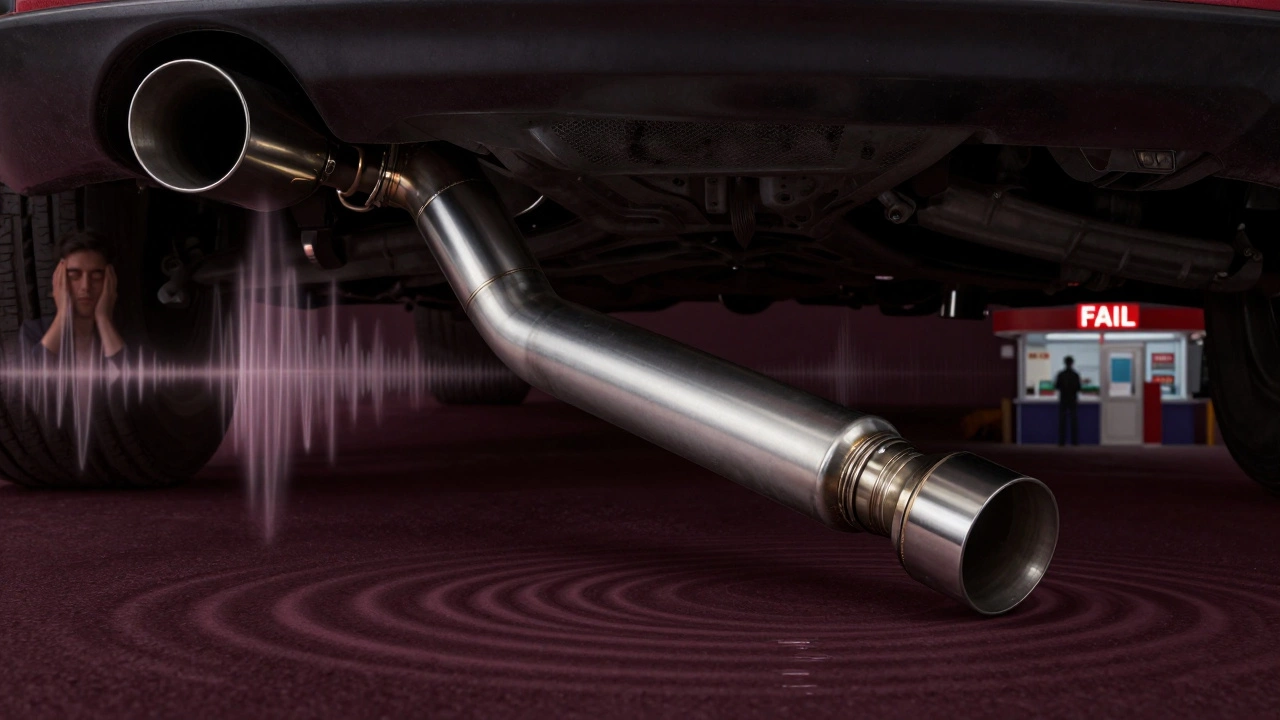
Check local noise laws. In the UK, modified exhausts must meet ECE R41 standards. If your system is too loud, you could fail your MOT or get fined. A 3 inch system doesn’t automatically mean illegal-but pair it with the wrong muffler, and you’re asking for trouble.
What about fuel economy?
Some think a bigger exhaust saves fuel. It can-but only under specific conditions. If your engine was struggling to breathe before, reducing backpressure helps it run more efficiently. You might see a 1-2% improvement in highway fuel economy if you’re cruising at steady speeds.
But here’s the trade-off: if you’re driving more aggressively because the car sounds better, you’ll burn more fuel. That deep rumble is tempting to rev. And if you’re not driving on highways, the gains vanish. Most people don’t notice a real difference in mpg unless they’re very careful with their foot.
What if you just swap the tailpipe?
Don’t be fooled by shops selling “3 inch exhaust tips.” That’s just a cosmetic change. The tip is the last 6 inches of the system. It doesn’t affect flow. If your stock exhaust is 2.25 inches from the catalytic converter back, swapping the tip won’t help performance or sound. You need a full cat-back system with 3 inch piping from the catalytic converter to the tailpipe.
Even then, some systems only have 3 inch piping in the last section. That’s still not enough. The entire path after the catalytic converter needs to be 3 inch to reduce restriction. Anything less, and you’re just paying for looks.
What’s the downside?
Bigger isn’t always better. A 3 inch exhaust on a small engine can hurt low-end torque. You might feel sluggish off the line, especially in traffic. That’s because the exhaust gases move too slowly through the big pipe. They don’t create enough scavenging effect to pull fresh air into the cylinders.
Also, bigger pipes mean more heat. Your undercarriage will run hotter. That can affect fuel lines, wiring, or even brake hoses if they’re too close. Make sure your new system has proper heat shielding. And if you’re lowering your car, check clearance. A 3 inch system can hang lower than stock, especially if it’s not custom-fitted.
Cost is another factor. A quality 3 inch cat-back system from a brand like Akrapovič, Borla, or Milltek costs £800 to £1,500. If you’re not getting other mods, that’s a big investment for marginal gains on a stock engine.
Should you install one?
Ask yourself three questions:
- Is your engine modified? (Turbo, supercharger, cam, intake, ECU tune?)
- Do you drive at higher RPMs often? (Track days, highway cruising, spirited driving?)
- Are you okay with louder noise and higher cost?
If you answered yes to all three, then yes-a 3 inch exhaust will make a real difference. You’ll feel more power above 4,000 RPM, hear a better sound, and get a small efficiency boost if you drive calmly.
If you drive a stock Honda Civic or Toyota Corolla mostly in the city? Skip it. You’ll waste money and lose low-end responsiveness. A 2.5 inch system is plenty. Even better: just clean your existing exhaust and replace worn hangers. That’ll cost £50 and make your car run smoother.
Bottom line: A 3 inch exhaust isn’t a universal upgrade. It’s a tool for specific jobs. Use it when your engine needs it. Don’t install it because it looks cool in a YouTube video.
What size is right for your car?
Here’s a simple guide based on engine size and mods:
| Engine Type | Stock Power Output | Recommended Exhaust Size | Notes |
|---|---|---|---|
| 1.0L - 1.5L (4-cyl) | 80 - 120 hp | 2.0 - 2.25 inch | Stick with stock size. Bigger hurts low-end. |
| 1.8L - 2.5L (4-cyl, naturally aspirated) | 130 - 200 hp | 2.25 - 2.5 inch | 2.5 inch is ideal for mild mods. |
| 2.0L - 3.0L (turbocharged) | 200 - 350 hp | 2.5 - 3 inch | 3 inch recommended if tuned or heavily modified. |
| 4.0L+ (V6/V8) | 300+ hp | 3 inch | 3 inch is standard for performance builds. |
Remember: This is a starting point. Always match your exhaust size to your engine’s airflow needs-not your ego.
What else should you pair it with?
A 3 inch exhaust won’t work well alone. To get the full benefit, you need to support it:
- Performance ECU tune: Without tuning, your car’s computer might not adapt to the new flow. You’ll lose torque and fuel economy.
- High-flow catalytic converter: Stock cats can still restrict flow. Upgrade if you’re going 3 inch.
- Intake system: More air in = more exhaust out. A cold air intake helps balance the system.
- Downpipe (for turbos): If you have a turbo, the downpipe is the biggest restriction. Upgrade that first.
Doing just the exhaust without these? You’re leaving power on the table-and possibly stressing your engine.
Final verdict: Is it worth it?
A 3 inch exhaust makes a difference-but only if your car is ready for it. On a tuned turbo car, it’s one of the best upgrades you can make. On a stock family sedan? It’s a waste of money.
Don’t buy it because it sounds cool in a video. Buy it because your engine needs it. Measure your power output. Know your driving habits. Understand the trade-offs. Then decide.
If you’re serious about performance, start with a dyno test. Run your car before and after. You’ll see if the 3 inch pipe actually moved the needle-or if you just spent £1,000 for a louder noise.