
Fuel Pump Diagnostic Tool
Fuel Pump Symptom Assessment
Diagnosis Results
Next Steps
Learn More
The check engine light can indicate a bad fuel pump, especially when accompanied by specific symptoms. A failing pump often causes low fuel pressure, leading to codes like P0087 (low fuel rail pressure) or P0171 (lean air-fuel mixture).
If your check engine light suddenly pops on, your first thought might be a sensor glitch, a loose gas cap, or a spark plug issue. But what if it’s something deeper-like a failing fuel pump? The short answer: yes, a bad fuel pump can absolutely trigger the check engine light. It’s not the most common cause, but it’s one that’s often missed until it’s too late.
How a Fuel Pump Works
Your fuel pump sits inside the gas tank and pushes gasoline from the tank to the engine at the right pressure. Modern cars use electric fuel pumps that run continuously while the engine is on. They don’t just move fuel-they maintain precise pressure, usually between 30 and 60 psi, depending on the make and model. The engine control unit (ECU) monitors this pressure through sensors. If the pressure drops too low or fluctuates, the ECU knows something’s wrong.
It’s not just about flow. The fuel system needs consistent pressure for the injectors to spray fuel in the exact right amount. Too little pressure? The engine runs lean. Too much? It runs rich. Both trigger error codes.
Why a Bad Fuel Pump Triggers the Check Engine Light
A failing fuel pump doesn’t always sputter or die suddenly. More often, it weakens slowly. Here’s how that leads to a check engine light:
- Low fuel pressure: The fuel pressure sensor detects pressure below the minimum threshold. This triggers code P0191 or P0087.
- Lean air-fuel mixture: Not enough fuel reaches the combustion chamber. The oxygen sensors pick up excess oxygen, setting code P0171 or P0174.
- Engine misfires: Without enough fuel, cylinders misfire. That triggers code P0300 or cylinder-specific misfire codes like P0303.
- Intermittent loss of power: The pump struggles under load-like when accelerating or climbing hills. The ECU sees inconsistent fuel delivery and flags it.
These aren’t random errors. They’re direct consequences of fuel delivery failure. The check engine light is the ECU’s way of saying, “I can’t keep the engine running properly because I’m not getting the fuel I need.”
Other Symptoms of a Failing Fuel Pump
The check engine light is just one clue. Here are the other signs you’re dealing with a bad fuel pump:
- Engine sputters at high speeds: Especially on the highway, the pump can’t keep up with demand.
- Difficulty starting: The car cranks but won’t start because fuel isn’t reaching the engine.
- Loss of power under load: Accelerating uphill or towing feels sluggish, even if the engine sounds fine.
- Whining noise from the fuel tank: A loud, high-pitched whine when you turn the key to “on” (before starting) is a classic sign.
- Stalling at high temperatures: Heat makes weak pumps fail faster. If your car stalls after a long drive and starts again after cooling off, it’s a red flag.
These symptoms often get mistaken for ignition or sensor problems. But if you’ve checked spark plugs, air filters, and oxygen sensors-and everything’s fine-the fuel pump is the next logical suspect.
How Mechanics Diagnose Fuel Pump Problems
Most people assume the check engine light points to the sensor that triggered it. But the ECU doesn’t know the cause-it just knows something’s out of range. A good mechanic doesn’t just read the code. They test the system.
Here’s how they do it:
- Scan for codes: They pull all stored codes-not just the current one. Multiple fuel-related codes (P0087, P0171, P0300) together point to fuel delivery.
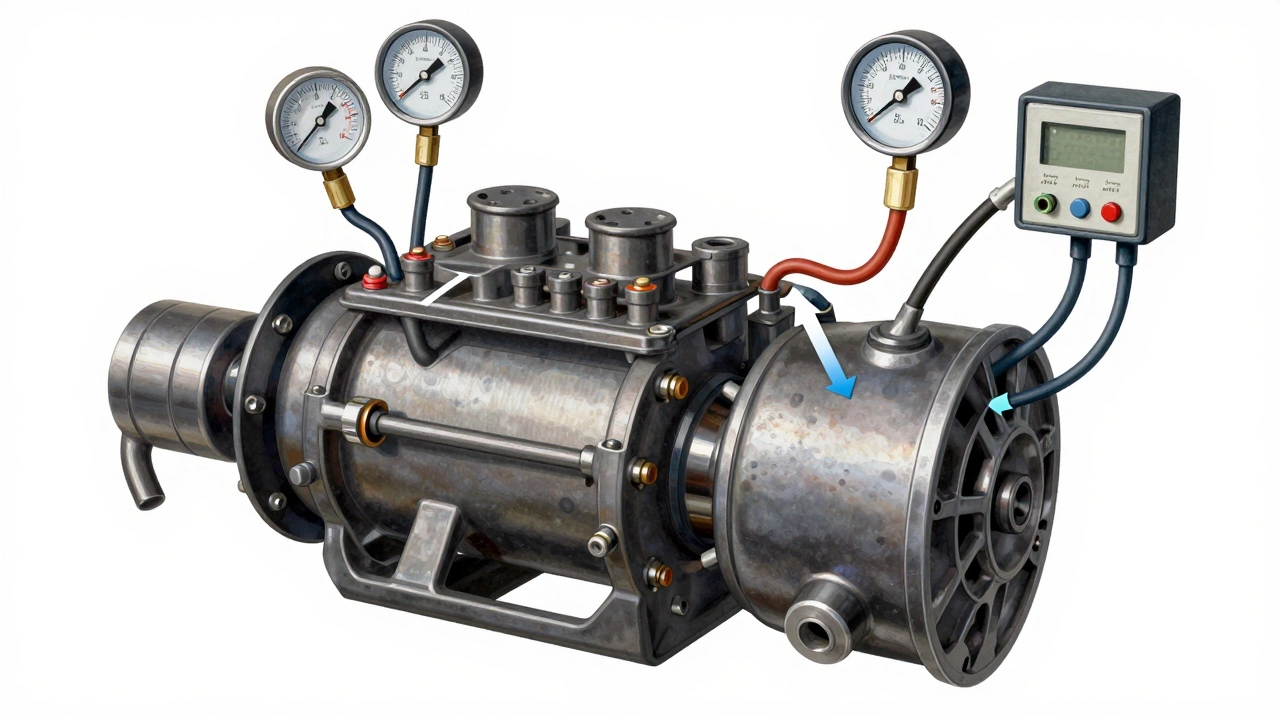
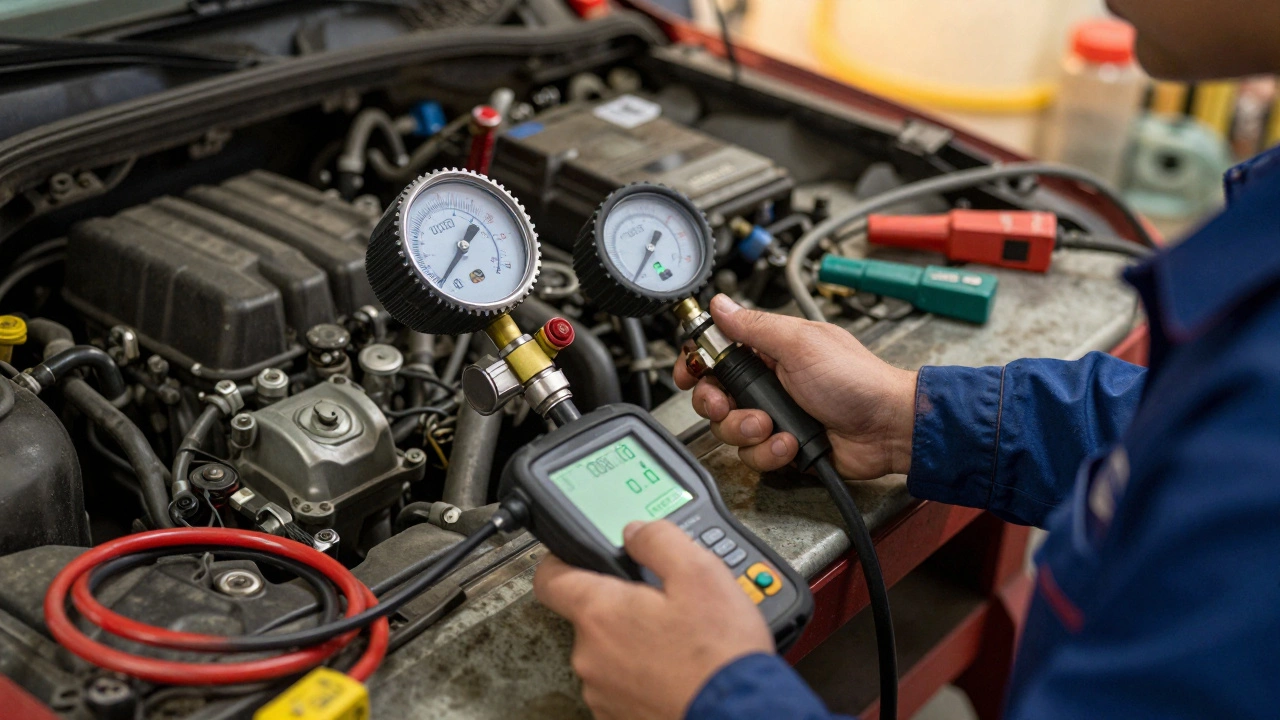
- Check fuel pressure: They connect a fuel pressure gauge to the fuel rail. If the pressure is below spec or drops when revving the engine, the pump is failing.
- Test fuel volume: They measure how much fuel the pump delivers in 30 seconds. A healthy pump delivers at least 750 ml. Anything under 500 ml means replacement is needed.
- Listen for the pump: With the key turned to “on,” they listen near the fuel tank. No sound? The pump isn’t turning on. Faint or noisy? It’s on its way out.
- Rule out other causes: They check the fuel filter, fuel pressure regulator, and wiring. A clogged filter or bad relay can mimic pump failure.
Skipping these steps leads to misdiagnosis. Replacing a fuel pump when the real issue is a dirty filter wastes money-and leaves you with the same problem.
What Happens If You Ignore It
Driving with a bad fuel pump is like running a marathon with a leaking water bottle. You might make it to the next mile-but not the next one.
At first, you get poor fuel economy and rough idling. Then, the engine starts stalling at stoplights. After that, you can’t accelerate past 40 mph. Eventually, the car won’t start at all. And if the pump fails completely while you’re on the highway, you’re stranded.
Worse, running lean for too long can damage the catalytic converter. That’s a $1,500 repair on top of the $400 fuel pump replacement. The longer you wait, the more expensive it gets.
Can a Fuel Pump Fail Without Warning?
Yes-but not often. Most fuel pumps give signs before they die. They’re electric motors with brushes and a commutator. Like any motor, they wear out gradually. The whine gets louder. The car hesitates more. The check engine light comes on more frequently.
That said, sudden failure can happen, especially in older cars with high mileage or those that’ve run on low fuel for years. Sediment and debris in the tank grind down the pump’s internal parts. Running the tank near empty lets the pump overheat because fuel also cools it.
That’s why topping off your tank before it hits 1/4 full isn’t just good practice-it’s preventative maintenance.
How to Prevent Fuel Pump Failure
You can’t stop wear, but you can slow it down:
- Never run the tank below 1/4 full: Fuel cools the pump. Running low exposes it to heat and debris.
- Use quality fuel: Cheap gas often has more contaminants. Stick to top-tier brands.
- Replace the fuel filter every 30,000-40,000 miles: A clogged filter forces the pump to work harder.
- Avoid frequent short trips: Short drives don’t let the engine warm up fully, letting moisture build up in the tank.
- Keep the tank clean: If your car is over 10 years old and has never had the tank cleaned, consider a professional fuel system flush.
These steps won’t make your fuel pump last forever-but they can easily add 50,000 miles to its life.
When to Replace the Fuel Pump
If your car has over 100,000 miles and you’re seeing multiple symptoms-check engine light, sputtering, hard starts-it’s time to replace the pump. Don’t wait for it to die on the side of the road.
Most OEM fuel pumps last 100,000-150,000 miles. After that, failure becomes much more likely. If you’re buying a used car with high mileage and the pump hasn’t been replaced, budget for it. It’s not a luxury-it’s insurance.
When replacing the pump, always replace the fuel filter too. And if you’re doing it yourself, make sure to disconnect the battery first. Fuel pumps can spark if energized while being handled.
Final Thought
The check engine light isn’t just a warning-it’s a diagnostic tool. When it comes on, don’t ignore it. Don’t just reset it and hope it goes away. A bad fuel pump doesn’t always scream for help. Sometimes, it just whispers: a faint whine, a slight hesitation, a check engine light that comes on during highway driving.
Listen closely. Test it properly. Replace it before it leaves you stranded. Your wallet-and your peace of mind-will thank you.
Can a bad fuel pump cause the check engine light to come on without any other symptoms?
Yes, but it’s rare. A failing fuel pump usually causes other symptoms like sputtering, hard starts, or loss of power. However, if the pump is only slightly underperforming, the engine control unit might detect low fuel pressure or a lean mixture before you notice any drivability issues. In those cases, the check engine light is the first-and sometimes only-warning.
Will a fuel pump fail without triggering any error codes?
It’s possible, but unlikely in modern cars. Most fuel pumps are monitored by the ECU through pressure sensors and fuel trim readings. If the pump fails completely, the engine won’t start, and you’ll get a no-start code. If it fails partially, you’ll get lean or pressure-related codes. If no codes appear and the car won’t start, the issue could be electrical-a blown fuse, bad relay, or wiring fault-not the pump itself.
Can a clogged fuel filter cause the same check engine light codes as a bad fuel pump?
Absolutely. A clogged fuel filter restricts flow just like a weak pump. Both cause low fuel pressure and lean codes (P0087, P0171). That’s why mechanics always check the filter first. Replacing a $30 filter is cheaper and easier than replacing a $400 pump. If the filter is dirty, replace it and retest before assuming the pump is bad.
How much does it cost to replace a fuel pump?
The cost ranges from $400 to $1,200, depending on the car. Parts alone can be $150-$600. Labor is $200-$600 because the pump is usually inside the fuel tank, requiring the tank to be dropped or removed. Luxury and older cars with complex fuel systems cost more. Always get quotes from two shops and ask if they include a new fuel filter and tank gasket.
Is it safe to drive with a bad fuel pump?
It’s risky. You might make it to your destination-but you could also stall on a highway or in heavy traffic. Driving with a failing pump also strains the engine and can damage the catalytic converter. If you suspect a bad fuel pump, get it checked within a few days. Don’t wait until it dies.