
MagnaFlow Horsepower Gain Calculator
Calculate Your Potential Horsepower Gain
Estimated Horsepower Gain
The actual gain depends on your vehicle's specific setup. MagnaFlow mufflers typically add 5-12 HP on vehicles with restrictive stock systems.
When you hear the deep rumble of a MagnaFlow muffler on the road, it’s easy to assume it’s giving your car more power. But does it actually increase horsepower? Or is it just about sound? The truth isn’t as simple as a yes or no - and if you’re thinking about upgrading, you need to know what really happens under the hood.
What MagnaFlow Mufflers Actually Do
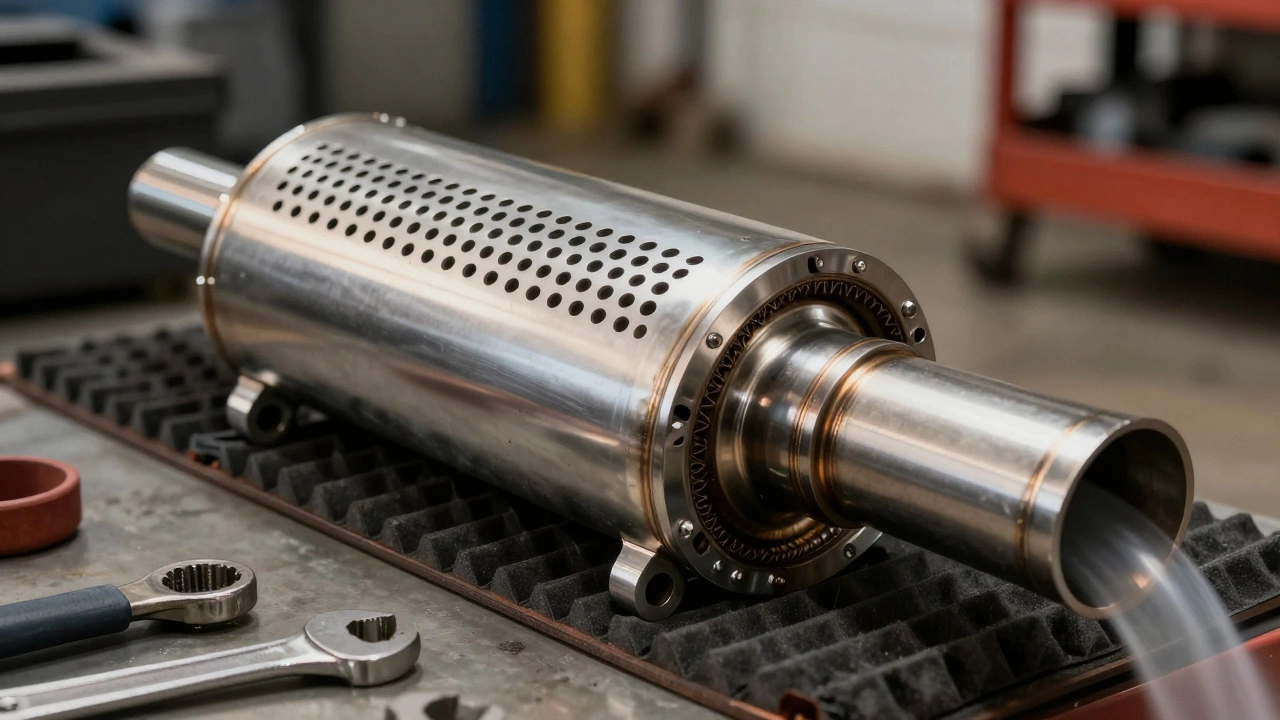
MagnaFlow mufflers are designed as MagnaFlow is a high-flow, straight-through exhaust system that reduces backpressure. Unlike stock mufflers with packed fiberglass and complex baffles, MagnaFlow uses a single, uninterrupted stainless steel tube with perforations and acoustic material wrapped around it. This design lets exhaust gases flow more freely, which is the key to any performance gain.
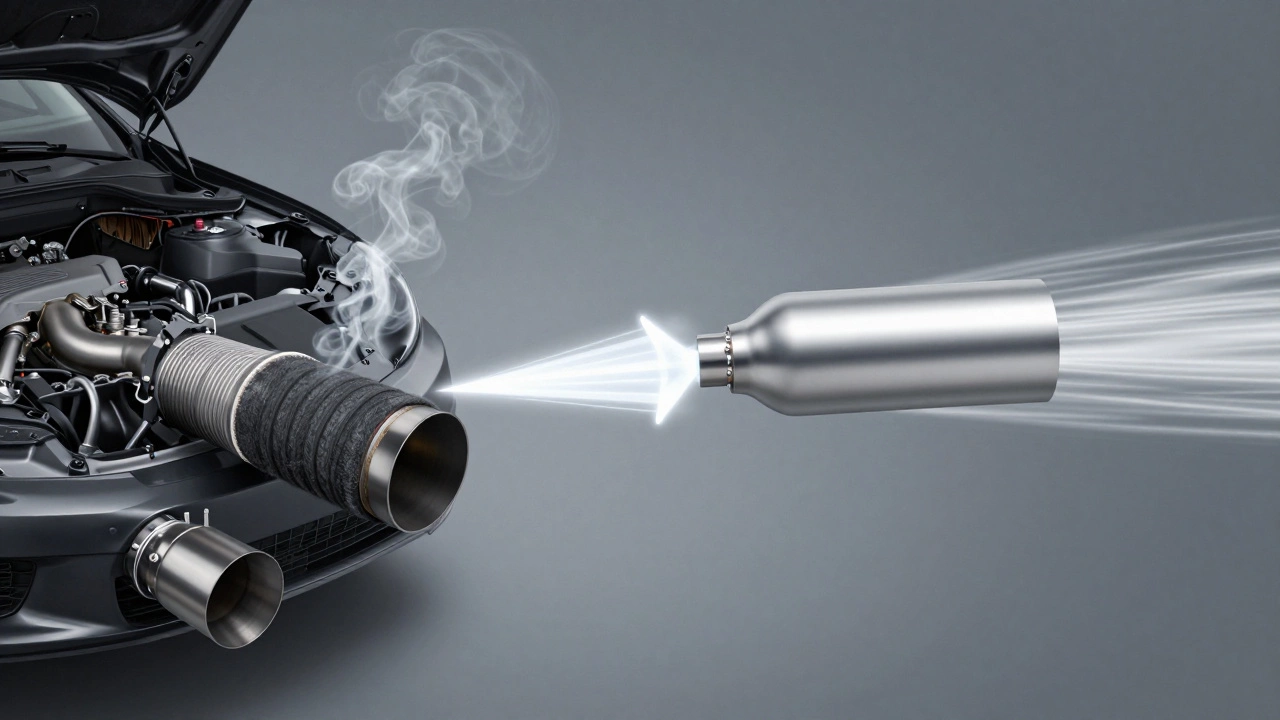
Backpressure is the resistance your engine fights against when pushing exhaust out. High backpressure means your engine has to work harder, which steals power. A free-flowing exhaust like MagnaFlow reduces that resistance. But here’s the catch: the muffler itself doesn’t create power. It just removes a restriction.
How Much Horsepower Can You Expect?
Real-world tests from independent shops and automotive magazines show that a MagnaFlow muffler alone typically adds 5 to 12 horsepower - not the 20+ you see on some YouTube ads. This assumes you’re replacing a restrictive factory system. If your car already has a decent exhaust, the gain might be closer to 2 or 3 hp.
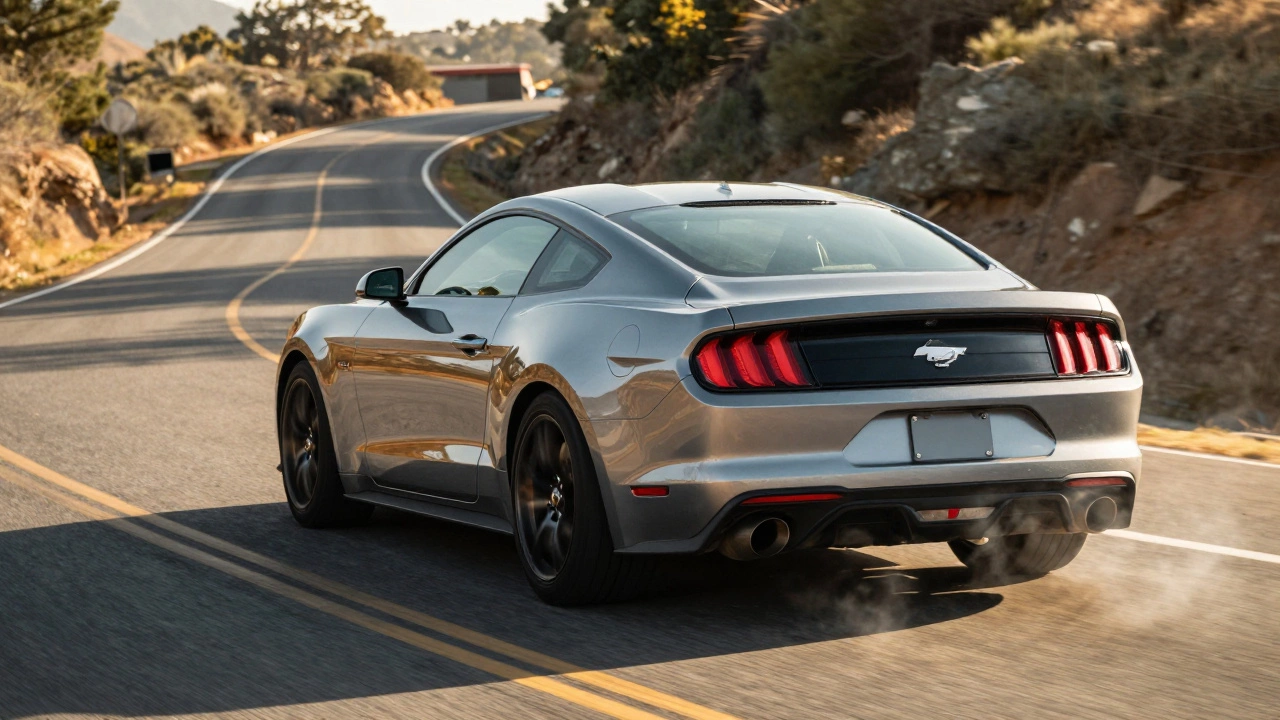
For example, a 2022 Ford Mustang EcoBoost with a stock cat-back system gained 8 hp and 11 lb-ft of torque at the wheels after swapping in a MagnaFlow system, according to a dyno test by Car and Driver. That’s measurable, but not game-changing. The bigger benefit? A smoother throttle response and a more aggressive sound without the drone.
On older V8s - like a 2010 Chevrolet Camaro - the gains can be more noticeable because factory systems were even more restrictive. In those cases, 10-12 hp is common. But for modern turbocharged engines, the gains are smaller. Why? Because turbos already manage exhaust flow efficiently, and the factory system isn’t as clogged.
It’s Not Just the Muffler - The Whole System Matters
Most people think buying a MagnaFlow muffler alone is enough. But if you’re keeping the stock catalytic converter, factory mid-pipe, or narrow exhaust tubing, you’re still bottlenecking the system. The muffler is just the last piece.
For real horsepower gains, you need a full cat-back system. That means replacing everything from the catalytic converter back to the tailpipe. A complete MagnaFlow cat-back system can add 15-20 hp on many vehicles because it opens up the entire exhaust path. But if you’re only swapping the muffler, you’re not getting the full benefit.
Also, don’t forget the header or downpipe. If your engine can’t expel exhaust quickly at the source, no muffler will fix that. That’s why track cars use long-tube headers - they’re the first step in reducing backpressure.
What About Fuel Economy?
Here’s something most people overlook: reducing backpressure can improve fuel efficiency. When your engine doesn’t have to push exhaust out as hard, it uses less fuel - especially during steady highway driving. Many owners report a 1-2 mpg improvement after switching to a MagnaFlow system. That’s not huge, but over 10,000 miles a year, it adds up to $50-$100 in savings.
But if you drive more aggressively after the upgrade - and let’s be honest, most people do - you’ll likely burn more fuel than before. The sound is addictive. So while the system is more efficient, your driving habits can erase the gains.
Sound vs. Power - What You’re Really Buying
Let’s be real: most people buy a MagnaFlow muffler for the sound. And honestly, that’s fine. The deep, resonant tone it produces is one of the best in the aftermarket. It’s not raspy like some cheap systems, and it doesn’t drone at highway speeds like others. It’s balanced - loud enough to feel satisfying, quiet enough to drive daily.
But if you’re expecting a muscle car transformation, you’ll be disappointed. A MagnaFlow muffler won’t turn your compact sedan into a drag racer. It enhances what’s already there. It doesn’t create power - it just lets your engine breathe better.
Who Should Install One?
You’re a good candidate for a MagnaFlow muffler if:
- You drive a naturally aspirated V6 or V8 with a restrictive stock exhaust
- You want a deeper tone without excessive noise
- You’re not planning to do major engine mods (turbo, supercharger, etc.)
- You’re looking for a reliable, durable upgrade with a lifetime warranty
You should skip it if:
- You drive a turbocharged four-cylinder (gains are minimal)
- You’re on a tight budget and need more than 10 hp
- You want maximum performance - you’ll need a full exhaust system and tuning
- You live in a state with strict noise laws (California, Massachusetts, etc.)
Common Myths Debunked
Myth 1: All aftermarket mufflers add horsepower.
False. A poorly designed system can hurt performance. Some cheap mufflers have internal restrictions that are worse than stock.
Myth 2: Bigger pipes = more power.
Not always. Too large a diameter can hurt low-end torque. MagnaFlow designs its systems with optimal pipe sizes based on engine displacement and RPM range.
Myth 3: You need to reprogram the ECU.
For a muffler swap alone, no. But if you’re doing a full cat-back with high-flow cats, tuning can unlock another 5-10 hp.
Real Example: A 2019 Toyota Camry V6
A friend of mine swapped the stock muffler on his 2019 Camry V6 for a MagnaFlow. The car had 301 hp stock. After the swap, it hit 309 hp on the dyno. That’s 8 hp. He said the difference was more about how the car felt - smoother acceleration, less hesitation at 3,000 rpm, and a sound that made him smile every time he started it. He didn’t care about the numbers. He cared about the experience.
That’s the real value of a MagnaFlow. It doesn’t turn your car into a monster. But it makes your daily driver feel more alive.
Final Verdict
Yes, a MagnaFlow muffler can increase horsepower - but only modestly. You’re looking at 5-12 hp on most cars, and only if you’re replacing a restrictive factory system. The bigger wins are in throttle response, sound quality, and sometimes fuel economy. If you want serious power, you need more than a muffler. But if you want your car to sound better and feel a little more responsive, it’s one of the best bang-for-buck upgrades you can make.
Don’t buy it expecting a race car. Buy it because you love the way it sounds - and because it just might make your daily drive a little more enjoyable.
Do MagnaFlow mufflers make your car louder?
Yes, but not in a cheap or annoying way. MagnaFlow mufflers produce a deep, resonant tone that’s noticeable but not obnoxious. They’re designed to reduce drone at highway speeds, so you get a sporty sound without the fatigue on long drives.
Can I install a MagnaFlow muffler myself?
Yes, if you have basic tools and some experience with car maintenance. Most MagnaFlow systems are bolt-on and don’t require welding. You’ll need jack stands, a ratchet set, and possibly a torque wrench. Installation usually takes 2-4 hours. If you’re unsure, take it to a shop - labor costs are typically $150-$250.
Will a MagnaFlow muffler pass emissions testing?
If you keep the stock catalytic converter, yes. MagnaFlow mufflers are designed to work with OEM cats. But if you replace the catalytic converter with a catless or high-flow version, you may fail emissions in states that test for both tailpipe emissions and visual inspection.
How long do MagnaFlow mufflers last?
MagnaFlow offers a lifetime warranty on all its stainless steel mufflers. With proper maintenance, they can easily last the life of your car. Unlike aluminized steel systems that rust within 5-7 years, stainless steel resists corrosion even in snowy or coastal climates.
Is a MagnaFlow muffler worth the price?
For $300-$700, depending on your vehicle, it’s one of the most reliable performance upgrades you can make. You get better sound, a small power boost, and a lifetime warranty. Compared to other exhaust brands that fade, rust, or drone, MagnaFlow delivers consistent quality. If you drive regularly and care about your car’s feel and sound, it’s worth it.