MERV Filter Recommendation Tool
Assess Your Home
Answer a few questions to find your ideal air filter
Recommendation
If you’ve ever stared at a pack of air filters at the hardware store, wondering whether to grab MERV 11 or MERV 13, you’re not alone. The difference seems small-just two numbers-but it can change how clean your air feels, how often you change the filter, and even how hard your HVAC system has to work. So which one actually wins? It’s not about picking the highest number. It’s about matching the filter to your needs.
What MERV Ratings Really Mean
MERV stands for Minimum Efficiency Reporting Value. It’s a scale from 1 to 20 that tells you how well a filter traps tiny particles. The higher the number, the tighter the mesh and the more stuff it catches. But here’s the catch: a filter that catches more doesn’t always mean it’s better for your system.
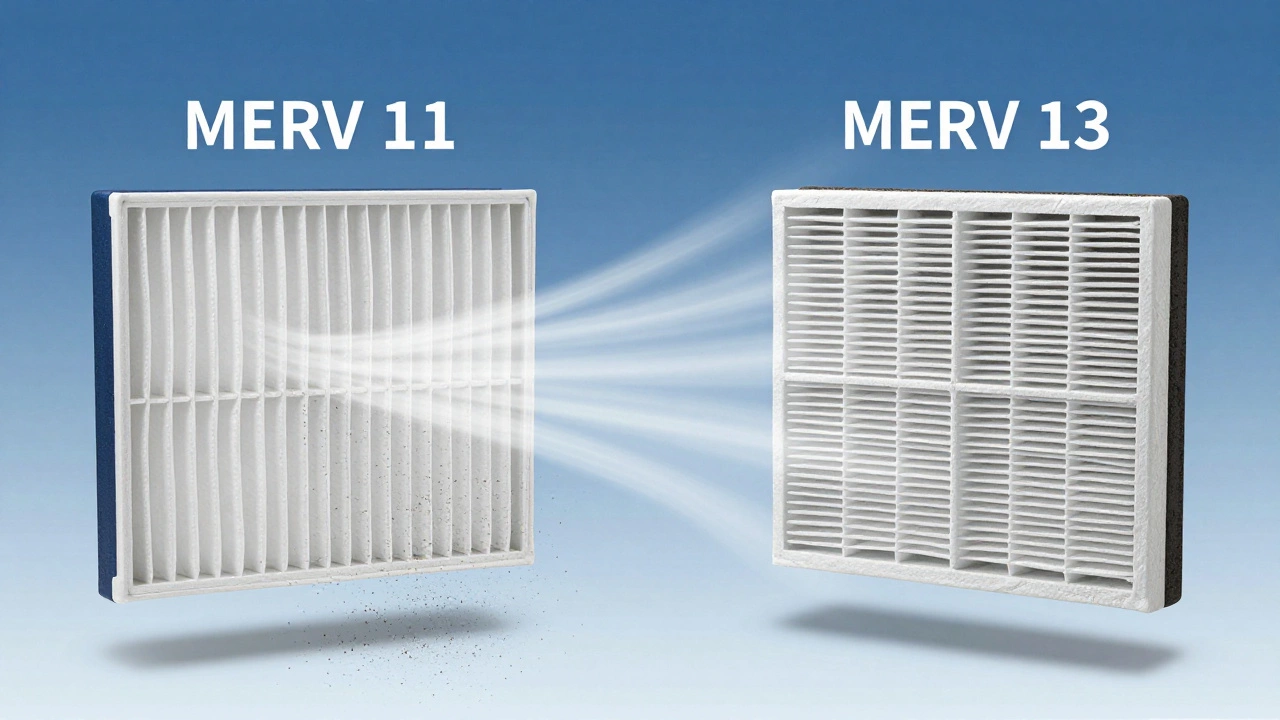
MERV 11 filters capture around 85% of particles between 1 and 3 microns-think mold spores, dust mites, and pet dander. MERV 13 goes further, catching up to 90% of particles as small as 0.3 microns. That includes smoke, bacteria, and some virus carriers. Sounds great, right? But your HVAC system doesn’t care about perfect air. It cares about airflow.
How Airflow Gets Restricted
Think of your air filter like a sieve. MERV 11 is a medium-fine sieve. MERV 13 is almost like a fine mesh net. The tighter the weave, the harder it is for air to push through. If your furnace or AC wasn’t designed for high-efficiency filters, forcing MERV 13 into it can cause problems.
In older homes, especially those with single-stage systems built before 2015, MERV 13 can reduce airflow by 20% or more. That forces the blower motor to run longer and hotter. Over time, that leads to higher energy bills and a shorter lifespan for your equipment. I’ve seen homeowners replace their filters religiously every month, only to have their furnace shut down in winter because the motor burned out.
Modern systems, especially those labeled as “high-efficiency” or with variable-speed blowers, handle MERV 13 just fine. But if your unit is 10+ years old and you’ve never upgraded the blower, stick with MERV 11. It’s safer, cheaper, and still does a solid job.
Who Needs MERV 13?
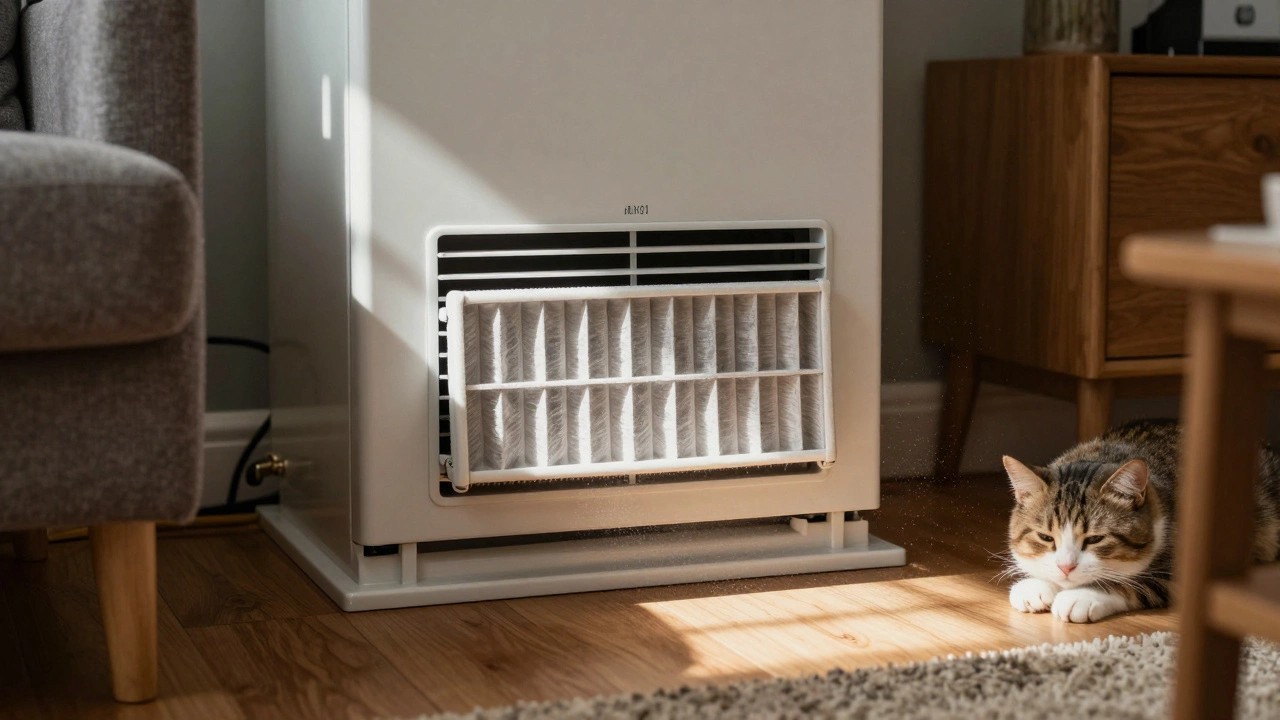
Not everyone needs the extra filtration. If you live alone, don’t have pets, and don’t suffer from allergies, MERV 11 is more than enough. It catches the big stuff-dust, pollen, lint-that clogs your ducts and makes your home feel grimy.
But if you have:
- Someone in the house with asthma or severe allergies
- Multiple pets shedding fur and dander
- Someone who smokes indoors
- Live near a busy road or construction site
- Are worried about airborne viruses (especially during flu season)
Then MERV 13 makes sense. It’s not magic-it won’t make your house a hospital-but it cuts down on the irritants that trigger symptoms. A 2023 study from the American Journal of Respiratory and Critical Care Medicine found that households switching from MERV 11 to MERV 13 saw a 30% drop in allergy flare-ups over six months.
Cost and Maintenance Differences
MERV 13 filters cost about 20-40% more than MERV 11. That adds up over time. If you change filters every 3 months, you’re spending an extra £15-£30 a year. Not huge, but it’s real money.
But here’s what most people don’t realize: MERV 13 clogs faster. Because it catches more particles, it gets dirty quicker. In homes with pets or high dust levels, you might need to change MERV 13 every 6-8 weeks instead of every 3 months. That’s 50% more changes per year. If you forget, you’re risking system strain.
And if you’re using a cheap, thin MERV 13 filter? Don’t. Those are often just MERV 11 material with a fancy label. Look for pleated filters with a solid frame and real fiberglass media. Brands like Filtrete, Honeywell, and 3M make reliable ones.
What Happens If You Use the Wrong One?
Using MERV 13 in an incompatible system doesn’t cause instant failure. It’s a slow burn. You’ll notice your home takes longer to heat or cool. Your utility bill creeps up. The air might feel stale, even with the filter in. That’s because the system isn’t moving enough air.
On the flip side, using MERV 11 when you need MERV 13 means you’re breathing in more allergens. If you have kids with eczema or an elderly person with COPD, that’s not just a nuisance-it’s a health risk.
The worst-case scenario? You install MERV 13, forget to check it, and it gets so clogged that the filter collapses. Air bypasses it entirely, and all the dust goes straight into your ducts. Cleaning that out costs hundreds.
How to Decide: A Simple Flow
Here’s how to pick without overthinking it:
- Check your HVAC manual. If it says “use MERV 8-13,” you’re good for either. If it says “max MERV 11,” don’t go higher.
- Look at your blower motor. If it’s a variable-speed model (often labeled as “ECM” or “permanent split capacitor”), you’re safe with MERV 13.
- Ask yourself: Do allergies or pets make life harder? If yes, MERV 13 is worth the extra cost and maintenance.
- Don’t upgrade just because it’s “better.” A filter that strains your system isn’t better-it’s a liability.
Most homes in the UK-especially older ones with standard furnaces-do fine with MERV 11. If you’re in a newer build with a high-efficiency system, MERV 13 gives you cleaner air without trade-offs.
Real-World Example: A Bristol Home
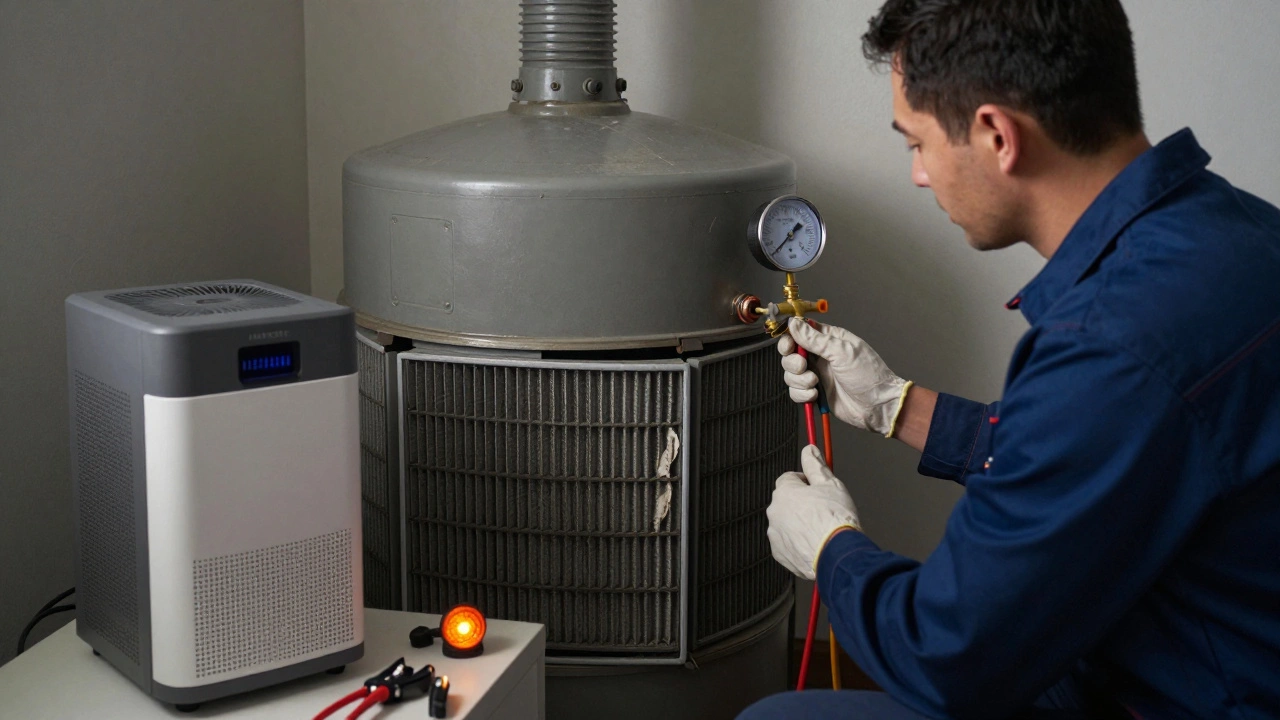
Last winter, a client in Bristol switched from MERV 11 to MERV 13 because her daughter had asthma. Within two weeks, she noticed fewer nighttime coughing fits. But she also saw her heating bill jump 18%. She didn’t realize her 2012 furnace wasn’t built for the extra resistance. After a technician checked the static pressure, we switched back to MERV 11 and added a portable HEPA air purifier in her daughter’s room. The results? Just as good air quality, no extra strain on the furnace, and lower bills.
That’s the key: sometimes the best solution isn’t the highest-rated filter. It’s the one that works with your system, not against it.
Final Verdict
There’s no universal winner between MERV 11 and MERV 13. MERV 11 is the smart, balanced choice for most households. It’s affordable, reliable, and doesn’t stress your HVAC system. MERV 13 is a specialist tool-for homes with health concerns, pets, or modern equipment.
Don’t chase the highest number. Chase the right fit. Your lungs, your wallet, and your furnace will thank you.