Dipstick Oil Level Checker
Oil Level Checker
Check your engine oil level using the dipstick. Select your current reading to get safety guidance.
Getting the oil level right on your dipstick isn’t just about following a rule-it’s about keeping your engine alive. Too little oil, and you risk seizing the engine. Too much, and you can damage seals, flood the catalytic converter, or even cause hydrolock. So how high should oil be on a dipstick? The answer is simple: between the minimum and maximum marks. But that’s only the start.
What the Dipstick Marks Actually Mean
Every dipstick has two clear marks: one for minimum and one for maximum. These aren’t suggestions-they’re boundaries set by the engine manufacturer based on how the oil pump, crankshaft, and internal components move. The oil should sit between them, ideally closer to the full mark when the engine is warm and has settled.
Some dipsticks have a crosshatched area between the marks. That’s your sweet spot. If the oil level is below the minimum, you’re running on borrowed time. If it’s above the maximum, you’re creating pressure where it shouldn’t exist. Don’t assume ‘a little over’ is harmless. Even half a quart too much can cause foaming, which means the oil pump can’t circulate oil properly.
How to Check Oil Correctly
Checking oil wrong is worse than not checking at all. Here’s how to do it right:
- Wait at least 5 minutes after turning off the engine. Oil needs time to drain back into the pan.
- Park on level ground. A slight slope can give you a false reading.
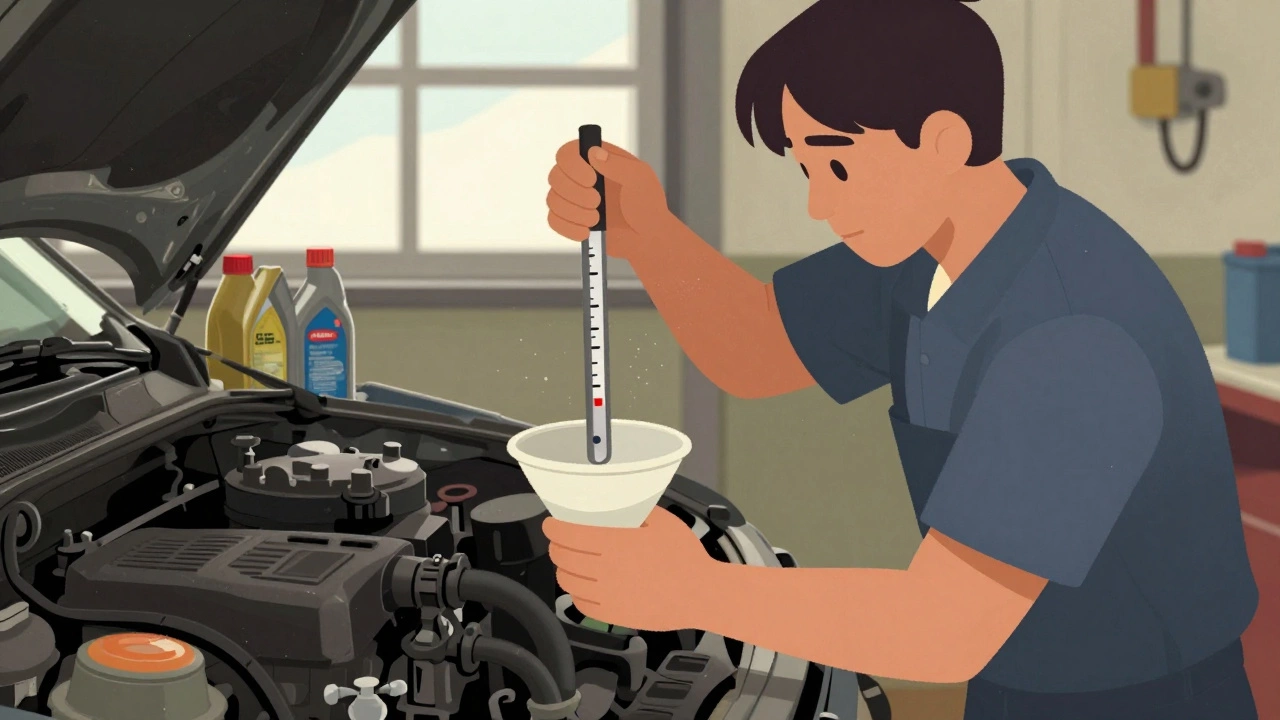
- Pull out the dipstick, wipe it clean with a lint-free cloth or paper towel.
- Reinsert it fully, then pull it out again.
- Look at the oil film. It should cover the area between the two marks.
Don’t check oil while the engine is still hot or right after driving. The oil hasn’t settled yet. Don’t check it in the morning before starting the car either-that’s not the standard method. The engine should be off, warm, and idle for a few minutes.
Why Oil Level Changes Over Time
Oil doesn’t just disappear. If your level drops between checks, something’s happening. Here are the common reasons:
- Normal consumption: Older engines burn a small amount of oil. A quart every 1,000 miles is acceptable in high-mileage cars.
- Leak: Check under the car for drips. Common spots: valve cover gasket, oil pan gasket, or the oil filter.
- Blow-by: Worn piston rings let combustion gases push oil into the exhaust. You’ll see blue smoke from the tailpipe.
- Overfilling: If you recently added oil and now it’s too high, you may have added too much. Drain the excess.
If you’re topping up every 500 miles, it’s time for a serious inspection. A healthy engine shouldn’t need oil between oil changes unless it’s over 150,000 miles.
What Happens If Oil Is Too Low
Low oil isn’t a slow problem-it’s an emergency. When oil falls below the minimum mark:
- The oil pump can’t pick up enough fluid to lubricate the crankshaft, camshaft, and bearings.
- Metals start grinding together. Bearings wear out fast. A $20 oil change turns into a $5,000 engine rebuild.
- Overheating kicks in. Oil helps cool parts too-not just lubricate them.
Some modern cars have sensors that warn you when oil is low. But many older models don’t. If your car doesn’t have a warning light, you’re on your own. That’s why checking monthly-or before every long trip-isn’t optional. It’s insurance.
What Happens If Oil Is Too High
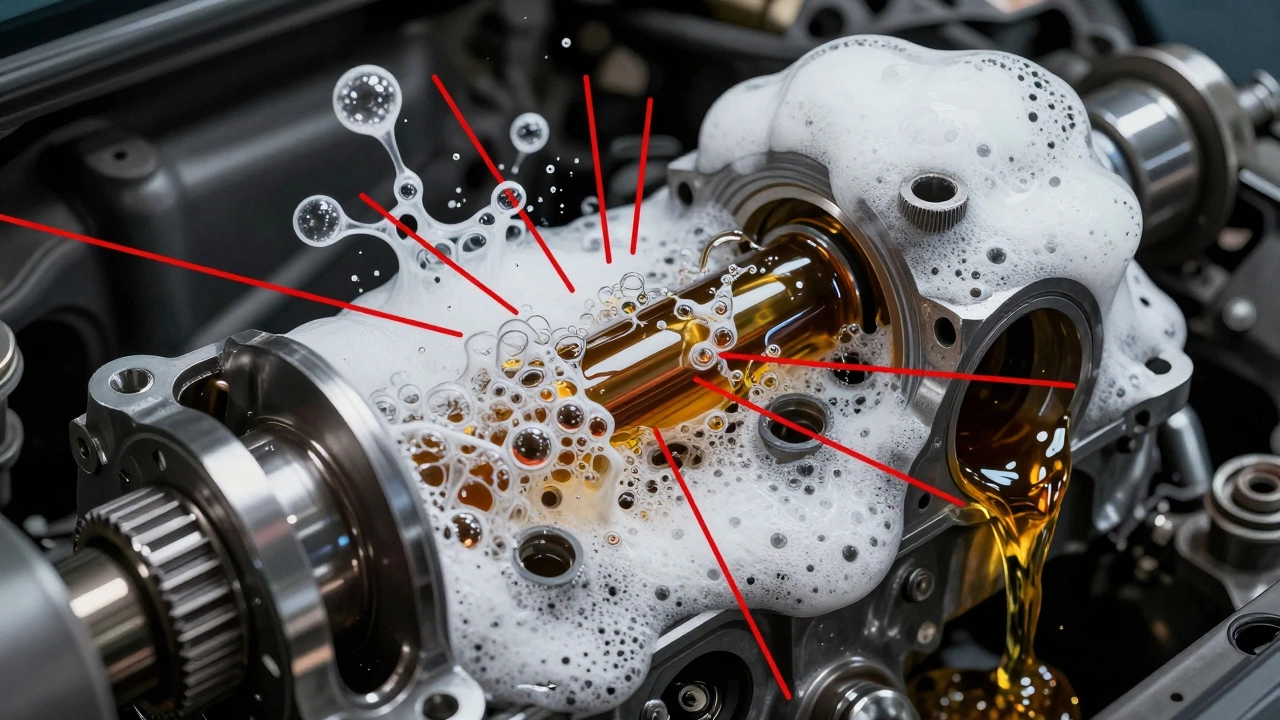
Too much oil causes problems you might not notice until it’s too late. Excess oil gets whipped into foam by the spinning crankshaft. Foam doesn’t lubricate. It just creates air bubbles.
Here’s what happens next:
- Reduced oil pressure: The pump can’t push foam through the system.
- Oil leaks: Pressure builds up and blows out seals at the valve cover or crankshaft.
- Carbon buildup: Foaming oil gets burned in the combustion chamber, clogging spark plugs and the catalytic converter.
- Hydrolock: In extreme cases, oil enters the cylinders and can’t be compressed. The engine stalls instantly-and bends connecting rods.
I’ve seen a 2012 Honda Civic with 180,000 miles get a $4,000 engine replacement because the previous owner topped off oil without checking the dipstick. He thought ‘more is better.’ He was wrong.
How Much Oil Should You Add?
Most engines hold between 4 and 6 quarts. The dipstick usually shows a 1-quart difference between min and max. That means if your oil is at the low mark, you need about half a quart to get to the middle. One full quart will take you to the top.
Never guess. Always add oil slowly-half a quart at a time. Recheck after each addition. You can always add more. You can’t take it out easily without a pump or drain.
Use the exact oil type your owner’s manual recommends. Mixing 5W-30 with 10W-40 might seem harmless, but it changes viscosity and affects how the oil flows under pressure. Stick to the spec.
When to Replace the Dipstick
Dipsticks don’t last forever. If the markings are faded, the handle is cracked, or the tip is bent, it’s giving you bad readings. A bent dipstick can show oil level as low when it’s actually fine-or vice versa.
Most dipsticks cost under £15 to replace. If you’re unsure about your reading, swap it out. A new dipstick is cheaper than a tow truck.
Real-World Example: A 2015 Ford Focus
A customer brought in a 2015 Ford Focus with 98,000 miles. The oil light was flashing. When I checked the dipstick, the oil was right at the minimum mark. He’d been driving it for 3 months without checking. He thought the light was faulty.
We added half a quart. The light went off. But we also found a slow leak from the oil filter housing. He got the leak fixed, changed the oil, and hasn’t had an issue since. All because he finally checked the dipstick.
Final Rule: Check It Every Month
Don’t wait for a warning light. Don’t wait until you hear knocking. Check your oil every month, or before every long journey. It takes 90 seconds. It saves thousands.
If your oil level is between the marks, you’re good. If it’s below, add oil. If it’s above, drain a little. If you’re unsure, take it to a mechanic. But never ignore it.
Your engine doesn’t care about your schedule. It only cares if you gave it the right amount of oil.
How high should oil be on a dipstick?
The oil level should be between the minimum and maximum marks on the dipstick. Ideally, it should sit near the full mark when the engine is warm and has been off for at least five minutes. Never let it drop below the minimum, and avoid going above the maximum.
Can I drive with low oil on the dipstick?
No. Driving with oil below the minimum mark risks severe engine damage. The oil pump can’t circulate enough lubricant, leading to metal-on-metal contact in critical parts like bearings and camshafts. Even a few miles can cause permanent harm.
Is it bad to overfill engine oil?
Yes. Overfilling causes oil to foam due to contact with the spinning crankshaft. Foamed oil doesn’t lubricate properly, which can lead to low oil pressure, blown seals, and even hydrolock. It can also foul spark plugs and damage the catalytic converter.
How often should I check my engine oil?
Check your engine oil at least once a month. If your car is older, has high mileage, or you notice oil consumption, check it every two weeks. Always check before a long trip. Modern cars may have oil sensors, but many don’t-so manual checks are still essential.
Should I check oil when the engine is hot or cold?
Check oil when the engine is warm but turned off. Wait at least five minutes after driving to let oil drain back into the pan. Checking while cold can give a falsely low reading. Checking while the engine is running is dangerous and inaccurate.
What if my dipstick has no markings?
If your dipstick has faded or missing markings, replace it immediately. A damaged dipstick gives unreliable readings and can mislead you into overfilling or underfilling. Most dipsticks cost under £15 and are easy to swap. Never guess the level without clear marks.
How much oil does a typical car need?
Most passenger cars hold between 4 and 6 quarts of oil. The difference between the minimum and maximum marks on the dipstick is usually about one quart. Always refer to your owner’s manual for the exact capacity and recommended oil type.