Spark Plug Lifespan Estimator
Analysis Result
Enter your details to see if it's time for a change.
Quick Summary of Spark Plug Life
- Copper Plugs: Usually last between 30,000 and 50,000 km.
- Platinum Plugs: Typically go from 60,000 to 100,000 km.
- Iridium Plugs: The long-haulers, often lasting 120,000 to 200,000 km.
- Warning Signs: Rough idling, poor fuel economy, and engine misfires.
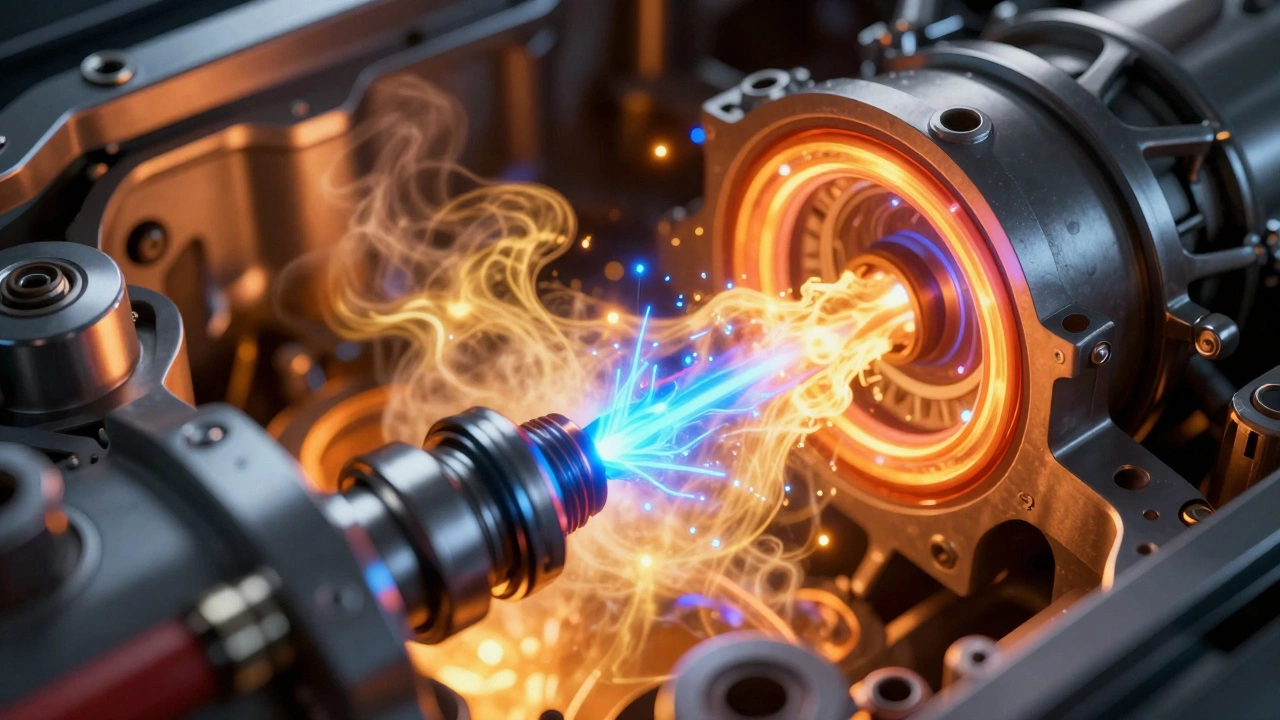
When we talk about the spark plug lifespan, we aren't just talking about a random number on a box. A Spark Plug is an electrical device that fits into the cylinder head of an internal combustion engine to ignite the air-fuel mixture using an electric spark . Because they sit right in the middle of a controlled explosion thousands of times per minute, they eventually wear down. The metal electrode physically erodes over time, meaning the gap where the spark jumps becomes too wide for the electricity to cross reliably.
The Big Difference: Material Matters
Not all plugs are created equal. If you put the cheapest copper plugs in a modern engine, you'll be replacing them every year. If you put high-end iridium ones in an old beater, you're wasting money. The material determines how well the plug resists heat and electrical erosion.
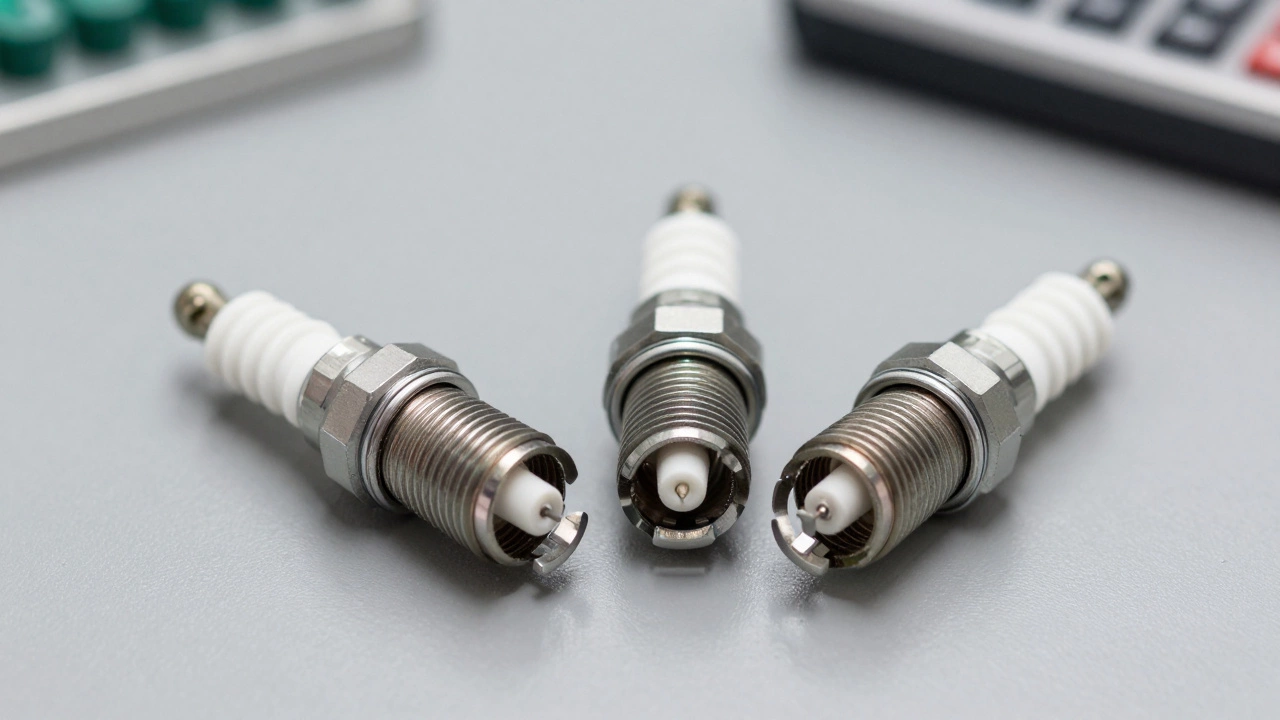
Standard copper plugs are great for conductivity, but they burn out fast. You'll see these mostly in older cars or high-performance racing engines where the plugs are changed almost every race weekend. Then you have platinum, which is harder and resists wear better. Finally, there's Iridium, which is one of the hardest metals on earth. It allows for a much thinner center electrode, which requires less voltage to spark and lasts significantly longer.
| Material | Average Lifespan (KM) | Durability | Common Use Case |
|---|---|---|---|
| Copper | 30,000 - 50,000 | Low | Older cars, Performance tuning |
| Platinum | 60,000 - 100,000 | Medium | Standard commuter vehicles |
| Iridium | 120,000 - 200,000 | High | Modern engines, Luxury cars |
Why Your Mileage Might Vary
The numbers above are benchmarks, but your actual driving habits change the math. If you spend most of your time idling in heavy city traffic, your engine is working harder and producing more heat than if you were cruising on a highway for 200 km. Short trips where the engine never fully warms up also lead to carbon buildup on the plug tip, which can "poison" the plug and kill it prematurely.
Another factor is the Ignition Coil, which is the component that transforms the battery's low voltage into the thousands of volts needed to create a spark . If your coils are failing, they can either under-fire or over-fire, putting extra stress on the spark plug electrode. Similarly, if you have a leak in your Cylinder Head Gasket, coolant can leak into the combustion chamber, fouling the plugs instantly regardless of how many kilometers they've done.
Spotting the Warning Signs
You don't always have to rely on the odometer. Your car will usually tell you when the plugs are dying. One of the first signs is a rough idle. When you're stopped at a red light, does the car feel like it's shivering? That's often a sign of a "misfire," where one cylinder isn't firing properly because the plug is worn out.
Keep an eye on your fuel gauge. Worn plugs lead to incomplete combustion. This means you're literally throwing fuel out the exhaust pipe instead of using it to move the car. If your KM per liter suddenly drops without a change in your driving style, check the plugs. You might also notice the engine takes a few extra turns of the key to start in the morning-a classic sign that the gap in the plug has become too wide for a strong spark to jump.
How to Inspect Your Plugs
If you're handy with a wrench, pulling a plug out can tell you exactly what's happening inside your engine. The color of the tip is like a medical report for your car. A healthy plug should be a light tan or grayish-brown color. If it's stark white, your engine is running too hot. If it's covered in black, dry soot, your engine is running "rich," meaning there's too much fuel and not enough air.
Then there's the "oil-fouled" plug. If the tip is covered in a wet, black oily sludge, you have a bigger problem than just old plugs. This usually means oil is leaking past the piston rings. Replacing the plug will fix the misfire for a week, but the oil will just coat the new plug again. In this case, the spark plug is just the messenger; the engine itself needs a look.
Pro Tips for Replacement
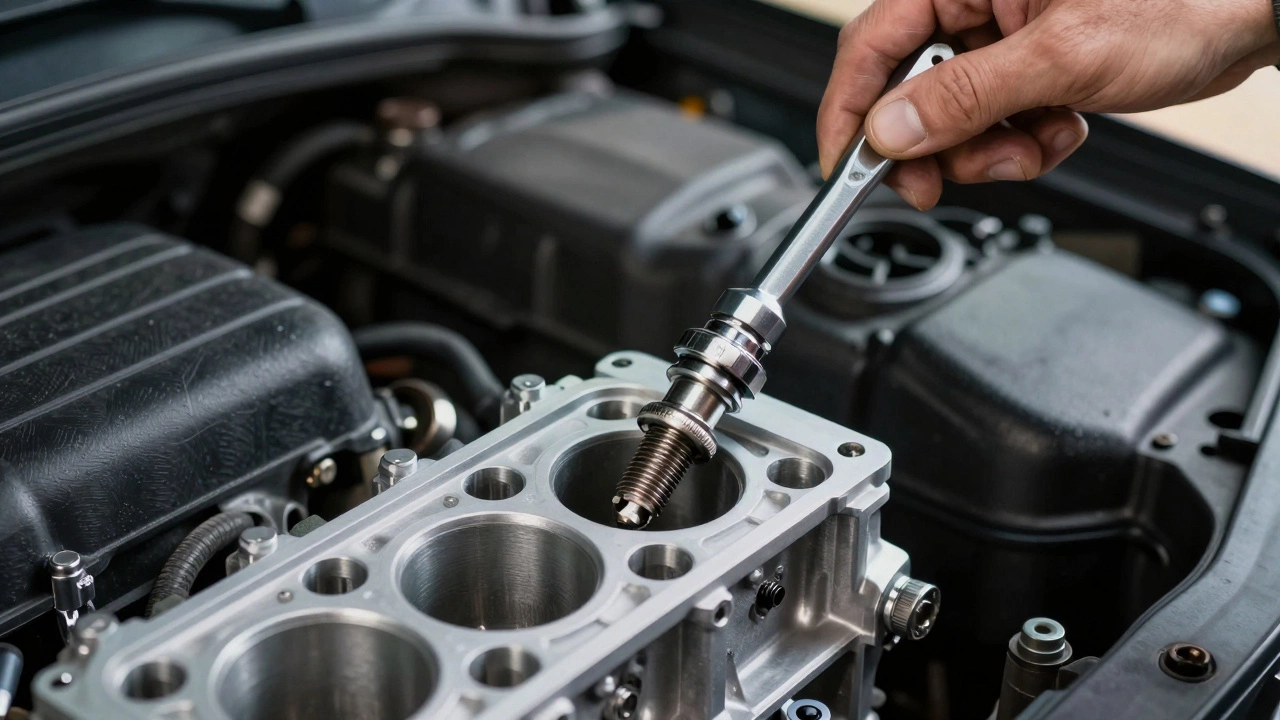
When you finally decide to swap them, don't just buy the cheapest set online. Use the exact part number specified in your owner's manual. Using a plug with the wrong "heat range" can lead to premature failure or, in worst-case scenarios, holes burned into the top of your piston.
One mistake people often make is over-tightening the plugs. Modern engines use aluminum heads, which are soft. If you crank a spark plug too hard, you can strip the threads right out of the engine block. This turns a 20-minute job into a multi-hundred-dollar repair involving a Helicoil, which is a thread-repair insert used to restore stripped screw holes in metal . Always use a torque wrench to ensure the plug is snug but not crushed.
Can I just replace one spark plug if only one is misfiring?
It's not recommended. Spark plugs wear at roughly the same rate across all cylinders. If one has failed, the others are likely very close to the end of their life. Replacing them as a set ensures the engine runs smoothly and consistently across all cylinders, which prevents unnecessary vibration and stress on the engine mounts.
Does using premium fuel extend the life of spark plugs?
Not directly. Premium fuel has a higher octane rating to prevent knocking in high-compression engines, but it doesn't change the physical wear on the electrode. However, high-quality fuels with better detergents can help prevent carbon buildup, which keeps the plugs cleaner for longer.
What happens if I keep driving with worn-out spark plugs?
First, you'll notice a drop in power and fuel efficiency. Eventually, the misfires will become constant. This is dangerous because unburnt fuel can enter the exhaust system and hit the Catalytic Converter. The fuel will ignite inside the converter, causing it to overheat and melt, which is an incredibly expensive part to replace.
Are Iridium plugs always better than Copper?
For 99% of drivers, yes. They last longer and are more efficient. However, in some very specific high-performance racing engines, copper is preferred because it transfers heat away from the tip faster, allowing the engine to run at higher combustion temperatures without causing pre-ignition.
How do I know if I have an Iridium or Platinum plug in my car?
Check your owner's manual or the part number on the plug itself. Visually, Iridium plugs have an incredibly thin center electrode-it looks like a tiny needle. Platinum plugs have a slightly blunter tip. If you aren't sure, always stick to what the manufacturer recommends for your specific engine code.
Next Steps for Your Vehicle
If you've reached the kilometer limit for your plugs, your next step is to check your ignition coils. Since you already have the engine open and the plugs out, it's a great time to inspect the rubber boots of the coils for cracks or "arcing" marks. If you see small white lines on the rubber, the electricity is leaping out of the coil before it even reaches the plug.
For those with older vehicles, consider a full tune-up that includes replacing the air filter and cleaning the throttle body. These systems all work together; a clean air intake ensures the spark plug has the perfect mixture to ignite, maximizing your fuel economy and engine life.