
Spark Plug Replacement Estimator
Analysis Result
Enter your details to see if you should replace your spark plugs.
The truth is that ignition components don't usually shout before they quit; they whisper. By the time you actually feel a 'problem,' you might have already been losing 2-3 MPG or putting unnecessary stress on your catalytic converter for months. While you won't wake up to a dead engine tomorrow, ignoring these small parts can lead to a domino effect of expensive repairs.
Quick Takeaways for Your Engine
- Preventive replacement prevents expensive "domino effect" failures.
- Modern iridium plugs last longer (up to 100k miles) than old copper ones.
- Worn plugs can cause unseen fuel waste and increased emissions.
- Replacing them "too early" is cheaper than replacing a ruined catalytic converter.
The Invisible Decline of the Ignition System
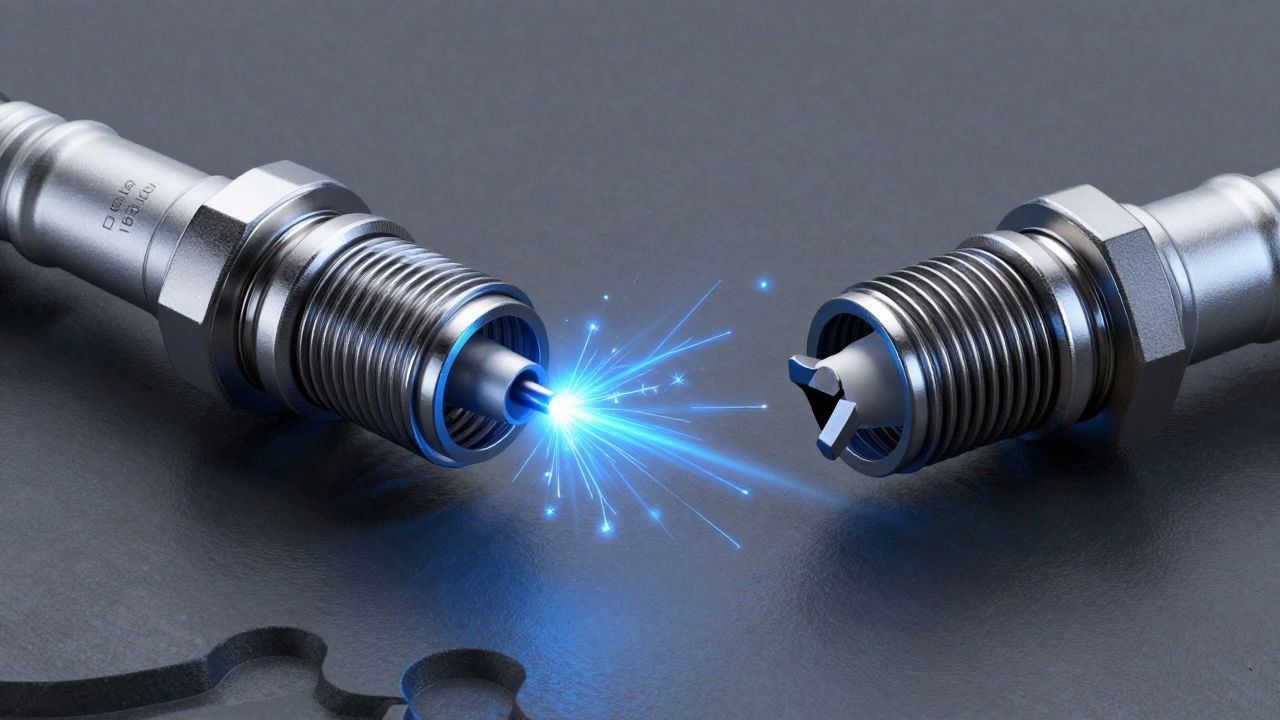
To understand why you'd change a part that seems to be working, you have to look at what's happening inside the combustion chamber. Spark Plugs is a device for delivering an electric spark to ignite the fuel-air mixture in the cylinders of an internal combustion engine. Over thousands of miles, the electrode tip wears down. This is called "gap growth." As the gap between the center and side electrode widens, the Ignition Coil has to work harder to jump that gap with electricity.
You won't feel this change immediately. Your car has a computer-the Engine Control Unit (ECU)-that adjusts timing and fuel delivery to compensate for the weak spark. This is why your car still feels "fine." However, that compensation comes at a cost. You're likely burning more fuel than necessary and producing more unburnt hydrocarbons, which travel straight into your exhaust system.
Comparing Plug Materials and Lifespans
Not all plugs are created equal. If you're wondering if you're "too early" for a change, check what's actually in your engine. Copper plugs were the gold standard for decades but wear out quickly. Modern engines use precious metals to resist the brutal heat and pressure of the cylinder.
| Material | Average Lifespan | Durability | Price Point |
|---|---|---|---|
| Copper | 20,000 - 30,000 miles | Low | Cheap |
| Platinum | 40,000 - 60,000 miles | Medium | Moderate |
| Iridium | 60,000 - 100,000 miles | High | Expensive |
The Risk of the "Wait and See" Approach
If you decide to skip the replacement because there are no symptoms, you're essentially betting on the structural integrity of the electrode. When a plug finally fails, it doesn't always just stop sparking. Sometimes, a piece of the electrode can break off, or the plug can cause an Engine Misfire. A misfire means raw fuel is being dumped into the exhaust pipe.
Here is where the real money is lost. That raw fuel hits the Catalytic Converter, which is designed to handle exhaust gases, not liquid petrol. The fuel ignites inside the converter, melting the ceramic honeycomb structure. Replacing a set of spark plugs might cost you £60 to £120; replacing a catalytic converter can easily cost £800 to £2,000 depending on your vehicle. Is saving a few hours of garage time worth that risk?
When You Absolutely Should Change Them Now
Even if the car feels smooth, there are specific scenarios where you should prioritize spark plugs replacement. If you've recently switched to a lower-quality fuel or if you do a lot of short-trip city driving, your plugs are under more stress. Short trips often mean the engine doesn't reach full operating temperature, leading to carbon buildup on the tips.
Also, consider your driving style. If you're someone who pushes the car hard-constant acceleration and high RPMs-the electrodes erode faster. If you're hitting the 100,000-mile mark on a set of iridium plugs, change them. Even the best materials have a breaking point, and the risk of a plug seizing in the cylinder head increases the longer they stay in there.
Step-by-Step: The Preventive Check
If you're handy with a wrench, you don't have to guess. You can pull a couple of plugs to see their actual condition. This is the only way to know if you're truly "fine" or just lucky.
- Ensure the engine is completely cool to avoid stripping the threads of the cylinder head.
- Remove the ignition coil or spark plug wire carefully.
- Use a spark plug socket and a torque wrench to remove the plug.
- Inspect the tip: a healthy plug is light brown or grey. If it's black and soot-covered, you have a rich fuel mixture. If it's white or blistered, your engine is running too hot.
- Check the gap with a feeler gauge. If the electrode is rounded off or the gap is wider than the factory spec, replace the whole set immediately.

Common Misconceptions About "Performance" Plugs
You'll often see "high-performance" or "platinum-tipped" plugs marketed as a way to add horsepower. Let's be clear: spark plugs do not add power. They only ensure that the power your engine is designed to make is actually realized. A brand-new set of standard OEM plugs will do 99% of what a fancy performance plug does for a daily driver.
The goal is consistency. When all cylinders are firing with the same intensity, the engine vibrates less, the idle is smoother, and the transition from stop to start is seamless. This is why following the manufacturer's schedule-even when the car feels great-is the smartest way to avoid an expensive breakdown on the side of the road.
Can I just change one spark plug if only one is acting up?
No, you should always replace them as a set. Spark plugs wear at roughly the same rate. If one has failed, the others are likely very close to the end of their lifespan. Replacing them all ensures the engine remains balanced and prevents you from having to pay for labor multiple times in a short period.
Will new plugs improve my fuel economy?
If your current plugs are worn, yes. While you won't get "extra" MPG beyond the factory rating, you will recover the efficiency you've been losing. Worn plugs cause incomplete combustion, meaning you're wasting fuel that isn't being converted into movement.
Does a "Check Engine" light always mean I need new plugs?
Not always, but it's a common cause. A P0300 code usually indicates a random or multiple cylinder misfire, which is often linked to old plugs. However, it could also be a failing ignition coil or a vacuum leak. Always scan the codes first to confirm the issue before buying parts.
What happens if I over-tighten the spark plugs?
Over-tightening can strip the threads in the cylinder head, which is a nightmare scenario. This usually requires a professional to install a thread repair kit (like a Heli-Coil) or, in worst cases, replacing the entire cylinder head. Always use a torque wrench set to the manufacturer's specifications.
Can I use a wire brush to clean my old plugs?
You can clean carbon deposits off the porcelain, but you cannot "fix" a worn-down electrode. Once the metal has eroded, no amount of scrubbing will bring back the original gap or the conductive properties of the metal. If they're worn, they're scrap.
Next Steps for Vehicle Owners
If you're unsure where you stand, start by digging out your owner's manual. Look for the "Maintenance Schedule" section. If you're within 10,000 miles of the suggested interval, just do it. It's a cheap insurance policy for your engine.
For those who aren't comfortable working on cars, ask your mechanic for a "plug health check" during your next oil change. They can pull one plug and tell you if the rest are likely toast. It's a quick diagnostic that can save you from a sudden misfire during a long trip or a cold winter morning when the engine struggles to start.