Radiator Lifespan Calculator
Your Vehicle Information
Results
Enter your vehicle details and click calculate to see your radiator's estimated lifespan.
Most people assume their car radiator lasts forever-until it leaks, overheats, or turns into a rusted paperweight. The truth? Radiators don’t have a set expiration date like oil filters or brake pads. But they don’t last forever either. So how often do you actually need to replace one? The answer isn’t a simple number. It depends on your car, your driving habits, and how well you’ve taken care of the coolant system.
Typical Lifespan of a Car Radiator
On average, a well-maintained radiator will last between 8 and 12 years. That’s roughly 100,000 to 150,000 miles. But this isn’t a guarantee. Some radiators fail after just 5 years. Others keep going past 200,000 miles. The difference? Maintenance.
Older cars used copper and brass radiators. They were heavy but durable. Modern cars use aluminum radiators with plastic end tanks. These are lighter and cheaper to make, but they’re more prone to cracking from heat stress and corrosion. If you drive in hot climates or haul heavy loads, your radiator works harder-and wears out faster.
What Actually Kills a Radiator?
Most radiator failures aren’t from age. They’re from neglect. Here’s what really causes them to die:
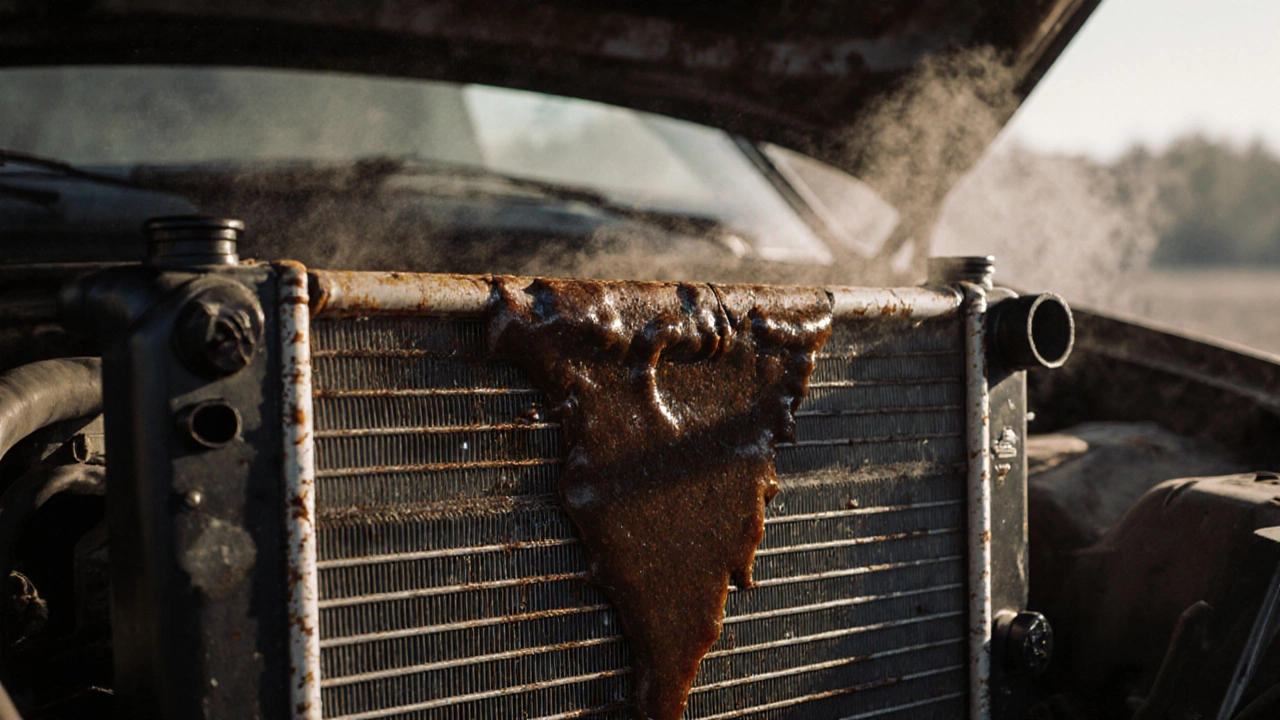
- Contaminated coolant: Rust, dirt, or old fluid turns into sludge. That gunk clogs the tiny cooling passages inside the radiator. Once blocked, heat can’t escape. The radiator overheats and warps.
- Low coolant levels: Running low on coolant means the engine runs hotter. That extra heat puts stress on the radiator’s metal and plastic parts. Over time, that leads to cracks.
- Corrosion: If you don’t flush the coolant every 3 to 5 years, the anti-corrosion additives break down. The coolant starts eating away at the metal tubes and seams.
- Physical damage: A rock hit from the road, a minor front-end collision, or even a poorly installed fan can crack the radiator or damage the fins.
- Improper coolant mix: Using straight water instead of a 50/50 mix of coolant and water speeds up corrosion and lowers the boiling point. That’s asking for trouble in summer heat.
One study from the Society of Automotive Engineers found that 68% of radiator failures were directly linked to poor coolant maintenance-not age or manufacturing defects.
Signs Your Radiator Needs Replacing
You don’t need to wait for your engine to boil over. Watch for these red flags:
- Overheating: Your temperature gauge climbs into the red, especially in traffic or uphill. This is the #1 warning sign.
- Coolant leaks: Puddles under your car, especially green, orange, or pink fluid. Check the radiator itself-cracks often start at the seams or near the filler neck.
- Rusty or dirty coolant: Drain a little from the overflow tank. If it looks muddy or has flakes in it, your radiator’s internal passages are likely clogged.
- Sludge in the radiator: Remove the radiator cap (only when cool!) and look inside. If you see thick, brown gunk instead of clear fluid, it’s time.
- Visible damage: Dents, cracks, or bulging plastic end tanks. Even small cracks can grow fast under pressure.
- Steam or burning smell: That’s coolant vapor escaping from a leak. Don’t ignore it.
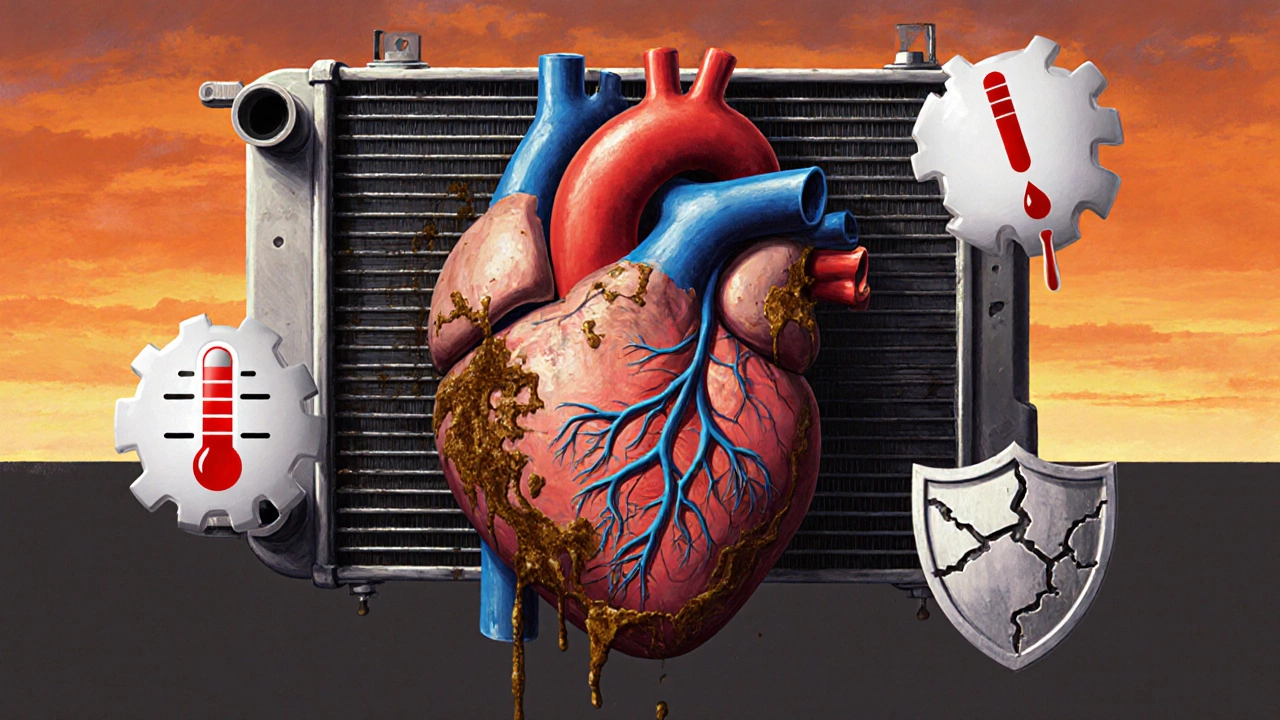
If you notice any of these, don’t wait. A failing radiator can cause engine damage-sometimes within minutes. A warped cylinder head or blown head gasket costs 5 to 10 times more than a radiator replacement.
When to Replace vs. Repair
Not every leak means you need a new radiator. Small leaks at the seams or around the filler neck can sometimes be fixed with a radiator stop-leak additive. But this is a temporary fix at best.
Here’s when to repair:
- Pinhole leak in a metal tube (can be soldered)
- Loose hose connection
- Minor crack in a plastic tank (if it’s not under pressure)
Here’s when to replace:
- Multiple leaks
- Cracked plastic end tanks
- Severe internal corrosion or clogging
- Damaged cooling fins across the core
- Age over 10 years with any signs of trouble
Rebuilding a radiator is rarely cost-effective. Labor to remove, repair, and reinstall often costs as much as a new unit. Plus, a rebuilt radiator won’t last as long. For most drivers, replacement is the smarter choice.
How to Make Your Radiator Last Longer
Extending radiator life isn’t rocket science. It’s about consistent, simple habits:
- Flush and replace coolant every 3 to 5 years. Even if your owner’s manual says “lifetime coolant,” that’s a marketing term. Real-world conditions break down additives faster.
- Use the right coolant. Check your owner’s manual for the correct type-DEX-COOL, G12, or traditional green. Mixing types causes chemical reactions that form sludge.
- Keep coolant levels full. Top off with the correct mixture if it’s low. Don’t just add water.
- Inspect hoses and clamps yearly. A failed hose can dump coolant onto the radiator, causing it to overheat.
- Check the thermostat. A stuck thermostat keeps coolant from circulating. That puts extra pressure on the radiator.
- Don’t ignore warning lights. If the temperature light comes on, pull over and turn off the engine. Let it cool before checking anything.
These steps don’t cost much. A coolant flush runs $80-$150. A new radiator? $200-$600 depending on your car. Compare that to a $2,000 engine repair.
What Happens If You Don’t Replace a Failing Radiator?
Ignoring a bad radiator doesn’t just mean a hot engine. It leads to cascading damage:
- Head gasket failure: Overheating causes the cylinder head to warp. That breaks the seal between the cylinder and coolant passages.
- Engine seizure: Metal expands when hot. Pistons can stick in cylinders if the engine overheats too long.
- Oil contamination: Coolant leaking into the oil turns it into a milky sludge. That destroys bearings and pistons.
- Transmission damage: Many radiators have a built-in transmission cooler. A cracked radiator can flood your transmission with coolant.
These aren’t rare outcomes. Mechanics see them all the time. One shop in Texas reported replacing 37 radiators in 2024. Of those, 14 had already damaged head gaskets. That’s a 38% failure rate after radiator neglect.
Replacement Costs and Options
Prices vary based on your car’s make, model, and where you live. Here’s a general breakdown:
| Part Type | Cost Range | Labor Cost | Total Estimate |
|---|---|---|---|
| Aftermarket (non-OEM) | $100-$300 | $150-$300 | $250-$600 |
| OEM (Original Equipment) | $250-$600 | $200-$400 | $450-$1,000 |
| High-performance (aluminum, dual-core) | $300-$800 | $250-$450 | $550-$1,250 |
For most daily drivers, an aftermarket radiator is fine. Brands like Denso, Spectra, and Koyo offer reliable replacements that meet or exceed OEM specs. Save OEM parts for high-end cars or if your original radiator had known issues.
Don’t forget: if your radiator is failing, your water pump, thermostat, and hoses are likely aging too. Many mechanics recommend replacing them at the same time. It saves labor costs and prevents another breakdown in a few months.
Final Answer: When Should You Replace Your Radiator?
There’s no magic number. But here’s a simple rule:
If your radiator is over 10 years old or has over 100,000 miles, and you’re seeing any signs of trouble-replace it.
Don’t wait for it to fail on the highway. Don’t gamble on a $15 stop-leak bottle. A new radiator is a cheap insurance policy against engine failure.
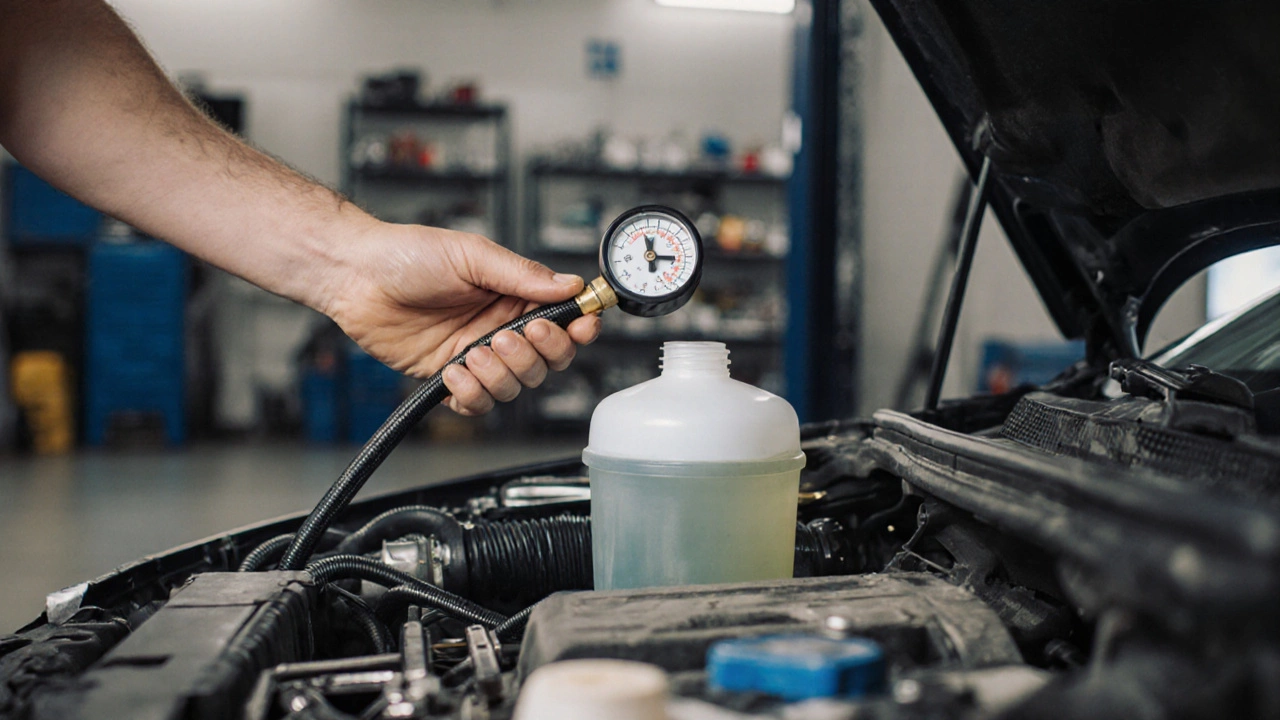
And if you’re not sure? Get a professional inspection. A good mechanic can pressure-test your cooling system in 15 minutes. That’s cheaper than a tow truck.
Can a radiator last 200,000 miles?
Yes, but only if it’s been well maintained. Cars with regular coolant flushes, no leaks, and no overheating events often hit 200,000 miles or more without a radiator replacement. But it’s the exception, not the rule. Most radiators fail before then due to neglect.
Is it safe to drive with a leaking radiator?
No. Even a small leak can lead to overheating in minutes, especially under load or in hot weather. Driving with low coolant risks engine damage, including warped heads or seized pistons. Pull over, turn off the engine, and get it towed.
Can I use water instead of coolant in my radiator?
Only in an emergency. Water boils at 212°F, while coolant mixtures can handle over 265°F. Water also causes corrosion and doesn’t protect against freezing in winter. Always use a 50/50 mix of coolant and distilled water for normal operation.
Do electric cars need radiator replacements?
Yes, but differently. Electric vehicles don’t have engines, but they do have battery and power electronics cooling systems. These often use small radiators or heat exchangers. They can fail, but less frequently. Replacement is still needed if leaks or blockages occur.
How often should I flush my radiator coolant?
Every 3 to 5 years, or 30,000 to 60,000 miles-whichever comes first. Even "lifetime" coolant breaks down over time. Flushing removes rust, sludge, and contaminants that damage the radiator and water pump.
Can a bad radiator cause poor fuel economy?
Yes. If the engine runs too hot or too cold due to radiator issues, the engine control unit can’t maintain optimal temperature. This leads to inefficient fuel combustion. A failing radiator can drop fuel economy by 10% or more.
Next Steps: What to Do Now
If your car is over 8 years old or has more than 80,000 miles:
- Check your coolant color and level today.
- Look under the car for leaks.
- Listen for unusual noises near the radiator.
- Review your maintenance records-when was the last coolant flush?
If you’re unsure, schedule a cooling system inspection. A $50 checkup can save you $2,000 in engine repairs. Don’t wait for the warning light to turn red.