MERV Rating Selector Tool
Find Your Ideal Air Filter Rating
Select your home conditions to get a personalized recommendation based on ASHRAE standards and HVAC system compatibility.
Your Recommended MERV Rating
If you’ve ever stared at a pack of air filters at the hardware store and felt overwhelmed by the numbers - MERV 8, MERV 11, MERV 13 - you’re not alone. The truth is, picking the right MERV rating isn’t about going for the highest number. It’s about matching the filter to your home, your health, and your HVAC system. Too low, and you’re breathing in dust and pollen. Too high, and you could be straining your furnace or AC unit. So what MERV rating should you actually use? Let’s break it down.
What Does MERV Even Mean?
MERV stands for Minimum Efficiency Reporting Value. It’s a scale from 1 to 20 that tells you how well an air filter traps tiny particles. The higher the number, the better it catches small stuff - like smoke, mold spores, and even some viruses. But here’s the catch: a filter that catches more doesn’t always mean it’s better for your system.
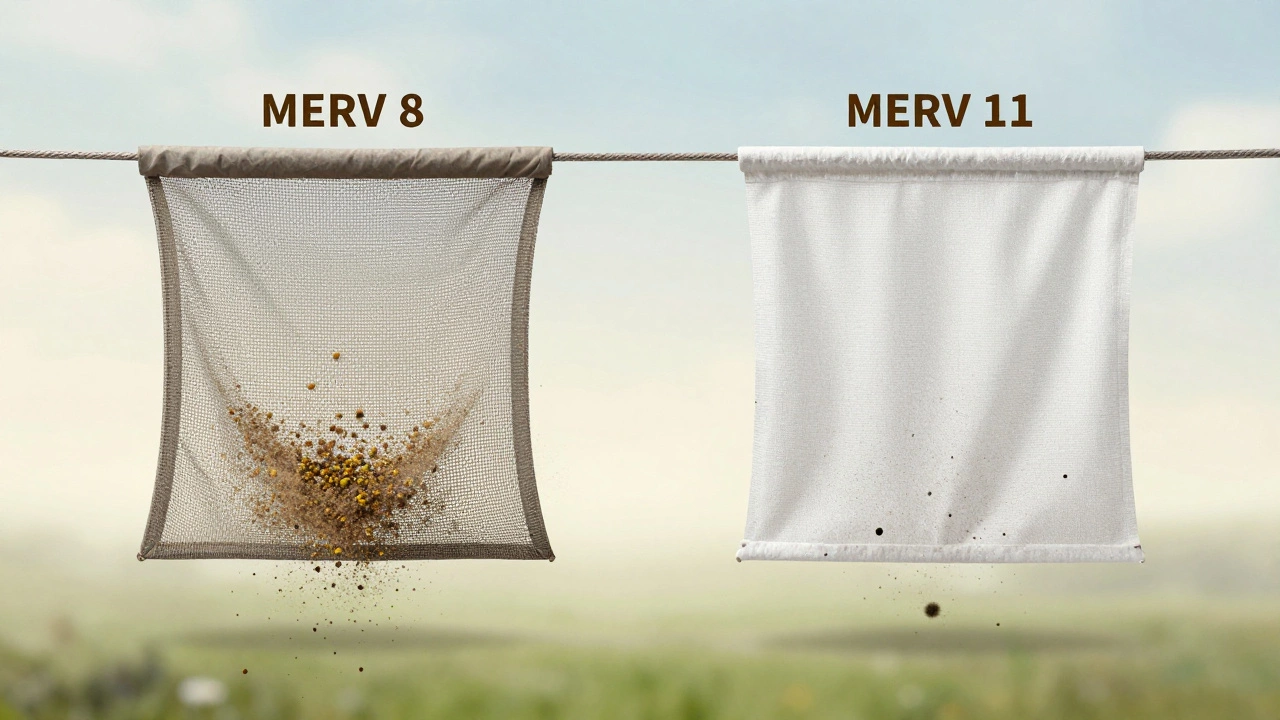
Think of it like a sieve. A low MERV filter is like a coarse mesh - it lets big stuff like dust and pet hair through but doesn’t slow down airflow much. A high MERV filter is like fine silk - it traps almost everything, but it also makes your HVAC work harder to pull air through.
What’s the Right MERV Rating for Most Homes?
For the average home in the UK - especially in places like Bristol with damp air and seasonal pollen - MERV 8 to MERV 11 is the sweet spot.
- MERV 8 catches most dust, lint, and larger pollen grains. Good if you don’t have allergies, pets, or smokers in the house.
- MERV 11 adds protection against finer particles: mold spores, pet dander, and some smoke. This is what most modern homes should use.
Studies from the American Society of Heating, Refrigerating and Air-Conditioning Engineers (ASHRAE) show that MERV 11 filters reduce airborne allergens by up to 85% compared to MERV 8, without significantly increasing energy use in standard home systems.
When Should You Go Higher Than MERV 11?
Only if you have specific needs:
- MERV 13 - Recommended if someone in your home has asthma, severe allergies, or a compromised immune system. It captures bacteria, virus carriers, and fine smoke particles. But: your HVAC system must be designed to handle it. Older units or those with weak fans may overheat or shut down.
- MERV 14-16 - Used in hospitals and clean rooms. Not suitable for residential HVAC unless your system was built for it. Most home furnaces can’t handle the airflow restriction.
One homeowner in Bristol replaced their MERV 8 with a MERV 13 without checking their furnace specs. Within two weeks, their system started short-cycling - turning on and off too fast. The repair bill was £320. The fix? Back to MERV 11.
When Should You Stick With MERV 8 or Lower?
You might want to keep it simple if:
- Your home is older and has a weak HVAC blower motor (common in 1980s and 1990s systems).
- You live in a dry area with low pollen and dust.
- You’re on a tight budget and change filters every month anyway.
But don’t go below MERV 8. Filters rated MERV 1-7 are basically just dust catchers. They won’t protect you from allergens or improve indoor air quality in any meaningful way.
Check Your HVAC Manual - Seriously
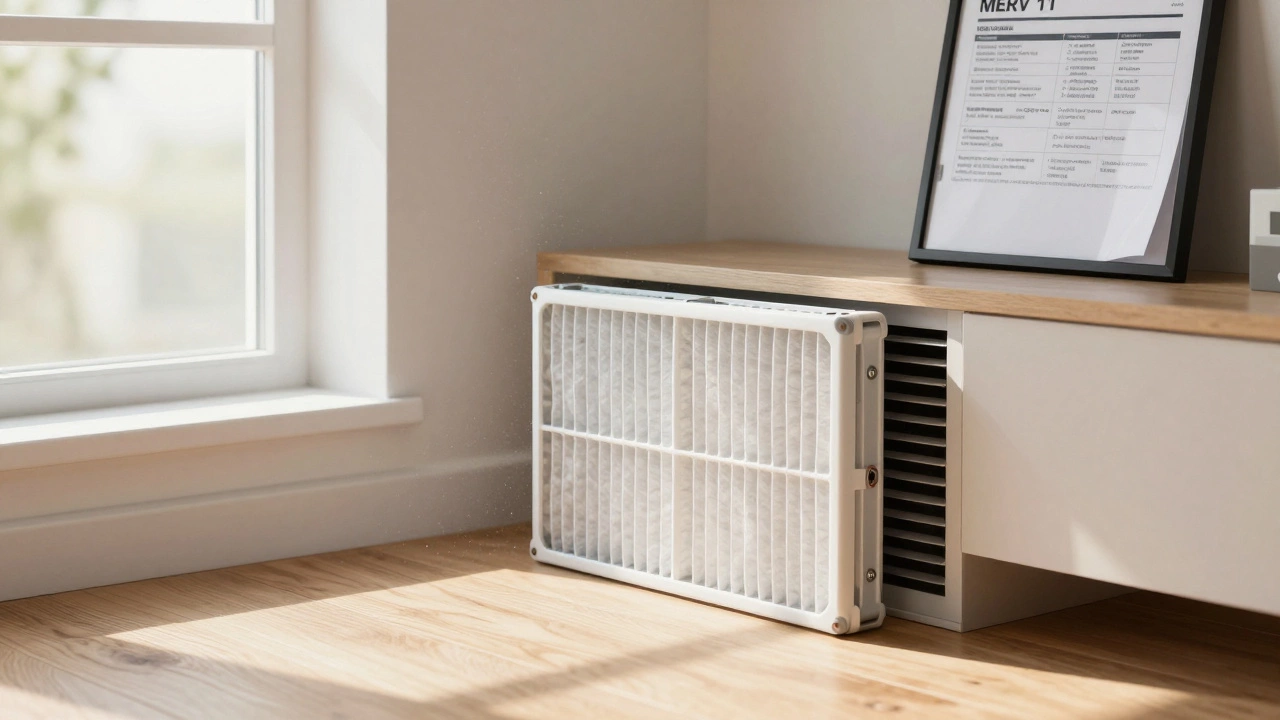
Before you buy, open your HVAC system’s manual. Look for the manufacturer’s recommended MERV rating. Most modern units (made after 2010) say MERV 8-13 is acceptable. If it says “maximum MERV 8,” don’t ignore it.
If you don’t have the manual, check the filter slot. Some units have a sticker inside the return air grill that lists the max rating. If you’re unsure, call the installer or a local HVAC tech. A five-minute call can save you hundreds in repairs.
What About HEPA Filters?
HEPA filters are often confused with high MERV ratings. They’re not the same. HEPA filters capture 99.97% of particles 0.3 microns and larger. But they’re too dense for standard home HVAC systems. You can’t just swap in a HEPA filter - it will choke your blower.
If you want HEPA-level filtration, get a standalone air purifier. Place it in your bedroom or living room. It’s more effective and won’t damage your HVAC.
How Often Should You Change the Filter?
Higher MERV filters clog faster. That’s just physics. Here’s a simple rule:
- MERV 8 - Every 90 days
- MERV 11 - Every 60-75 days
- MERV 13 - Every 30-45 days
Check your filter monthly. Hold it up to the light. If you can’t see light through it, it’s time to replace it. A dirty filter doesn’t just reduce efficiency - it makes your air worse.
Real-World Example: A Bristol Household
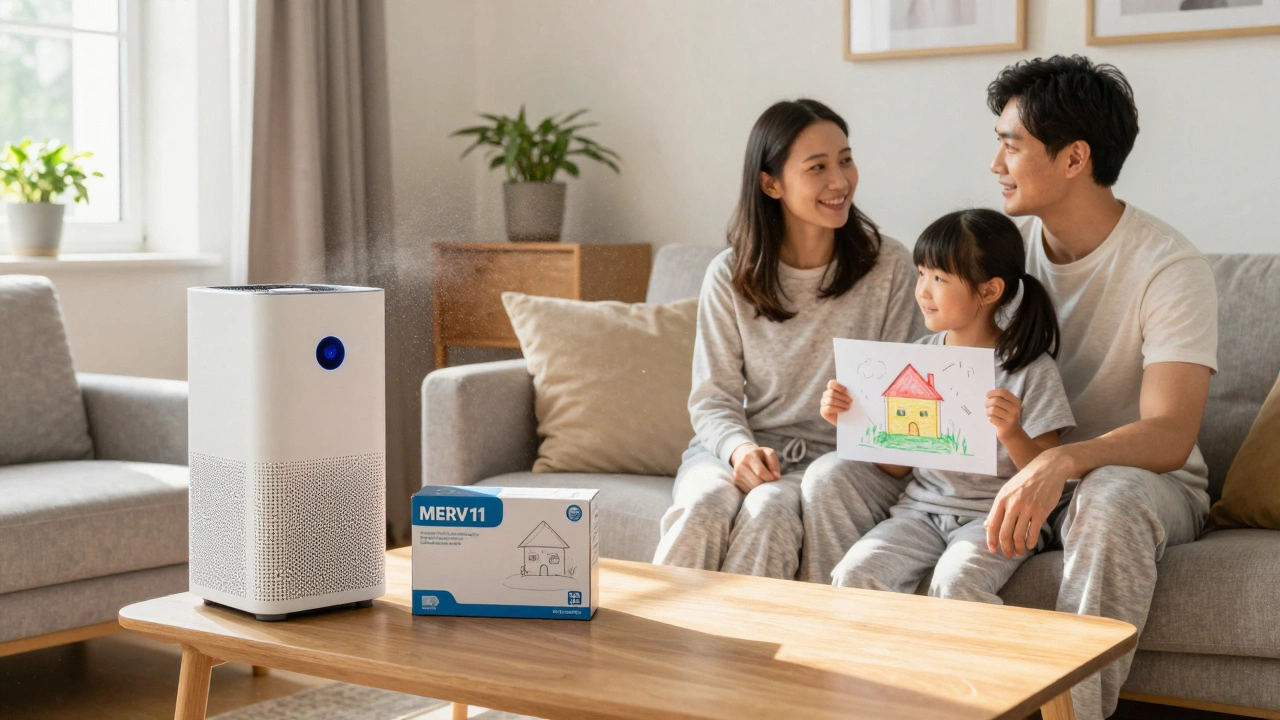
Take the Smith family. They live in a 2012 semi-detached house in Hotwells. Two kids, one dog, one parent with seasonal allergies. They started with MERV 8. Every spring, someone was sneezing. They switched to MERV 11. Within two weeks, allergy symptoms dropped. Their HVAC ran smoothly. No extra noise. No repair bills. Cost? £12 per filter, changed every two months.
They didn’t need MERV 13. They didn’t need a HEPA purifier. Just the right filter, changed on time.
Common Mistakes to Avoid
- Buying the highest MERV you can find - It’s not a badge of honor. It’s a liability.
- Ignoring airflow - If your vents feel weak or your system runs constantly, your filter might be too restrictive.
- Using washable filters - Most don’t meet MERV standards and trap less than disposable ones. They’re a false economy.
- Not checking the size - A MERV 13 filter that doesn’t fit properly is useless. Always match the dimensions exactly.
One Bristol resident bought a MERV 13 filter because it was on sale. The size was wrong - it was 1 inch too small. Dust poured into the ducts. He spent £400 cleaning the entire system.
Final Answer: What MERV Rating Should You Use?
For 9 out of 10 homes in the UK, the answer is MERV 11.
It strikes the perfect balance: it catches the particles that affect your health - pollen, mold, pet dander - without overloading your system. It’s affordable, widely available, and compatible with almost all modern HVAC units.
Only go higher if you have a medical need and your system supports it. Only go lower if your system is old and you can’t upgrade. Everything else is guesswork.
And remember: no matter what MERV you choose, change the filter on time. A dirty MERV 13 is worse than a clean MERV 8.
Can I use a MERV 13 filter in my home HVAC system?
You can, but only if your HVAC system was designed for it. Most standard home systems built after 2010 can handle MERV 13 without issue. But older units, especially those with weak blowers, may struggle. Signs your system can’t handle it include louder operation, longer run times, or the system shutting off unexpectedly. Always check your manual or consult an HVAC technician before upgrading.
Is MERV 11 better than MERV 8?
Yes, for most households. MERV 11 captures significantly more allergens - like pet dander, mold spores, and fine dust - than MERV 8. If anyone in your home has allergies, asthma, or respiratory sensitivity, MERV 11 offers real health benefits. The energy cost difference is minimal, and most modern systems handle it easily.
Do MERV ratings affect energy bills?
Yes, but only if the filter is too restrictive. A clean MERV 11 filter adds almost no extra load to your system. But a clogged MERV 13 filter can force your blower to work 15-20% harder, increasing energy use. The key is regular replacement. Change your filter before it gets dirty, and you’ll avoid efficiency drops.
Are expensive filters worth it?
Not always. A MERV 11 filter from a reputable brand costs £8-£15. A premium “allergen-blocking” filter with fancy branding might cost £25 but offer the same filtration. Focus on the MERV rating, not the marketing. Look for the MERV number printed on the frame - that’s what matters.
Can I use a MERV filter with a smart air purifier?
Yes, but they serve different roles. Your HVAC filter cleans air as it circulates through your ducts. A smart air purifier cleans air in a single room. Use both: MERV 11 for whole-house filtering, and a HEPA purifier in your bedroom for extra protection. Don’t try to replace one with the other.
Next Steps
Here’s what to do right now:
- Find your current filter. Look for the MERV rating printed on the frame.
- Check your HVAC manual or the return air grill for the manufacturer’s recommended rating.
- If you’re unsure, replace it with a MERV 11 filter - it’s the safest, most effective choice for most homes.
- Set a reminder to check it every 45 days. Replace it when it looks dark or you can’t see light through it.
Good air quality doesn’t require expensive gadgets or complex upgrades. Just the right filter, changed on time, makes a bigger difference than you think.