Air Filter Replacement Calculator
Select Filter Type
Your Driving Conditions
Most drivers don’t think about their air filter until the car starts acting weird-poor acceleration, weird smells, or the check engine light flickering. But here’s the truth: air filters are one of the easiest and cheapest things to maintain, and doing it on time can save you hundreds in repairs. So how often should you actually change it? The answer isn’t one-size-fits-all. Let’s break it down simply.
Engine Air Filter vs. Cabin Air Filter: Know the Difference
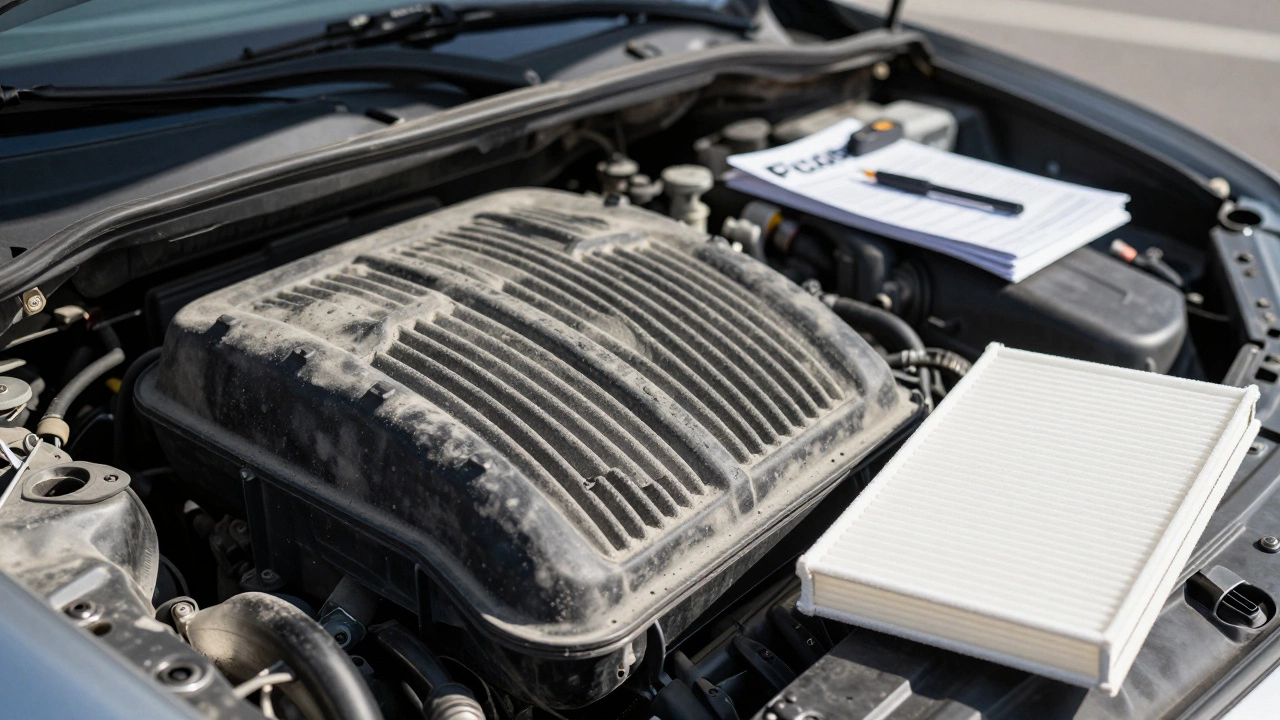
There are two air filters in your car, and they do totally different jobs. The engine air filter sits in the engine bay and cleans the air going into your engine. If it gets clogged, your engine doesn’t get enough air, which messes up the fuel mix. That leads to lower fuel efficiency, rough idling, and even engine damage over time.
The cabin air filter is in the HVAC system. It traps dust, pollen, smoke, and even mold spores before they get blown into your cabin. A dirty cabin filter doesn’t hurt your engine-but it makes your car smell like a dusty attic and can trigger allergies. If you sneeze more than usual when you turn on the AC, this is probably why.
Most people only think about the engine filter. But if you drive in a city with heavy traffic or near construction, the cabin filter clogs just as fast. You need to check both.
General Replacement Guidelines
Car manufacturers give you a recommended interval in your owner’s manual. For most vehicles, that’s every 12,000 to 15,000 miles for the engine filter, and every 15,000 to 20,000 miles for the cabin filter. But real-world driving doesn’t match those numbers.
Here’s what actually matters:
- Normal driving (highways, clean roads): Replace every 15,000 miles.
- Dusty or rural areas (dirt roads, farmland): Replace every 5,000 to 7,500 miles.
- City driving (heavy traffic, pollution): Replace the cabin filter every 10,000 miles; engine filter every 10,000-12,000.
- With pets (hair, dander): Replace both filters every 10,000 miles.
- During allergy season (spring/fall): Swap the cabin filter before pollen hits.
These aren’t guesses. A 2024 study by the Automotive Aftermarket Industry Association tracked 12,000 vehicles and found that drivers who changed filters based on conditions-instead of just mileage-saved 11% on fuel and had 30% fewer HVAC system repairs.
How to Check Your Filter (No Tools Needed)
You don’t need a mechanic to tell you if your filter is bad. Just take five minutes.
For the engine air filter:
- Open the hood and locate the air box (a black plastic box near the engine, usually with a clip or screw-on lid).
- Remove the filter. It’s usually rectangular and made of pleated paper or foam.
- Hold it up to a bright light. If you can’t see light through it, it’s clogged. If it looks gray or black with dirt, replace it.
- If you see oil spots, that’s a sign of a deeper engine problem-get it checked.
For the cabin air filter:
- Check your owner’s manual-it’s often behind the glove box, under the dashboard, or near the windshield.
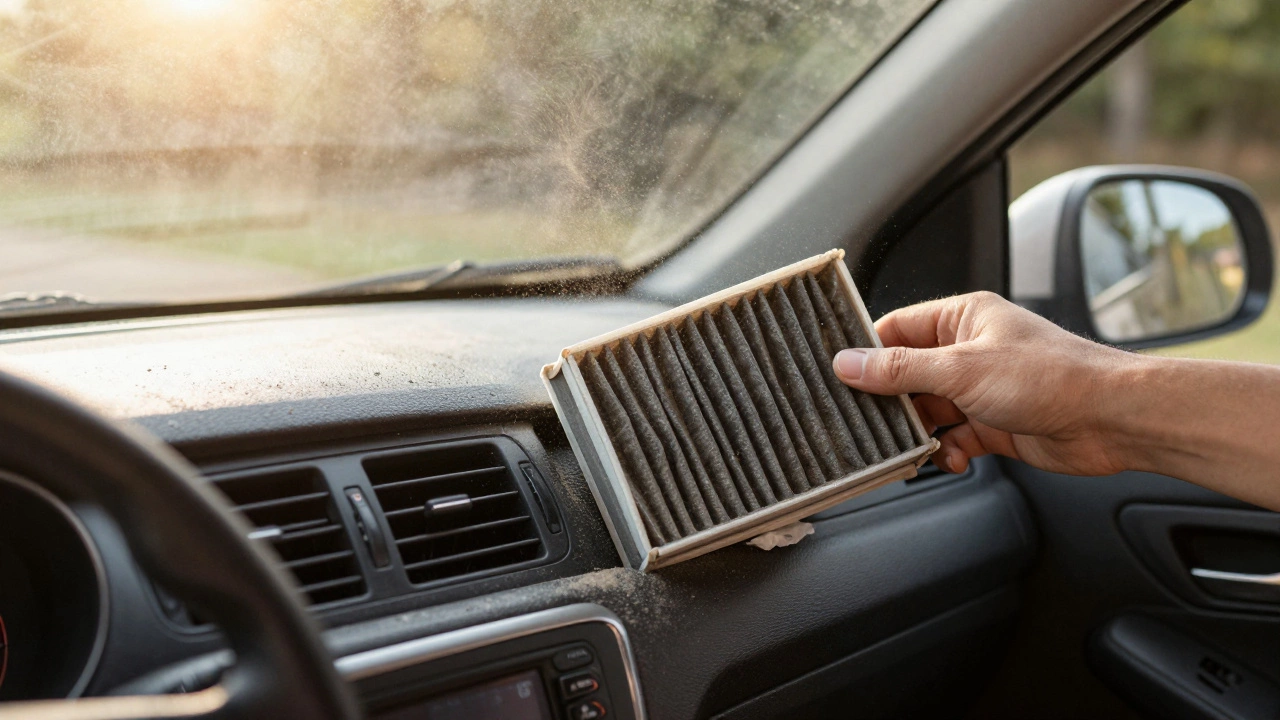
- Remove it. It’s usually smaller and may have a mesh or carbon layer.
- Smell it. If it smells musty or like wet dog, it’s full of mold.
- Shake it. If dust falls out, it’s done.
Pro tip: Do this every time you get your oil changed. It’s a quick visual check-and it takes less time than paying for coffee.
What Happens If You Skip It?
Skipping filter changes doesn’t cause instant disaster. But it’s like ignoring a small leak in your roof. It starts small, then it ruins everything.
If the engine air filter is too dirty:
- Your fuel economy drops by 5-10%
- Engine performance feels sluggish
- Carbon buildup forms on valves and pistons
- Long-term: You might need a new mass airflow sensor ($300-$600) or even engine cleaning
If the cabin air filter is ignored:
- AC airflow gets weak-your car takes forever to cool down
- Foul odors fill the cabin
- Mold and bacteria build up in the ducts
- Eventually, the blower motor burns out from working too hard ($500+ repair)
One mechanic told me he saw a Ford Explorer with a cabin filter so clogged it had turned into a brick of dust. The owner kept turning the AC up higher-and blew the motor. That’s not a coincidence. That’s neglect.
When to Upgrade Your Filter
Stock filters are fine for most drivers. But if you drive in extreme conditions, consider upgrading.
- Performance air filters (like K&N): Reusable, washable, and let in more airflow. Great for off-roaders or performance cars. They last 50,000 miles but need cleaning every 25,000. Not ideal for dusty areas unless you’re willing to maintain them.
- Cabin filters with activated carbon: These trap gases and odors better. Best for city drivers or people who park near gas stations.
- HEPA-style cabin filters: Block 99% of pollen and fine dust. Ideal for allergy sufferers. They cost more, but you’ll notice the difference.
Don’t buy the “premium” filter just because it’s expensive. Match it to your driving. A HEPA filter won’t help your engine performance. A K&N filter won’t stop mold spores.
Real-World Examples
Let’s say you drive a 2021 Honda Civic:
- You commute 20 miles a day, five days a week-so about 5,000 miles a year.
- You live in Phoenix, where dust storms happen in spring.
- You have a dog that rides in the back.
Your engine filter? Change it every 10,000 miles-that’s every two years. Your cabin filter? Change it every 10,000 miles too. That’s once a year. You’re not following the manual’s 15,000-mile advice, but you’re following reality.
Another example: You drive a 2023 Toyota Camry in downtown Chicago. You’re stuck in traffic daily. You rarely drive on highways. Your cabin filter? Change it every 8,000 miles. Your engine filter? Every 12,000. You’re not overdoing it-you’re being smart.
What About Those ‘Lifetime’ Filters?
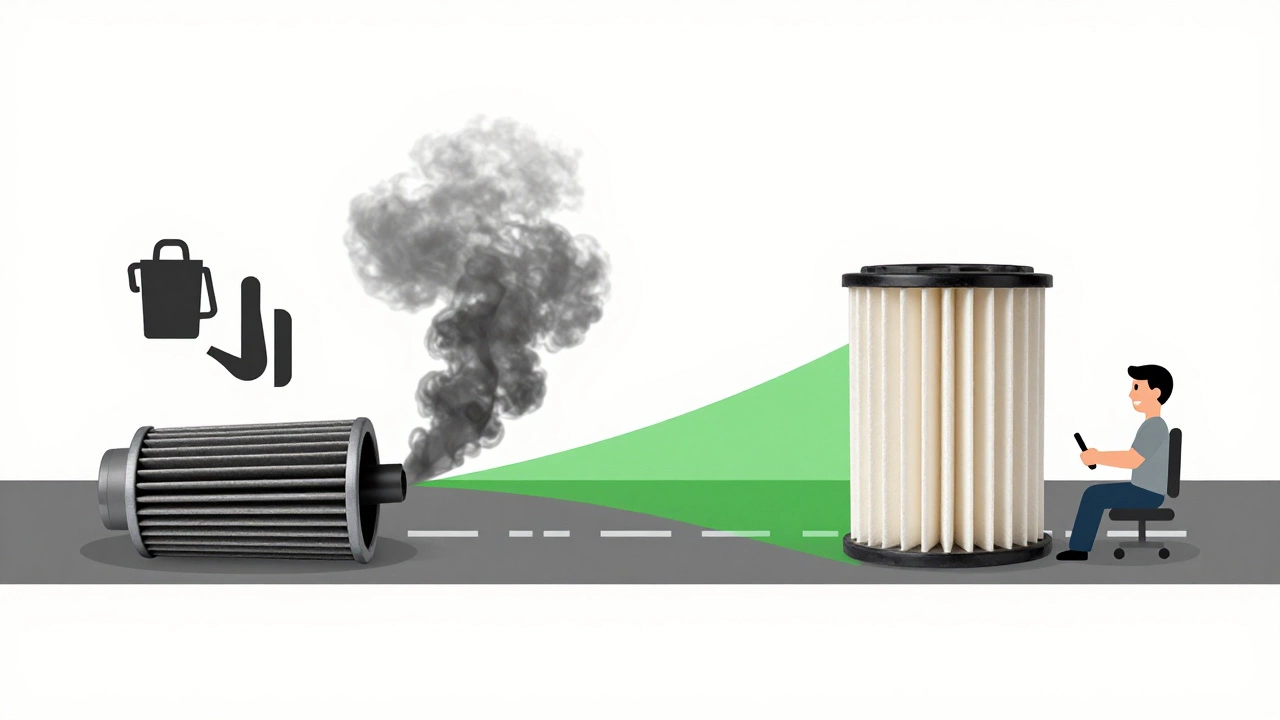
Sometimes you’ll see ads for “lifetime” air filters. They sound great. But here’s the catch: they’re usually just reusable filters that still need cleaning. They’re not magic. If you don’t clean them, they clog just like disposable ones.
And don’t believe claims like “lasts the life of the car.” That’s marketing. Filters wear out. Even the best ones need attention.
Quick Checklist: When to Replace
Replace your air filters if you notice:
- Reduced airflow from vents
- Unusual smells (musty, moldy, burning)
- Decreased fuel economy
- Engine hesitation or rough idle
- Dust buildup on dashboard (even with AC on)
- It’s been over a year since the last change
Even if you haven’t hit the mileage, if it’s been over a year, replace it. Filters don’t last forever-they just get less visible.
Final Rule of Thumb
Here’s the simplest way to remember:
- Engine filter: Change every 10,000-15,000 miles-or every year, whichever comes first.
- Cabin filter: Change every 10,000 miles-or every year, especially if you drive in cities or have allergies.
That’s it. No complicated charts. No confusing jargon. Just two simple rules. Do this, and you’ll avoid expensive repairs, save on gas, and breathe easier while driving.
Can I clean and reuse my air filter?
Only if it’s a reusable performance filter (like K&N). Standard paper filters are disposable. Washing them doesn’t restore their filtering ability-it just makes them soggy. Reusing a dirty disposable filter can let dust into your engine, which causes damage. Always check the manufacturer’s label.
Do I need to change both filters at the same time?
No. They’re separate systems and wear out at different rates. But since they’re both easy to check, it’s smart to look at both every time you get your oil changed. You might replace one now and the other in six months. That’s normal.
What happens if I use the wrong air filter?
Using a filter that doesn’t fit properly can let unfiltered air into your engine. That’s worse than no filter at all. It can scratch valves, clog fuel injectors, or damage sensors. Always match the filter to your car’s make, model, and year. The part number on your old filter is your best guide.
Is it worth buying a more expensive air filter?
For most drivers, no. A basic OEM replacement filter works fine. Premium filters are only worth it if you drive in extreme conditions-dusty off-road, heavy pollution, or have severe allergies. Then, a HEPA cabin filter or reusable engine filter makes sense. Don’t pay extra just because it’s labeled “premium.”
Can a dirty air filter cause the check engine light to come on?
Yes. A severely clogged engine air filter can cause the mass airflow sensor to read incorrectly. That triggers codes like P0171 (System Too Lean) or P0102 (Mass Airflow Sensor Low Voltage). It’s not the most common cause-but it’s one of the easiest to fix. Always check the filter before assuming it’s a sensor or fuel system problem.