Suspension Health Diagnostic Tool
Select Your Symptoms
Car bounces more than once when pushed down
Metallic sounds over bumps or speed humps
High-pitched squeaks when turning or accelerating
Car leans significantly during turns
Nose dips sharply on braking or rear squats on acceleration
Persistent shaking at certain speeds
Cupping, scalloping, or edge wear patterns
Visible grease or oil coating shock bodies
Constant correction needed to keep straight
💡 Quick Tip
Select all symptoms you've noticed for the most accurate diagnosis. Even minor signs can indicate developing problems.
You’re driving along the M32 in Bristol, hitting a familiar pothole near Temple Meads. Normally, your car absorbs the impact with a dull thud. Today, it feels like you just drove over a brick wall. The steering wheel vibrates, and your teeth rattle. You might be thinking, "Is that normal for an older car?" Or maybe, "Do I really need to pay for a mechanic right now?"
Ignoring these signs is dangerous. A damaged suspension system doesn’t just make your ride uncomfortable; it compromises your ability to control the vehicle. It increases stopping distances, causes uneven tire wear, and can lead to catastrophic failure at speed. But how do you know if it’s actually broken or just aging?
This guide breaks down the specific, observable symptoms of suspension failure. We’ll look at what you see, hear, and feel while driving so you can make an informed decision about repairs.
The Bounce Test: The First Line of Defense
Before you even start the engine, you can perform a simple check known as the "bounce test." This is one of the most reliable ways to assess the condition of your shock absorbers and struts.
Here is how you do it:
- Stand at one corner of your vehicle (e.g., the front left).
- Push down firmly on the bumper or fender to compress the suspension.
- Release it suddenly.
A healthy suspension will return to its resting position immediately after bouncing once. If the car continues to bounce up and down two or more times before settling, your shock absorbers are likely worn out. They have lost their damping capability, meaning they can no longer control the movement of the springs effectively.
Repeat this for all four corners. If only one side bounces excessively, you may have a single failed strut or shock, which often means the other three are nearing the end of their life too. Suspension components usually wear out in pairs due to similar usage patterns.
Listening for Unusual Noises
Your ears are often the first warning system. A well-maintained suspension is quiet. When things go wrong, they tend to be loud. Pay attention to these specific sounds:
- Clunking or Knocking: If you hear a metallic clunk when going over bumps or speed humps, it could indicate worn control arm bushings, ball joints, or sway bar links. These parts connect the wheels to the frame, and when they develop play, they rattle against each other.
- Squeaking: High-pitched squeaks when turning or going over small imperfections often point to dried-out rubber bushings or lack of lubrication in pivot points.
- Creaking: A deep creaking sound during acceleration or braking might suggest issues with the rear leaf springs or air suspension bags, depending on your vehicle type.
If the noise stops when you apply slight pressure to the brake pedal while moving slowly, it’s almost certainly a suspension issue rather than a wheel bearing problem. The brakes load the suspension, reducing the play that causes the noise.
Feeling the Ride Quality
We get used to our cars’ quirks over time. However, a sudden change in ride quality is a major red flag. If your car feels "floaty" or unstable at highway speeds, your suspension isn’t keeping the tires planted on the road.
Consider these scenarios:
- Excessive Body Roll: When you take a sharp turn, does the car lean significantly more than usual? This indicates weak struts or worn sway bar bushings. The lateral forces aren’t being managed correctly, pushing the body outward.
- Diving and Squatting: Does the nose dip sharply when you brake hard? Does the rear squat heavily when you accelerate? This is called pitch motion. Healthy dampers control this movement. Excessive diving reduces front tire grip during emergency stops, increasing crash risk.
- Vibration: Persistent vibration in the steering wheel or seat, especially at certain speeds, can stem from worn suspension mounts or unbalanced tires caused by uneven suspension geometry.
In Bristol’s wet climate, maintaining tire contact is crucial. Poor suspension performance directly impacts traction, making hydroplaning more likely.
Visual Inspection: What to Look For Underneath
While you don’t need to be a mechanic, a visual check can reveal obvious problems. Park on level ground and look closely at your wheels and undercarriage.
| Symptom | Likely Cause | Severity |
|---|---|---|
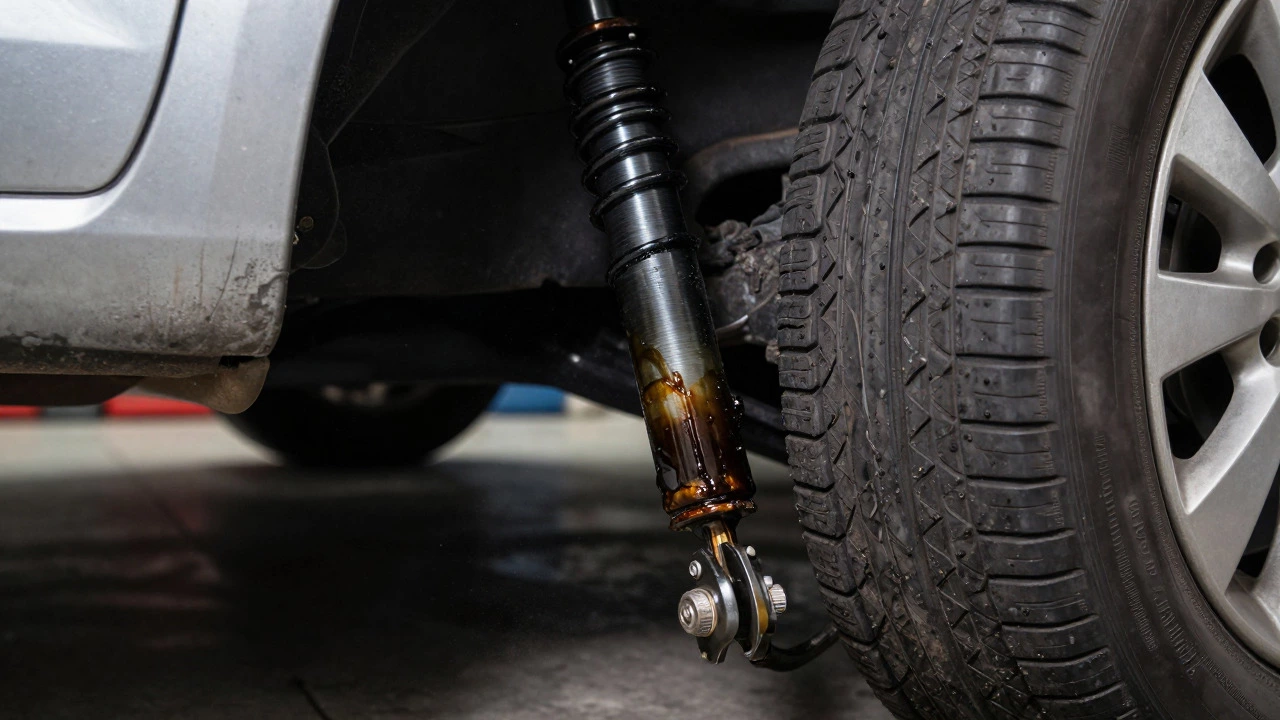
| Oil leaks on shocks/struts | Worn seals inside the damper | High - Immediate replacement needed |
| Uneven tire tread wear | Bad alignment, worn bushings, or collapsed springs | Medium - Check alignment and components |
| Car sits lower on one side | Broken spring or leaking air suspension bag | High - Risk of bottoming out |
| Cracked or torn rubber boots | Exposed ball joints or CV joints | Medium - Debris can enter and destroy joint |
Pay special attention to oil leaks. Shock absorbers contain hydraulic fluid. If you see grease or oil coating the outside of the shock body, the internal seals have failed. Once sealed, the shock loses pressure and effectiveness. Unlike engine oil, this fluid cannot simply be topped up; the entire unit must be replaced.
Tire Wear Patterns as Diagnostic Tools
Your tires tell a story about your suspension health. Uneven wear is rarely just about inflation pressure. Specific patterns point to specific suspension failures.
- Cupping or Scalloping: Dips around the tire’s circumference indicate that the tire is bouncing slightly instead of rolling smoothly. This is a classic sign of worn shock absorbers.
- Inner or Outer Edge Wear: Excessive wear on one edge suggests incorrect camber angle. This can be caused by bent suspension arms, worn control arm bushings, or damaged strut mounts.
- Center Strip Wear: While often related to over-inflation, consistent center wear combined with a harsh ride can indicate stiff or broken springs failing to absorb vertical loads.
If you notice these patterns, replace the tires only after fixing the underlying suspension issue. Otherwise, you’ll ruin the new tires quickly.
Steering Responsiveness Issues
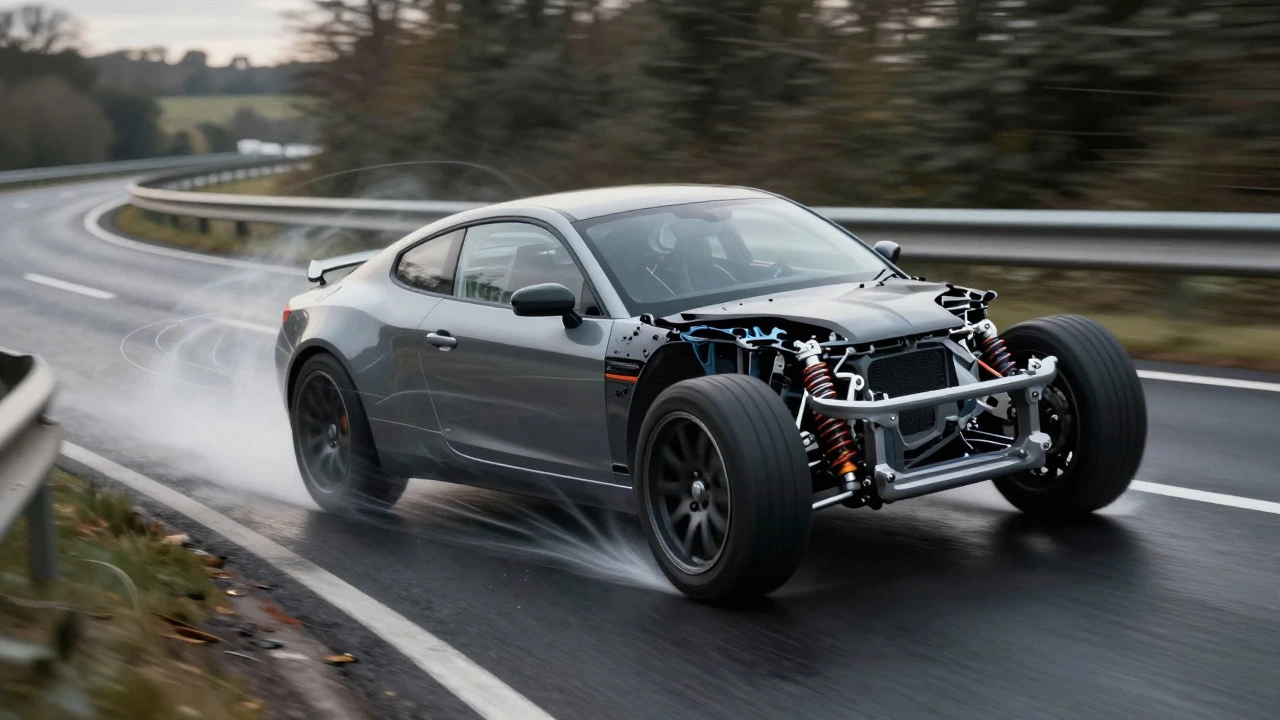
Suspension and steering systems are deeply interconnected. Problems in one area affect the other. If your steering feels vague, loose, or requires constant correction to keep the car straight, suspect suspension wear.
Worn tie rod ends, ball joints, or control arm bushings create excess play in the steering mechanism. This results in "steering wander," where the car drifts lane-to-lane without input. On motorways, this is fatiguing and dangerous because it delays your reaction time to obstacles.
Test this by driving on a flat, straight road. Take your hands off the wheel briefly (safely!). If the car pulls significantly to one side or wobbles, your suspension geometry is compromised.
When to Seek Professional Help
Some checks you can do yourself, but others require lifting the vehicle. If you’ve identified any of the above symptoms, take your car to a trusted garage. In the UK, many independent garages offer free suspension inspections.
Ask them to check:
- All bushings for cracks or splits
- Ball joints for vertical play
- Tie rods for looseness
- Strut mounts for wear
Don’t ignore minor noises. Suspension parts fail progressively. A small leak today becomes a total collapse tomorrow. Regular maintenance extends the life of your tires, brakes, and overall vehicle safety.
How much does it cost to fix a damaged suspension?
Costs vary widely depending on the part and labor. Replacing a single shock absorber might cost £100-£200 including labor, while replacing all four struts on a premium car could exceed £800. Always ask for a quote covering both parts and VAT. Independent mechanics in Bristol often charge less than main dealerships.
Can I drive with a broken suspension?
Technically yes, but it’s risky. A partially failed suspension reduces handling stability and increases stopping distances. If a component like a control arm breaks completely, the wheel can detach from the vehicle. Drive cautiously and avoid high speeds until repaired.
What causes suspension damage fastest?
Repeated impacts from potholes, curbs, and speed bumps accelerate wear. Carrying heavy loads regularly also strains springs and dampers. Corrosion from road salt in winter climates degrades metal components and rubber bushings over time.
How long do shock absorbers last?
Most manufacturers recommend inspecting shocks every 50,000 miles and replacing them between 60,000 and 100,000 miles. However, severe driving conditions or frequent off-road use can shorten this lifespan significantly. There is no fixed expiration date; condition matters more than mileage.
Does bad suspension affect MOT tests?
Yes. The UK MOT test checks for excessive wear or damage to suspension components. Leaking shock absorbers, split rubber bushes, and loose ball joints are common reasons for failure. Fixing these issues beforehand ensures a smoother inspection process.