MERV Filter Compatibility Calculator
Your System Information
Recommended Filters
Based on your system:
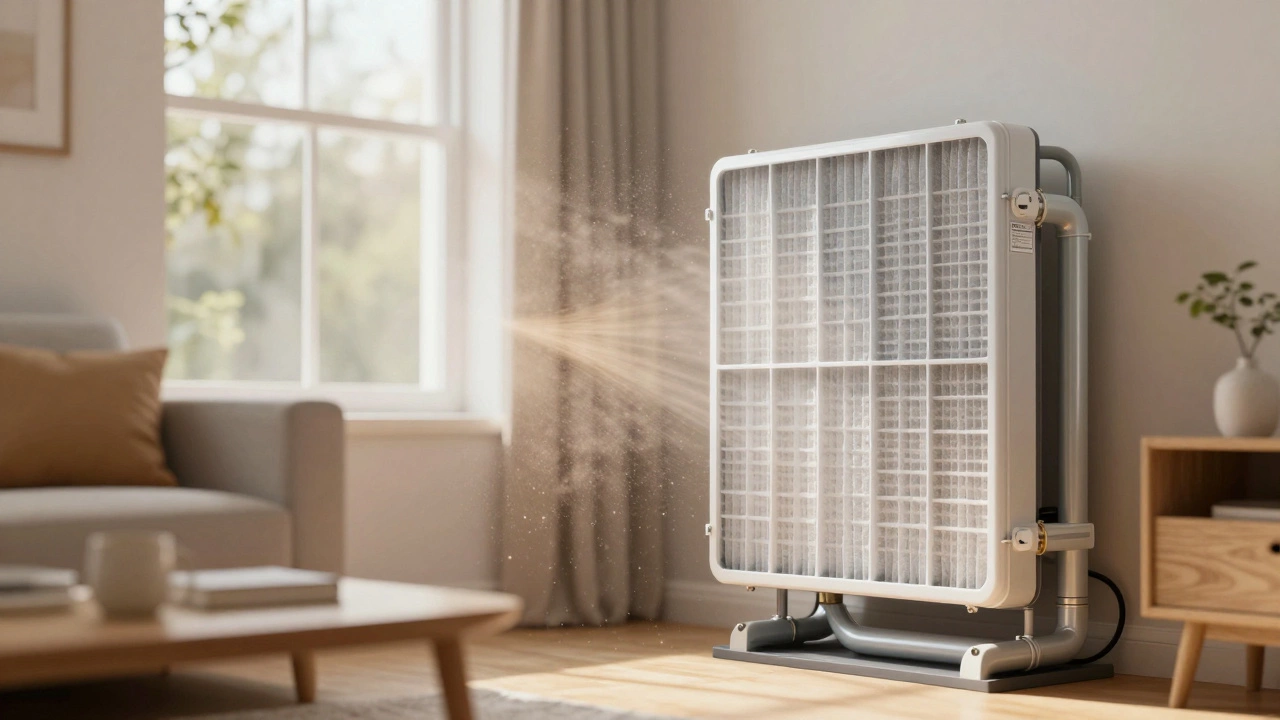
If you’ve ever stared at a pack of air filters and seen MERV 14 staring back at you, you’re not alone. It sounds impressive - high efficiency, hospital-grade, particle-trapping power. But is it actually right for your home? Or is it overkill that could cost you more money and stress your HVAC system? Let’s cut through the marketing noise and look at what MERV 14 really means for a typical house in the UK.
What Does MERV 14 Even Mean?
MERV stands for Minimum Efficiency Reporting Value. It’s a scale from 1 to 20 that tells you how well a filter catches tiny particles. A MERV 14 filter can trap particles as small as 0.3 to 1.0 microns - think pollen, mold spores, fine dust, and even some bacteria. That’s the same level used in some hospitals and clean rooms. Sounds great, right?
But here’s the catch: higher MERV ratings mean tighter filter media. That’s great for trapping stuff - but it also makes it harder for air to flow through. Your HVAC system isn’t built to push air through something that dense unless it was designed for it. Most residential systems were made for MERV 8 to MERV 11 filters. Pushing MERV 14 into that setup is like putting a sports car engine in a compact sedan and expecting it to run smoothly.
Why Most Homes Don’t Need MERV 14
The average UK home doesn’t have the kind of air quality problems that demand MERV 14. Sure, you might have allergies, or someone in the house smokes, or you live near a busy road. But even then, MERV 13 is usually more than enough. MERV 14 is designed for environments where even microscopic particles can cause serious harm - think labs, operating rooms, or industrial settings.
Most homes benefit more from regular cleaning, good ventilation, and humidity control than from an ultra-dense filter. A MERV 12 filter will catch 90% of airborne particles that affect health and comfort. Going to MERV 14 only adds another 5-7% efficiency - at a steep cost.
The Hidden Costs of MERV 14
It’s not just about the filter price. A MERV 14 filter costs 2-3 times more than a standard MERV 11. But the real expense comes from what it does to your system.
- Your blower motor has to work harder to pull air through the dense media. That means higher electricity bills.
- Straining the motor can shorten its lifespan. Replacing a furnace blower costs £500-£1,200.
- Restricted airflow can cause your heat exchanger to overheat, leading to cracks - a repair that often means replacing the whole furnace.
- You’ll need to change the filter more often. MERV 14 clogs faster, sometimes every 30 days instead of 90.
In Bristol, where winters are damp and HVAC systems run frequently, this added strain can mean trouble faster than you think. I’ve seen homeowners replace their furnaces two years early because they thought a MERV 14 was "better." It wasn’t.
What Happens When You Use MERV 14 in a Standard System?
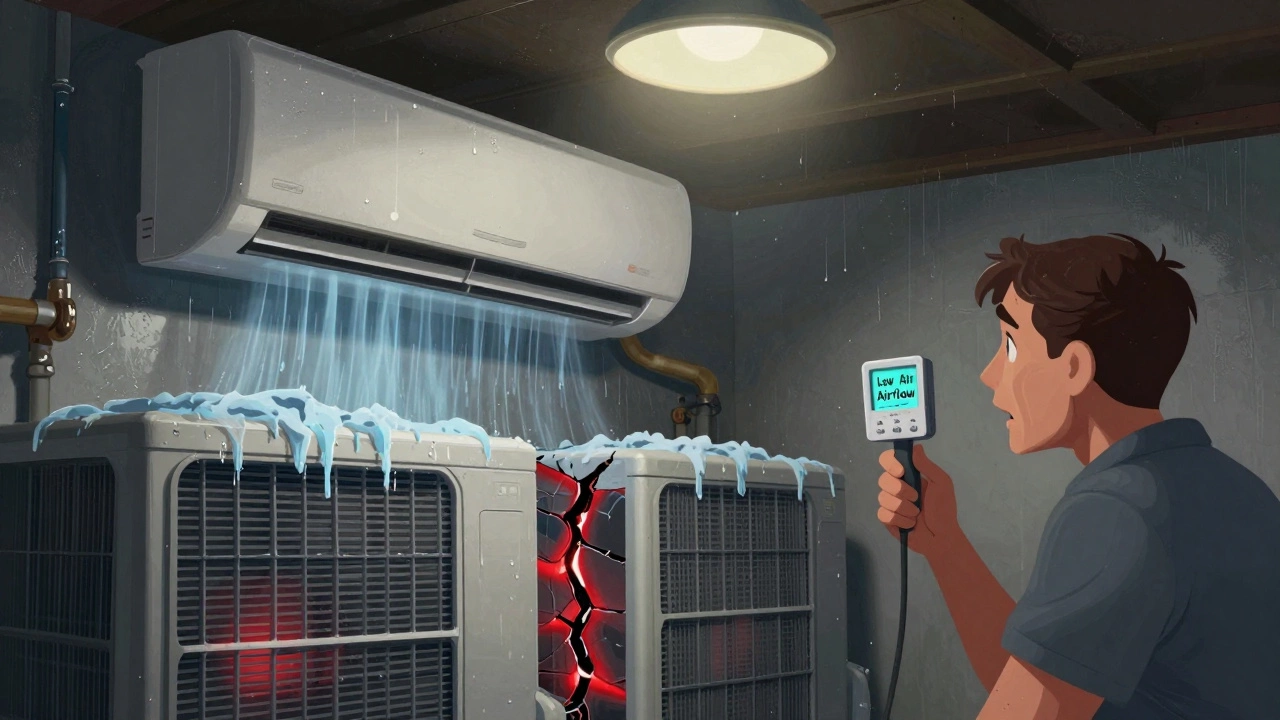
Here’s what actually happens when you install a MERV 14 filter in a home not designed for it:
- Reduced airflow - you’ll notice rooms feel stuffy, even when the heater or AC is running.
- Uneven temperatures - some rooms stay cold, others get too warm.
- Louder operation - your furnace sounds like it’s straining, like a car climbing a steep hill in the wrong gear.
- Ice buildup on AC coils - because not enough warm air is moving over them.
- System shutdowns - your thermostat may show "system fault" or "low airflow" warnings.
These aren’t minor inconveniences. They’re warning signs your system is being pushed beyond its limits. And if you ignore them, you’re gambling with your heating bill - and your safety.
When Might MERV 14 Be Okay?
There are exceptions. If your home has a high-end HVAC system built for high-efficiency filters - like a variable-speed blower with a 1.5+ static pressure rating - then MERV 14 might work. But you’ll need to know your system specs. Check the manual. Look for labels on the furnace that say "compatible with MERV 13-16" or "high-efficiency filtration."
Also, if someone in your home has severe respiratory conditions - like advanced COPD, cystic fibrosis, or immune system disorders - and your doctor recommends ultra-fine filtration, then MERV 14 could be justified. But even then, it should be paired with professional HVAC assessment. Don’t guess.
What Should You Use Instead?
For most UK homes, the sweet spot is MERV 11 or MERV 13.
- MERV 8: Good for basic dust and lint. Fine if you don’t have pets or allergies.
- MERV 11: Best balance. Catches pollen, mold, dust mites, and smoke. Works with nearly all residential systems.
- MERV 13: Excellent for allergy sufferers. Catches bacteria and finer particles. Still safe for most modern furnaces.
Pair your filter with regular duct cleaning, a humidifier in winter, and a good air purifier for the bedroom. That combo will do more for your air quality than any ultra-high MERV filter ever could.
Myth Busting: "Higher MERV = Cleaner Air"
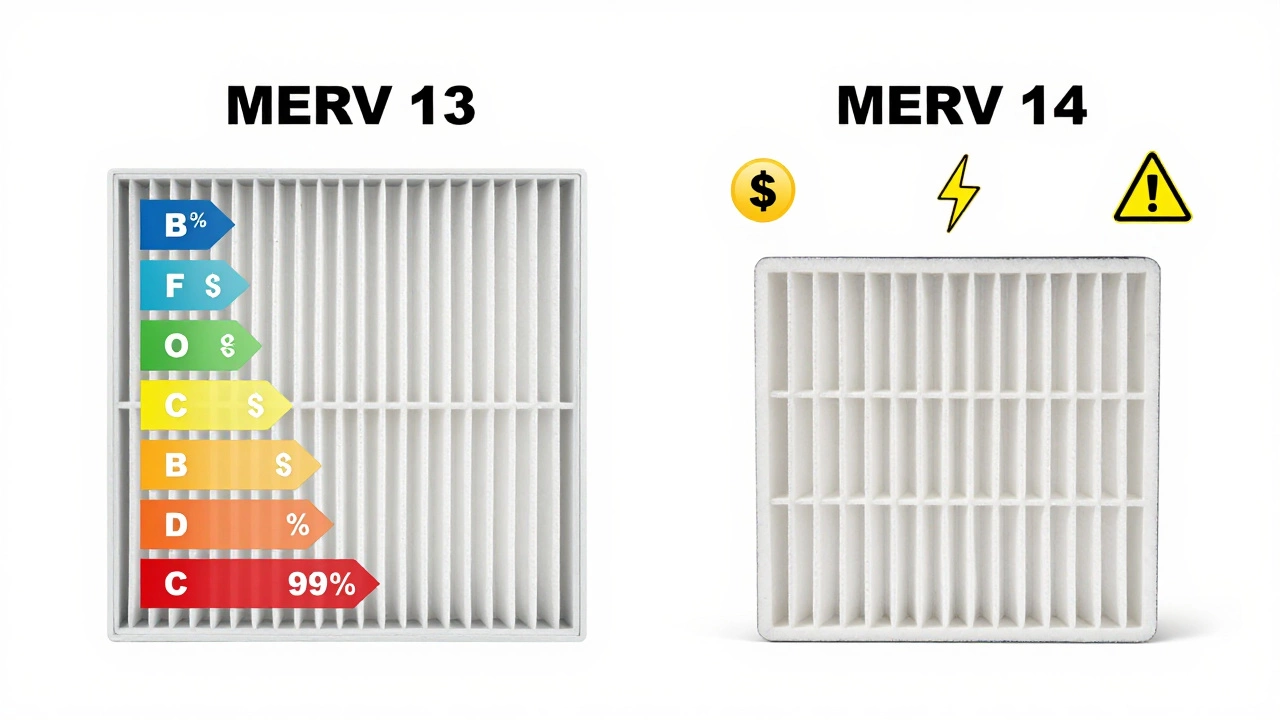
It’s tempting to think that if MERV 14 is better than MERV 11, then it’s twice as good. But air filtration doesn’t work like that. The jump from MERV 8 to MERV 11 gives you a huge improvement. The jump from MERV 13 to MERV 14? Almost negligible.
Think of it like sunscreen. SPF 30 blocks 97% of UV rays. SPF 50 blocks 98%. Going from SPF 30 to 50 gives you 1% more protection - but costs more and feels heavier. Same with filters. MERV 13 gets you 99% of the way there. MERV 14? You’re paying for a sliver of extra benefit while risking your system.
What to Do If You Already Installed MERV 14
If you’ve already put in a MERV 14 filter and your system seems to be struggling - here’s what to do:
- Turn off the HVAC system.
- Remove the MERV 14 filter.
- Install a MERV 11 or MERV 13 filter.
- Wait 24 hours and turn the system back on.
- Listen for changes - airflow should feel stronger, noise should drop.
If your system still doesn’t perform right after switching, call an HVAC technician. You might have a clogged duct or a failing blower motor. Don’t keep pushing the wrong filter - it’s not helping.
Final Verdict
Is MERV 14 too high for residential use? For 95% of homes - yes. It’s not just unnecessary. It’s risky. You’re trading convenience, cost, and system longevity for a tiny gain in air quality that most people won’t even notice.
Stick with MERV 11 or MERV 13. Keep your filters changed every 3-6 months. Clean your ducts every 2-3 years. And if you’re worried about air quality, invest in a HEPA air purifier for your bedroom. It’s cheaper, safer, and way more effective than forcing your furnace to do a job it wasn’t built for.
Can MERV 14 damage my HVAC system?
Yes, if your system wasn’t designed for high-efficiency filters. MERV 14 restricts airflow so much that it can overwork the blower motor, cause overheating, and lead to cracked heat exchangers. Most residential systems are built for MERV 8-11. Forcing a MERV 14 into them can shorten their lifespan by years.
Is MERV 14 better than MERV 13 for allergies?
Not significantly. MERV 13 already captures 90-95% of airborne allergens like pollen, mold, and pet dander. MERV 14 captures a few more ultrafine particles - but the difference is so small that most people won’t feel any improvement. The added strain on your system isn’t worth it unless you have a medical-grade need.
How often should I change a MERV 14 filter?
Every 30 to 45 days - much more often than standard filters. Because MERV 14 traps so many particles, it clogs quickly. If you leave it in too long, airflow drops even further, which strains your system and reduces indoor air quality. Check it monthly.
Do I need MERV 14 if I have pets?
No. MERV 11 or MERV 13 is perfect for pet owners. Pet dander particles are typically 1-10 microns in size - easily caught by MERV 13. MERV 14 won’t help you notice a difference, but it will cost you more in energy bills and potential repairs.
Can I use MERV 14 with a smart thermostat?
Smart thermostats can’t fix airflow problems. If your system can’t handle MERV 14, the thermostat will just show errors like "low airflow" or "system fault." It won’t compensate. The issue is mechanical - not digital. Using MERV 14 with a smart thermostat doesn’t make it safer - it just gives you more alerts.