When you hear a grinding noise coming from your transmission or feel the clutch slipping under acceleration, it’s time to think about a clutch replacement. But here’s the question most people don’t ask until they’re halfway through the job: Do you need a new flywheel when replacing the clutch? The answer isn’t simple. It depends on the type of flywheel, how your car’s been driven, and whether the old one shows signs of damage.
What Exactly Is a Flywheel?
The flywheel is a heavy metal disc bolted directly to the engine’s crankshaft. Its job? To store rotational energy and smooth out the power pulses from the engine cylinders. In manual transmission cars, it also provides the friction surface for the clutch disc to grip against. Without it, your engine would shake violently at idle, and shifting gears would feel like trying to grab a spinning top with bare hands.
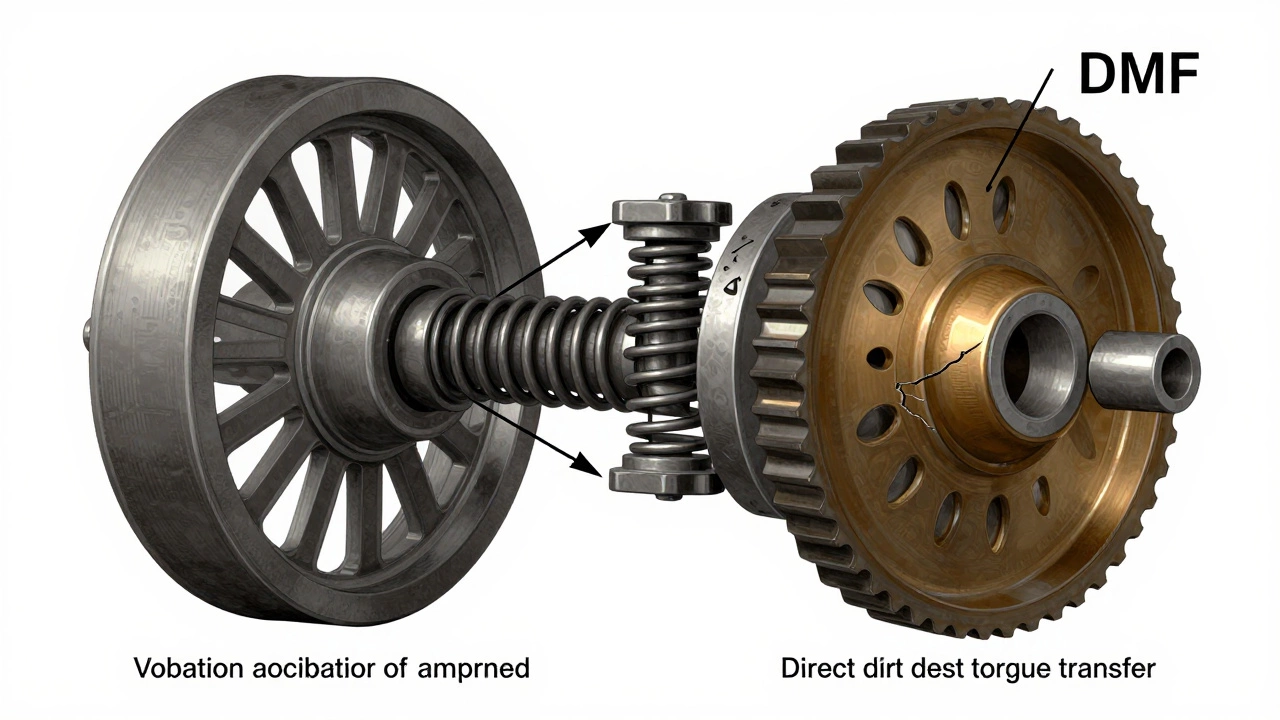
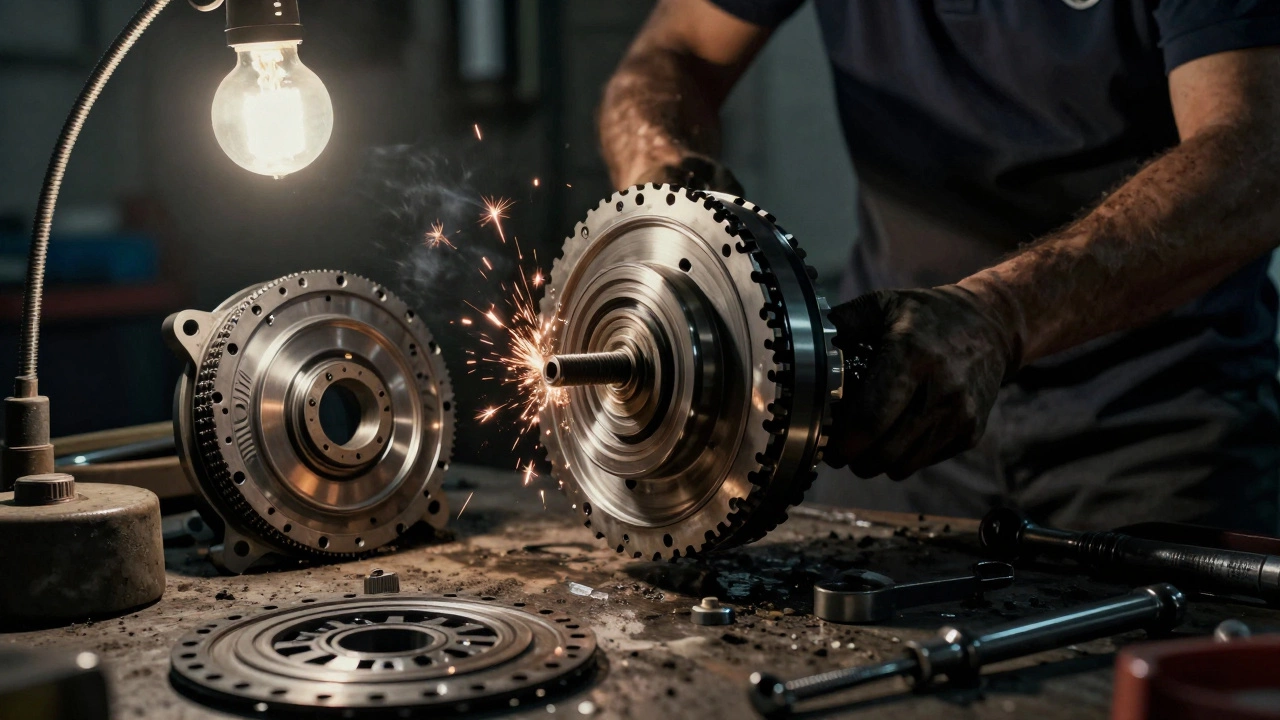
There are two main types: solid flywheels and dual mass flywheels (DMF). Solid flywheels are simple, heavy steel discs-common in older cars and performance vehicles. Dual mass flywheels have two separate parts connected by springs and dampers. They’re designed to absorb engine vibrations, making the ride smoother in modern cars, especially diesels and turbocharged engines.
Why You Might Need a New Flywheel
You don’t always need to replace the flywheel when swapping the clutch. But if you skip it when you should, you’ll regret it. Here’s why:
- Worn friction surface: The clutch disc rubs against the flywheel every time you engage the clutch. Over time, this wears down the surface. If you see grooves deeper than 0.5 mm, hot spots, or bluing (discoloration from overheating), the flywheel needs replacement.
- Cracked or warped surface: A cracked flywheel is dangerous. It can shatter under load. Warping-often from overheating or improper installation-causes clutch chatter and vibration. Neither can be fixed with resurfacing.
- Dual mass flywheel failure: DMFs have internal springs and dampers that wear out. If you hear a rattle from the bellhousing when the engine is idling, or feel a clunk when shifting from neutral to first gear, the DMF is likely broken. Once those springs fail, there’s no repair. You must replace the whole unit.
- Previous poor installation: If the clutch was replaced before without resurfacing or using incorrect torque specs, the flywheel may have been damaged. Mechanics who skip flywheel inspection are cutting corners.
Many shops will tell you to always replace the flywheel with the clutch. That’s not always true-but it’s often the smartest move. Why? Because labor is the big cost here. Once you’ve pulled the transmission, the extra $150-$400 for a new flywheel is cheap compared to paying to drop the transmission again in six months.
When You Can Get Away with Resurfacing
If you have a solid flywheel and it’s in decent shape, resurfacing is a valid option. Resurfacing means machining the contact surface flat again using a lathe. It removes a thin layer of metal to restore a smooth, even surface for the new clutch disc.
But only do this if:
- The flywheel is still above the manufacturer’s minimum thickness (check your service manual-some are as low as 24 mm).
- There are no cracks, deep grooves, or warping.
- You’re not dealing with a dual mass flywheel. You cannot resurface a DMF. The internal damping components are destroyed by machining.
Resurfacing saves money-but only if the flywheel is truly salvageable. A badly resurfaced flywheel can cause the new clutch to slip or grab unevenly. That’s worse than the original problem.
What Happens If You Skip Replacing a Bad Flywheel?
Skipping a worn or damaged flywheel is like putting new tires on a bent rim. The clutch will engage, but it won’t work right.
- Clutch chatter: You’ll feel a vibration or shudder when you let out the clutch, especially at low speeds. It sounds like the car is hiccuping.
- Premature clutch failure: A rough or warped surface causes uneven pressure on the clutch disc. The friction material wears out faster. You might burn through a new clutch in under 20,000 miles.
- Noisy operation: A cracked DMF can rattle loudly. A warped solid flywheel can cause a rhythmic clunk every time you shift.
- Damage to other parts: Excessive vibration can wear out the input shaft bearing, throw-out bearing, or even the transmission itself.
One mechanic I worked with told me about a customer who saved $300 by not replacing the flywheel. Six weeks later, the new clutch failed. He came back furious. The flywheel had been cracked. The new clutch was destroyed. He ended up paying $800 more than if he’d done it right the first time.
How to Check Your Flywheel Before Replacing the Clutch
Before you buy a new clutch kit, inspect the flywheel. Here’s how:
- Remove the clutch assembly and transmission.
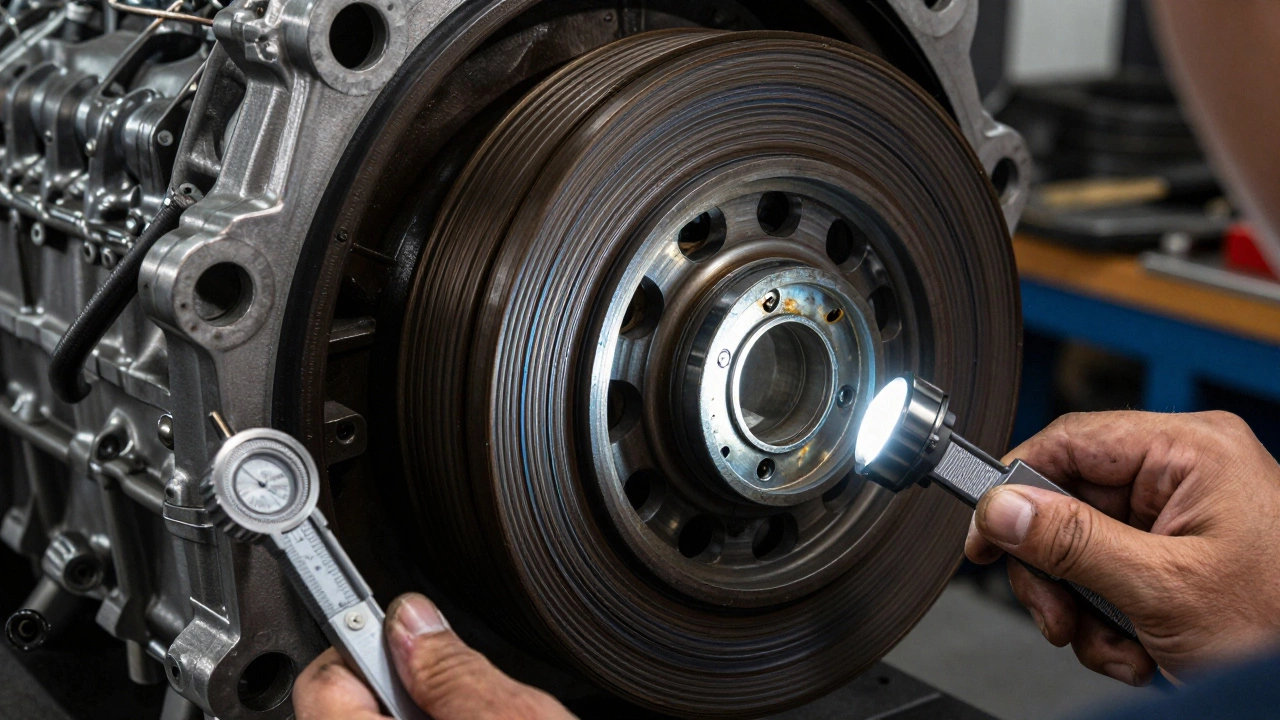
- Look at the friction surface. Use a flashlight and your fingers. Run your hand over the surface. Are there grooves? Hot spots? Rough patches?
- Check for cracks. Look closely at the edges and around the bolt holes. Even a hairline crack is a deal-breaker.
- Spin the flywheel by hand. If it wobbles or feels uneven, it’s warped.
- For dual mass flywheels: hold the outer ring and try to twist it. It should have slight movement (due to the springs) but no clunking or free rotation. If you hear a rattle or the outer ring spins freely, it’s dead.
- Measure thickness with a micrometer if you have one. Compare to the minimum spec in your repair manual.
If you’re not comfortable doing this yourself, take it to a shop that specializes in drivetrain work. Most will inspect the flywheel for free if you’re having them install the new clutch.
What to Buy: OEM, Aftermarket, or Performance?
Not all flywheels are created equal. Your choice depends on how you drive.
- OEM (Original Equipment): Best for daily drivers. They match the factory specs for smoothness and vibration control. Ideal if you have a DMF and want to keep your car quiet and comfortable.
- Aftermarket solid flywheel: Cheaper than OEM DMFs. Good for older cars or if you’re replacing a failed DMF with a solid one. But expect more engine vibration, especially at idle. Not recommended for modern cars unless you’re tuning for performance.
- Performance flywheel: Lighter, made of steel or aluminum. Used in racing or track cars. Reduces rotational mass, improving acceleration. But it makes the car harder to drive in traffic. You’ll feel every engine pulse. Only for enthusiasts who know what they’re getting into.
Never buy a cheap, no-name flywheel off eBay. I’ve seen too many cases where the surface was uneven or the weight was off. Those cause clutch chatter and early failure.
Real-World Example: A 2018 Volkswagen Golf TDI
A customer brought in a 2018 Golf TDI with a slipping clutch. The DMF was original, with 98,000 miles. We removed the clutch and found the DMF had a broken spring pack. The outer ring rattled when twisted. The friction surface was glazed and had deep grooves. The clutch disc was worn thin.
We replaced the clutch kit and the DMF with a new OEM unit. Total cost: $1,200. The car runs smoother than when it was new. The customer didn’t believe it until he felt the difference.
Had we just replaced the clutch, the new disc would’ve worn out in 10,000 miles. The DMF would’ve kept rattling. The transmission bearing would’ve failed next. The total cost? Probably $1,800.
Final Decision: Should You Replace the Flywheel?
Here’s your quick checklist:
- Replace the flywheel if: You have a dual mass flywheel with any sign of failure, the surface is grooved or glazed, there’s visible cracking, or the thickness is below minimum.
- Resurface the flywheel if: It’s a solid flywheel, no cracks, no warping, and it’s thick enough.
- Always replace the flywheel if: You’re unsure. It’s cheaper than a second repair.
Most mechanics will recommend replacing it. They’re not just trying to upsell you. They’ve seen the aftermath of skipped flywheels. It’s not a luxury-it’s insurance.
When you’re replacing the clutch, treat the flywheel like a critical part. It’s not just a passive component. It’s the foundation the entire clutch system relies on. Get it right the first time, and you’ll drive smoothly for years.
Do you always need to replace the flywheel when replacing the clutch?
No, you don’t always need to replace it-but you should inspect it every time. Solid flywheels can be resurfaced if they’re in good condition and thick enough. Dual mass flywheels (DMFs) cannot be resurfaced and must be replaced if they show any signs of wear, noise, or damage.
Can you resurface a dual mass flywheel?
No. Dual mass flywheels have internal springs and dampers that absorb engine vibrations. Machining the surface destroys these components. Even if the surface looks okay, the internal parts may already be worn. Resurfacing a DMF is not safe or effective.
How do I know if my flywheel is bad?
Signs of a bad flywheel include clutch chatter (vibration when engaging), a rattle from the bellhousing at idle, difficulty shifting, or a burning smell. Visually, look for deep grooves, bluing (discoloration), cracks, or warping. For DMFs, try twisting the outer ring-it should have slight movement but no clunking or free spin.
What’s the difference between a solid flywheel and a dual mass flywheel?
A solid flywheel is one solid piece of steel that stores engine momentum. A dual mass flywheel has two separate parts connected by springs and dampers. DMFs reduce engine vibrations, making rides smoother, especially in diesel and turbocharged engines. Solid flywheels are simpler, lighter, and used in performance or older vehicles.
Is it worth upgrading to a performance flywheel?
Only if you drive your car on tracks or race it. Performance flywheels are lighter, which improves throttle response and acceleration. But they make the car harder to drive in traffic because they transmit more engine vibration. For daily driving, stick with OEM or a quality aftermarket solid flywheel.
How much does it cost to replace a flywheel with the clutch?
A clutch kit alone might cost $300-$600. Adding a new flywheel (OEM) can add $400-$800. Labor is usually $600-$1,000 depending on the car. Total? Around $1,300-$2,200. Skipping the flywheel might save $400 now-but if it fails later, you’ll pay double to fix it.