Find Your Ideal Suspension Type
Select the options that best describe your driving needs:
Recommended:
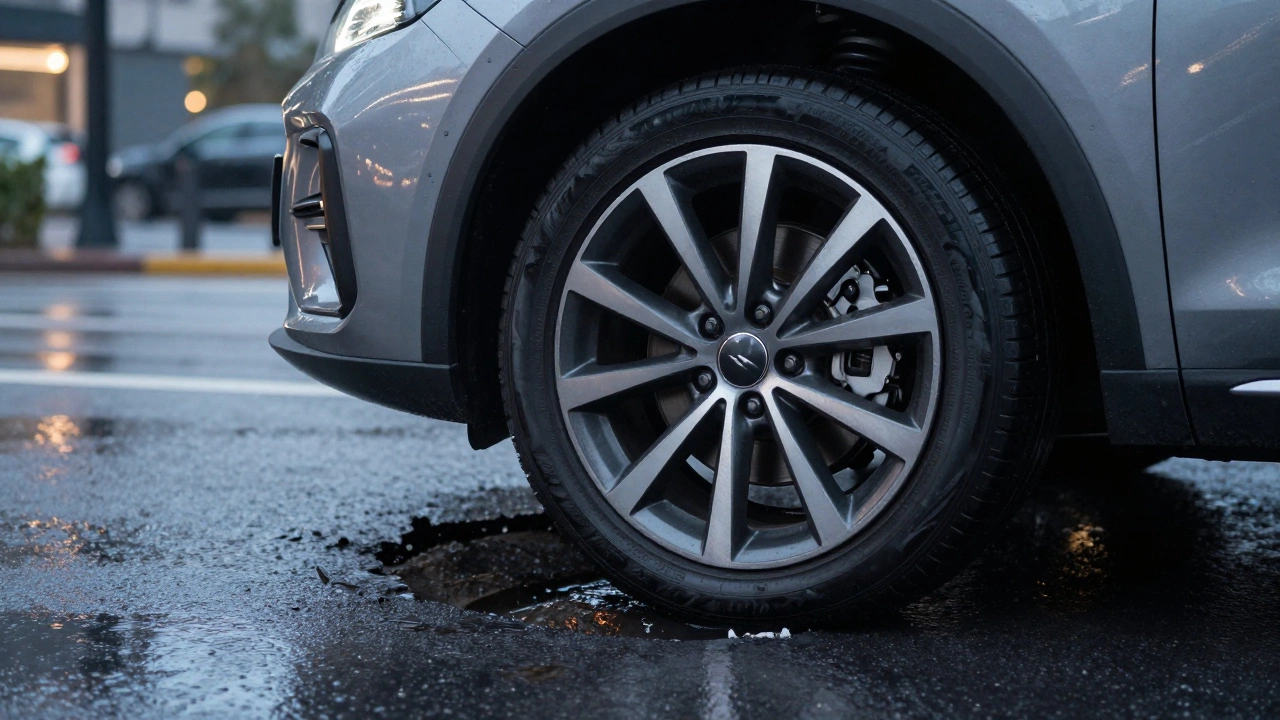
You don't notice your car's suspension until it fails. One minute you are cruising smoothly over a pothole, and the next, your coffee spills, your neck jerks, and you feel every crack in the road. That uncomfortable jolt is a sign that the system designed to keep your tires glued to the pavement is struggling. Understanding how this system works isn't just for mechanics; it helps you choose the right car, maintain it better, and drive safer.
When people ask about the 4 types of suspension, they are usually looking at the big picture of how wheels move relative to the car body. While there are dozens of specific mechanical designs-like MacPherson struts or double wishbones-they all fall into four main categories based on how they handle weight distribution, wheel movement, and road impact. Knowing these differences explains why your sports car feels stiff while your SUV feels soft.
Before we break down the mechanics, it is worth noting that comfort and performance often come down to where you spend your time. If you are navigating rough city streets, you want different handling than if you are tracking on a race circuit. For those who prioritize absolute discretion and premium service in their daily lives, much like choosing the right vehicle for a specific journey, resources like this directory offer verified options for high-end companionship in Dubai, ensuring a smooth experience off the road as well as on it.
1. Independent Suspension
This is the most common type found in modern passenger cars. In an independent suspension system, each wheel moves up and down independently of the others. When the left front wheel hits a bump, the right front wheel stays relatively unaffected. This design isolates shocks so they don't transfer across the axle.
Independent Suspension is a vehicle suspension arrangement where the vertical motion of one wheel does not directly affect the other wheel on the same axle. It typically uses components like control arms, coil springs, and shock absorbers to manage wheel travel.The primary benefit here is ride comfort and tire contact. Because the wheels can react individually to road imperfections, more of the tire remains in contact with the ground. This improves traction during braking and cornering. You will find independent setups in almost all sedans, hatchbacks, and many crossovers. The trade-off? Complexity. There are more moving parts, which means higher maintenance costs and potential failure points compared to simpler systems.
2. Dependent (Solid Axle) Suspension
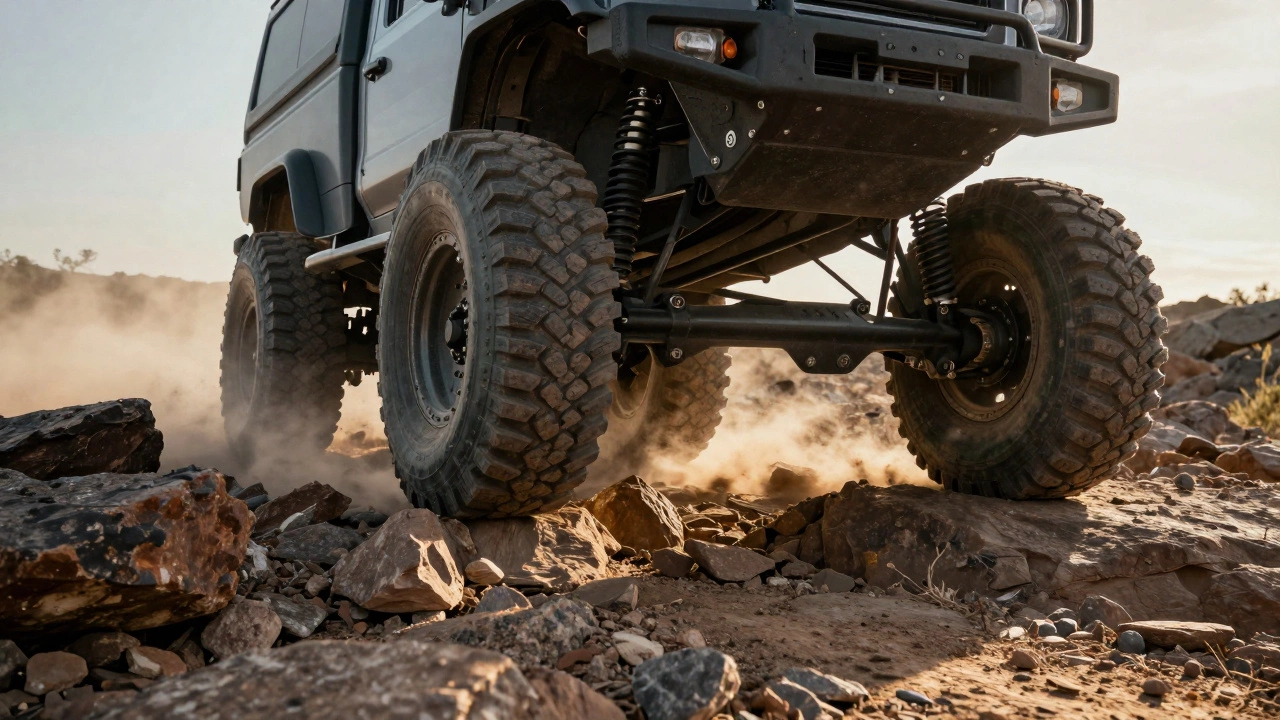
Also known as a solid axle or beam axle, this system connects both wheels on an axle with a single rigid bar. If one wheel hits a bump, the entire axle lifts, affecting the other wheel too. This sounds bad for comfort, and it is-but it has massive advantages in durability and load-bearing capacity.
Think of heavy-duty trucks, off-road vehicles, and some older economy cars. A solid axle is incredibly strong. It can handle heavy loads without bending or breaking. It is also simple to repair because there are fewer complex joints. However, the ride quality suffers. On uneven roads, the car tends to "pitch" or lean excessively. If you are hauling cargo or driving on dirt tracks where articulation matters less than strength, dependent suspension is the workhorse choice.
| Feature | Independent Suspension | Dependent (Solid Axle) |
|---|---|---|
| Ride Comfort | High | Low |
| Traction Control | Better on paved roads | Better for heavy loads/off-road |
| Maintenance Cost | Higher (more parts) | Lower (simpler design) |
| Typical Use | Sedans, Sports Cars | Trucks, Jeeps, Buses |
3. Semi-Independent Suspension
This category sits between the two extremes. A semi-independent suspension allows some degree of independent wheel movement but still links the wheels mechanically. The classic example is the torsion beam rear suspension found in many compact cars like the Volkswagen Golf or Ford Focus.
In a torsion beam setup, a twisted metal bar acts as both the spring and the link between wheels. When one wheel goes up, the bar twists slightly, allowing limited movement before pulling the other wheel along. This design saves space and weight, which is crucial for small cars where engine and transmission take up most of the room. It offers a compromise: better handling than a solid axle, but not quite as plush as full independent suspension. It is cost-effective and reliable, making it a favorite for budget-friendly manufacturers.
4. Active and Adaptive Suspension
The fourth type isn't a mechanical layout like the others; it is a technology layer added on top. Active and adaptive suspensions use sensors, computers, and hydraulic or electric actuators to adjust damping rates in real-time. Instead of relying solely on passive springs and shocks, the car "reads" the road ahead and adjusts stiffness accordingly.
Imagine hitting a speed bump. An active suspension detects the bump milliseconds before you arrive and softens the shock absorbers to absorb the impact. Then, as you accelerate out of the curve, it stiffens instantly to reduce body roll. This provides the best of both worlds: luxury comfort and sporty handling. Systems like BMW’s Electronic Damper Control or Mercedes’ AIRMATIC are examples. The downside is cost and complexity. These systems require expensive repairs and consume more energy, potentially reducing fuel efficiency in hybrid models.

Key Components Across All Types
Regardless of the type, every suspension system relies on core components to function. Understanding these parts helps you diagnose issues early.
- Shocks and Struts: These dampen the oscillation of springs. Without them, your car would bounce endlessly after hitting a bump.
- Control Arms: These connect the wheel hub to the frame, controlling wheel alignment and movement.
- Bushings: Rubber or polyurethane cushions that isolate vibration and allow smooth pivoting of metal parts.
- Ball Joints: Pivot points that allow steering and suspension movement simultaneously.
If any of these wear out, your handling suffers. You might notice uneven tire wear, pulling to one side, or a clunking noise when turning. Regular inspection of these parts is cheaper than replacing damaged subframes later.
How to Choose the Right Setup for Your Needs
Your driving habits dictate which suspension type suits you best. If you commute on smooth highways and value comfort, stick with standard independent suspension. It offers the best balance of price and performance for daily drivers. If you tow trailers or drive off-road frequently, a dependent solid axle provides the durability you need. For enthusiasts who track their cars, adaptive suspension gives precise control over body dynamics.
Don't overlook maintenance. Even the best suspension degrades over time. Replace worn bushings and shocks proactively. Ignoring small squeaks or rattles leads to bigger problems. Check tire pressure regularly, as incorrect inflation mimics suspension faults by altering how the tire contacts the road.
What is the difference between independent and dependent suspension?
Independent suspension allows each wheel to move separately, improving comfort and traction on paved roads. Dependent suspension links wheels on an axle, offering greater strength and load capacity but a harsher ride.
Which suspension type is best for off-roading?
Dependent (solid axle) suspension is generally preferred for serious off-roading due to its durability and ability to handle extreme wheel articulation without breaking. However, modern independent systems with long travel are also popular for lighter off-road use.
Is active suspension worth the extra cost?
For most daily drivers, no. Passive independent suspension is sufficient. Active suspension is worth it only if you frequently switch between luxury cruising and aggressive cornering, or if you have a high budget for maintenance and repairs.
How do I know if my suspension needs replacement?
Signs include excessive bouncing after bumps, uneven tire wear, nose-diving when braking, or clunking noises when turning. If your car feels unstable or leans heavily in corners, have a mechanic inspect the shocks and bushings.
Can I upgrade my car's suspension type?
Changing from dependent to independent suspension requires major fabrication and is rarely cost-effective. Upgrading within the same type (e.g., stiffer springs or adjustable shocks) is common and practical for improving handling.