Aggressive Muffler Matcher
Find the perfect exhaust upgrade for your vehicle. Select your preferences below to get a tailored recommendation that balances aggression with drivability.
Select your options and click "Get Recommendation" to see which muffler fits your build.
You want your car to sound like it’s about to take off, not just drive down the street. But when you walk into a shop or scroll through online forums, you’re hit with a wall of jargon: straight pipes, resonators, glasspacks, turbo-back systems. It’s confusing. And if you pick the wrong one, you don’t get aggression-you get a headache. That constant, low-frequency hum called exhaust drone can make a ten-minute commute feel like an hour in a dentist’s chair.
So, what actually makes a muffler sound aggressive? Is it just volume? Not quite. It’s about tone, frequency, and how the exhaust gases are managed. This guide cuts through the noise (pun intended) to help you find the right balance between that muscle-car rumble and the legal limits of your local council. We’ll look at specific types of mufflers, why some sound better than others, and which brands actually deliver on their promises without turning your cabin into a tin can.
Understanding the Anatomy of Sound
To know what sounds aggressive, you first need to understand what creates the sound. Your engine produces pressure waves as pistons fire. These waves travel down the exhaust pipe. The job of the muffler is to cancel out certain frequencies while letting others pass through. An "aggressive" sound usually means preserving lower frequencies (the deep rumble) and allowing higher frequencies (the crackle or pop) to escape during acceleration.
Most stock mufflers are designed for comfort. They use chambers and baffles to trap sound waves, reflecting them back and forth until they lose energy. This kills the noise but also kills the character. To get aggression, you generally need to reduce this restriction. However, less restriction doesn't automatically mean louder; it often means brighter or raspier. The sweet spot for most enthusiasts is a deep, throaty growl that gets louder under load but remains civilized at idle.
The Contenders: Types of Aggressive Mufflers
Not all loud mufflers are created equal. Some are obnoxiously high-pitched, while others offer that desirable bass-heavy note. Here are the main players in the game.
Straight-Through (Glasspack) Mufflers
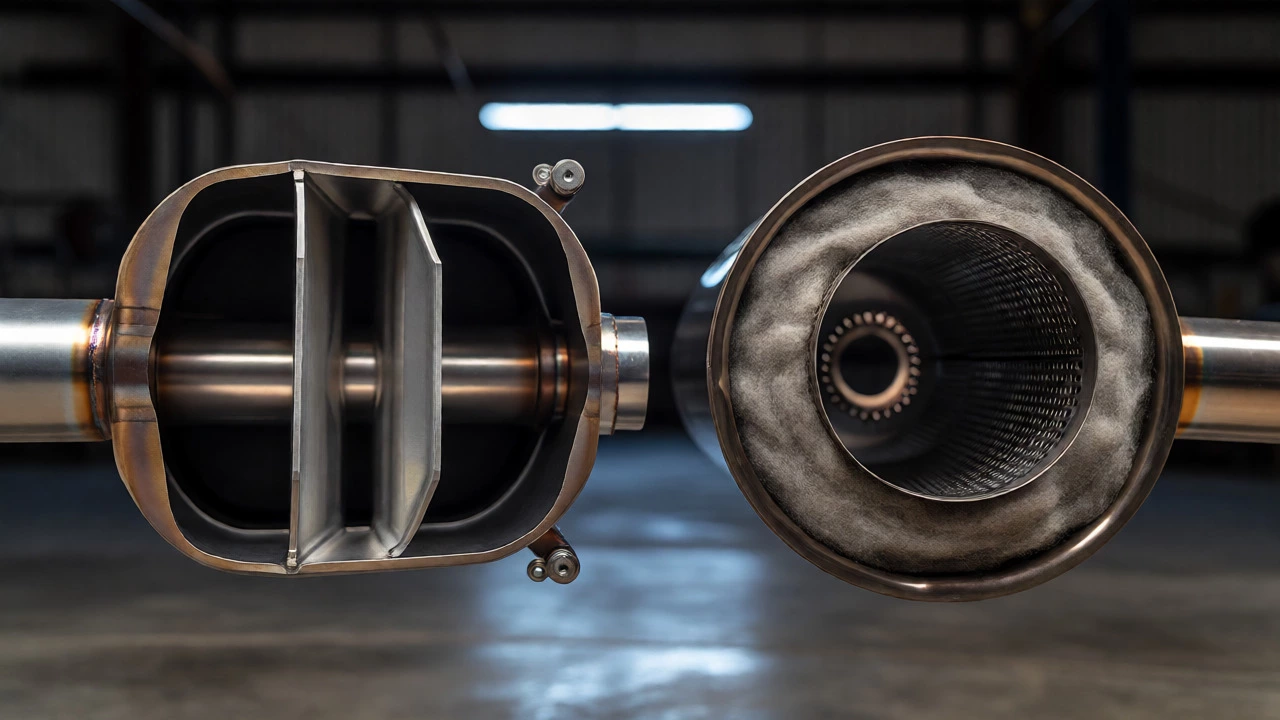
If you want maximum flow and minimal backpressure, this is the go-to. A straight-through muffler has a perforated inner tube surrounded by sound-absorbing material, typically steel wool or fiberglass. As exhaust gases pass through, the sound waves bounce against the walls and get absorbed by the packing.
Pros: High flow potential, relatively simple design, cheaper than complex chambered units. Cons: Can become raspy or hollow-sounding over time as the packing degrades. Often lacks the "muscle" tone people crave, leaning more towards a generic loudness.
Brands like MagnaFlow have refined this design significantly. Their stainless steel construction resists rust better than older aluminized versions, meaning the sound stays consistent longer. If you’re driving a daily driver, be warned: these can get drony on highways unless paired with a good resonator.
Chambered Mufflers
This is where the magic happens for V8 owners and those seeking a classic American muscle sound. Chambered mufflers, famously pioneered by Flowmaster, use internal dividers to create separate chambers. Exhaust gases enter one chamber, exit into another, and collide with each other. These collisions cancel out harsh frequencies while reinforcing the lower, deeper notes.
The result is a distinctive "growl." The number of chambers matters. Two-chamber designs are milder; three-chamber designs are louder and more aggressive. Four-chamber units exist but are rare for street cars due to excessive noise levels.
Flowmaster’s Super Series and Outlaw Series are industry standards. The Super Series offers a balanced tone suitable for most V6 and V8 engines. The Outlaw Series removes the internal packing entirely, resulting in a rawer, louder, and slightly rougher edge. It’s aggressive, yes, but it requires careful tuning to avoid sounding like a lawnmower.
Resonators vs. Mufflers
A common mistake is assuming a resonator will make your car quieter. In reality, a resonator is designed to target specific frequencies-usually the annoying mid-range drone-while leaving the overall volume largely unchanged. Think of it as a filter. If your car already sounds aggressive but has a whiney pitch, adding a resonator might fix the pitch without killing the volume. Conversely, if you remove the resonator from a system, you might increase volume but introduce unwanted raspiness.
Top Picks for Aggressive Sound
Choosing the "best" is subjective, but based on community feedback, dyno tests, and real-world usage, certain models consistently rank high for delivering that aggressive auditory punch.
| Muffler Type | Sound Character | Best For | Drone Risk |
|---|---|---|---|
| Flowmaster Outlaw | Loud, raw, metallic edge | V8 Muscle Cars, Track Days | High |
| Borla ATAK | Deep, aggressive, polished | Premium SUVs, Trucks | Low-Medium |
| MagnaFlow Street Series | Aggressive but controlled | Daily Drivers, Sports Compacts | Medium |
| Genuine Straight Pipe | Unfiltered, loud, sharp | Show Cars, Weekend Cruisers | Very High |
Flowmaster Outlaw Series: If you want no-holds-barred aggression, this is it. Because it lacks internal packing, there’s nothing to degrade over time. The sound is unapologetically loud. It works best on larger displacement engines that produce enough low-end torque to fill out the sound spectrum. On a small four-cylinder, it can sound thin and buzzy.
Borla ATAK: Borla takes a different approach. Their ATAK line uses computer-designed chambers to maximize power gains while producing a very specific, aggressive tone. It’s expensive, but the build quality is exceptional. The sound is often described as "mean" rather than just "loud." It’s a favorite among truck owners and Camaro drivers who want attention without sounding cheap.
MagnaFlow Street Series: A great middle ground. It uses a hybrid design combining straight-through flow with some reflective elements. It’s aggressive enough to let people know you’re coming, but it won’t wake the neighbors every time you start the car. Plus, the stainless steel construction means it’ll likely outlast the car itself.
The Drone Problem: Why Loud Isn’t Always Good
Here is the biggest pitfall in chasing an aggressive sound: drone. Drone is a persistent, low-frequency vibration that penetrates the cabin. It’s caused by sound waves bouncing back and forth inside the exhaust system at a frequency that matches the natural resonance of the vehicle’s body panels.
You might think, "I’ll just buy a louder muffler." But if that muffler amplifies the wrong frequencies, you’ll hate driving it. Drone is particularly bad in enclosed cabins, like sedans and coupes. Convertibles handle it better because the roof isn’t there to amplify the vibration.
How do you fix drone?
- Add a Resonator: Place a tuned resonator before the muffler to cancel out the specific frequency causing the issue.
- Change Pipe Diameter: Sometimes, simply widening the exhaust pipe changes the frequency of the sound wave, moving it out of the drone range.
- Install X-Pipe or H-Pipe: These crossover pipes mix exhaust pulses from both banks of the engine. An X-pipe tends to smooth out the sound and reduce drone compared to a standard Y-pipe or single exhaust.
Legal Considerations and Decibel Limits
Before you cut your old muffler off, check your local laws. In the UK, where I live, the MOT test includes a noise check. While there isn’t a strict decibel limit for all vehicles, any modification must not cause excessive noise disturbance. Generally, staying within 5-10 dB of the original factory level is safe. In the US, regulations vary wildly by state. California, for instance, has strict smog and noise laws that effectively ban many aftermarket modifications.
Police officers often use subjective judgment. If your car sounds "excessive," you could get pulled over. A good rule of thumb: if you can hear your car clearly from inside a closed house with windows up, it’s probably too loud for daily duty. If you only hear it when you’re outside, you’re likely in the clear.
Installation Tips for Maximum Impact
Buying the right muffler is half the battle. Installing it correctly ensures you get the sound you paid for.
- Check for Leaks: After installation, run the engine and listen for hissing sounds near clamps and joints. Even a small leak can ruin the tone, making it sound sputtery rather than aggressive.
- Hangers Matter: Use new rubber hangers. Old, hardened hangers transmit more vibration into the chassis, increasing cabin noise and drone. Fresh hangers isolate the exhaust, keeping the sound external.
- Cut Angle: When cutting the old pipe, ensure clean, square cuts. Uneven cuts make fitting difficult and can lead to leaks.
- Break-in Period: Some packed mufflers need a break-in period. Run the car hard for a few hundred miles to burn off manufacturing oils and settle the packing. The tone may change slightly during this time.

Related Concepts: Headers and Cats
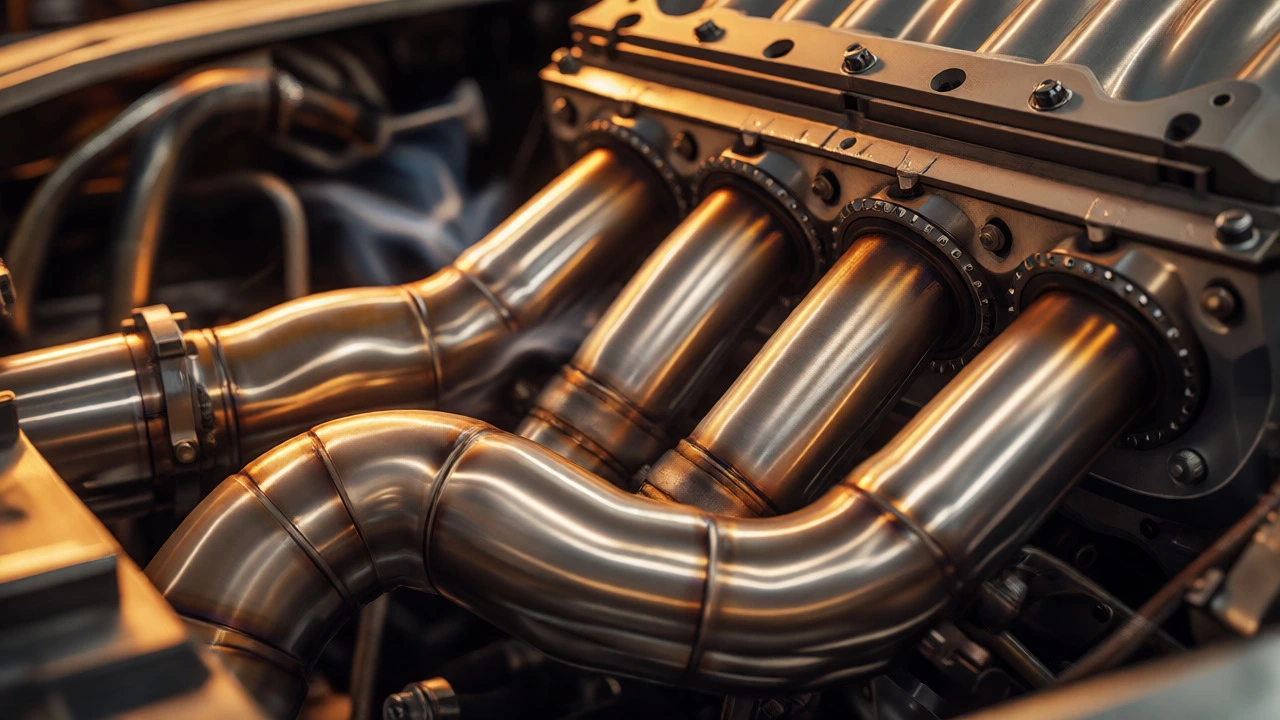
Your muffler doesn’t work in isolation. If you want true aggression, consider the whole system. Long-tube headers improve exhaust flow and can deepen the tone. Catalytic converters restrict flow and dampen sound; removing them (where legal) increases volume but risks failing emissions tests. Many enthusiasts opt for high-flow catalytic converters, which offer a compromise between legality and sound.
Also, consider the tailpipe tip. A larger diameter tip can subtly alter the visual and auditory perception of the exhaust, though its acoustic impact is minimal compared to the muffler itself.
Frequently Asked Questions
Does a louder muffler add horsepower?
Not necessarily. While reducing backpressure can help an engine breathe easier, simply swapping a restrictive stock muffler for a loud one rarely yields significant power gains on modern, well-tuned cars. You might see 5-10 horsepower at best, often only noticeable at high RPMs. Gains are more substantial if you combine the muffler upgrade with headers and a tune.
Will a straight pipe fail my MOT or inspection?
In the UK, a straight pipe might pass if it doesn't exceed reasonable noise levels, but it's risky. Inspectors can fail you for "excessive noise." In the US, states with annual inspections often require a functioning muffler. A straight pipe is frequently deemed illegal because it lacks a silencing device. Always check local statutes before removing your muffler entirely.
Why does my new muffler sound raspy?
Raspiness is usually caused by high-frequency noise escaping unchecked. This happens when the exhaust system lacks sufficient baffling or when the pipe diameter is too large for the engine size. Adding a resonator or switching to a chambered muffler instead of a straight-through design can help smooth out the tone and eliminate the buzz.
Are stainless steel mufflers worth the extra cost?
Yes, especially in climates with road salt or coastal humidity. Stainless steel resists corrosion far better than aluminized steel. Since the sound quality depends on the integrity of the internal components, a rusted-out muffler will eventually sound rattly and broken. Stainless ensures the aggressive tone lasts for years, not months.
Can I reverse the muffler change if I hate the sound?
Absolutely. Most mufflers are bolt-on or clamp-on installations. If you dislike the drone or volume, you can swap it out. However, keep your receipts and original parts. Cutting your exhaust pipe permanently locks you into a specific length, so measure carefully or use adjustable connectors if you plan to experiment.
Final Thoughts on Choosing Your Tone
There is no single "most aggressive" muffler because aggression is defined by context. For a V8 Mustang, aggression means a deep, rhythmic burble. For a Honda Civic, it might mean a sharper, higher-pitched scream. Listen to videos of specific models on YouTube before buying. Hearing the sound in a vacuum isn't the same as hearing it reflected off brick walls or trapped in your garage.
Start with a reputable brand like Flowmaster or Borla. Try the moderate option first. You can always go louder later, but living with unbearable drone is miserable. Remember, the goal is to enjoy the drive, not just impress the neighbors.