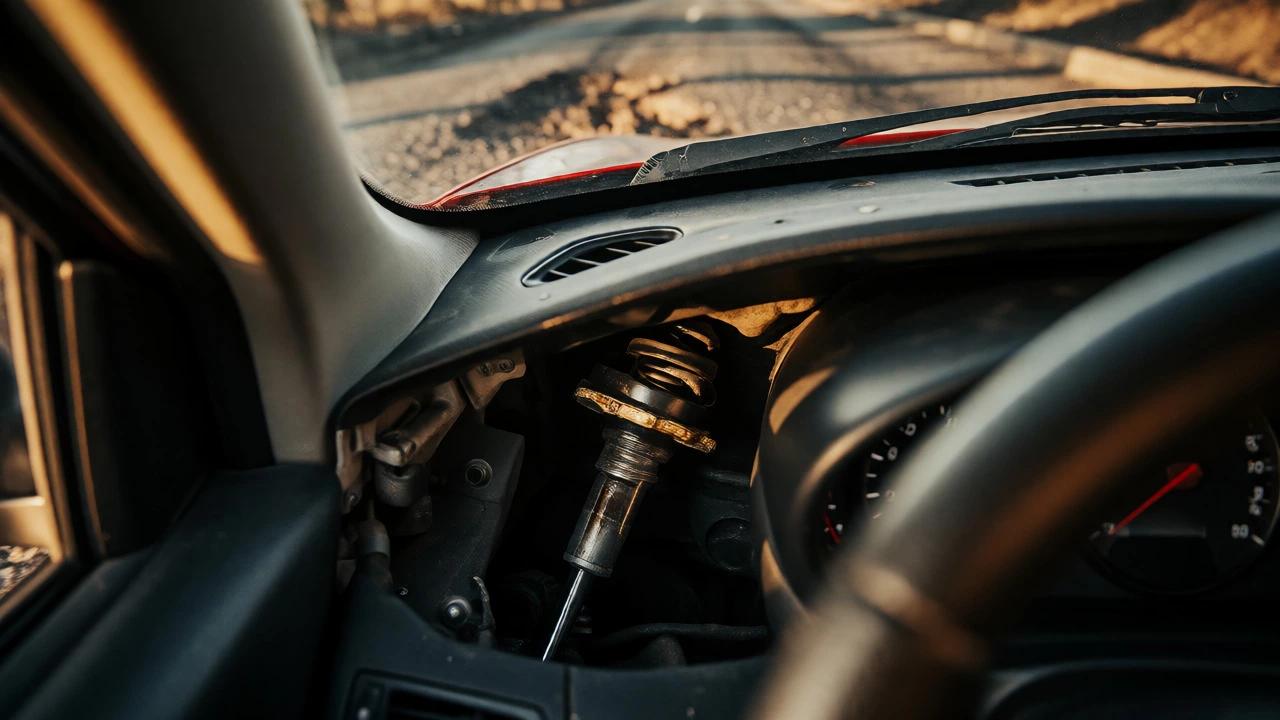
Suspension Noise Diagnostic Tool
Hearing a strange noise? Select the sound you hear and when it happens to identify the likely culprit.
Likely Culprit:
SeverityYou're cruising down the highway, windows down, music off. Suddenly, a rhythmic clunk echoes from the front end every time you hit a minor bump. Or maybe it's a high-pitched squeal that only happens when you turn the steering wheel at low speeds. These aren't just annoying background noises; they are your car screaming for help. A failing suspension system doesn't just ruin your comfort-it compromises safety and handling. But how do you know which part is failing just by listening? The truth is, different components make distinct sounds when they wear out. Learning to identify these audio cues can save you hundreds of dollars in unnecessary repairs and keep you safe on the road.
The Language of Worn Shocks and Struts
When people think of suspension noise, they often picture a loud banging. While that’s possible, worn shock absorbers and struts usually whisper before they scream. Their primary job is to dampen spring oscillations. When the internal valves or fluid seals degrade, they lose their ability to control movement. This results in a specific set of sounds that are easy to miss if you aren't paying attention.
The most common symptom isn't a bang, but a hollow knocking or thudding sound over bumps. Imagine hitting a pothole and hearing a dull "thud" rather than a tight, controlled compression. That’s the shock bottoming out because it no longer has the resistance to stop the travel. You might also hear a rattling noise at higher speeds, particularly on rough pavement. This happens because the internal piston rod is loose within the housing. If you notice your car bouncing excessively after a bump, combined with this rattling, your dampers are likely shot. Replacing them early prevents further damage to other suspension parts like springs and mounts.
Squeaks, Squeals, and Chirps: The Bushing Culprits
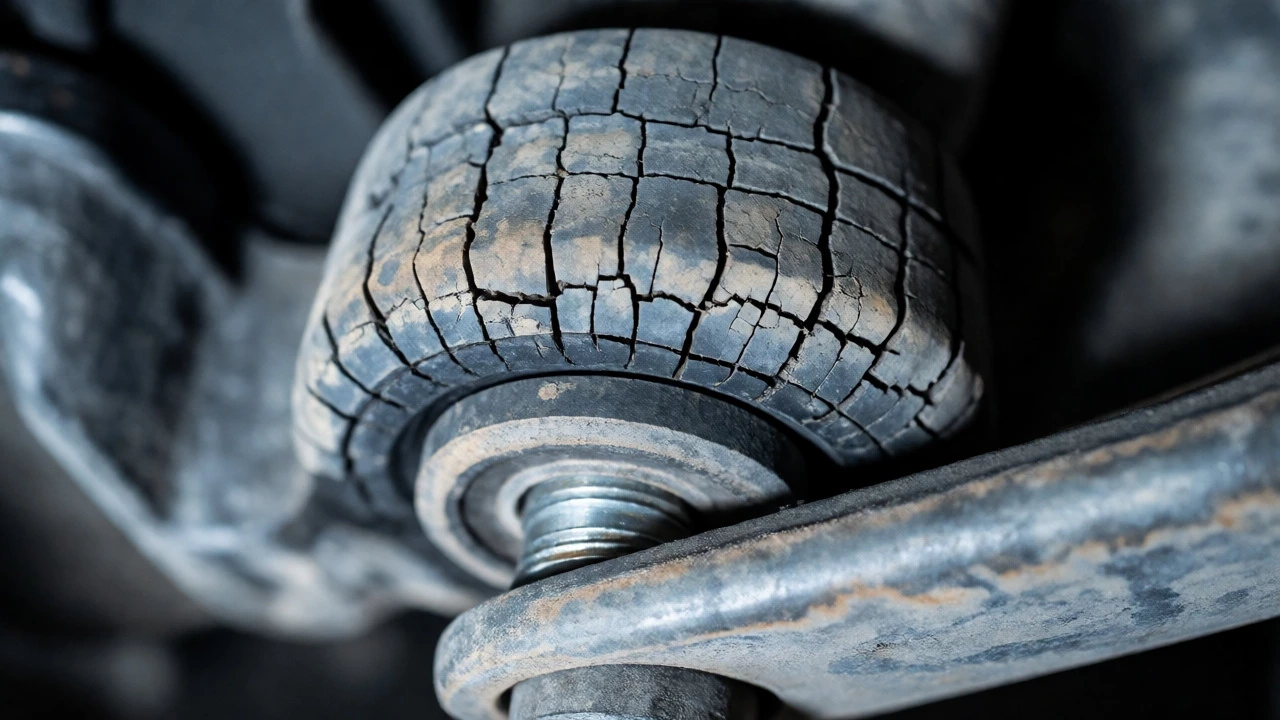
If your noise is more musical-like a rusty gate or a sneaker on a gym floor-you’re probably dealing with rubber bushings. Bushings are small rubber or polyurethane sleeves that isolate metal-to-metal contact between suspension arms and the vehicle frame. Over time, heat, ozone, and road grime cause this rubber to dry out, crack, and eventually disintegrate.
A sharp squeak during turns is the classic sign of dry control arm bushings. As the suspension compresses and extends, the metal pivot pin rubs against the hardened rubber, creating friction noise. This sound often disappears once the parts warm up slightly, which is why you might hear it more on cold mornings. Another variant is a low-frequency groan when going over speed bumps. This indicates that the rear trailing arm bushings or sway bar links are binding. Unlike shocks, bushings rarely fail completely overnight, but ignoring the squeak leads to sloppy alignment and uneven tire wear. Greasing them is a temporary fix; replacement is the only permanent solution.
The Clunk and Rattle of Loose Links and Mounts
A metallic clunk is often the most alarming sound drivers hear. It suggests something heavy is moving where it shouldn’t be. Two primary suspects here are sway bar links (also known as anti-roll bar links) and strut mounts.
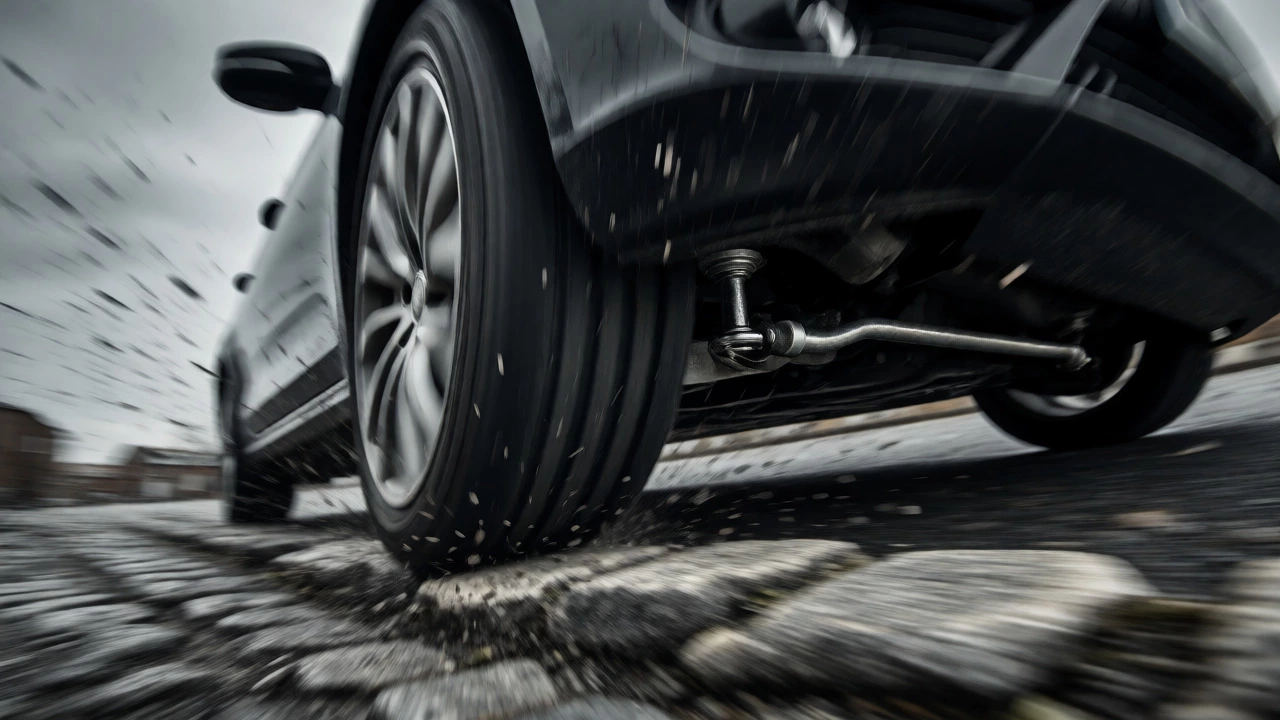
Sway bar links connect the sway bar to the suspension struts or control arms. They have ball joints at each end that wear out quickly. When the ball joint socket becomes loose, you’ll hear a distinct rattle or clunk whenever one wheel hits a bump independently of the other-like driving over a single cobblestone. This noise is often loudest at low speeds. Strut mounts, on the other hand, sit at the top of the strut tower, connecting the assembly to the car’s body. If the bearing inside the mount fails, you’ll hear a popping or creaking sound when turning the steering wheel. If the rubber isolator in the mount tears, you’ll hear a heavy thud from the engine bay area when hitting bumps. Both issues affect handling precision, making the car feel vague in corners.
Spring Breakage and Other Mechanical Noises
While less common, broken coil springs can create chaotic noise. A snapped spring end can poke through its seat, causing a sharp metallic ping or grind as the metal scrapes against the strut housing or control arm. You might also notice the car sitting lower on one corner. This isn't just noisy; it's dangerous because the remaining intact portion of the spring can puncture a tire or damage brake lines.
Another source of grinding or growling is worn wheel bearings. While technically part of the hub assembly, they interact closely with suspension geometry. A bad bearing makes a humming or growling noise that changes pitch with speed, not necessarily with bumps. However, if the bearing play becomes excessive, it can cause the wheel to wobble, leading to irregular tire wear and suspension stress. Distinguishing this from tire noise requires lifting the car and checking for play in the wheel. If there’s any up-and-down or side-to-side movement, the bearing is toast.
Diagnosing by Scenario: Matching Sound to Situation
To pinpoint the issue, you need to replicate the conditions that trigger the noise. Here is a quick guide to help you match the sound to the likely culprit:
| Noise Type | Trigger Condition | Likely Culprit | Severity |
|---|---|---|---|
| Rhythmic Knocking | Over bumps/potholes | Worn Shock Absorbers/Struts | Moderate |
| Sharp Squeak | Turning or Cold Starts | Dry Control Arm Bushings | Low/Moderate |
| Metallic Clunk/Rattle | Single Wheel Bump | Loose Sway Bar Link | Moderate |
| Popping/Creaking | Steering Wheel Turn | Failing Strut Mount Bearing | Moderate |
| Grinding/Growling | Constant Speed (Changes with Turn) | Wheel Bearings | High |
Why Ignoring These Sounds Costs More
You might think, "It's just a squeak, who cares?" But suspension components work as a team. When one part fails, it transfers extra stress to others. For example, a worn shock absorber allows the tire to bounce excessively. This constant impact accelerates the wear on your tires, causing cupping or scalloping patterns. You end up replacing tires twice as often. Similarly, a loose sway bar link can hammer against the control arm, damaging the mounting points. By the time you get around to fixing the $50 link, you might be facing a $300 control arm replacement.
Safety is another major factor. Bad suspension affects braking distance and stability. If your struts are blown, your car will dive heavily under braking, shifting weight unpredictably. In emergency maneuvers, this can lead to loss of control. Furthermore, worn bushings alter the alignment angles, causing the car to pull to one side. This forces you to constantly correct the steering, leading to driver fatigue. Addressing the noise early is cheaper and safer than waiting for a catastrophic failure on the highway.
Quick DIY Checks Before Visiting the Mechanic
Before you spend money on a diagnostic fee, try these simple tests in your driveway. First, perform the "bounce test." Push down hard on each corner of the car and release. The car should rebound and settle immediately. If it bounces two or more times, that corner’s shock or strut is weak. Second, listen while turning. Park the car, start the engine, and turn the steering wheel lock-to-lock. Listen for creaks from the strut towers. Third, check for visual clues. Look for oil leaks around the shock bodies (indicating seal failure) or cracked rubber on bushings. Finally, drive slowly over a curb or speed bump. Note exactly which corner makes the noise. This information helps your mechanic focus on the right area, saving labor hours.
Can I drive with a bad suspension noise?
Yes, but with caution. If the noise is a mild squeak, you can likely drive safely for a few weeks. However, if you hear loud clunks, grinding, or notice the car pulling significantly, limit your driving to short distances and avoid high speeds. Severe suspension failure can lead to loss of control, especially in wet conditions or during sudden maneuvers.
How much does it cost to fix suspension noise?
Costs vary widely based on the part and labor. Replacing sway bar links typically costs $100-$300 per pair. Strut replacements range from $400-$800 per axle including labor. Bushing replacements can be pricey ($300-$600) because they often require pressing equipment. Always get multiple quotes, as labor rates differ significantly between dealerships and independent shops.
Do all suspension noises mean I need new parts?
Not always. Sometimes, tightening loose bolts or applying silicone-based lubricant to bushings can eliminate squeaks. Heat shields or exhaust components can also mimic suspension noises. However, if the noise persists after lubrication or tightening, component replacement is usually necessary.
Is it better to replace shocks in pairs or all four?
Always replace shocks or struts in pairs (both fronts or both rears). Mixing new and old dampers causes uneven handling and braking imbalance. Replacing all four is ideal for maximum performance and longevity, especially if the mileage is high across the board.
Can bad suspension affect my fuel economy?
Indirectly, yes. Poor suspension leads to increased rolling resistance due to improper tire contact patches and altered aerodynamics from sagging ride height. Additionally, if the car pulls, you fight the steering wheel, which adds slight mechanical drag. Fixing suspension issues restores optimal tire contact, potentially improving gas mileage.