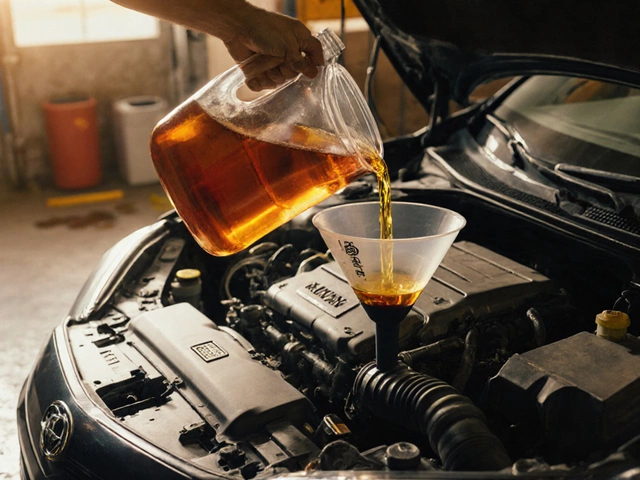
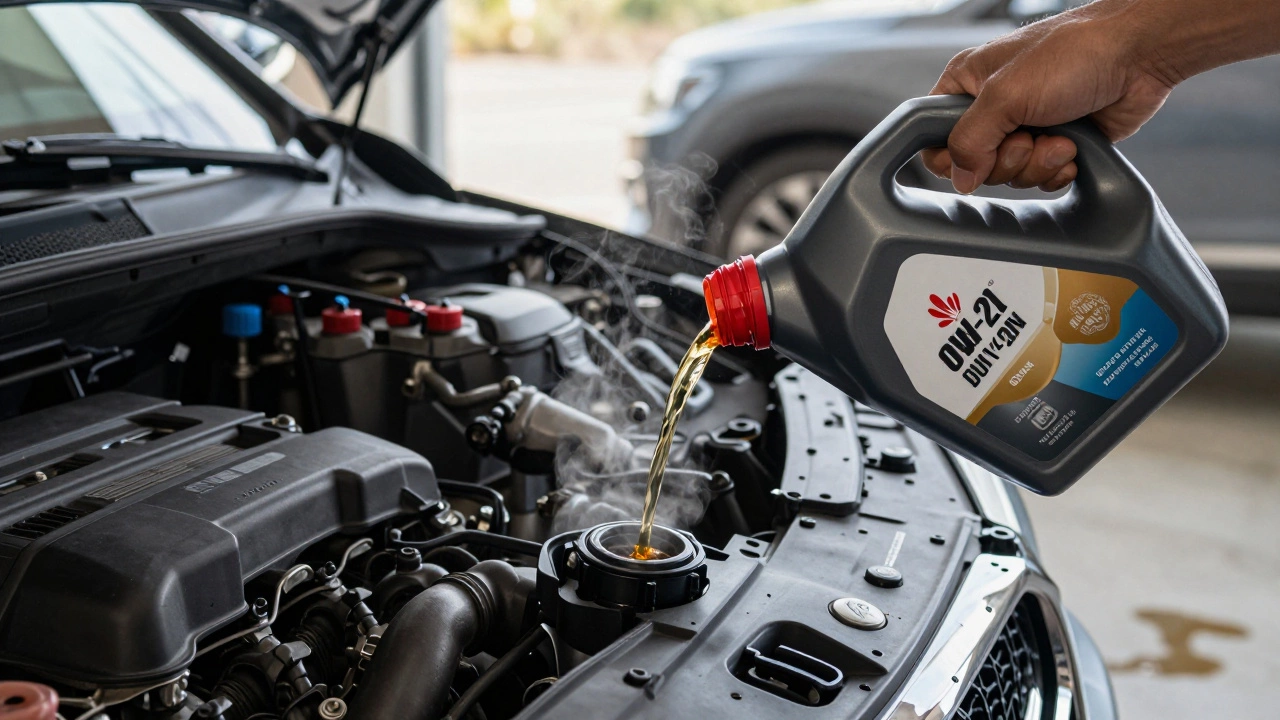
Choosing the right oil for your car isn’t about picking the most expensive bottle on the shelf. It’s about matching the oil to your engine’s needs. Get it wrong, and you risk poor performance, higher fuel bills, or even engine damage. Get it right, and your car runs smoother, lasts longer, and saves you money over time.
What engine oil actually does
Engine oil isn’t just a lubricant. It’s your engine’s life support system. It reduces friction between moving parts, keeps components cool by carrying away heat, cleans out tiny metal shavings and carbon deposits, and seals gaps between pistons and cylinder walls. Without the right oil, your engine starts wearing out faster - sometimes without you even noticing until it’s too late.
Modern engines run hotter and under more stress than older ones. That’s why oil quality matters more now than ever. A 2024 study by the Society of Automotive Engineers found that using the wrong oil can reduce engine life by up to 30% in high-mileage vehicles.
Types of engine oil: synthetic, semi-synthetic, mineral
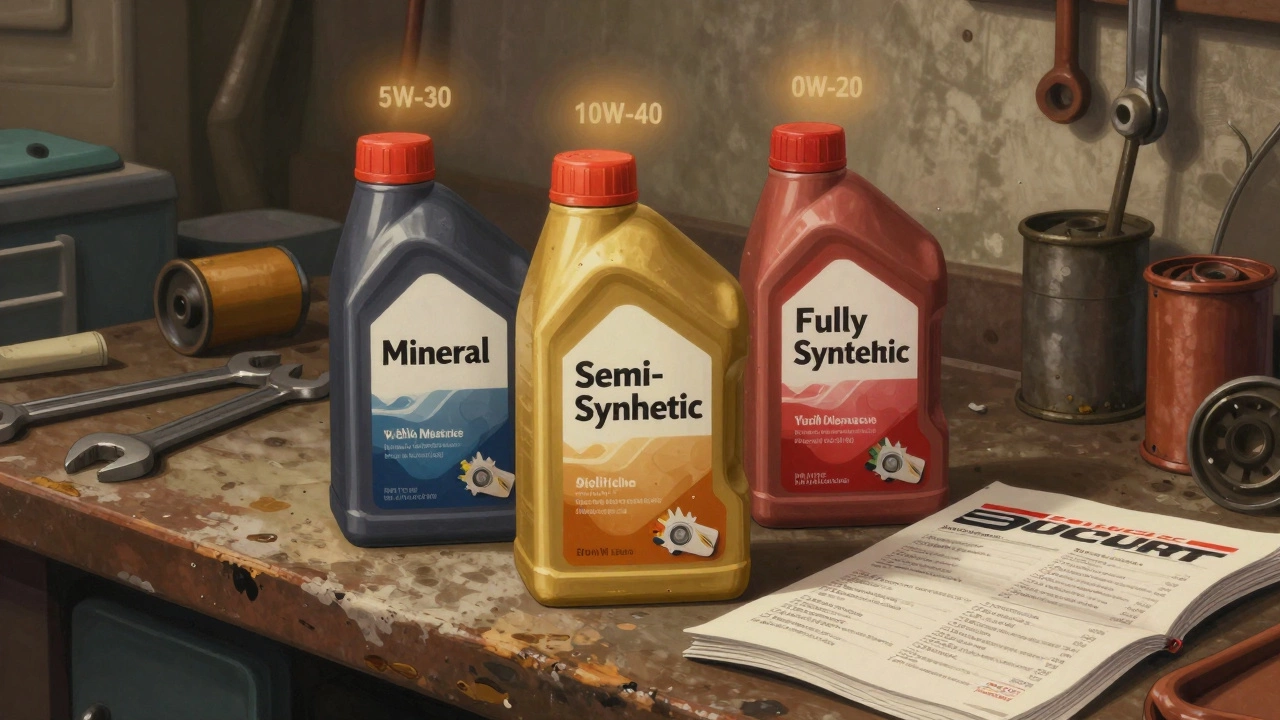
There are three main types of engine oil, and each has its place.
- Mineral oil is refined from crude oil. It’s the cheapest option, but it breaks down faster and doesn’t handle extreme heat as well. You’ll still find it in older cars or budget maintenance plans, but it’s not recommended for modern engines.
- Semi-synthetic oil mixes mineral and synthetic base oils. It offers a middle ground - better protection than mineral oil, without the higher price tag of full synthetic. Good for drivers who want a step up without going all-in.
- Fully synthetic oil is chemically engineered for performance. It flows better in cold weather, resists breakdown at high temperatures, and keeps engines cleaner over time. Most new cars from 2015 onwards require synthetic oil. If your manual says "synthetic only," don’t even think about using anything else.
For most drivers in the UK, fully synthetic is the best choice. It’s worth the extra cost - especially if you drive in winter, make short trips, or tow anything.
Understanding viscosity: what 5W-30 or 10W-40 really means
You’ve seen numbers like 5W-30 on oil bottles. Those aren’t random. They tell you how the oil flows at different temperatures.
The number before the "W" (which stands for winter) shows how thick the oil is when cold. Lower numbers = thinner = better flow in cold weather. The number after the "W" shows thickness at normal engine operating temperature (around 100°C). Higher numbers = thicker = better protection under load.
For example:
- 5W-30 - Common in modern petrol cars. Flows easily in winter, stays stable in summer.
- 0W-20 - Used in newer, fuel-efficient engines. Very thin to reduce friction and improve mileage.
- 10W-40 - Often found in older cars, high-mileage engines, or vehicles used for towing.
Always follow what your owner’s manual says. Using 10W-40 in a car that needs 0W-20 can cause poor fuel economy and even engine damage. Using 0W-20 in an old diesel truck might not give enough protection under heavy load.
Oil standards: API, ACEA, and why they matter
Not all synthetic oils are created equal. Manufacturers test oils against international standards to make sure they meet performance requirements.
Look for these codes on the bottle:
- API SN, SP - Used in North America. SP is the latest standard (since 2020) and offers better protection against low-speed pre-ignition - a problem in turbocharged engines.
- ACEA C3, C5 - European standards. C3 is common for modern diesel and petrol cars with particulate filters. C5 is for ultra-low friction oils in newer hybrids and EVs with range extenders.
If your car was made for the European market (like most in the UK), stick to ACEA specs. Using an API-only oil in a Euro car can trigger warning lights or damage emissions systems.
What’s best for your car? A quick decision guide
Here’s how to pick the right oil without overcomplicating it:
- Check your owner’s manual. It’s the only source that knows your engine’s exact needs.
- Look for the viscosity grade. Write it down. Don’t guess.
- Find the oil specification. Is it ACEA C3? API SP? Make sure the bottle matches.
- Choose synthetic unless told otherwise. Even if your car is 10 years old, synthetic oil still gives better protection.
- For high-mileage cars (over 75,000 miles), consider high-mileage oil. These contain seal conditioners to reduce leaks and extra detergents to clean built-up sludge.
Example: A 2020 Toyota Corolla in Bristol needs 0W-20, ACEA C2/C3, API SP. A 2008 Ford Mondeo with 120,000 miles might need 10W-40, ACEA A3/B4, API SN - and a high-mileage version.
Common mistakes people make
Even smart drivers mess this up. Here are the top three errors:
- Using thicker oil "for better protection." Thicker oil doesn’t mean better. It can clog narrow oil passages in modern engines and cause overheating.
- Ignoring oil change intervals. Synthetic oil lasts longer, but it still breaks down. Don’t wait until the oil looks dirty. Follow the manual’s schedule - usually every 10,000 to 15,000 miles or 12 months, whichever comes first.
- Buying cheap oil from a garage that doesn’t know specs. Some budget oils claim to be "all-purpose" but don’t meet the exact ACEA or API standards your car needs. Stick to trusted brands like Mobil 1, Castrol EDGE, Shell Helix, or Total Quartz.
What about oil additives?
There are hundreds of additives on the market: engine treatments, seal restorers, friction modifiers. Most are unnecessary - and some are harmful.
Modern oils already contain additives that do everything you need: detergents, dispersants, anti-wear agents, antioxidants. Adding more can throw off the balance and cause sludge or clog filters.
The only exception: high-mileage oil with seal conditioners. Even then, don’t add extra additives unless you’re fixing a known leak - and even then, consult a mechanic first.

Real-world advice from UK drivers
Many drivers in Bristol and across the UK face wet winters, stop-start traffic, and short commutes. These conditions are tough on oil.
One mechanic at a garage in Clifton told me he sees more engine failures from wrong oil than from lack of service. "I’ve fixed three engines this month because people used 10W-40 in a 5W-30 car," he said. "They thought thicker was better. It wasn’t. It just made things worse."
For daily drivers in the UK, the rule is simple: synthetic, correct viscosity, correct specification. Stick to that, and you’re covered.
How often should you change your oil?
It’s not a one-size-fits-all answer. Most modern cars have oil life monitors that track driving conditions and tell you when to change. If your car has one, trust it.
If not:
- Fully synthetic oil: Every 10,000-15,000 miles or 12 months
- Semi-synthetic: Every 7,500-10,000 miles
- Mineral oil: Every 5,000 miles
Short trips (under 5 miles) in cold weather are the worst for oil. The engine never fully warms up, so moisture builds up and turns into sludge. If you mostly do short journeys, change oil every 6 months - even if you haven’t hit the mileage.
Can I use any synthetic oil in my car?
No. Not all synthetic oils are the same. You must match the viscosity (like 5W-30) and the specification (like ACEA C3 or API SP) listed in your owner’s manual. Using the wrong one can damage emissions systems or reduce engine life.
Is synthetic oil worth the extra cost?
Yes, for most modern cars. Synthetic oil lasts longer, protects better in extreme temperatures, and keeps your engine cleaner. Over time, you’ll save money on fuel and repairs. A £10-£15 higher oil cost per change is worth it if it prevents a £3,000 engine repair.
What happens if I use 10W-40 instead of 5W-30?
Your engine may struggle to start in winter, fuel economy will drop, and the oil might not reach all parts quickly enough during startup. In modern engines with tight tolerances, thicker oil can cause overheating or even damage the oil pump. Always follow the manual.
Can I mix different brands of oil?
Yes, if they have the same viscosity and specification. Mixing brands isn’t harmful - but it’s not ideal. You’re better off sticking to one brand that meets your car’s requirements. Don’t mix synthetic with mineral oil unless it’s an emergency.
Do I need high-mileage oil for my 10-year-old car?
If your car has over 75,000 miles and you’re noticing oil leaks or burning oil, high-mileage oil can help. It contains additives that condition seals and reduce sludge. If your car runs fine with no leaks, regular synthetic oil is still fine.
Next steps: what to do now
Grab your owner’s manual. Find the section on engine oil. Write down the viscosity and specification. Then check the oil bottle you’re thinking of buying. Does it match exactly?
If you’re unsure, take a photo of the manual’s recommendation and ask a trusted garage. Don’t rely on shop staff who don’t check the manual - many still push the same oil for every car.
And remember: the best oil isn’t the one with the flashiest label. It’s the one that matches your engine’s needs - exactly.