AC Filter Location & Maintenance Guide
Where is your filter?
Most people look outside by mistake. Select your system type below.
Locate the Slot
Based on your system, check these common spots indoors.
When to Change It
Select factors that apply to your home to calculate frequency.
Outdoor Unit Care
Since there's no filter outside, do these checks instead.
Checklist
- Clearance: Is there at least 2 feet (60cm) of space around the unit? Trim shrubs.
- Fins: Are the metal fins clean? Use a leaf blower (low setting) or hose from inside-out.
- Sound: Does the fan hum steadily? Grinding/screeching means call a pro.
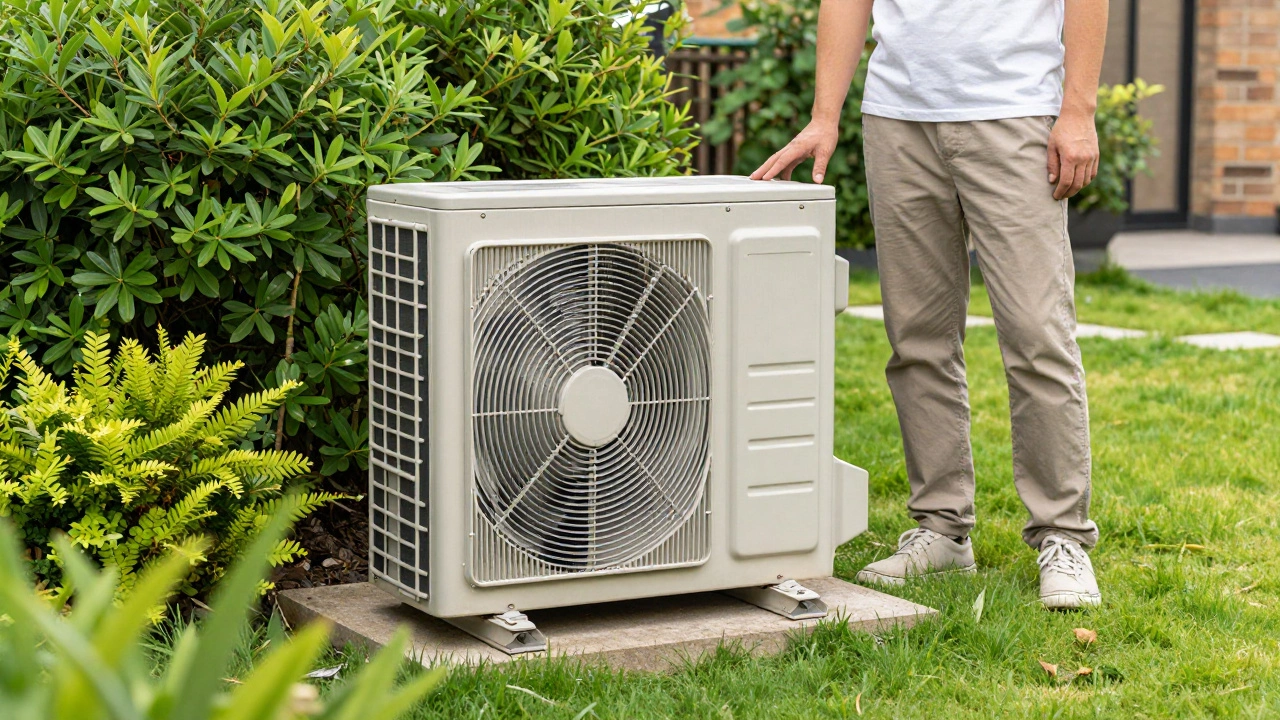
Outdoor AC units do not have air filters. If you are standing in your garden or backyard looking for a filter slot on the condenser unit that sits outside your home, you won’t find one. This is a common point of confusion for homeowners who want to maintain their central air conditioning system. The good news is that your system still has a filter-it’s just located inside your house.
The Short Answer: Look Inside
Your air filter lives indoors, typically near the air handler or furnace. These components pull air from your living spaces, push it through the filter to catch dust and allergens, and then send it over the cooling coils before circulating it back into your rooms. The outdoor unit’s job is different. It takes the warm refrigerant gas from inside and releases that heat into the outside air using a fan and compressor. Because it deals with external air rather than indoor air quality, it doesn’t need a filter.
Trying to force a filter onto an outdoor unit can actually cause serious damage. Blocking airflow to the condenser coil makes the system work harder, leading to higher energy bills and potential compressor failure. So, stop searching the exterior casing and head back inside.
Why You Won’t Find a Filter Outside
To understand why the filter isn’t outside, you need to look at how a split-system air conditioner works. Most modern homes use this setup, which separates the cooling components into two main parts:
- The Condenser (Outdoor Unit): This box houses the compressor and condenser coil. Its only interaction with air is rejecting heat. It pulls in ambient outdoor air and blows it out warmer. Filtering this air would trap leaves, pollen, and dirt, clogging the fins almost immediately and starving the system of the airflow it needs to cool down.
- The Evaporator/Air Handler (Indoor Unit): This component holds the evaporator coil and the blower motor. It circulates your home’s air. This is where the filter belongs because its job is to protect the delicate indoor coils from household dust, pet dander, and debris.
If you live in an older home with a single-package unit that sits entirely outside (often seen in mobile homes or some commercial buildings), the filter might be located on the side or bottom of that single cabinet. However, for standard residential split systems, the rule remains: the filter is always inside.
Exactly Where to Find Your Indoor Filter
Since you know the outdoor unit is filter-free, here is how to locate the actual filter quickly. In most UK and European homes, as well as many US setups, the filter is found in one of three places:
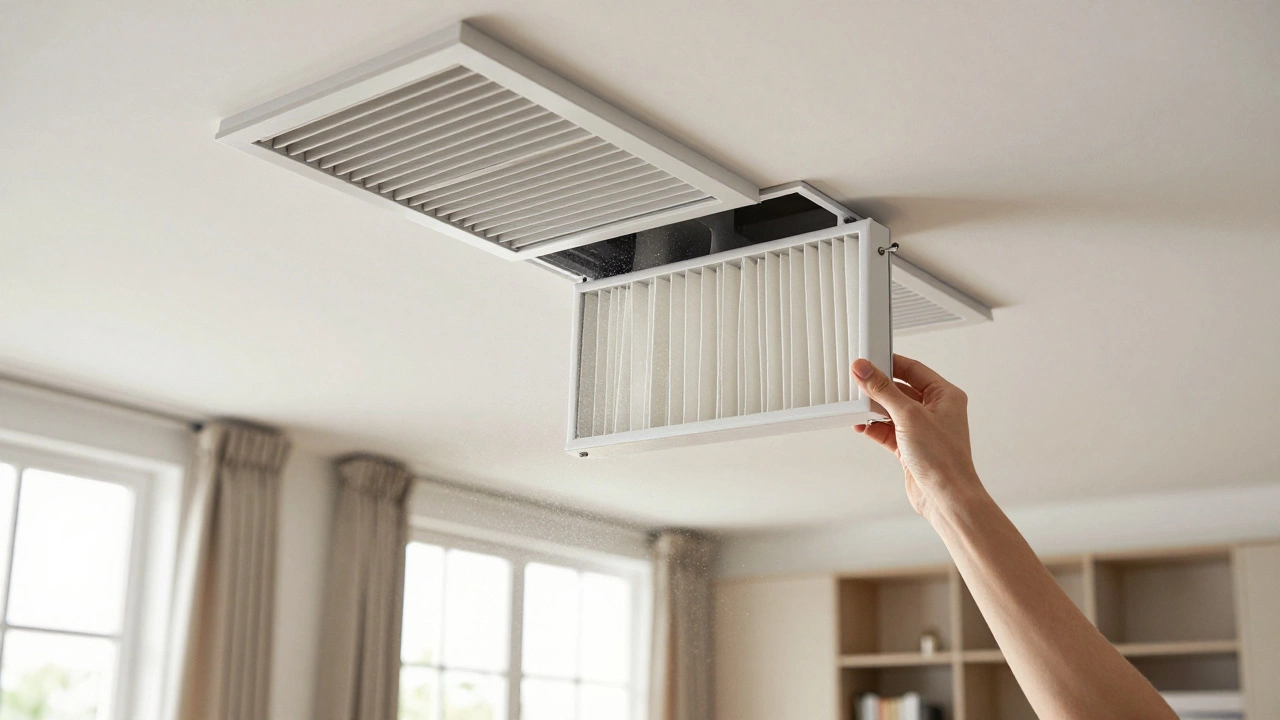
- In the Return Air Grille: Walk around your living areas and look for large vents that suck air into the system. You can test this by holding a piece of tissue paper up to the vent; if it sticks, it’s a return vent. Some of these grilles have a slide-out tray behind them where the filter sits. Others require you to remove the grille cover to access the filter slot in the ductwork.
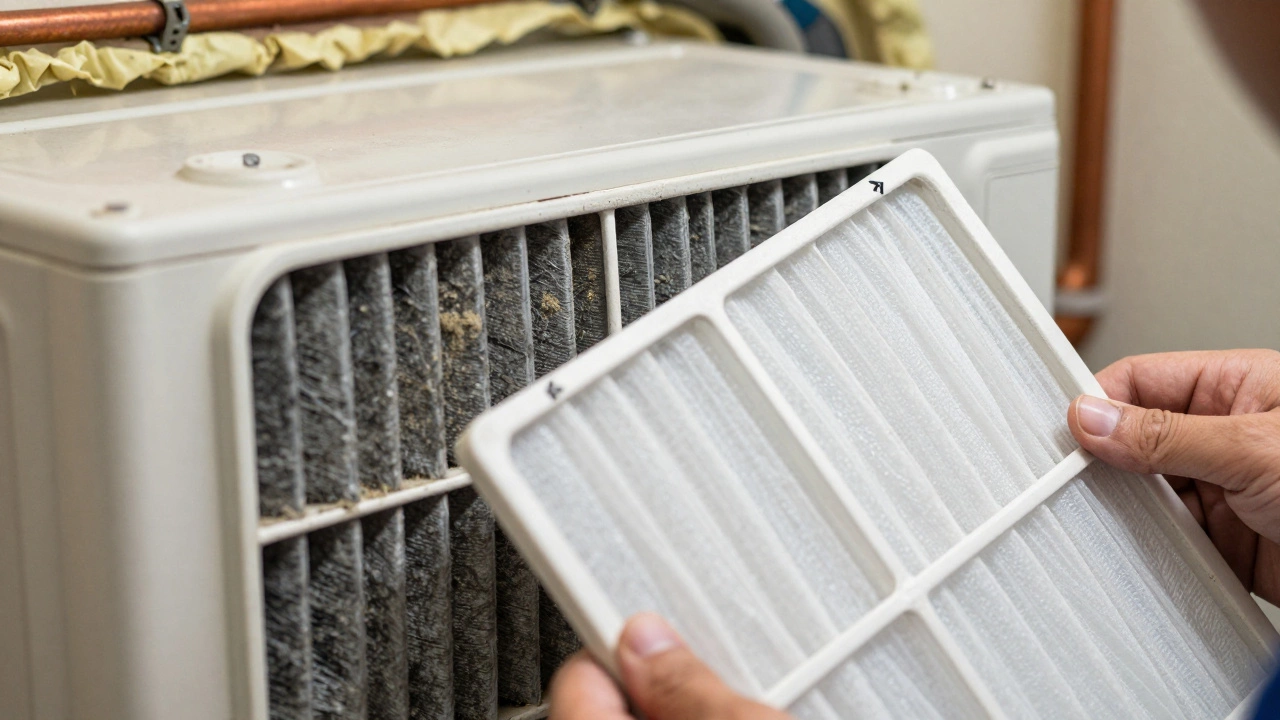
- Near the Furnace or Air Handler: Open the panel on your furnace or air handling unit. There is usually a rectangular slot designed specifically for the filter. It will often have arrows indicating the direction of airflow. Make sure you install the new filter with the arrow pointing towards the blower motor.
- In the Ductwork Access Panel: In some installations, there is a dedicated access door in the ceiling or wall ducting. Remove the screws or clips, open the door, and slide the filter out.
If you have a ducted reversible air conditioner (common in Australia and increasingly in the UK), each indoor wall-mounted unit has its own small filter. These are easy to spot: simply lift the front panel of the indoor wall unit, and you’ll see the mesh filters sitting right behind it.
What About the Outdoor Unit? Maintenance Tips
Even though the outdoor condenser doesn’t have a filter, it still needs care. Without proper maintenance, the unit can lose efficiency or break down. Here is what you should focus on instead of looking for a filter:
- Keep the Fins Clean: The metal fins on the outdoor coil can get bent or clogged with dirt. Use a soft brush or a leaf blower on low setting to gently remove debris. For deeper cleaning, you can use a garden hose to spray water through the fins from the inside out. Never spray from the outside in, as this pushes dirt further into the coil.
- Maintain Clearance: Ensure there is at least 2 feet (60cm) of clear space around the unit. Shrubs, fences, or stored boxes can block airflow. If the unit can’t breathe, your AC won’t cool effectively.
- Check the Fan: Listen to the outdoor unit when it’s running. It should hum steadily. If you hear grinding, screeching, or clicking noises, the fan motor or bearings might be failing. Call a professional technician immediately.
Signs Your Indoor Filter Needs Changing
Since the filter is inside, neglecting it affects your health and your wallet more directly than neglecting the outdoor unit. A dirty filter restricts airflow, causing the system to freeze up or overheat. Here are the clear signs it’s time to replace or clean your filter:
- Reduced Airflow: If the air coming from your vents feels weak, even when the fan is on high, the filter is likely clogged.
- Dust Buildup: Notice dust accumulating on surfaces faster than usual? Or see dust blowing out of the registers when the fan starts? That’s unfiltered air.
- Higher Energy Bills: A strained system uses more electricity. If your bill spikes without increased usage, check the filter first.
- Allergy Symptoms: If you’re sneezing more at home, your filter may no longer be trapping pollen and dust mites effectively.
As a general rule, replace disposable filters every 1-3 months. Washable filters should be cleaned monthly during peak cooling season. In Bristol, where dampness can lead to mould growth, checking your filter for moisture or mildew smells is also crucial.
Common Mistakes Homeowners Make
Confusion about filter location leads to several costly errors. Avoid these pitfalls:
- Installing a Filter on the Outdoor Unit: Some DIYers try to attach a mesh screen to the outdoor condenser. This restricts airflow and can cause the compressor to overheat and fail. Compressor replacement is extremely expensive-never block the outdoor unit.
- Using the Wrong Filter Size: Check the dimensions printed on the edge of your old filter. Using a filter that is too thin or thick can cause it to fall out or block airflow. Standard sizes are often 1-inch or 4-inch deep.
- Ignoring the Directional Arrow: Filters have an arrow on the frame indicating airflow direction. Installing it backward reduces filtration efficiency and can damage the filter media.
- Forgetting to Turn the System Back On: After replacing the filter, remember to close the access panels securely and turn the thermostat back to 'Cool' or 'Auto'. Leaving panels open lets cold air escape into the attic or crawlspace.
When to Call a Professional
You can handle filter changes and basic outdoor cleaning yourself. However, call an HVAC technician if:
- The outdoor unit makes unusual noises like grinding or loud banging.
- The system blows warm air despite a clean filter and clear outdoor unit.
- You notice ice forming on the copper lines connecting the indoor and outdoor units.
- The outdoor unit trips the circuit breaker frequently.
Regular professional maintenance ensures both the indoor and outdoor components are working in harmony. Technicians can check refrigerant levels, electrical connections, and coil cleanliness-tasks that go beyond simple filter swaps.
Does my window AC unit have an outdoor filter?
No. Window air conditioners are self-contained units. They have an internal filter located inside the unit, accessible by removing the front grill. They do not have separate outdoor filters because they exhaust hot air directly out the window.
Can I put a screen over my outdoor AC unit to keep leaves out?
You should not place a fine mesh screen over the entire unit as it restricts airflow. Instead, keep vegetation trimmed back and manually remove leaves regularly. If you must use a protective cover, ensure it is designed specifically for AC condensers and allows for maximum ventilation.
How often should I change my indoor AC filter?
Every 1 to 3 months for standard 1-inch filters. If you have pets, allergies, or live in a dusty area, check it monthly. Thicker 4-5 inch pleated filters can last 6 to 12 months. Always follow the manufacturer's recommendation.
What happens if I run my AC without a filter?
Running without a filter allows dust and debris to coat the evaporator coil. This insulates the coil, reducing its ability to absorb heat. Over time, this causes the system to work harder, increases energy costs, and can lead to coil corrosion and compressor failure.
Is the filter in the outdoor unit called a condenser filter?
No, there is no such thing as a condenser filter in standard split systems. The term 'condenser' refers to the outdoor unit itself, which does not filter air. Any mention of a 'condenser filter' is likely a misunderstanding of the indoor air filter's role in protecting the system.