Washable vs. Paper Air Filter Cost Calculator
Enter your details below to see if a washable filter is worth the investment for your specific driving profile.
Your Driving Profile
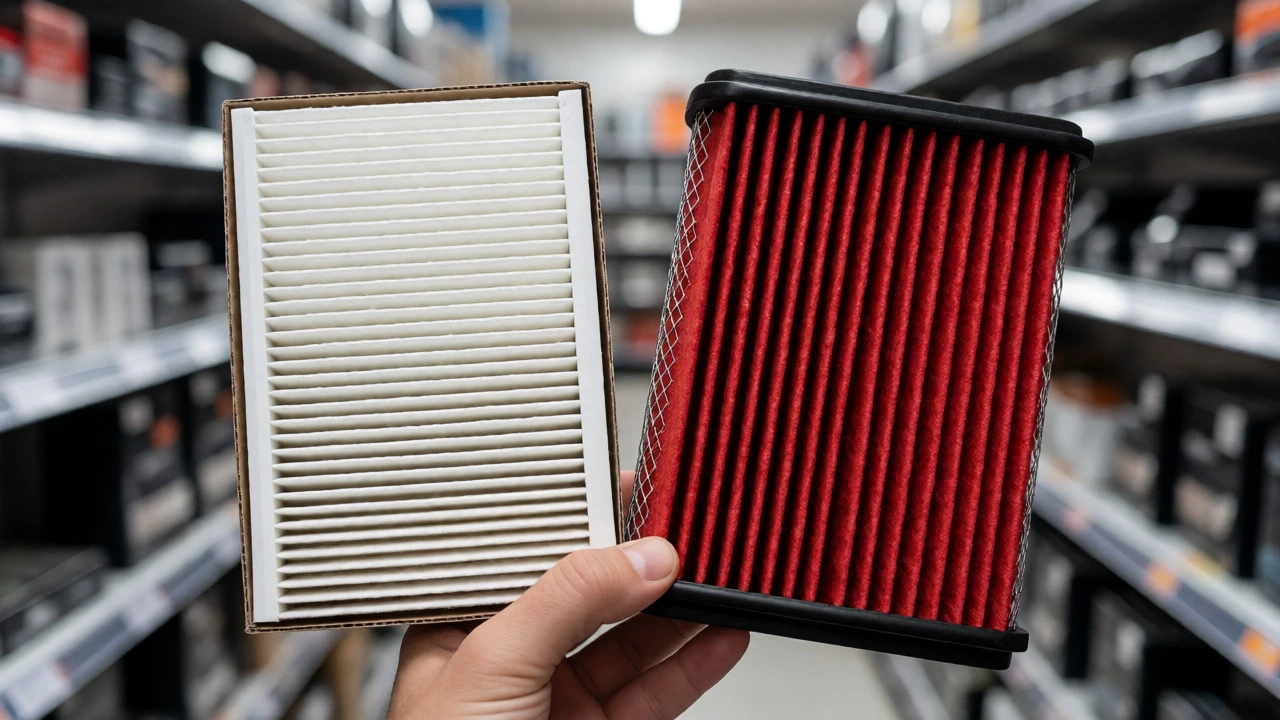
You’re standing in the auto parts aisle, holding a standard paper air filter for £8 and a premium washable one for £45. The sales pitch says you’ll save money over time. But is that actually true, or just marketing fluff designed to empty your wallet faster? If you drive a daily commuter car in Bristol traffic, the answer isn’t as simple as "yes" or "no." It depends entirely on how much you value your time versus your cash.
Key Takeaways
- Cost Break-Even: Washable filters typically pay for themselves after 3-5 replacements compared to disposable ones.
- Maintenance Risk: Improper cleaning can damage your engine more than running a slightly dirty paper filter.
- Best For: Enthusiasts, off-road drivers, and those who already perform their own basic car maintenance.
- Not For: Lease vehicles, high-mileage commercial fleets, or anyone who hates getting oily hands.
The Real Cost of Clean Air
Let’s do the math before we talk about horsepower. A standard paper air filter is a disposable component made from pleated cellulose material that traps dust and debris before it enters the engine intake. You buy them every 15,000 to 20,000 miles. In the UK, these cost between £8 and £15 at places like Halfords or Kwik Fit. Over 60,000 miles, you might replace one four times. That’s roughly £40-£60 total.
Now look at a washable air filter is a reusable filtration system typically constructed from cotton gauze or synthetic foam treated with oil to capture particles while allowing higher airflow. Brands like K&N sell entry-level units for around £35-£50. These last up to 500,000 miles if maintained correctly. To clean them, you need a specific kit-cleaner and re-oiling spray-which costs another £15. So, your initial outlay is nearly double the lifetime cost of paper filters for an average driver.
But here is the catch: you aren’t just paying for the part; you are paying for longevity. If you keep your car for 10 years or 100,000 miles, the washable option eventually wins on pure dollar amount. However, most people don’t factor in the "time tax." Cleaning a filter takes 20-30 minutes per cycle, usually every 15,000 miles. Is your half-hour worth £5? For many, the convenience of swapping a cheap paper box and binning it outweighs the savings.
Performance Gains: Myth vs. Reality
Marketing materials love to claim washable filters boost horsepower. And technically, they do. Because the mesh is less restrictive than dense paper, the engine breathes easier. On a stock family hatchback like a Ford Focus, you might see a gain of 2-5 horsepower. Can you feel it? Probably not. You certainly won’t notice it on the MOT certificate.
However, the story changes if you’ve modified your engine. If you have a turbocharged setup or a high-performance sports car, unrestricted airflow matters more. In these scenarios, a washable filter supports better throttle response and helps maintain peak power under heavy load. But for a standard diesel estate doing school runs, the performance difference is negligible. Don’t buy a £50 filter expecting a £5,000 tuning result.
| Feature | Paper (Disposable) | Washable (Reusable) |
|---|---|---|
| Initial Cost | £8 - £15 | £35 - £60 |
| Lifespan | 15,000 - 20,000 miles | Up to 500,000 miles |
| Airflow Restriction | Higher | Lower |
| Filtration Efficiency | 99%+ (New) | 95-98% (Varies by maintenance) |
| Maintenance Effort | Replace & Bin | Clean, Dry, Re-oil |
| Eco Impact | High Waste | Low Waste |
The Maintenance Trap
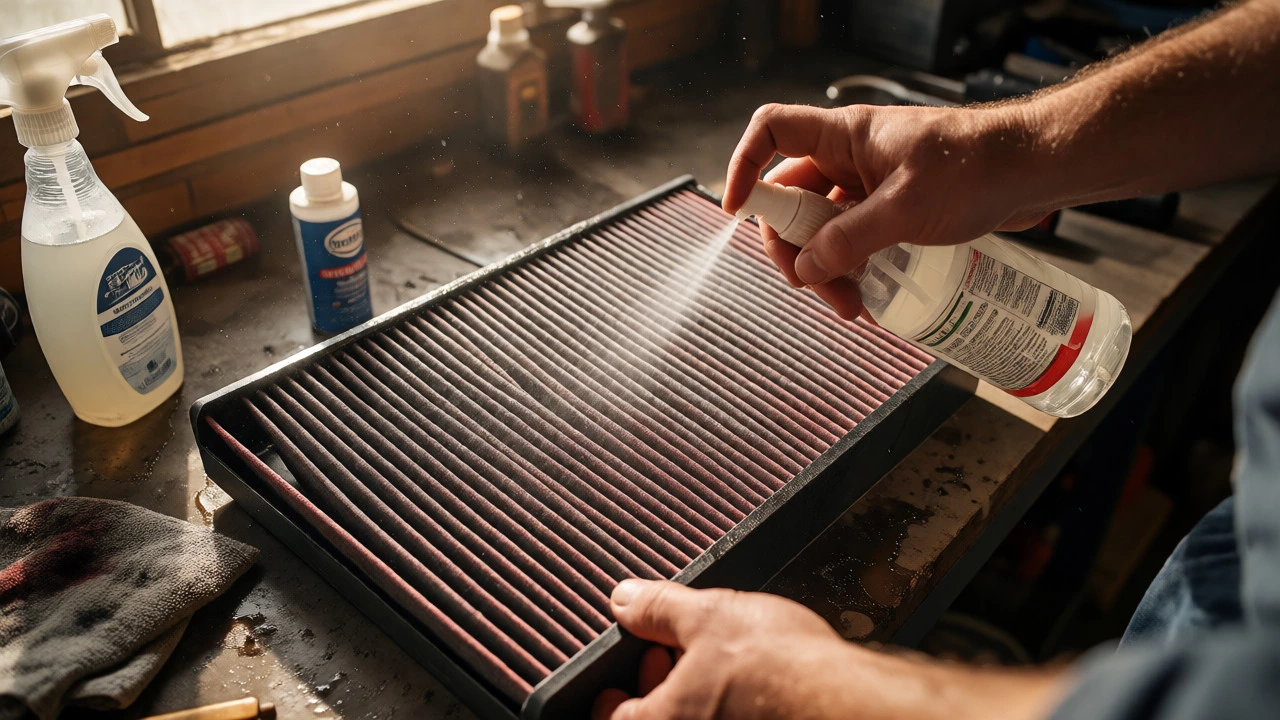
This is where things get tricky. A washable filter isn’t "set and forget." It requires active care. If you neglect it, you risk more than just reduced efficiency. Cotton gauze filters rely on a thin layer of oil to trap dirt. If you wash the filter but forget to re-oil it, dust passes straight into your engine. Over time, this abrasive grit wears down cylinder walls and piston rings, leading to expensive internal damage.
Conversely, over-oiling is equally dangerous. Too much oil can foul your Mass Air Flow (MAF) sensor. This sensor measures the amount of air entering the engine so the computer knows how much fuel to inject. If it gets coated in oil, it sends wrong data, causing rough idling, poor fuel economy, and check engine lights. Replacing a MAF sensor costs £50-£150, wiping out any savings from the filter instantly.
Do you have the patience to follow a strict routine? Every 15,000 miles, you must remove the filter, spray it with cleaner, rinse it until water runs clear, let it dry completely (never use compressed air), apply a light mist of oil, and reinstall it. Miss a step, and you’re asking for trouble. For the casual owner, the simplicity of buying a new paper filter and having a mechanic swap it in five minutes is often safer.
When Washable Filters Make Sense
So, who should actually buy one? There are three specific profiles where the investment pays off.
First, the DIY enthusiast. If you already change your own oil and spark plugs, adding a filter cleaning to your garage routine is easy. You control the process, ensuring it’s done right. Second, off-road drivers. If you spend time on dusty tracks or gravel roads, your filter clogs quickly. A paper filter would need replacing constantly, which is costly and wasteful. A washable unit handles heavy dust loads better and can be cleaned immediately without a trip to the shop.
Third, long-term owners of modified cars. If you plan to keep your vehicle for 10+ years and want maximum airflow for aftermarket exhausts or intakes, a high-quality washable filter is the logical choice. It aligns with the philosophy of maintaining rather than discarding components.

Environmental Considerations
It’s hard to argue against the environmental benefits of reusing something. Millions of paper filters end up in landfills every year. They take decades to decompose, especially if contaminated with oil and grime. A single washable filter replaces dozens of disposables. If eco-consciousness drives your purchasing decisions, the reusable option is clearly superior, provided you dispose of the cleaning chemicals responsibly.
However, don’t ignore the manufacturing footprint. Producing a complex cotton-gauze filter uses more energy and resources upfront than pressing a sheet of paper. But over a 5-year ownership period, the reduction in waste usually offsets the initial production cost. Just make sure you actually use the filter for its intended lifespan. Buying a £50 filter and selling the car after two years makes it a poor environmental choice.
Final Verdict: Buy or Skip?
If you drive a standard car, lease it, or hate messy jobs, stick with paper filters. They are cheap, effective, and zero-effort. The potential savings of £20-£30 over several years aren’t worth the hassle of mixing oils and waiting for filters to dry.
But if you modify your car, drive in dusty conditions, or simply prefer sustainable maintenance practices, a washable filter is worth it. Just commit to the maintenance schedule. Treat it like a piece of equipment that needs care, not a consumable you ignore. Do that, and you’ll likely never buy an air filter again.
How often should I clean a washable air filter?
Most manufacturers recommend cleaning every 15,000 to 20,000 miles, or once a year, whichever comes first. If you drive in particularly dusty areas, such as rural farms or construction sites, check it every 5,000 miles. Visual inspection is key-if it looks grey and clogged, clean it early.
Can I use dish soap instead of special cleaner?
You can, but it’s risky. Dish soap may leave residues that affect the cotton fibers’ ability to hold oil properly. Specialized cleaners are formulated to break down dirt without stripping the cotton’s natural properties. If you must use soap, ensure it’s mild and rinse thoroughly, but sticking to the brand-specific cleaner is safer for long-term performance.
Will a washable filter void my warranty?
In the UK, under consumer protection laws, using aftermarket parts generally does not automatically void your warranty unless the manufacturer can prove the part caused the failure. However, some dealerships are hesitant. Always check your warranty terms or ask your dealer before switching. Keeping receipts for the filter and cleaning kits helps prove proper maintenance.
What happens if I forget to oil the filter?
Without oil, the cotton gauze loses its sticky surface needed to trap fine particles. Dust and grit will pass through into the engine, acting like sandpaper on internal components. This accelerates wear on pistons, cylinders, and valves. While one missed cycle won’t destroy your engine, chronic neglect leads to significant long-term damage.
Are all washable filters the same quality?
No. Quality varies significantly between brands like K&N, BMC, and Pipercross. Cheaper knock-offs may use inferior cotton blends or poorly sealed frames, leading to bypass leaks where unfiltered air sneaks around the edges. Stick to reputable brands with proven track records to ensure consistent filtration and durability.