DIY Car Battery Replacement Assistant
Pre-Flight Checklist
Ensure you have everything ready before starting.
Progress Tracker
Ready to Start?
Complete the checklist on the left, then click "Start Guide" below to begin the step-by-step process.
🎉 Job Complete!
You've successfully replaced your battery. Don't forget to recycle your old battery responsibly at an auto parts store or garage.
Your car won't start. The dashboard lights flicker and die. You hear that dreaded clicking sound when you turn the key. It’s a classic sign of a dead car battery, which is the primary power source for starting your vehicle and running its electrical systems. Before you call a tow truck or pay for a mobile mechanic to charge you an arm and a leg, ask yourself: can I replace it myself?
The short answer is yes. For most modern vehicles, swapping out a standard lead-acid battery is a straightforward task that takes about twenty minutes. However, it’s not just about lifting a heavy box and bolting it down. There are safety risks, specific tools you’ll need, and crucial steps regarding your car's computer system that many people overlook. If you skip these, you could damage expensive electronics or leave yourself stranded again in a week.
Gathering the Right Tools and Safety Gear
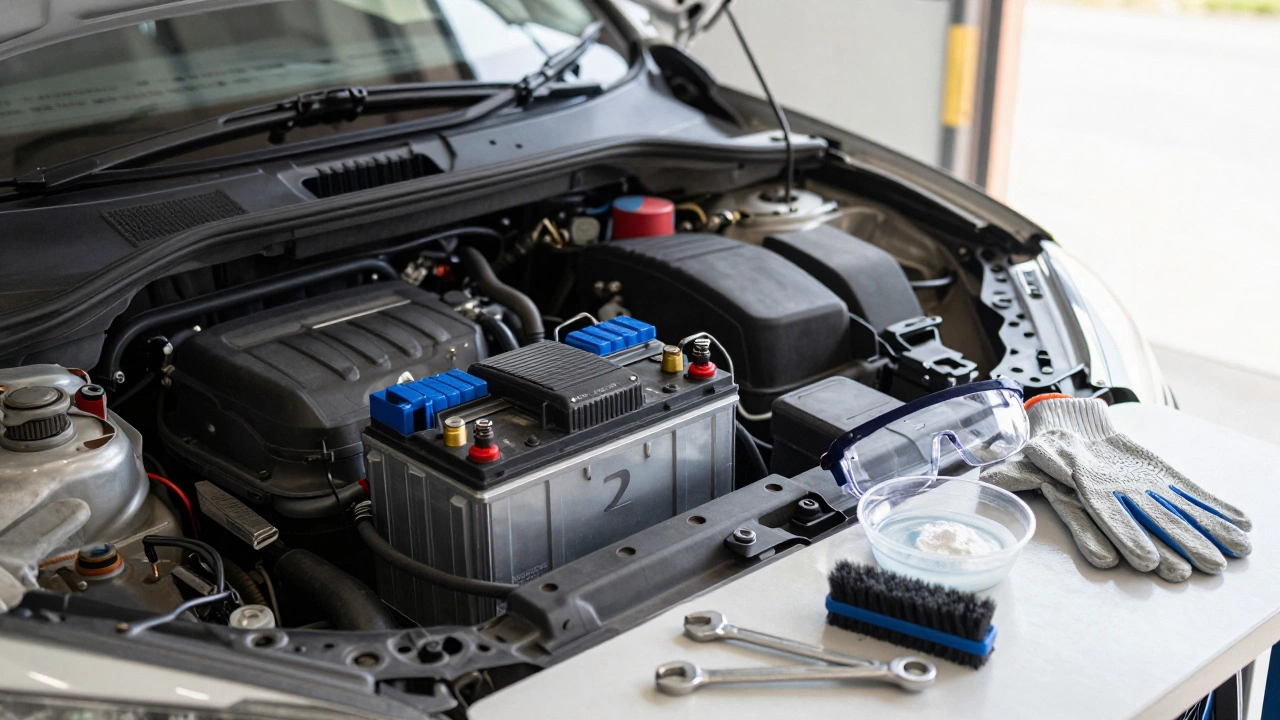
You don’t need a professional garage to do this job, but you do need the right equipment. Trying to wrench off corroded terminals with bare hands or improper tools is a recipe for injury. Start by gathering these essentials:
- Safety glasses: Batteries contain sulfuric acid. If a terminal leaks or sprays while you’re working, your eyes are at risk.
- Heavy-duty gloves: These protect your hands from acid burns and cold metal. Rubber or nitrile gloves work best.
- Wrench set: Most cars use metric sizes (usually 10mm or 8mm) for the terminal clamps. An adjustable wrench works if you don’t have a socket set.
- Terminal cleaner brush: A wire brush designed to clean corrosion off battery posts. You can also make one from an old soda can tab, but a proper brush is faster.
- Baking soda and water: A mixture of one tablespoon baking soda per cup of water neutralizes acid residue.
- Battery hold-down tool: Often a simple ratchet strap or a specific bolt removal tool depending on your car model.
Before you even touch the car, check the weather. Working on a battery in freezing temperatures makes the metal brittle and increases the risk of accidental shorts due to condensation. Ideally, do this in a dry, well-ventilated area.
Choosing the Correct Replacement Battery
Not all batteries fit every car. Buying the wrong one means wasted money and time returning it to the store. You need to match three specific attributes: physical size, terminal configuration, and Cold Cranking Amps (CCA).
| Specification | What It Means | Why It Matters |
|---|---|---|
| Group Size | Physical dimensions (length, width, height) | Ensures the battery fits in the tray and doesn't hit other components. |
| Cold Cranking Amps (CCA) | Power output at 0°F (-18°C) | Must meet or exceed the manufacturer's recommendation for reliable starts in winter. |
| Reserve Capacity (RC) | Minutes the battery can run accessories if the alternator fails | Higher RC is better for cars with lots of electronics or frequent short trips. |
| Terminal Orientation | Which side (+/-) is positive/negative | If reversed, cables won't reach, forcing dangerous extensions. |
Check your owner’s manual or look at the label on your current battery for the group size (e.g., Group 24F, Group 35). When buying, ensure the new battery has equal or higher CCA ratings than the old one. In the UK, where winters can be damp and chilly, maintaining adequate CCA is critical. Also, note whether your car uses a standard flooded lead-acid battery or an Absorbent Glass Mat (AGM) battery. AGM batteries are common in cars with stop-start technology. Do not substitute a standard battery for an AGM unless explicitly stated as compatible, as they handle charging cycles differently.
Removing the Old Battery Safely
Now comes the physical work. The golden rule of battery replacement is: always disconnect the negative terminal first. This prevents accidental short circuits if your wrench touches the car’s metal frame while loosening the positive clamp. Here is the step-by-step process:
- Turn off the engine and remove the key. Ensure all electrical accessories are off.
- Locate the battery. In most cars, it’s under the hood. Some luxury brands hide it in the trunk or under a rear seat. Consult your manual if you can’t find it immediately.
- Remove the hold-down clamp. This secures the battery in place. Loosen the bolts or release the plastic clip. Keep these hardware pieces safe; you’ll need them later.
- Disconnect the negative cable. Use your wrench to loosen the nut on the black (negative) terminal. Pull the clamp off gently. If it’s stuck, wiggle it slightly-do not force it with excessive leverage that might break the post. Tuck the cable away so it cannot touch the terminal.
- Disconnect the positive cable. Repeat the process for the red (positive) terminal. Again, tuck the cable aside.
- Lift the battery out. Batteries weigh between 30 to 50 pounds (14-23 kg). Bend your knees, keep your back straight, and lift carefully. Watch for any leaking fluid around the base.
If your car has a battery cover or plastic tray, inspect it for cracks. Acid leaks can eat through plastic over time. If the tray is damaged, replace it before installing the new battery.
Cleaning Corrosion and Preparing the Terminals
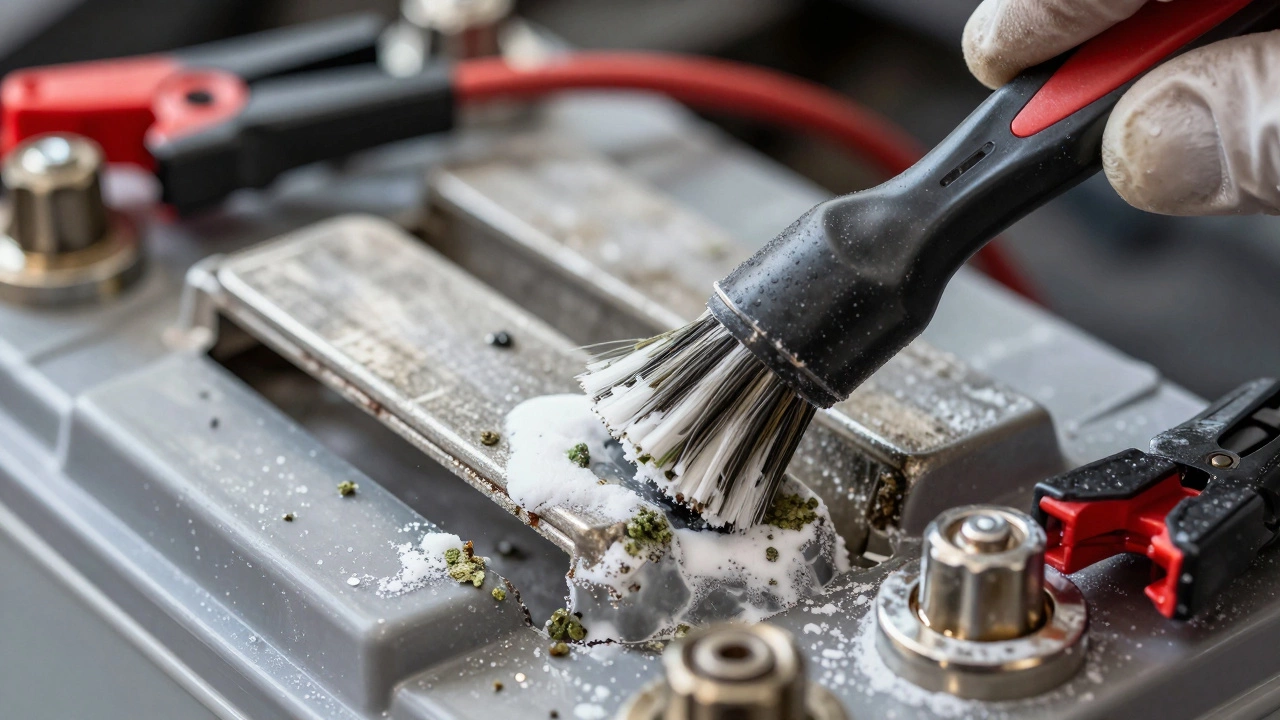
Look at the battery posts and the cable clamps. Do you see white, blue, or green crusty powder? That’s corrosion, caused by hydrogen gas escaping the battery reacting with air. Corrosion creates resistance, which means your new battery won’t deliver full power to the starter motor. Ignoring this is a common mistake that leads to premature battery failure.
Mix your baking soda and water solution. Apply it to the corroded areas using an old toothbrush or the terminal cleaning brush. The mixture will fizz as it neutralizes the acid. Scrub until the metal shines. Rinse with clean water and dry thoroughly with a rag. Dryness is key-moisture promotes future corrosion.
Once clean, apply a thin layer of petroleum jelly or specialized terminal protector spray to both the battery posts and the inside of the cable clamps. This barrier seals out moisture and oxygen, significantly extending the life of your connection.
Installing the New Battery
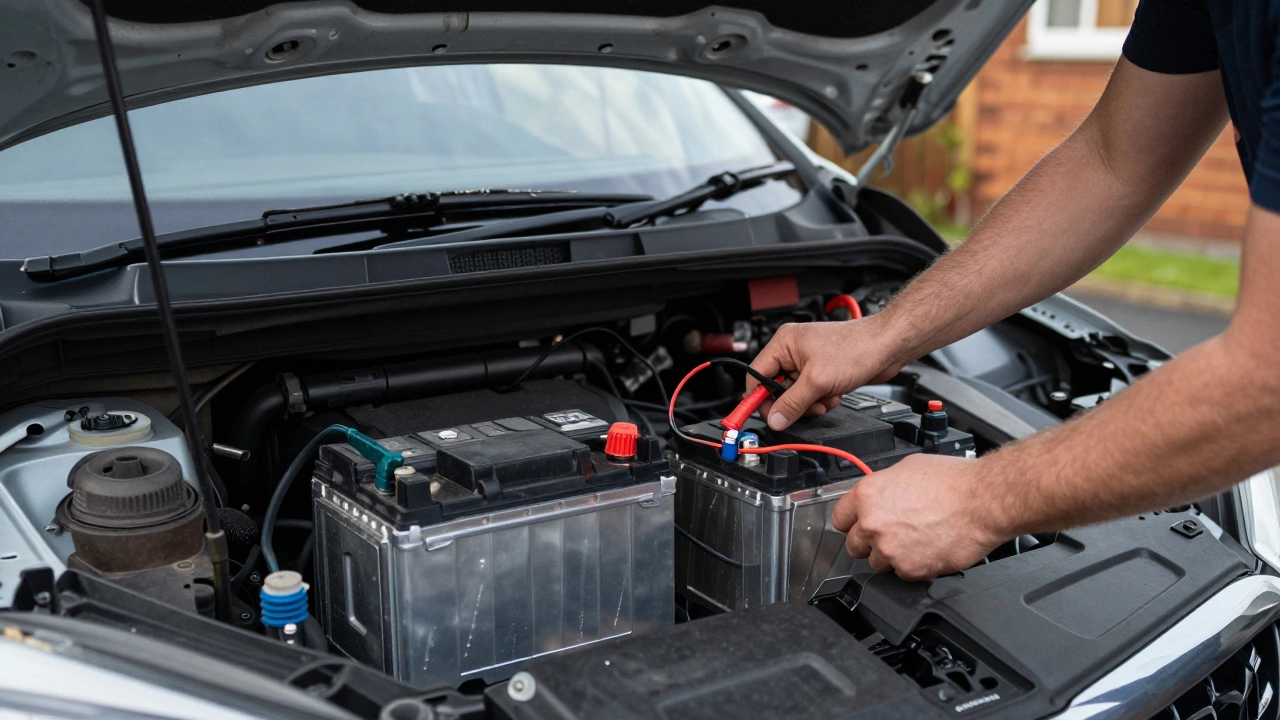
Place the new battery into the tray, ensuring the terminals face the correct direction as noted earlier. Reinstall the hold-down clamp securely. A loose battery can vibrate internally during driving, damaging the plates and shortening its lifespan. Tighten the clamp until snug, but avoid over-torquing, which can crack the battery case.
Connect the cables in reverse order of removal: positive first, then negative. Place the red clamp on the positive post and tighten the nut. Then connect the black clamp to the negative post. Ensure both connections are tight enough that you cannot wiggle the clamps by hand. Loose connections cause voltage drops and heat buildup.
Resetting Electronics and Testing
This is the part many DIYers forget. Modern cars rely on complex computer systems (ECUs) that lose their memory when power is cut. After reconnecting the battery, you may need to reset several settings:
- Radio Code: Many anti-theft radios require a PIN code to reactivate. Have this ready before you start.
- Clock and Date: Set these manually or via GPS if equipped.
- Window Reset: On some cars, the automatic up/down window feature needs recalibration. Roll windows fully down, then hold the switch up for five seconds after they close.
- Idle Relearn: The engine may idle roughly for the first few miles as the ECU relearns fuel trim values. Drive normally for about 10-15 minutes to help this process.
Start the car. Listen for a smooth crank. Check the dashboard for warning lights. If the Check Engine light stays on, it might just be a temporary glitch from the power loss. Drive for a day; if it persists, scan for codes. If the car starts but dies shortly after, your alternator might not be charging the new battery properly.
Disposing of the Old Battery Responsibly
Never throw your old battery in the trash. Lead-acid batteries are hazardous waste containing toxic lead and corrosive acid. In the UK, you must recycle them. Most auto parts stores (like Halfords, AutoZone equivalents, or local garages) accept old batteries for free recycling. They often offer a small refund or credit toward your new purchase. Keep the old battery upright in a sealed container if you’re transporting it home to prevent leaks.
How long does a typical car battery last?
Most standard lead-acid car batteries last between 3 to 5 years. Factors like climate, driving habits, and how often you take short trips affect longevity. Extreme heat accelerates chemical breakdown, while extreme cold reduces available power. Regular testing can predict failure before it happens.
Do I need to reset my car computer after changing the battery?
For most basic functions, no special tool is needed. The car’s ECU will automatically begin relearning parameters as you drive. However, you may need to manually reset the clock, radio presets, and sometimes window auto-up features. Some high-end models require a diagnostic scanner to clear temporary fault codes stored during power loss.
What should I do if I accidentally swap positive and negative cables?
If you connect them backward, you will likely hear a loud pop, see sparks, and smell burning insulation. Immediately disconnect the cables. Check for melted wires or blown fuses. Reverse the connections correctly. If the car doesn’t start or electronics behave strangely, consult a professional, as sensitive modules may have been damaged by reverse polarity.
Can I use a jumper cable instead of replacing the battery?
Jump-starting is a temporary fix. If your battery is more than four years old or shows signs of swelling or leakage, it needs replacement. Jump-starting repeatedly strains the donor vehicle’s alternator and doesn’t address the underlying cell failure in your old battery. Always test the battery after a jump to confirm it holds a charge.
Is it safe to replace a battery in an electric vehicle (EV)?
No. EVs have two battery systems: a high-voltage traction pack and a small 12V auxiliary battery. While the 12V battery can sometimes be replaced by owners, accessing it often requires disabling high-voltage systems. Due to severe electrocution risks, always consult the manufacturer’s service manual or a certified technician for EV battery work.