Exhaust Sound Change Estimator
Exhaust Sound Calculator
Based on the article "Do Exhaust Tips Actually Change Sound? The Real Truth About Exhaust Noise," this tool estimates how actual exhaust modifications affect sound. Remember: exhaust tips alone rarely change sound - it's the internal components that matter most.
Ever seen a car with a giant chrome exhaust tip and thought, ‘That must sound insane’? You’re not alone. But here’s the truth: exhaust tips don’t make your car louder or deeper by themselves. They’re the last piece of the puzzle - not the source of the sound.
What Actually Controls Exhaust Sound?
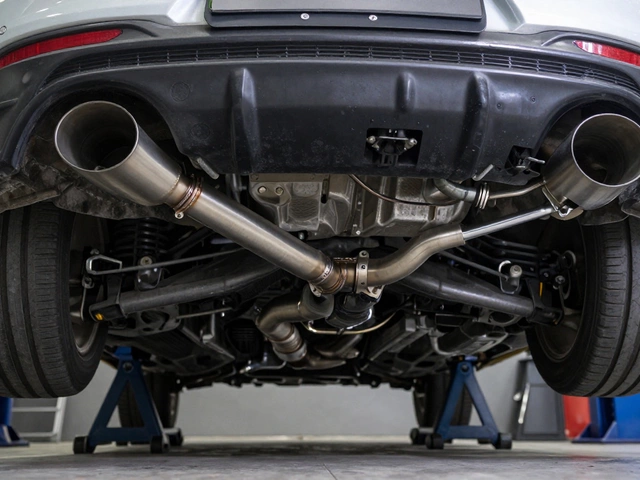
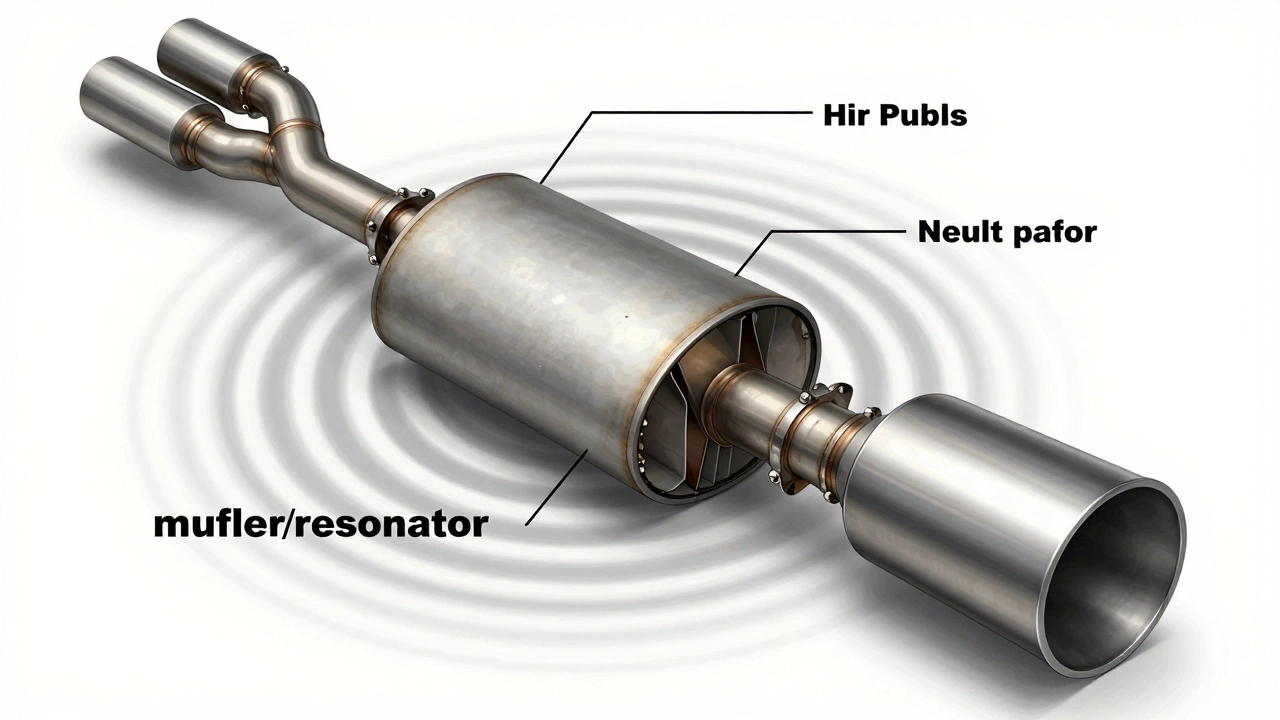
The noise your car makes comes from the engine’s exhaust pulses. These pulses travel through the entire exhaust system: headers, catalytic converters, mufflers, resonators, and finally the tailpipe. The shape, length, and internal design of the muffler and resonator are what dampen or amplify those pulses. Think of it like shouting into a cardboard tube versus a foam-lined room. The tube? Loud and sharp. The room? Muffled and rounded.Exhaust tips are just the opening - like the end of a trumpet. A trumpet’s sound doesn’t change because you swap the bell for a bigger one. It changes because of the valves, the air pressure, and the shape inside. Same with your car. If you’ve got a stock muffler and just bolt on a 4-inch tip, you won’t hear a difference. Not even a little.
When Do Exhaust Tips *Seem* to Change the Sound?
You might notice a change after installing new tips - but it’s not because of the tip. It’s because you probably replaced the whole rear section of the exhaust. Most people don’t buy just tips. They buy a cat-back system. That includes new pipes, a new muffler, and new tips. That’s where the real sound change happens.For example, a straight-through muffler (like a Borla or MagnaFlow) lets more sound through because it has fewer baffles. Pair that with a large-diameter tip, and now you’ve got a deep, throaty rumble. The tip doesn’t cause it. It just lets it out more freely. A small, narrow tip can actually restrict airflow slightly and make the sound feel more muffled - even if the muffler is loud.
Size and Shape Matter - But Only Indirectly
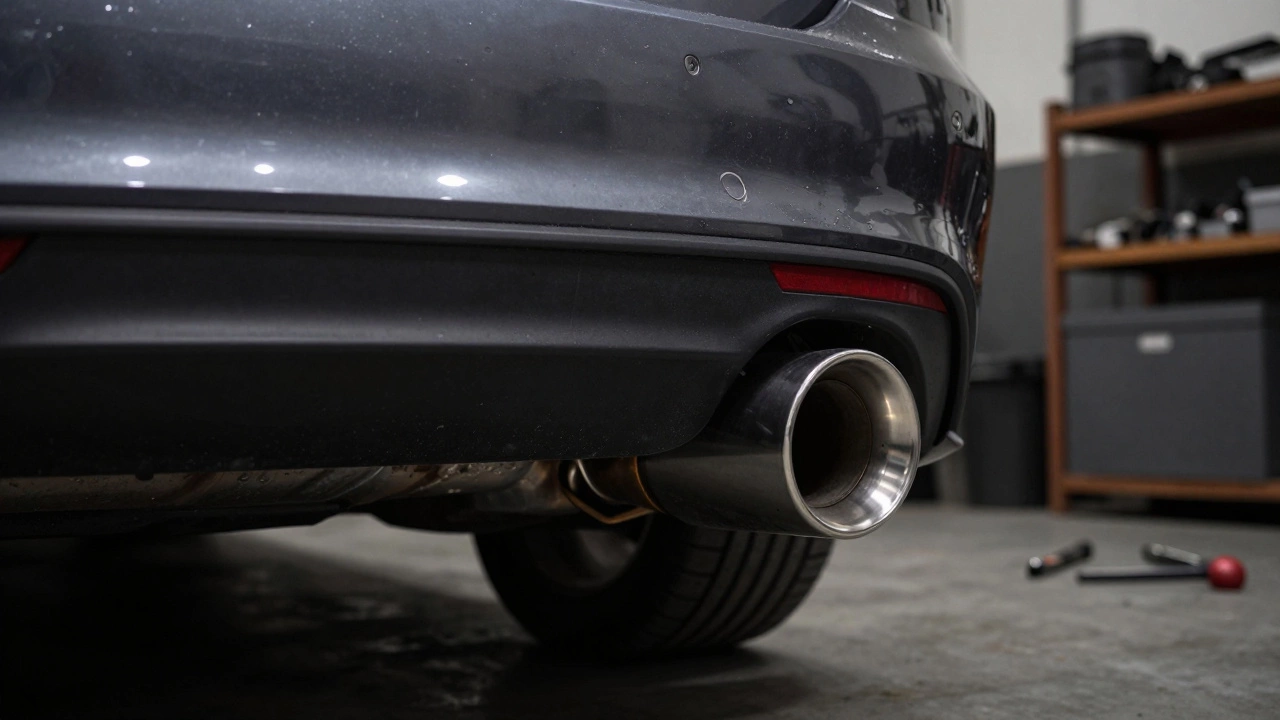
The diameter and design of the tip can influence how sound exits. A larger tip (say, 3.5 inches or more) allows exhaust gases to expand more quickly as they leave the pipe. This reduces backpressure slightly and can make the tone feel fuller. A double-wall tip with a rolled edge can also diffuse sound a bit differently than a plain-cut tip, creating a slightly smoother tone.But here’s the catch: if you’re running a stock exhaust with a 2.5-inch tip and you swap it for a 5-inch tip, you won’t hear anything different unless you’ve also upgraded the muffler. The tip is just a hole. A bigger hole doesn’t make the engine scream - it just lets the scream out more easily.
What About Resonance and Drone?
Some people install big tips hoping to reduce cabin drone. That’s a myth. Drone comes from specific frequencies bouncing around inside the exhaust system - usually between 1,800 and 2,500 RPM. That’s caused by the length of the pipes and the design of the muffler, not the tip. A tip can’t cancel out those frequencies. If you’re getting annoying drone, you need a better resonator or a different muffler design - not a flashier end.Real-World Examples
Take a 2015 Subaru WRX. Stock exhaust: quiet, almost polite. Swap the muffler for an aftermarket unit with a straight-through design and a 4-inch tip? Now it sounds like a rally car. The tip? It’s just the finish. The real change is inside the muffler. Now take a 2020 Ford Mustang EcoBoost. Stock tip: small, plain. Aftermarket cat-back with the same tip? Same sound. Swap the tip to a 5-inch rolled edge? Still the same sound. Change the muffler to a performance unit? Now it growls. The tip? Just decoration.Even in high-end cars like the BMW M3 or Audi RS5, the exhaust note is tuned by engineers using resonators, valves, and pipe diameters - not the shape of the tip. The tips you see on those cars? They’re there for looks, airflow efficiency, and branding - not sound tuning.
What *Does* Change Exhaust Sound?
If you want a deeper, louder, or more aggressive tone, here’s what actually works:- Aftermarket muffler - replaces the stock one with fewer baffles or different internal chambers
- Resonator delete - removes a sound-dampening chamber (can increase drone)
- Performance headers - improve flow and change pulse timing, affecting tone
- Exhaust pipe diameter - larger pipes (2.5” to 3”) reduce restriction and let sound travel more freely
- Valved exhaust systems - electronically controlled flaps that open or close to change volume
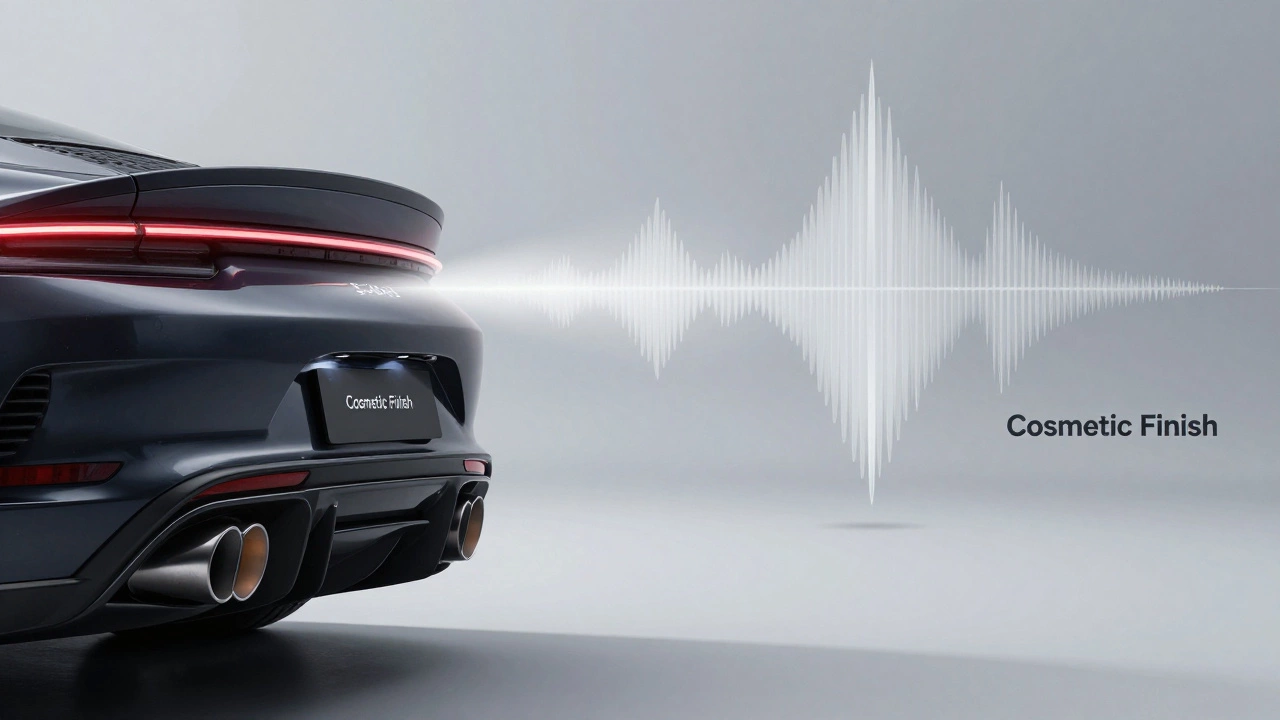
Exhaust tips? They’re the final touch - like new tires or a spoiler. They look good. They might help with airflow. But they don’t change the engine’s voice.
Why Do People Think Tips Change Sound?
Marketing. Car shops show before-and-after videos with a stock tip and a giant chrome one. They play the sound. The engine’s been modified - but the video makes it look like the tip did it. You see the big tip. You hear the deep rumble. Your brain connects the two.It’s the same reason people think bigger wheels make a car faster. They don’t. But they look fast. And that’s what sells.
So Should You Buy Exhaust Tips?
Yes - if you want your car to look better. They’re cheap. Easy to install. And they make a big visual difference. A black tip on a dark car? Sleek. A polished tip on a lowered GTI? Classy.No - if you’re buying them hoping for a louder, deeper, or more aggressive sound. You’ll be disappointed. Save your money for a proper muffler upgrade.
Final Verdict
Exhaust tips don’t change the sound of your car. They’re cosmetic. The real sound comes from the muffler, the pipes, and the engine’s design. Want a better exhaust note? Start with the muffler. Upgrade the pipes. Maybe add a resonator delete. Then, once you’ve got the tone you want, pick a tip that matches your style.Think of it like shoes. You wouldn’t buy new sneakers hoping they’ll make you run faster. You buy them because they look good. Same here.
Do exhaust tips make a car louder?
No, exhaust tips alone don’t make a car louder. The sound is controlled by the muffler, resonators, and pipe diameter. Tips are just the exit point. If you hear a difference after installing tips, it’s because you also changed the muffler or pipes.
Can a bigger exhaust tip improve sound quality?
A larger tip can let exhaust gases flow more freely, which may make an existing sound feel fuller or less restricted - but only if the rest of the system is already tuned for performance. A bigger tip won’t create depth or bass if the muffler is stock.
Do exhaust tips affect performance?
Minimal impact. A tip that’s too small can create a slight restriction, but most aftermarket tips are designed to match or exceed the pipe diameter. Any performance gain comes from the entire exhaust system, not the tip.
Why do performance cars have large exhaust tips?
They’re there for aesthetics and airflow efficiency. Large tips look aggressive and signal high performance. They also help exhaust gases exit smoothly, reducing backpressure slightly - but only when paired with a properly designed exhaust system.
Are dual exhaust tips louder than single tips?
Not inherently. Dual tips are often used for symmetry or style. If the system has two separate exhaust paths, you might get a wider soundstage, but the volume and tone are still controlled by the muffler. Two stock tips on a stock system? Still quiet.