Suspension Repair Cost Estimator
Estimate your suspension repair costs based on vehicle type and component needs. Prices reflect 2025 industry averages.
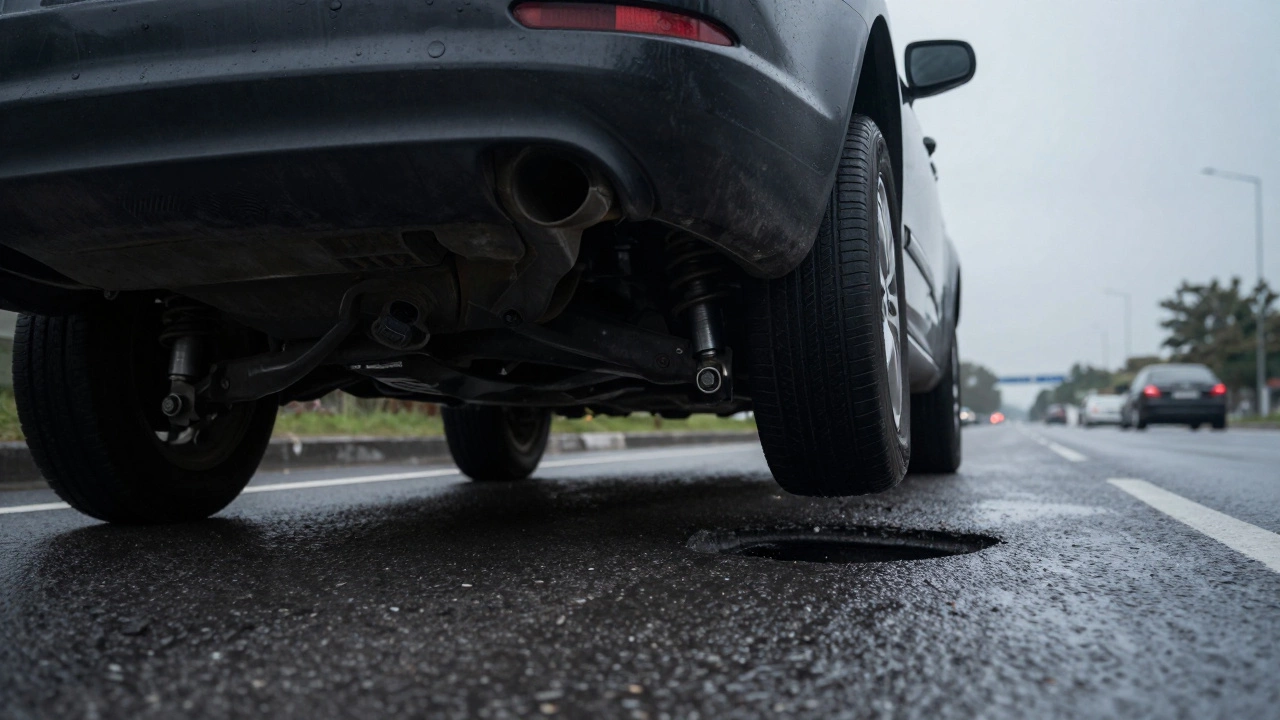
When your car starts bouncing like a pogo stick over every bump, or you hear a clunk when you hit a pothole, you know something’s wrong with the suspension. The big question isn’t just whether it’s broken-it’s whether fixing it will break your bank. The short answer? It can be, but it doesn’t have to be. What you pay depends on what’s broken, where you live, and whether you’re willing to do some of the work yourself.
What Exactly Is the Suspension System?
The suspension system isn’t one part. It’s a team: shock absorbers, struts, springs, control arms, bushings, ball joints, and sway bars. Each plays a role in keeping your tires on the road, smoothing out bumps, and helping you steer safely. When one part wears out, the others start working harder-and that’s when things go sideways. A worn ball joint can cause uneven tire wear. A broken spring makes the car lean to one side. A leaking shock absorber turns every bump into a jolt.
Most people don’t realize that suspension problems don’t always scream for attention. Sometimes, they just make driving feel… off. Like the car’s tired. Or like you’re driving a boat on rough water. If your car feels looser than it used to, or if it dips forward when you brake hard, that’s your suspension asking for help.
How Much Does It Really Cost to Fix Suspension?
There’s no single price tag for suspension repairs. Costs vary wildly based on the part, the car, and labor rates. Here’s what you’re likely to pay in late 2025 for common fixes:
| Part | Parts Cost | Labor Cost | Total Estimate |
|---|---|---|---|
| Shock Absorber (pair) | $100-$300 | $150-$300 | $250-$600 |
| Strut Assembly (pair) | $300-$800 | $200-$500 | $500-$1,300 |
| Control Arm (one) | $80-$250 | $100-$250 | $180-$500 |
| Ball Joint (one) | $20-$100 | $80-$200 | $100-$300 |
| Coil Spring (one) | $100-$250 | $150-$300 | $250-$550 |
| Stabilizer Bar Links (pair) | $40-$120 | $80-$150 | $120-$270 |
Struts are the most expensive fix because they’re often sold as a complete assembly, and replacing them requires a wheel alignment afterward. That adds another $75-$150 to the bill. Shock absorbers are cheaper, but if you’re replacing them on both sides-which you should-you’re still looking at $500 total for parts and labor on most sedans.
For luxury or performance cars like BMWs, Audis, or Mercedes, prices jump. A single strut for a 2023 Audi A4 can cost $600 just for the part. Labor? Another $400. That’s $1,000 before taxes. That’s not a typo.
Why Do Suspension Repairs Cost So Much?
It’s not just the parts. It’s the work. Suspension components are buried under layers of other systems. To get to a ball joint, a mechanic might need to remove the brake caliper, disconnect the steering linkage, and take off the wheel hub. It’s not a quick swap like changing an oil filter.
Also, many modern cars use integrated struts that combine the shock, spring, and mount into one unit. You can’t replace just the shock. You replace the whole thing. That’s why parts cost so much-they’re engineered as a single unit, not separate components.
Labor rates vary by region. In rural areas, you might pay $80 an hour. In big cities like New York or San Francisco, $150 an hour is normal. And if you’re getting this done at a dealership, expect to pay 30-50% more than an independent shop.
When Can You Save Money?
You don’t always need to pay full price. Here’s how to cut costs without cutting corners:
- Replace in pairs. If one shock is bad, the other isn’t far behind. Replacing just one creates uneven handling and wears out the new part faster. Always replace front or rear shocks and struts together.
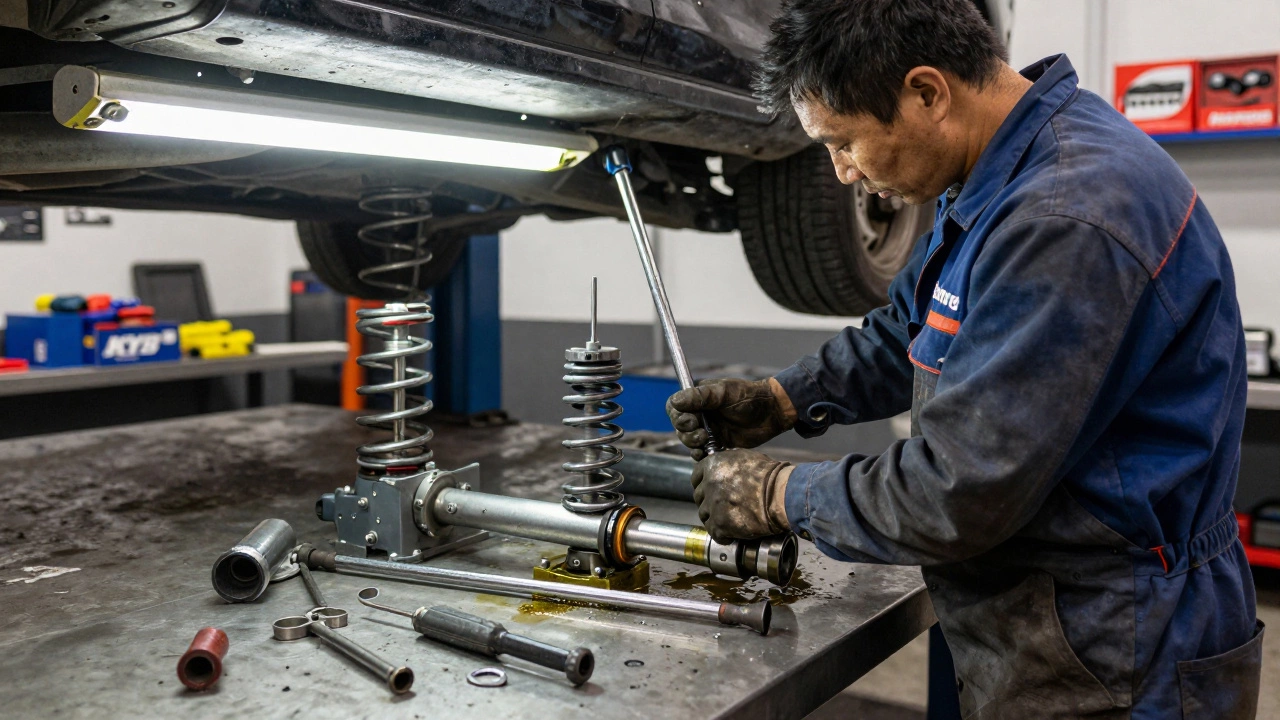
- Use aftermarket parts. OEM parts (from the car maker) cost more. Brands like Monroe, KYB, and Bilstein offer reliable aftermarket options that perform just as well. You can save 20-40% without sacrificing safety.
- Get multiple quotes. A mechanic in a strip mall might charge $300 for a strut replacement. The dealership down the street? $700. Don’t assume the pricier place is better.
- Do it yourself. If you’ve got basic tools and a jack, replacing shocks or sway bar links is doable for a weekend mechanic. YouTube tutorials walk you through it. You’ll save $200-$400 in labor. Just make sure you get a wheel alignment afterward.
What Happens If You Don’t Fix It?
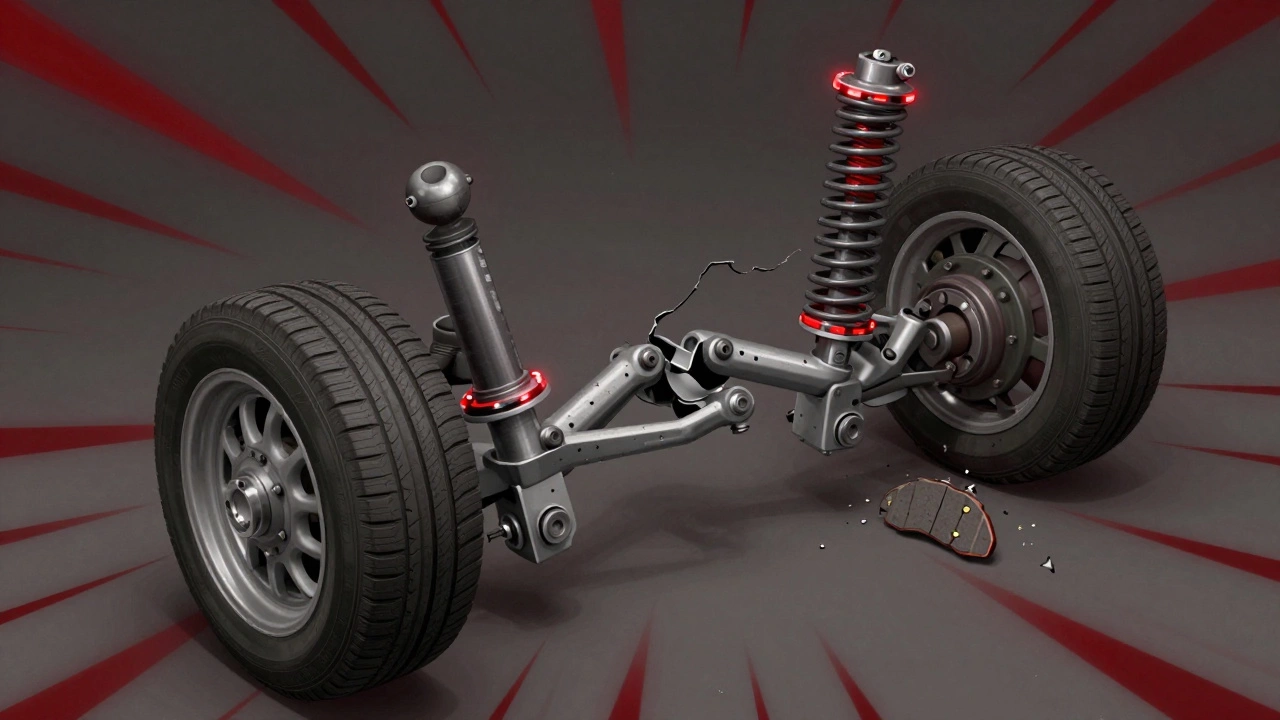
Ignoring bad suspension isn’t just uncomfortable-it’s dangerous. Worn shocks mean longer stopping distances. Bad ball joints can snap while you’re driving. A broken spring can cause your tire to rub against the fender, leading to a blowout.
And here’s the kicker: damaged suspension wears out other parts faster. Tires go bald in weeks. Brake pads wear unevenly. Steering components get extra stress. You’re not just fixing the suspension-you’re preventing a cascade of other expensive repairs.
One study from the National Highway Traffic Safety Administration found that vehicles with worn suspension systems had a 22% higher risk of losing control during emergency maneuvers. That’s not a small number.
How Long Do Suspension Parts Last?
There’s no set expiration date, but here’s what most mechanics see in the field:
- Shock absorbers and struts: 50,000 to 100,000 miles
- Control arms and bushings: 70,000 to 120,000 miles
- Ball joints: 80,000 to 150,000 miles
- Coil springs: Often last the life of the car-unless they rust or get damaged
Driving on rough roads, potholes, or gravel cuts those numbers in half. If you live in a place with harsh winters and road salt, expect to replace parts sooner. Rust eats through metal faster than you think.
Signs You Need Suspension Work
You don’t need a mechanic to tell you something’s wrong. Look for these red flags:
- Car leans to one side when parked
- Front end dives when you brake
- Back end squats when you accelerate
- Steering feels loose or wobbly
- Unusual noises-clunks, squeaks, or knocking over bumps
- Tires show cupping or uneven wear
- Car feels bouncy or floats over bumps
If you notice two or more of these, it’s time to get it checked. Don’t wait until it’s a safety issue.
Should You Repair or Replace the Whole Car?
If your car is older than 12 years and has over 150,000 miles, ask yourself: Is this repair worth it? A $1,200 suspension job on a 2010 Honda Civic might make sense. On a 2008 Toyota Corolla with a failing transmission and cracked head gasket? Maybe not.
Use this rule of thumb: If the repair cost is more than 50% of the car’s current market value, consider replacing it instead. A quick check on Kelley Blue Book or Edmunds will tell you what your car’s worth today. If it’s $2,000 and the repair is $1,100, you’re spending more than half your car’s value on one fix.
But if your car’s in good shape otherwise-clean interior, no rust, no engine issues-then fixing the suspension is a smart investment. It’ll last another 50,000 miles easily.
Is it safe to drive with a broken suspension?
No. Driving with a broken suspension part-like a worn ball joint or snapped spring-is dangerous. It reduces your control, increases stopping distance, and can cause sudden tire failure or loss of steering. If you suspect a major suspension failure, don’t drive the car. Have it towed.
Can I replace just one shock absorber?
Technically, yes-but you shouldn’t. Replacing only one side creates uneven damping, which leads to poor handling, faster tire wear, and extra stress on the new shock. Always replace shocks or struts in pairs (front or rear) to keep the car balanced.
Do I need an alignment after suspension repair?
Yes, absolutely. Any time you remove or replace components that connect to the steering or wheels-like control arms, struts, or ball joints-you need a wheel alignment. Skipping it will cause your tires to wear unevenly and your car to pull to one side.
Are aftermarket suspension parts reliable?
Yes, if you choose reputable brands. Monroe, KYB, and Bilstein are trusted names that meet or exceed OEM standards. Avoid no-name brands from unknown online sellers. They may look cheaper, but they often fail faster and can be unsafe. Stick to parts sold by established auto parts retailers.
How long does suspension repair take?
It depends. Replacing a pair of shocks might take 2-3 hours. Strut replacement can take 3-5 hours because it’s more complex. If multiple parts need replacing, or if there’s rust or corrosion, it could take a full day. Most shops will give you a time estimate when you drop off the car.
Final Thoughts
Fixing suspension isn’t cheap, but it’s one of the most important repairs you can make. It’s not about comfort-it’s about safety. A well-maintained suspension keeps your tires gripping the road, your brakes working properly, and your car responding when you need it most.
Don’t wait until it’s an emergency. If your car feels off, get it checked. A $100 inspection now can save you $1,000 later. And if you’re handy, consider doing some of the work yourself. You’ll save money and learn something valuable about your car in the process.