Brake Pad Thickness Estimator
Enter your brake pad thickness in millimeters to see remaining mileage and critical thresholds. (Thickness should be measured through wheel spokes or at caliper gap)
Brake pads are one of the most important safety components in your car-but most drivers don’t pay attention to them until something goes wrong. That’s a problem. Waiting for a grinding sound or a warning light means you’ve already damaged your rotors, and maybe even put yourself at risk. The good news? Knowing when your brake pads need replacing doesn’t require a mechanic’s degree. You just need to know what to look and listen for.
Listen for the squealing sound
Most modern cars have a metal wear indicator built into the brake pad. When the pad gets thin enough, that little tab rubs against the rotor and makes a high-pitched squeal every time you brake. It’s not always loud, and it might only happen when you’re slowing down gently, but if you hear it consistently, don’t ignore it. This isn’t just a noise-it’s your car telling you it’s time to act. The sound usually shows up when the pad has about 2-3 millimeters of friction material left. At that point, you’ve got roughly 1,000 to 2,000 miles before the metal backing plate starts scraping the rotor.
Feel for reduced stopping power
If your car feels like it’s taking longer to stop, or you have to press the pedal harder than usual, your brake pads could be worn out. This isn’t always obvious, especially if you drive the same route every day. But if you’ve noticed you’re braking earlier at intersections, or the pedal feels spongy or goes closer to the floor, that’s a red flag. Brake pad wear directly affects stopping distance. A set of pads worn down to the metal can increase your stopping distance by 30% or more compared to new pads. That’s the difference between stopping before the crosswalk and hitting it.
Check for vibrations or pulsing
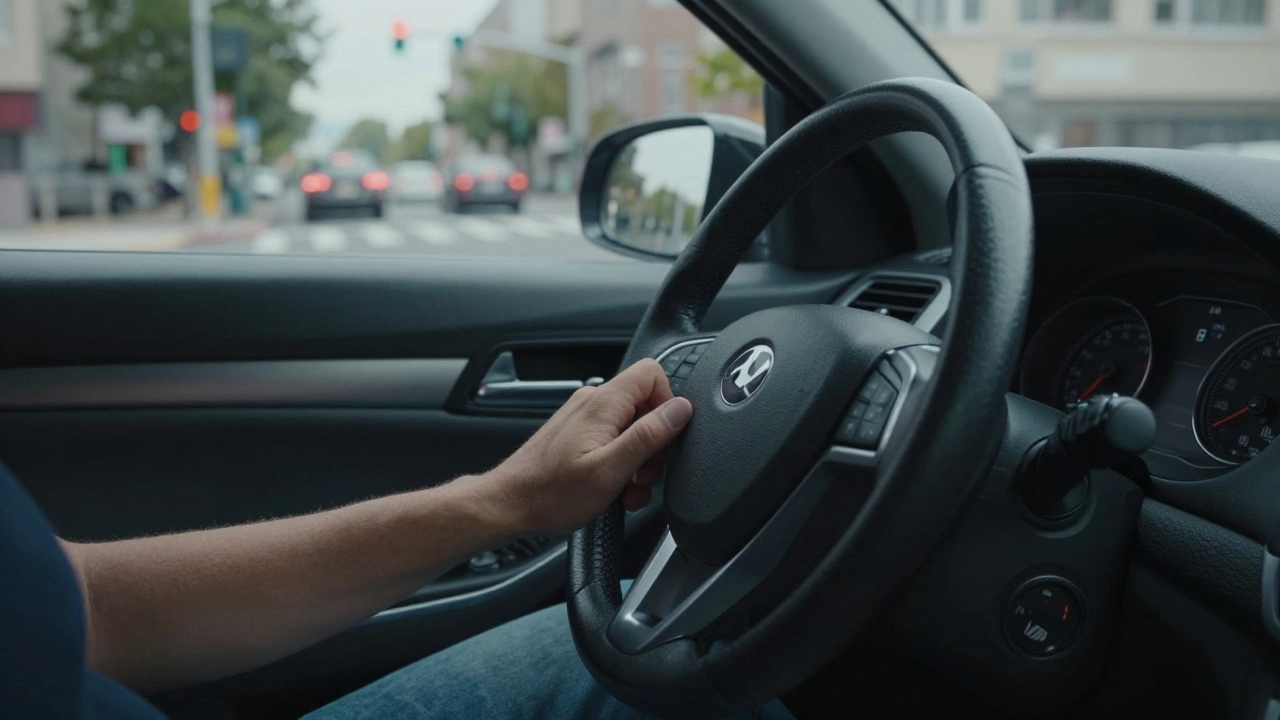
If you feel a vibration in the brake pedal or steering wheel when you slow down, it’s not just a bad tire. Worn or unevenly worn brake pads can cause the rotor to heat unevenly, warping it over time. A warped rotor doesn’t make smooth contact with the pad, which causes the pulsing sensation. This often happens after you’ve driven with worn pads for too long. Once the rotor is warped, you’ll need to replace both the pads and the rotor-double the cost. Catching the pad wear early saves you hundreds.
Look for visual signs
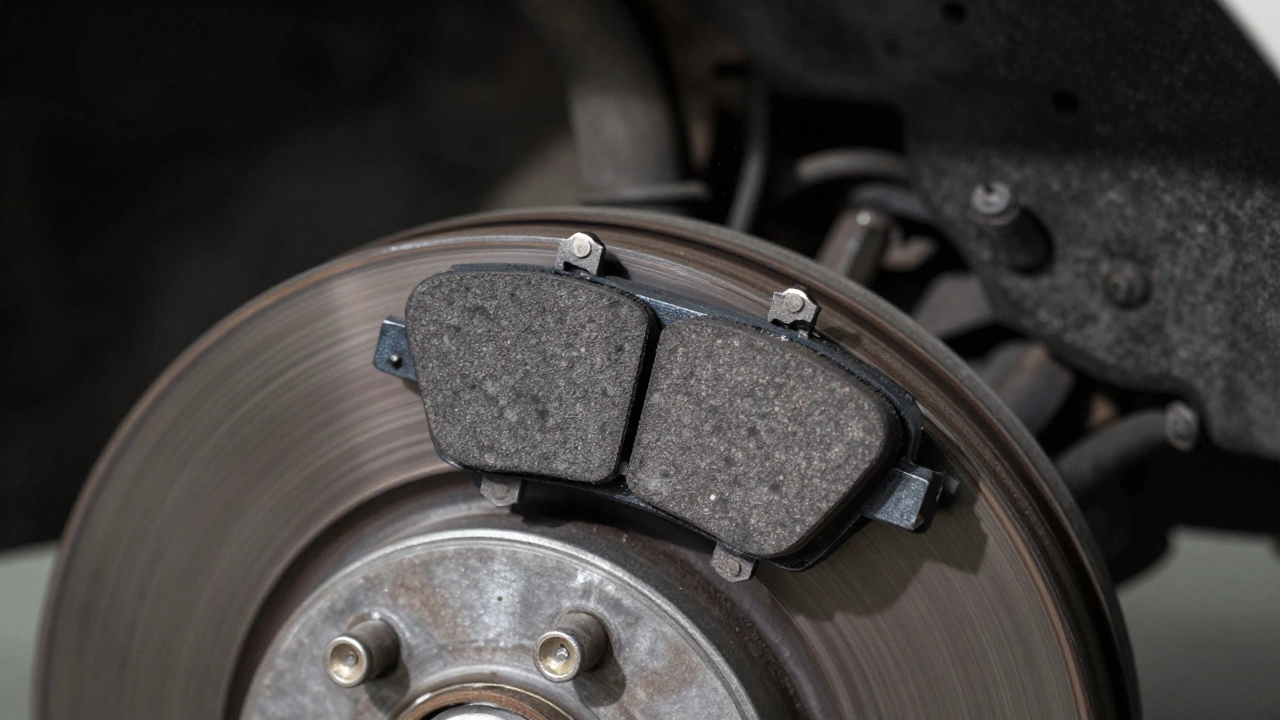
You don’t need to be a mechanic to check your brake pads. Most cars have a gap between the wheel and the brake caliper where you can see the pad through the wheel spokes. Grab a flashlight and look at the thickness of the friction material. If it’s less than 1/4 inch (about 6 millimeters), it’s time to think about replacement. If it’s thinner than a credit card, replace them now. Some pads have wear lines molded into them-when the material wears down to those lines, you’re at the end of the road. A quick visual check takes 30 seconds and can prevent a much bigger repair bill.
Notice unusual smells or smoke
Brake pads don’t normally smell. If you catch a strong, burning odor-like hot metal or burnt toast-especially after driving downhill or during heavy braking, your pads might be overheating or dragging. This can happen if the caliper piston sticks and keeps pressure on the pad even when you’re not braking. The friction creates heat, which can damage the pad material and warp the rotor. In extreme cases, you might even see smoke coming from the wheel. This is an emergency. Pull over, let it cool, and get it checked before driving again.
Pay attention to dashboard warnings
Many newer cars have brake pad sensors that trigger a warning light on the dashboard. It might say "BRAKE" or show a pad symbol. But not every car has this feature, and even if it does, the sensor can fail. Relying on the warning light alone is risky. Some drivers wait for the light to come on, only to find out their rotors are already ruined. The light is a backup-not a replacement for regular checks. If your car is older than 2015, it probably doesn’t have sensors at all.
How often do brake pads actually last?
There’s no single answer. Brake pads can last anywhere from 25,000 to 70,000 miles, depending on your driving habits. If you drive mostly on highways with gentle stops, you might get 60,000 miles out of them. If you live in the city, stop-and-go traffic, or haul heavy loads, you might need new pads every 25,000 miles. Aggressive braking, mountain driving, and towing all speed up wear. One mechanic told me he sees more pad replacements in electric vehicles than gas cars-because regenerative braking puts extra strain on the mechanical pads when you slow down hard.
What happens if you wait too long?
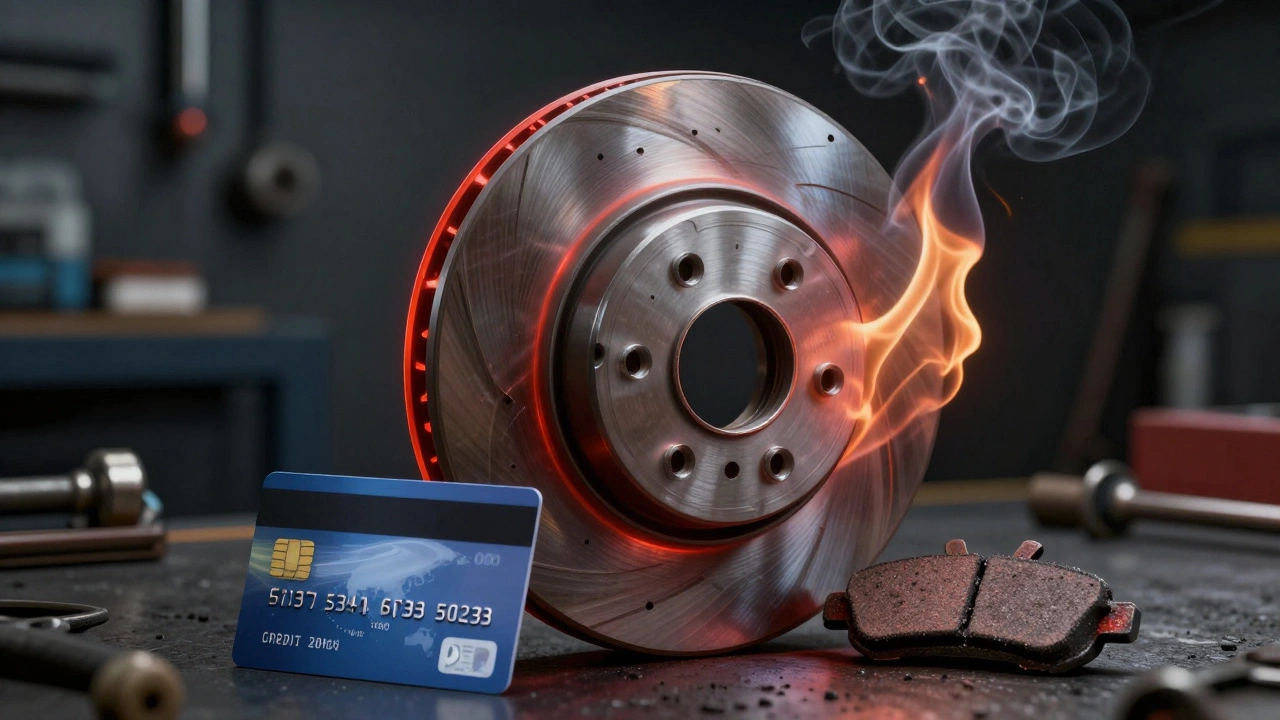
Waiting too long doesn’t just mean a bigger repair bill. It means you’re driving with compromised safety. When brake pads wear past their limit, the metal backing plate grinds directly against the rotor. This damages the rotor’s surface, making it grooved or uneven. Replacing a rotor costs $150-$300 per axle, while a set of brake pads is $50-$150. You’re paying double. Worse, damaged rotors can crack under heat stress, leading to brake failure. And that’s not something you want to find out on a rainy highway at 60 mph.
When to get them checked
Don’t wait for symptoms. Have your brakes inspected every 12,000 miles or once a year-whichever comes first. Most tire shops and auto centers offer free brake inspections. They’ll check pad thickness, rotor condition, caliper function, and fluid levels. Even if everything looks fine, it’s good to have a baseline. Keep a note in your phone or calendar. If you drove 15,000 miles since your last check and haven’t heard any noise or felt any changes, you’re probably okay. But if you’re unsure, get it checked. It’s cheaper than a tow truck.
Pro tip: Keep a brake pad thickness chart handy
Here’s a simple guide you can save on your phone:
- 8-10 mm: New condition. No action needed.
- 5-7 mm: Normal wear. Monitor every 3,000 miles.
- 3-4 mm: Time to plan replacement. Schedule service within 1-2 months.
- 1-2 mm: Replace immediately. Risk of rotor damage.
- Below 1 mm: Emergency. Don’t drive. Get towed.
Most people don’t know their brake pads are this thin until it’s too late. A quick glance every few months can save you money and stress.