
Fuel Pump Symptom Checker
Select symptoms you're experiencing to determine if your fuel pump might be failing. This tool helps identify potential fuel pump issues based on common vehicle symptoms.
Select symptoms to see if they indicate a failing fuel pump.
When your car starts acting up-hesitating on acceleration, sputtering at highway speeds, or just dying out for no obvious reason-it’s easy to blame the spark plugs, the battery, or even bad gas. But if you’ve ruled those out and your car still won’t behave, the real culprit might be hiding under the tank: the fuel pump.
What a failing fuel pump actually does to your car
A fuel pump’s job is simple: it pushes gasoline from the tank to the engine at the right pressure. When it starts to fail, that flow becomes uneven, weak, or stops altogether. The engine doesn’t get the fuel it needs to run smoothly, and your car responds in very specific, frustrating ways.It’s not like a light bulb that just goes out. A bad fuel pump doesn’t die all at once. It fades. Like a battery losing charge, it gives you warning signs before it quits completely. Ignoring them means you could end up stranded on the side of the road with no warning.
1. Engine sputtering at high speeds
If your car runs fine in the city but starts to hiccup when you hit 60 mph or more, that’s a classic sign. At higher speeds, the engine needs more fuel. A weak pump can’t keep up. You’ll feel the engine misfire, like it’s skipping beats. It’s not the spark plugs-it’s the fuel supply running dry under demand.One driver in Bristol reported this exact issue after a long motorway trip. The car sputtered every time he tried to overtake. He thought it was the transmission. Turns out, the fuel pump was delivering only 30 psi when it should’ve been pushing 45-60 psi depending on the model.
2. Difficulty starting the car
You turn the key. The engine cranks, but it won’t fire. You wait a few seconds, try again. This time, it starts-barely. Repeat this over a few days, and you’re dealing with a failing fuel pump.Here’s why: when the pump is weak, it takes longer to build pressure in the fuel lines. The engine control unit (ECU) waits for that pressure before allowing fuel injection. If pressure builds too slowly, the car delays starting. It’s not the battery. It’s not the starter. It’s the pump struggling to get fuel to the injectors.
3. Engine stalling at idle or under load
You’re stopped at a red light. The car idles fine. Then, when you accelerate-especially uphill or with a full load-the engine dies. It restarts easily, but the pattern keeps repeating.This happens because the fuel pump can’t deliver enough volume when demand spikes. At idle, the engine uses less fuel. But under load, it needs more. A failing pump can’t meet that sudden demand. It’s like trying to fill a bathtub with a dripping faucet when you need a shower.
4. Loss of power during acceleration
You press the gas pedal, and instead of a smooth surge forward, the car feels sluggish. Like driving through syrup. This isn’t a transmission issue. It’s not the air filter. It’s the fuel pump.Modern engines rely on precise fuel delivery. If the pump can’t keep up, the air-fuel mixture becomes too lean. The engine runs inefficiently, loses torque, and feels unresponsive. Many people mistake this for a clogged catalytic converter or dirty injectors. But if cleaning those doesn’t fix it, check the pump.
5. Loud whining noise from the fuel tank
Most people don’t notice this until it’s loud enough to hear over the radio. A healthy fuel pump makes a quiet hum when you turn the key. A failing one makes a high-pitched whine or grinding sound.This noise comes from worn bearings or a motor struggling to turn. The pump is still working, but it’s under stress. The louder it gets, the closer it is to complete failure. If you hear this, don’t wait. Replace it before it leaves you stranded.
6. Car won’t start after sitting for a while
You park the car for a few hours, come back, and it won’t start. You try again. Still nothing. But after waiting 20 minutes, it starts right up.This happens because the fuel pump overheats. When it runs hot, internal components expand or weaken temporarily. After cooling down, it works again. It’s a classic symptom of a pump nearing the end of its life. Heat is the enemy of electric motors-and fuel pumps are electric.

Why fuel pumps fail early
Fuel pumps are designed to last 100,000 to 150,000 miles. But many fail much sooner-and it’s usually because of bad habits:- Running the tank low often. The fuel cools the pump. When the tank is nearly empty, the pump runs hot and wears out faster.
- Using dirty or low-quality fuel. Contaminants clog the pump’s filter and strain the motor.
- Ignoring warning signs. People wait until the car won’t start at all before acting.
A 2023 study by the Institute of Automotive Engineers found that 68% of premature fuel pump failures were linked to consistently driving with less than a quarter tank of fuel.
What to do if you suspect a bad fuel pump
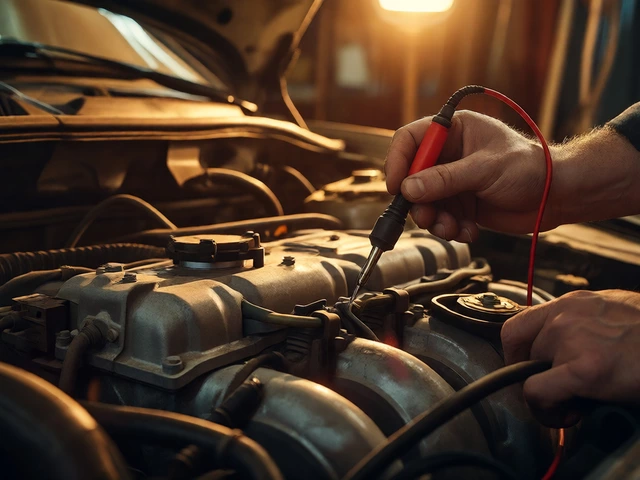
Don’t guess. Test it.- Listen for the hum when you turn the key to ‘on’ (before starting). No sound? That’s a red flag.
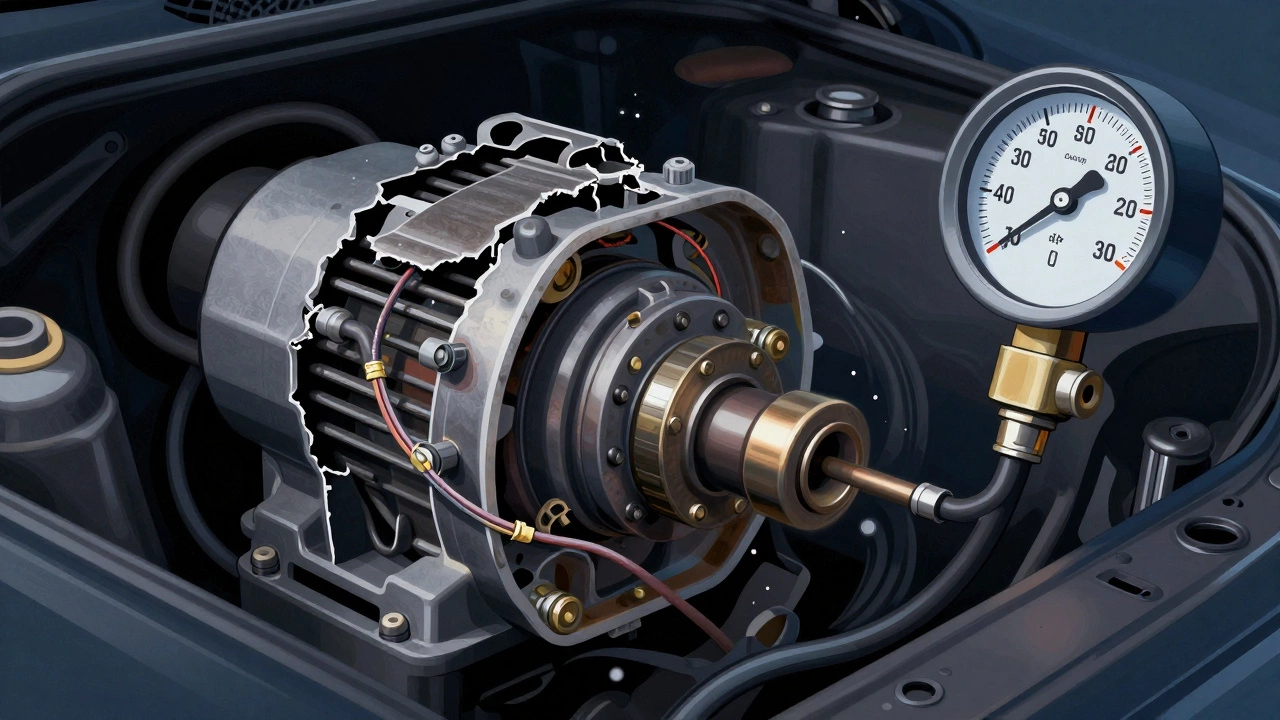
- Check fuel pressure with a gauge. Most cars need 40-60 psi. Below 30 psi? The pump is failing.
- Inspect the fuel filter. A clogged filter can mimic pump failure. Replace it if it’s older than 30,000 miles.
- Use an OBD2 scanner. Some codes like P0191 (fuel pressure sensor range/performance) point directly to fuel delivery issues.
If the pressure is low and the pump is noisy, replace it. Don’t try to ‘save money’ by waiting. A dead fuel pump can leave you stranded in freezing rain, on a busy road, with no cell signal.
How to prevent fuel pump failure
You can extend the life of your fuel pump with three simple habits:- Keep at least a quarter tank of fuel at all times. This keeps the pump cool and lubricated.
- Use high-quality fuel from reputable stations. Avoid bargain brands with unknown additives.
- Replace the fuel filter every 30,000-40,000 miles. It’s cheap insurance.
And if your car is over 10 years old or has more than 80,000 miles, consider replacing the fuel pump preemptively-even if it’s still working. It’s far cheaper than a tow truck and a rental car.
What happens if you ignore it
A failing fuel pump doesn’t just make your car annoying. It can damage other parts:- Injectors can get clogged from fuel starvation and overheating.
- The ECU may keep trying to compensate, causing misfires and long-term engine stress.
- In extreme cases, the engine can run too lean and overheat, leading to piston or valve damage.
One mechanic in Bristol told me about a customer who ignored the sputtering for six months. By the time he brought it in, the fuel pump was dead-and the engine had burned two valves. Repair cost: £2,800. A new fuel pump? £320.
Can a bad fuel pump cause the check engine light to come on?
Yes. A failing fuel pump often triggers codes like P0191 (fuel pressure too low), P0087 (fuel rail pressure too low), or P0300 (random misfire). These aren’t direct pump codes, but they point to fuel delivery problems that usually come from the pump.
How long does a fuel pump last?
Most fuel pumps last between 100,000 and 150,000 miles. But if you frequently run the tank low or use dirty fuel, it can fail as early as 60,000 miles. Replacing the fuel filter regularly and keeping the tank at least a quarter full can double its lifespan.
Is it safe to drive with a failing fuel pump?
Not for long. You might make it to the next gas station-but you risk stalling in traffic, on a highway, or in bad weather. The longer you drive with a weak pump, the more stress you put on the engine and fuel system. Replace it as soon as symptoms appear.
Can a clogged fuel filter cause the same symptoms as a bad fuel pump?
Yes. A dirty fuel filter restricts flow just like a weak pump. That’s why it’s critical to replace the filter every 30,000-40,000 miles. If you’ve never changed yours and your car is acting up, replace the filter first. It’s cheaper and easier than replacing the pump.
How much does it cost to replace a fuel pump?
Parts alone range from £150 to £400 depending on your car model. Labor adds another £150 to £300 because the pump is usually inside the fuel tank, requiring the tank to be removed. Total cost is typically £300-£700. Compare that to the cost of a tow and a rental car-you’ll save money by acting early.