Radiator Health & Replacement Cost Calculator
Vehicle Details
Enter your details above to calculate
your radiator's remaining life.
Status:
HealthyEstimated Replacement Cost (UK)
The Truth About Radiator Lifespan
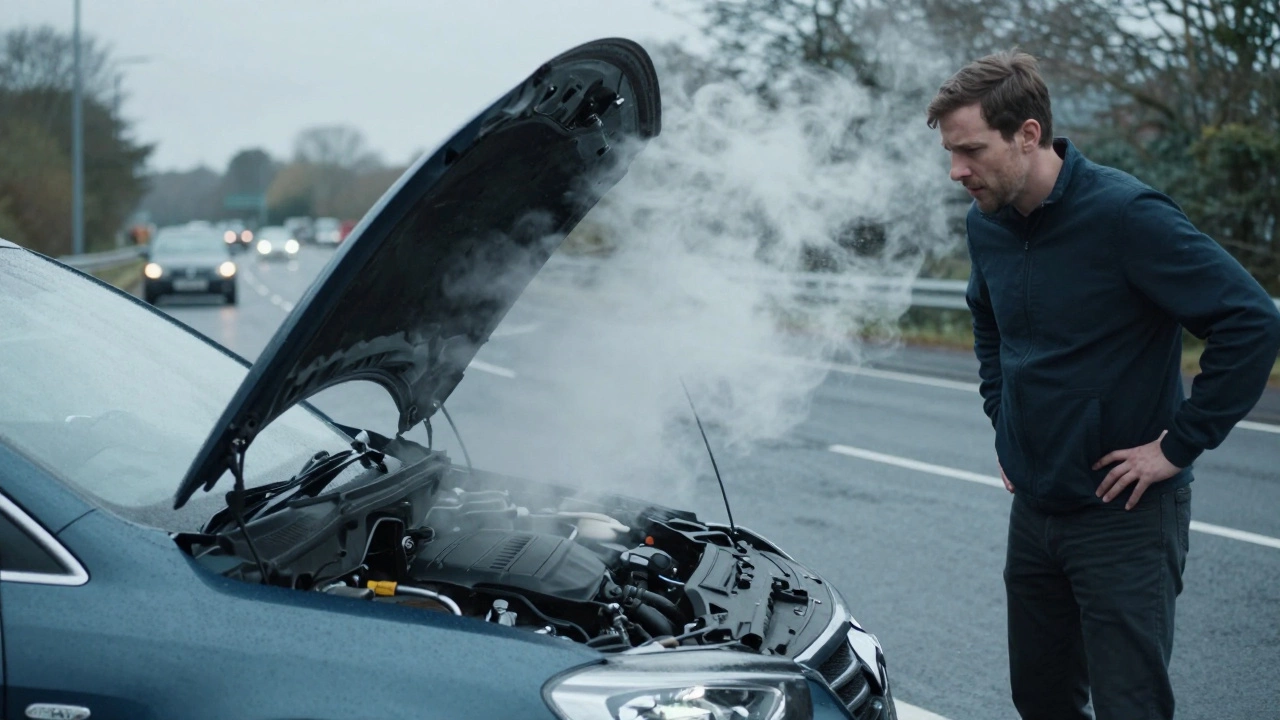
You pull over on the A38, steam billowing from under your bonnet, and suddenly you're facing a hefty repair bill. It's a scenario many of us in Bristol dread when the summer heat kicks in. You might be wondering if there's a set timetable for this kind of disaster. Should you swap your radiator every five years regardless? Honestly, there is no fixed deadline. A healthy car radiator can last ten years or more, sometimes even fifteen. However, waiting until it completely gives up usually leaves you stranded on the roadside.
We treat these components like they are disposable, yet they sit at the heart of your engine's cooling system. If you ignore them, you risk warping the engine block, which costs significantly more than just swapping a core unit. Most manufacturers claim indefinite service life, but real-world experience tells a different story. Rust, debris, and temperature cycling take their toll. By understanding how long these parts actually survive, you can avoid paying for emergency tow trucks and roadside repairs.
Timing Your Replacement: Years vs. Miles
While dealerships tell you "it will last forever," mechanics who see daily commuters know better. Generally, you should expect to change a radiator around the eight-year mark. In terms of mileage, that translates roughly to 100,000 to 120,000 miles. Why does time matter more than distance here? Because the chemicals sitting inside the plastic and metal degrade over time, regardless of whether you drive or park the car. Oxidation happens when the car sits in a driveway during those rainy Bristol winters.
If you drive mostly short trips around the city center, the engine rarely reaches its optimal operating temperature. This prevents condensation inside the system from evaporating, leading to moisture buildup that accelerates rust. Long-distance drivers, however, put constant pressure on the cooling tubes due to sustained high temperatures. Both scenarios wear things down differently. We look at the age of the vehicle first. If your car is older than eight years, you budget for a potential swap sooner rather than later.
| Usage Scenario | Average Lifespan | Failure Risks |
|---|---|---|
| City Commuter | 8-9 years | Rust, clogged filters, low airflow |
| Highway Driver | 10-12 years | Thermal stress, hose degradation |
| Stop-and-Go Traffic | 7-8 years | Air pockets, rapid temp swings |
| Heavy Towing | 6-8 years | Fatigue, physical damage, leaks |
Warning Signs That Signal Immediate Action
Waiting for the clock to tick away isn't always necessary if you catch the early indicators. Your eyes and dashboard gauges are the best sensors available to you. One obvious sign is external leakage. Inspect the ground beneath the front of your car. Pools of bright green, orange, or red fluid suggest a seal breach or crack in the plastic tanks. Even a small leak indicates that the integrity of the housing is failing, meaning a larger burst could happen anytime.
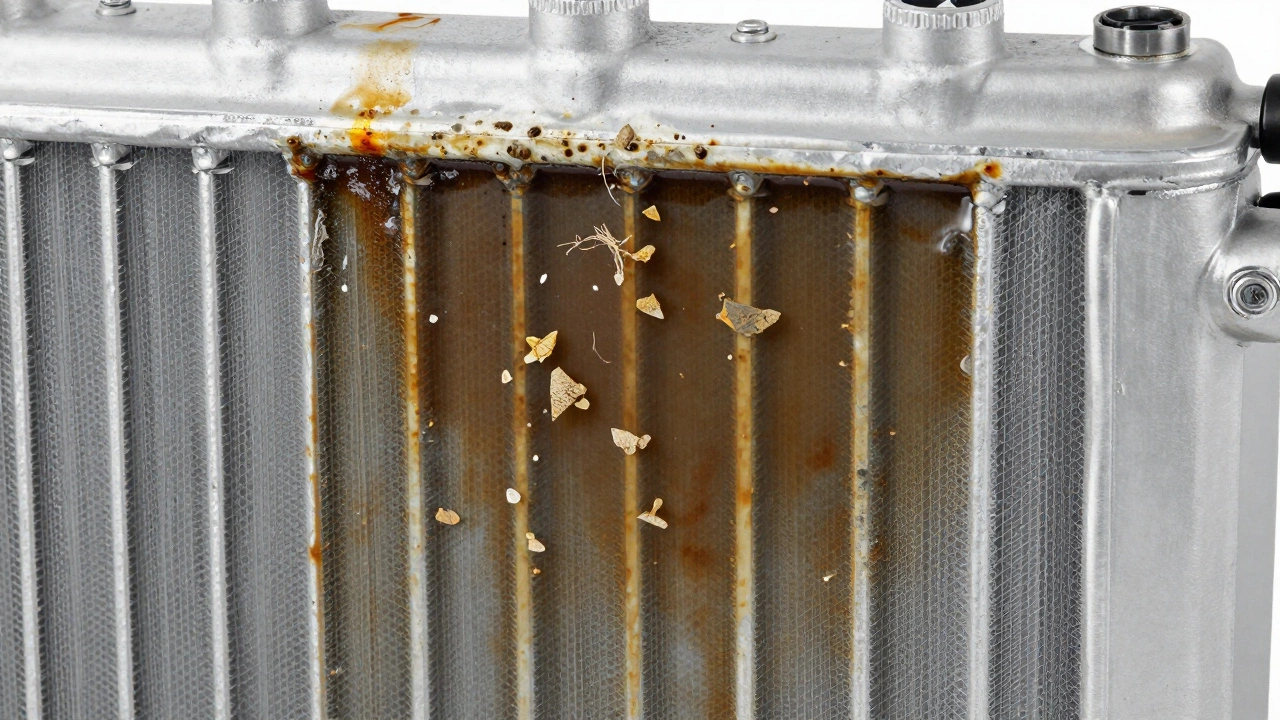
Look at the colour of your coolant reservoir. A healthy mix looks clean. If it looks like chocolate milk or has flakes floating around, sediment has built up inside the cores. Sludge blocks the passageways where heat transfer happens. When heat can't escape, pressure builds up. This pressure eventually finds the weakest point-often a seam in the radiator or a hose connection-and blows it open. Another silent killer is overheating episodes. If the gauge spikes after idling in traffic for too long, the fan or thermostat might be struggling, putting massive strain on the unit itself.
Material Differences: Aluminum vs. Copper
The material of your heat exchanger plays a huge role in longevity. Older vehicles from the 1990s and earlier often used copper and brass cores. These metals are durable and resistant to some forms of corrosion. They were heavy but lasted well over a decade easily. Modern engineering shifted towards aluminum because it is lighter and transfers heat more efficiently. While efficient, aluminum reacts faster with certain coolants if the pH balance gets off. A wrong chemical mix turns aluminum into a soft sponge full of holes.
We also deal with plastic end tanks nowadays. Metal corrodes slowly, but plastic becomes brittle over time. After eight years in a hot engine bay, vibration and heat cycles cause hairline cracks. These cracks expand until they snap. When a tank fails, the core might still work, but the entire assembly requires replacement because welding plastic back onto a metal core is unreliable. Mechanics will often recommend a full assembly swap rather than trying to patch cracked plastic tanks found in most modern setups.
Maintenance Habits That Extend Life
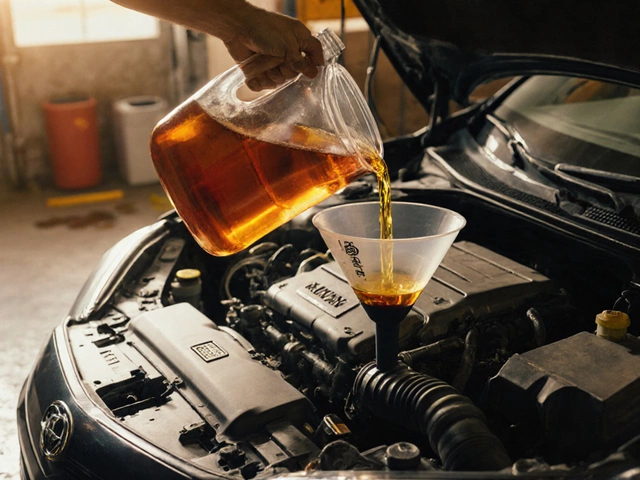
You cannot fix physics, but you can slow down the decay. Regularly changing your Coolant is a chemical mixture designed to transfer heat and prevent freezing or boiling within the engine. schedule is the number one way to keep things fresh. Don't just top up the level; flush the system every two years or 30,000 miles. Old inhibitors wash away, leaving the metal exposed to oxygen. Using distilled water mixed with the correct strength antifreeze prevents hard water scale deposits that act like insulation, trapping heat inside the pipes.
Check your belts too. A slipping belt stops the water pump from spinning fast enough. Without adequate flow, the coolant boils locally even if the global temperature looks okay. This local boiling creates expansion bubbles that pop seals. Also, keep the exterior fins clean. Mud, bugs, and pollen build up between the ribs. Dirt acts like a blanket, stopping airflow. You can gently spray these fins with water to restore cooling efficiency. Simple checks cost nothing but save you thousands in premature engine failures.
Repair Versus Replace Decision Matrix
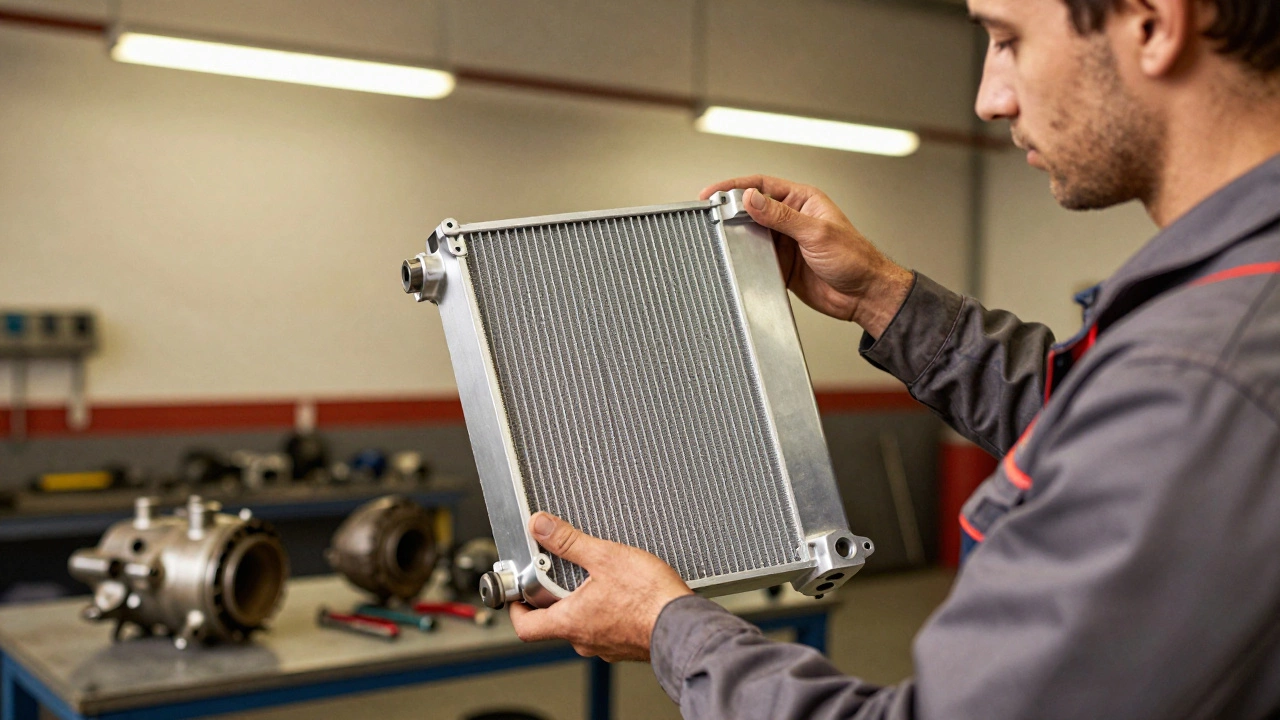
Sometimes a mechanic suggests a patch job. Is it worth it? It depends on the location of the damage. A small leak on a hose neck might be welded or plugged temporarily. However, if the damage is in the main core, a patch is a waste of money. Repairs carry higher risks of recurring failure compared to new OEM units. Weigh the labour cost of removal against the price of a new part. Usually, if the labour involves removing the bumper or intercooler, you might not want the old unit reinstalled just to fail three months later.
Consider the value of your car. On a twenty-year-old classic vehicle, finding a rebuilt original unit makes sense for restoration purposes. On a daily commuter, a remanufactured aluminium radiator provides better performance and warranty coverage. Remanufactured means the core is tested, cleaned, and fitted with new tanks. This hybrid approach offers reliability at a lower price point than brand new OEM parts. Always check the warranty length before agreeing to install a cheap aftermarket option that offers zero protection against defects.
Understanding Costs in the Current Market
Pricing fluctuates based on supply chains and manufacturing standards. In the UK market currently, a standard replacement unit without labour ranges from £150 to £400. Complex vehicles with turbochargers or intercoolers mounted directly to the rad require custom fabrication, pushing prices toward £800+. Labour adds another £200 to £500 depending on accessibility. It feels expensive, but compare it to an engine rebuild which costs upwards of £3,000. Prevention pays off here. Buying quality fluid and checking levels saves you from buying a new transmission if the oil cooler integrated into the radiator fails.
Budgeting for this shouldn't rely on luck. Add £100 monthly to a savings pot if you own a car over seven years old. That covers unexpected breakdowns. Knowing the average cost helps you decide between repairing an aging vehicle or trading it for something newer. Don't let fear dictate your decision; understand the financial reality of keeping the machine cool.
Can I delay radiator replacement if the car seems fine?
It depends. If you have no leaks and the coolant is clean, you can continue monitoring. However, if the unit is over eight years old, sudden failure is common. Waiting increases the risk of overheating while driving, which causes catastrophic engine damage.
Does using tap water ruin the radiator quickly?
Yes, over time. Tap water contains minerals that settle as scale inside narrow tubes. Scale insulates the metal, reducing cooling capacity and promoting corrosion. Use distilled water mixed with approved antifreeze for long-term health.
What happens if I only top up the coolant instead of flushing?
Adding fresh fluid to old, acidic coolant dilutes the protection slightly but doesn't remove harmful contaminants. Over several years, acids build up and eat away at aluminum cores, leading to microscopic leaks that spread rapidly.
Is a refurbished radiator reliable compared to new?
Remanufactured units are very reliable because they get new tanks and undergo pressure testing. They often come with similar warranties to new parts. Avoid "reconditioned" units that simply get a quick seal without full disassembly and cleaning.
Do electric cars have radiators that fail similarly?
Electric vehicles use chillers for battery management, which are similar in design to traditional radiators. These last longer generally because the fluid stays stable and doesn't cycle extreme engine temperatures like combustion engines do.