Tire Replacement Calculator
Tire Health Assessment
Enter your tire details to get personalized replacement recommendations based on safety standards.
Your Tire Recommendation
Most drivers don’t think about their tires until they get a flat or notice strange vibrations. But tires are the only part of your car that actually touch the road - and they wear out faster than you think. Tire replacement isn’t something you wait for until they look bad. It’s about safety, performance, and knowing when to act before it’s too late.
How Many Miles Do Tires Last?
A typical set of tires lasts between 25,000 and 50,000 miles. That sounds like a lot, but if you drive 12,000 miles a year, that’s just 2 to 4 years. Some high-performance or budget tires wear out even faster - sometimes under 20,000 miles. Premium touring tires can stretch closer to 60,000 miles, but even those don’t last forever.
The real question isn’t just mileage. It’s condition. Tires degrade over time, even if you don’t drive much. Rubber breaks down from UV exposure, ozone, and temperature changes. That’s why tires older than six years should be inspected closely, and most manufacturers recommend replacing them by ten years, regardless of tread depth.
Check the Tread - The Penny Test Isn’t Enough
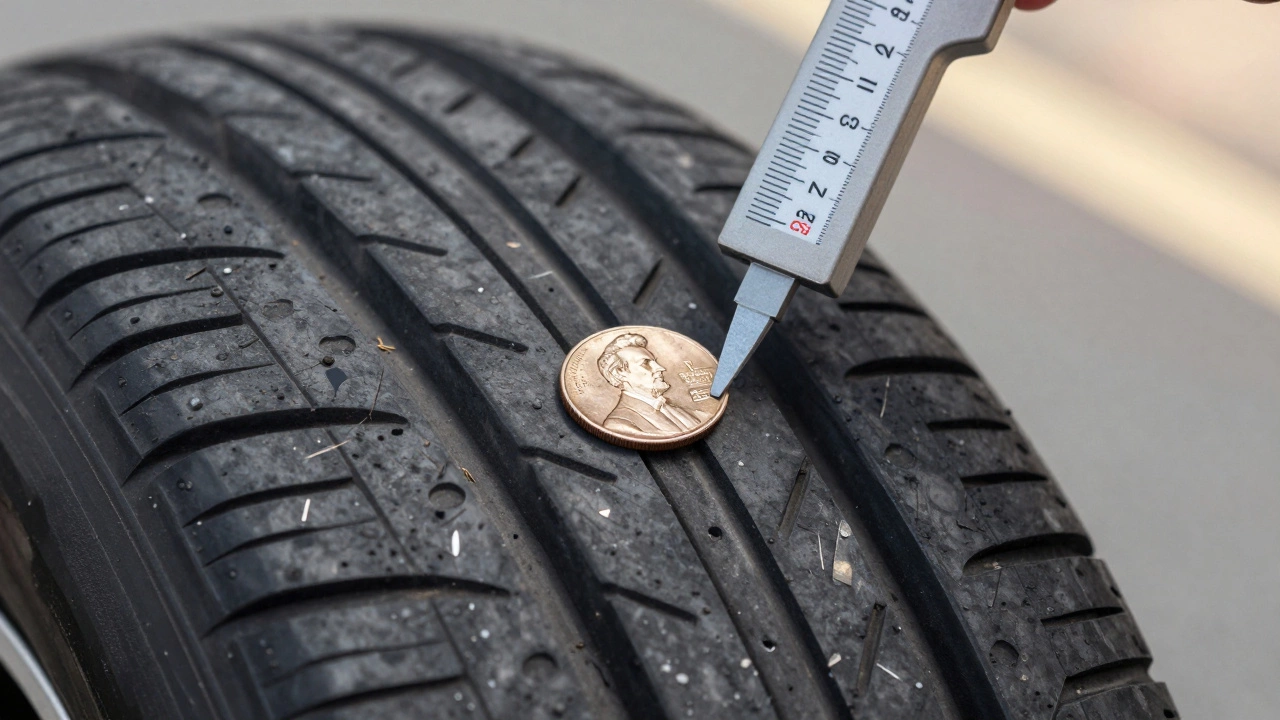
You’ve probably heard the penny test: stick a penny into the tread with Lincoln’s head upside down. If you can see his head, it’s time to replace the tire. That’s 2/32 of an inch of tread - the legal minimum in most places.
But here’s the problem: 2/32 inch is the point of no return. At that level, stopping distance on wet roads increases by up to 40%. You’re already at risk. Experts recommend replacing tires when tread hits 4/32 inch. That’s about halfway through the tread depth. At 4/32, you still have decent grip in rain and snow. At 2/32, you’re gambling with hydroplaning.
Use a tread depth gauge. They cost under $10 at auto parts stores. Or check the wear bars - those little raised ribs between the treads. When the tread is flush with them, it’s time to go.
Age Matters More Than You Think
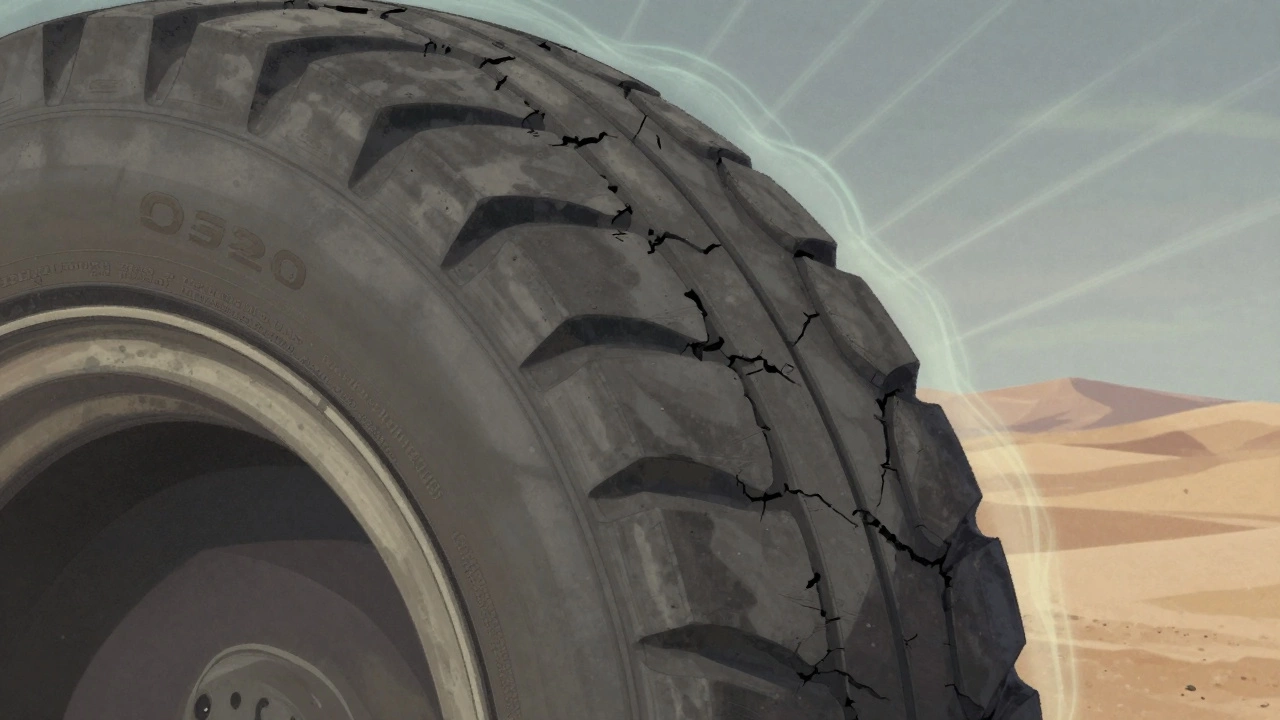
Even if your tires look perfect, they can be dangerous after six years. You won’t see cracks on the surface, but inside the rubber, the bonds break down. This makes tires stiffer and more likely to fail under pressure - especially at highway speeds.
Find the DOT code on the sidewall. It’s a 4-digit number at the end of a long string. The last four digits tell you the week and year it was made. For example, “3520” means it was made in the 35th week of 2020. If you’re in 2026 and your tires say “1219”, they’re over six years old. Replace them.
Storage matters too. Tires left in direct sunlight, near oil, or in freezing temps degrade faster. If you’ve had the same tires on your car since before the pandemic, it’s time to look.
Signs Your Tires Need Replacing (Beyond Wear)
Here are red flags that mean it’s time to replace tires - even if the tread looks okay:
- Cracks or splits on the sidewall - especially around the rim area
- Bulges or bubbles on the tire surface - this means internal layers have separated
- Vibrations or shaking at highway speeds - not from wheel balance, but from uneven wear or structural damage
- Low tread depth on only one or two tires - this can damage your AWD or 4WD system
- Repeated air pressure loss - if you’re refilling a tire every few weeks, there’s likely a slow leak from a puncture or damaged bead
These aren’t normal wear patterns. They’re signs of aging or damage. Driving on them risks blowouts, especially in hot weather or during hard braking.
Driving Conditions Change Everything
Your tire lifespan depends on how you drive and where. If you:
- Drive mostly on highways - your tires last longer
- Drive in cities with stop-and-go traffic - faster wear from braking
- Live in a hot climate like Arizona or Florida - UV rays accelerate rubber breakdown
- Drive on rough roads, gravel, or unpaved surfaces - cuts and impacts add up
- Carry heavy loads regularly - extra weight increases heat and wear
Someone who drives 5,000 miles a year on quiet suburban roads might get 10 years out of tires. Someone who drives 20,000 miles a year hauling tools on rough roads might need new ones in 2 years.
Don’t Replace Just One Tire
It’s tempting to replace just the flat or worn tire. But matching tread depth across all four tires is critical.
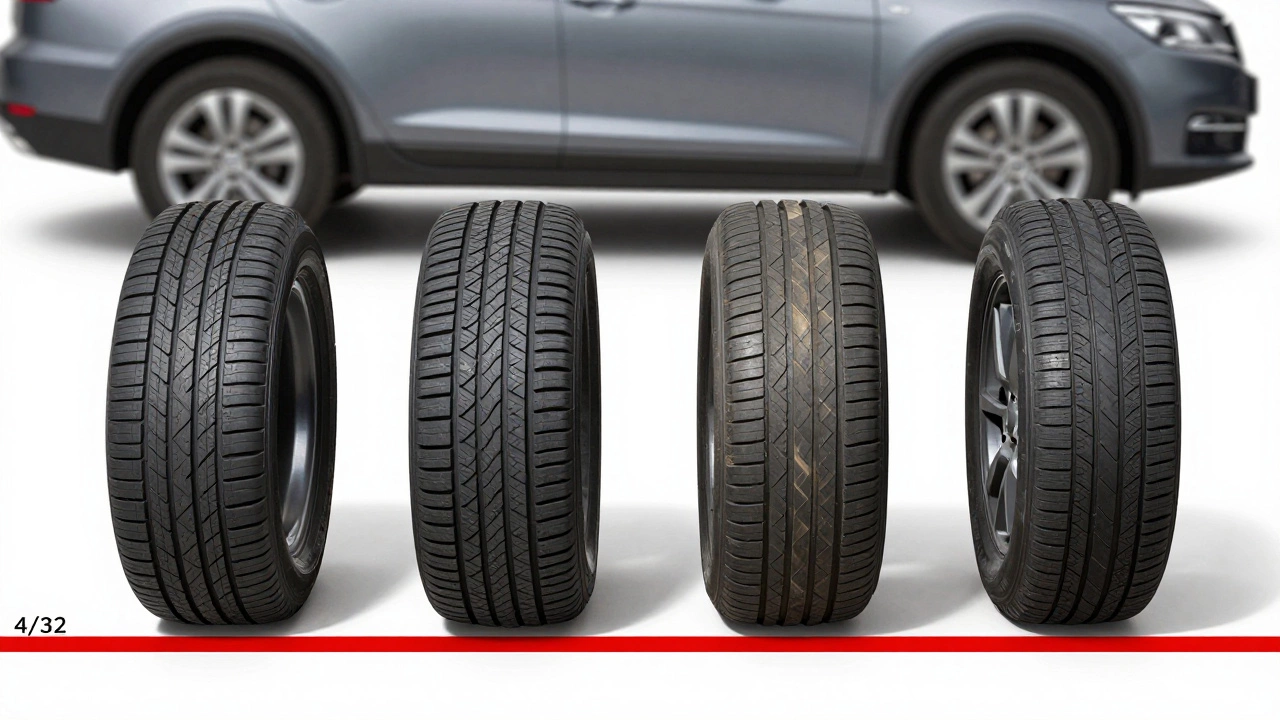
Modern cars have stability control, traction systems, and all-wheel drive. These systems rely on all tires rotating at the same speed. If one tire has 5/32 inch tread and the others have 2/32, the system thinks one wheel is slipping. That can cause overheating, strange handling, or even damage to the drivetrain.
If two tires are worn out, replace them as a pair - on the same axle. If all four are close to the limit, replace all four. Never mix different brands or tread patterns unless absolutely necessary.
What About Spare Tires?
Don’t forget the spare. Most cars come with a compact spare - meant for temporary use only. They’re not built for long drives or high speeds. Check your owner’s manual. If it says “max 50 mph” or “max 70 miles,” don’t ignore it.
Full-size spares are better, but they still age. If your spare is more than six years old, it’s not reliable. Replace it when you replace your main tires.
How to Extend Tire Life
You can stretch tire life with simple habits:
- Check tire pressure monthly - underinflated tires wear faster and get hotter
- Rotate tires every 6,000 to 8,000 miles - this evens out wear
- Get alignments checked if you notice uneven wear or pulling to one side
- Avoid hard braking and fast cornering - they burn rubber fast
- Keep tires clean - use a tire cleaner, not engine degreaser
These steps don’t make tires last forever, but they can add thousands of miles and improve safety.
When in Doubt, Get Them Checked
If you’re unsure, take your car to a trusted shop. Most offer free tire inspections. They’ll check tread depth, age, sidewall condition, and pressure. No sales pitch - just facts.
Waiting until you feel a vibration or see a crack means you’re already driving on the edge. Tires are a safety system, not a cost to minimize. Replacing them early isn’t an expense - it’s insurance.