Brake Disc Health & Replacement Checker
Check any issues you are currently experiencing with your vehicle.
Select symptoms and click analyze to see if your brake discs need replacing.
There is a specific moment every driver dreads. You press the brake pedal, expecting the car to slow down smoothly, but instead, you feel a violent shudder travel up through the steering wheel. Or maybe you hear a metallic screech that sounds like nails on a chalkboard. It’s unsettling. More importantly, it’s dangerous. While most people know when their brake pads are worn out, the companion component-the brake disc, also known as the brake rotor-often gets ignored until it’s too late.
Ignoring failing brake discs doesn't just ruin your ride quality; it compromises your ability to stop safely. In this guide, we will break down exactly how to spot the warning signs of worn brake discs, how to measure them yourself without special tools, and when you absolutely need to head to a mechanic. We’ll cover everything from visual inspections to understanding the strange noises your car might be making.
The Quick Summary: Key Takeaways
- Steering Wheel Vibration: If your steering wheel shakes during braking, your front brake discs are likely warped or unevenly worn.
- Pulsating Brake Pedal: A pulsing feeling under your foot usually indicates rear brake disc issues or severe glazing.
- Visual Inspection: Look for deep grooves, blueish heat spots, or cracks on the surface of the disc.
- Thickness Matters: Every disc has a minimum thickness specification. If it’s below that number, it must be replaced immediately.
- Noise Clues: High-pitched squealing often means pad wear sensors, while grinding metal means the pads are gone and damaging the discs.
Understanding the Braking System: Discs vs. Pads
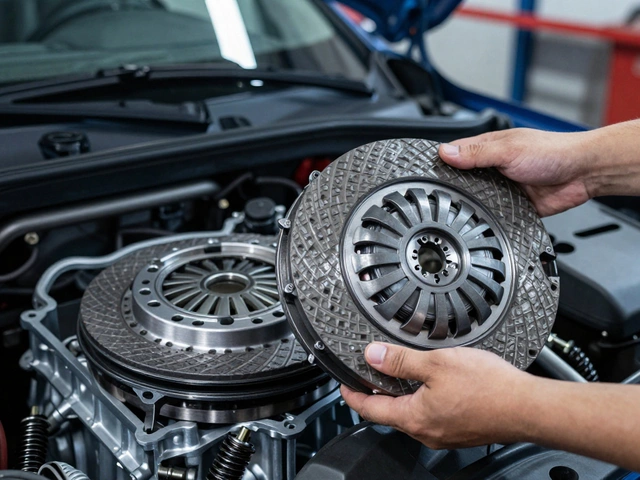
To understand why discs fail, you first need to know what they do. Your braking system relies on friction. When you press the pedal, hydraulic pressure pushes the brake caliper to squeeze the brake pads against the spinning brake disc. This friction converts kinetic energy (movement) into thermal energy (heat), slowing the vehicle down.
Think of the brake disc as a frying pan and the brake pads as the spatula. The pan spins, and the spatula presses against it to stop it. Over time, the spatula wears down (the pads), but the pan can also get warped from high heat or develop scratches if something hard hits it. Unlike brake pads, which are designed to be sacrificial and replaced frequently, brake discs are heavier, more expensive, and last longer-but not forever. Most drivers replace brake discs every two to three times they replace their pads, depending on driving habits and climate.
Symptom 1: Vibrations and Pulsations
The most common sign of failing brake discs is vibration. However, where you feel the vibration tells you which part of the system is at fault.
Steering Wheel Shake (Front Discs)
If you notice your steering wheel trembling or vibrating specifically when you apply the brakes at speeds between 30 and 50 mph (50-80 km/h), your front brake discs are likely warped. Warping doesn’t mean the disc is physically bent like a banana; rather, it means there is uneven thickness across the surface, known as Disc Thickness Variation (DTV). As the brake pads clamp onto these uneven surfaces, the caliper pistons move in and out slightly with each rotation, creating a rhythmic pulse that travels up the steering column.
Footwell or Seat Pulsation (Rear Discs)
If the steering wheel stays steady but you feel a thumping or pulsing sensation through the brake pedal or your seat, the issue is likely with the rear brake discs. Rear vibrations are harder to diagnose because they don’t affect steering control directly, but they indicate that the rear discs are no longer flat and smooth.
Symptom 2: Strange Noises
Your car talks to you, but only if you listen. Different noises point to different stages of brake failure.
- High-Pitched Squeal: Many modern cars have wear indicators built into the brake pads. These are small metal tabs that touch the disc when the pad material is low, creating a sharp squeal. This is a warning to check your pads soon, but it doesn’t necessarily mean the discs are bad yet.
- Grinding or Growling: This is a critical warning. A grinding noise means the brake pad material is completely gone, and the metal backing plate is rubbing directly against the steel disc. This creates deep grooves and generates excessive heat. If you hear this, pull over immediately. You are actively destroying your brake discs and risking total brake failure.
- Clicking or Rattling: Sometimes, loose components inside the caliper bracket can cause clicking. While not always a sign of disc wear, it can lead to uneven braking pressure, which eventually warps the discs.
Symptom 3: Visual Inspection
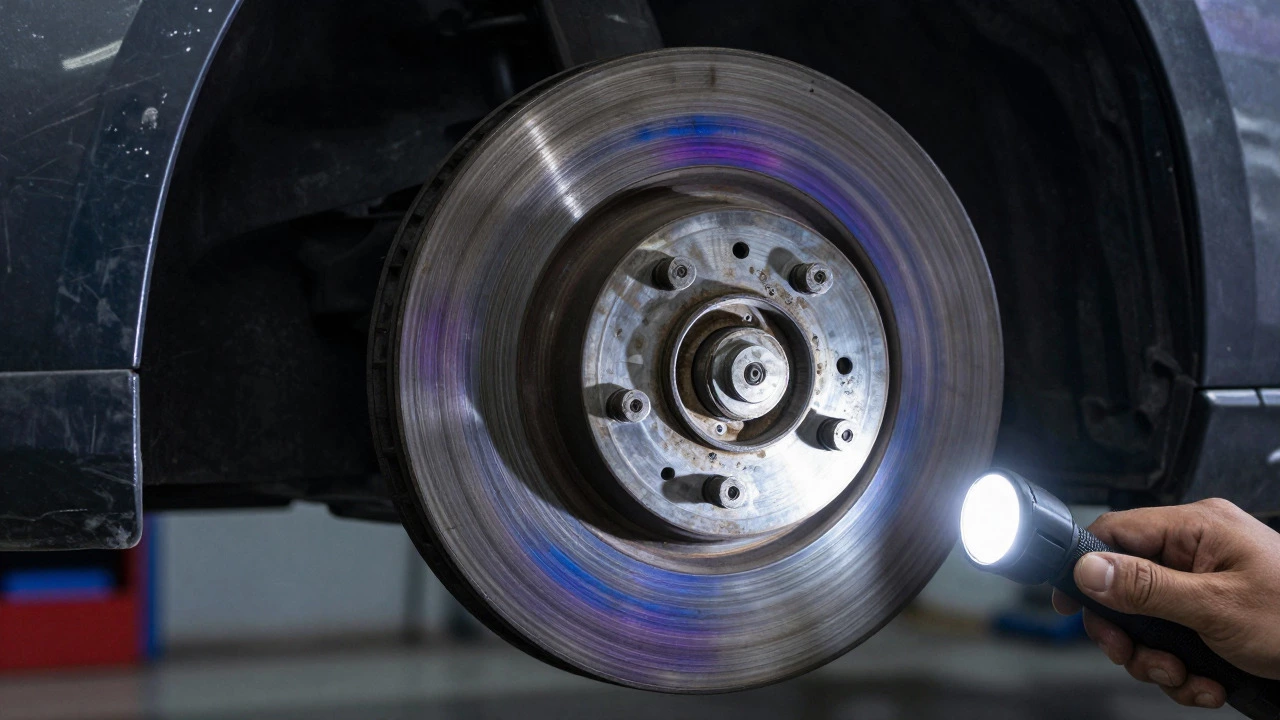
You don’t need to lift the car to get a basic idea of your brake health. With the wheels turned fully to one side, you can often see the brake discs through the spokes of your alloy wheels. Use a smartphone flashlight for better visibility.
Look for these visual red flags:
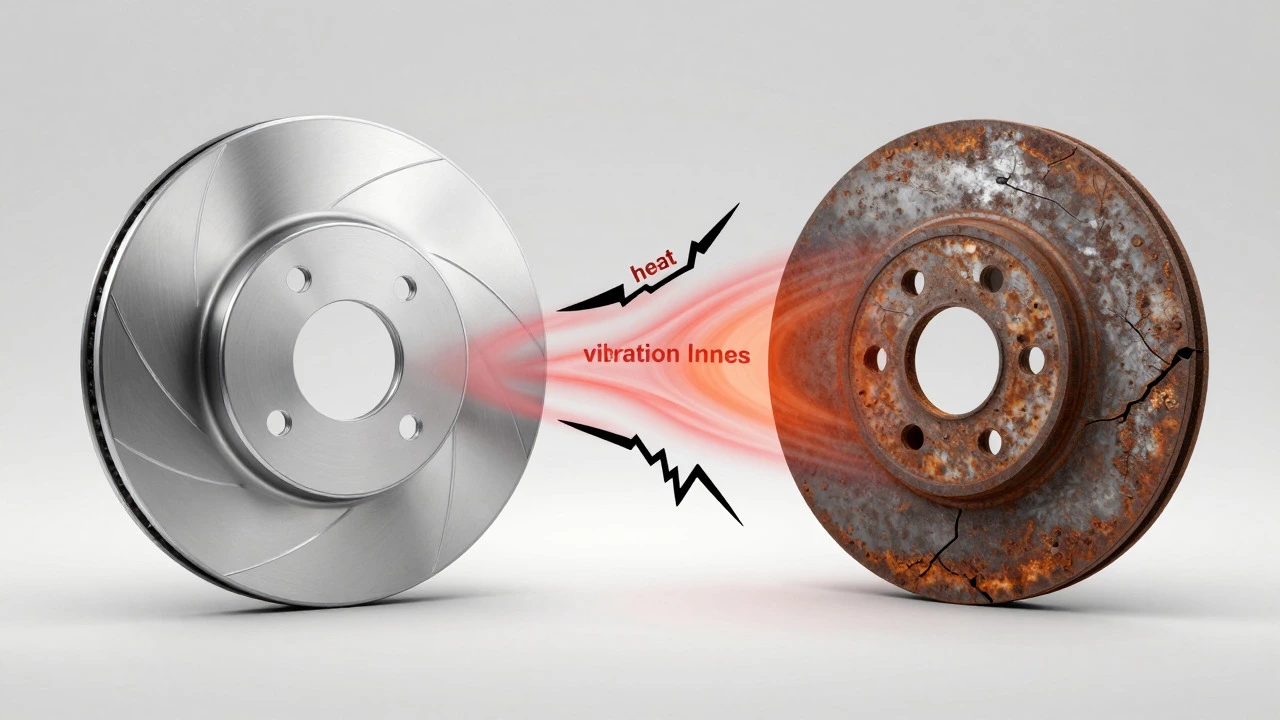
- Deep Grooves or Scoring: Light swirl marks are normal. However, if you see deep radial lines or gouges running around the circumference of the disc, the surface is compromised. These grooves prevent the brake pads from making full contact, reducing stopping power.
- Blue Spots or Discoloration: Steel changes color when it gets extremely hot. Blue or purple patches indicate "hot spots" where the disc has overheated. This weakens the metal structure and leads to warping.
- Cracks: Any visible crack, especially near the outer edge or the hat section (where the disc mounts to the hub), is an immediate safety hazard. Replace cracked discs instantly.
- Lip on the Edge: Run your finger gently along the edge of the disc (when cold!). If you feel a sharp ridge or lip sticking out, it means the center of the disc has worn down significantly. This is a clear sign of advanced wear.
Measuring Brake Disc Thickness
Visual checks are helpful, but measurement is definitive. Every brake disc has a minimum thickness specification stamped on the hat section (the non-braking part of the disc). It usually looks like "MIN THK 22.0mm" or similar.
To measure this, you need a micrometer or a specialized brake disc gauge. Here is the process:
- Locate the Specification: Find the "MIN THK" number on the disc.
- Clean the Surface: Wipe away any brake dust or rust from the measuring area.
- Measure Multiple Points: Measure the thickness at several points around the disc, avoiding the very edge and the inner hat. Take readings at 90-degree intervals.
- Compare to Minimum: If any reading is equal to or less than the MIN THK specification, the disc must be replaced. Do not attempt to machine (resurface) a disc that is already at its minimum limit.
| Vehicle Type | New Disc Thickness (Approx.) | Minimum Safe Thickness | Typical Lifespan |
|---|---|---|---|
| Compact Sedan | 24.0 mm - 26.0 mm | 22.0 mm - 24.0 mm | 40,000 - 60,000 miles |
| SUV / Crossover | 28.0 mm - 32.0 mm | 26.0 mm - 30.0 mm | 30,000 - 50,000 miles |
| Performance Car | 30.0 mm - 34.0 mm | 28.0 mm - 32.0 mm | 20,000 - 40,000 miles |
Should You Resurface or Replace?
In the past, mechanics would often "machine" or resurface brake discs to make them flat again. Today, this practice is becoming less common for several reasons.
First, many modern discs are manufactured very close to their minimum thickness limits to save weight and cost. There simply isn’t enough material left to machine them safely. Second, machining costs labor time. Often, the price of machining plus new pads comes close to the price of brand-new discs.
When should you consider resurfacing? Only if the discs are still well above the minimum thickness limit, have minor warping, and no deep scoring. Always consult with a trusted mechanic. If they suggest resurfacing, ask to see the measurement before and after. If the disc is thin, cracked, or heavily scored, replacement is the only safe option.

Factors That Accelerate Disc Wear
Not all brake discs last the same amount of time. Several factors can drastically shorten their lifespan:
- City Driving: Stop-and-go traffic generates more heat cycles than highway driving. Constant light braking keeps the discs hot, leading to faster wear and potential warping.
- Towing Heavy Loads: If you tow a trailer or carry heavy cargo, your brakes work much harder. This increases thermal stress and physical wear on the discs.
- Quality of Brake Pads: Cheap, abrasive brake pads can score and damage discs prematurely. High-quality ceramic or semi-metallic pads are gentler on rotors.
- Stuck Calipers: If a brake caliper piston sticks, it drags the pad against the disc even when you’re not braking. This creates extreme localized heat, warping the disc quickly.
- Rust and Corrosion: In areas with salted roads, surface rust is common. While light rust rubs off during braking, heavy corrosion can pit the disc surface, leading to uneven wear.
Pro Tips for Extending Brake Life
You can’t stop wear entirely, but you can manage it. Here are some practical tips to keep your brake discs healthy longer:
- Engine Braking: When going downhill, shift to a lower gear (or use paddle shifters) to let the engine slow the car down. This reduces reliance on friction brakes.
- Avoid Riding the Brake: Resting your foot lightly on the brake pedal while driving keeps the pads in constant contact with the discs, generating unnecessary heat.
- Replace in Pairs: Always replace brake discs in pairs (both fronts or both rears). Mixing old and new discs causes uneven braking force, which can pull the car to one side and create handling issues.
- Burn-In New Discs: After installing new discs and pads, avoid hard braking for the first 200 miles. Perform moderate stops to bed the pads properly. This ensures even transfer of pad material onto the disc surface.
When to See a Professional
While you can perform visual checks and listen for noises, some diagnostics require professional equipment. Take your car to a mechanic if:
- You feel pulling to one side when braking (could indicate stuck calipers or air in the lines).
- The brake pedal feels spongy or goes all the way to the floor (hydraulic issue).
- You smell burning chemicals coming from the wheels (overheated brakes).
- Your dashboard ABS light illuminates (sensor or electronic issue).
Remember, brakes are the most critical safety system on your vehicle. Never ignore warning signs. If you are unsure about the condition of your brake discs, err on the side of caution and get them inspected. The cost of a brake inspection is minimal compared to the cost of an accident.
How long do brake discs typically last?
Brake discs generally last between 40,000 and 70,000 miles, depending on driving conditions. City drivers who do lots of stop-and-go traffic may need to replace them closer to 40,000 miles, while highway drivers might get up to 70,000 miles or more. Towing heavy loads or aggressive driving will significantly reduce this lifespan.
Can I replace brake discs myself?
Yes, replacing brake discs is a manageable DIY project for someone with basic mechanical skills. You will need a jack, jack stands, a lug wrench, a torque wrench, and possibly a breaker bar to remove the caliper bolts. However, you must ensure the new discs are clean and free of oil before installation. If you are uncomfortable working with high-torque bolts or hydraulic systems, it is safer to hire a professional.
Why does my steering wheel shake when I brake?
Steering wheel vibration during braking is almost always caused by warped or unevenly worn front brake discs. This phenomenon, called Disc Thickness Variation (DTV), occurs when the discs heat up and cool down unevenly, causing slight changes in thickness. As the brake pads clamp onto these uneven surfaces, the pulsation transfers to the steering column.
Is it safe to drive with worn brake discs?
It depends on the severity. Minor scoring or slight wear may not immediately compromise safety, but it will reduce braking efficiency. However, if discs are below the minimum thickness, cracked, or severely warped, it is unsafe to drive. Thin discs can overheat and fail catastrophically, leading to a complete loss of braking power. If you hear grinding noises, stop driving immediately.
Do I need to replace all four brake discs at once?
No, you do not need to replace all four discs simultaneously. Typically, front brake discs wear out faster than rear ones because they handle more of the braking force. You should replace discs in pairs (both fronts or both rears) to ensure balanced braking performance. Check the condition of both axles, but only replace the ones that meet the wear criteria.
What is the difference between solid and ventilated brake discs?
Solid brake discs are single pieces of steel, commonly used on rear wheels of smaller cars where less heat is generated. Ventilated brake discs have internal vanes or fins that allow air to flow through the disc, dissipating heat more effectively. They are standard on front wheels and performance vehicles to prevent overheating and warping during heavy braking.