Front Suspension Diagnostic Checker
Select the symptoms you are experiencing with your vehicle's front end to receive a preliminary diagnosis and recommended action.
Please select one or more symptoms from the list to see potential causes and urgency levels.
You’re cruising down the M5, and suddenly your car feels like it’s trying to walk on its hands. The steering wheel shakes in your grip, or maybe you hear a nasty clunk every time you hit a pothole. It’s annoying, sure, but it’s also dangerous. A failing front suspension system connects your vehicle's wheels to its frame, absorbing road impacts to maintain tire contact and stability doesn’t just ruin your comfort; it compromises your ability to stop and steer when it matters most.
Most drivers ignore these signs until something snaps. Don’t be that driver. Here is how to spot the trouble before it strands you on the shoulder.
The Noise Test: Listening for Trouble
Your ears are your best diagnostic tool here. A healthy suspension is quiet. When things start to go, they make distinct sounds. Listen closely while driving over speed bumps or rough patches.
- Clunking or Knocking: This usually points to worn-out control arm bushings rubber components that isolate metal parts and reduce vibration. If the rubber cracks or tears, metal hits metal. You’ll hear this most often when turning or braking.
- Squeaking or Creaking: Dry joints are noisy joints. This often indicates that the grease has dried out in the ball joints spherical bearings that allow vertical movement of the wheel while maintaining lateral support. Think of an old door hinge. If you don’t fix it, the joint will eventually seize or fail completely.
- Rattling at Low Speeds: If you hear a rattle from one corner when going over small bumps, check your stabilizer bar links connectors that link the anti-roll bar to the suspension struts. These are cheap parts but notorious for rattling when their ball sockets wear out.
Steering Feel: What Your Hands Know
If the noise isn’t obvious, your hands will tell you something is wrong. The front end of your car handles about 60% of the braking force and all the steering input. When the suspension degrades, the feedback changes.
Does the car pull to one side? That could be alignment, but if the alignment is fine, it might be a collapsed spring or a bent component on one side. More commonly, look for "wander." If you have to constantly correct the steering wheel on a straight, flat road, your geometry is off. Worn bushings allow the wheels to shift slightly under load, changing the angle of attack against the road.
Vibration is another red flag. If the steering wheel buzzes through your palms at highway speeds, rule out tire balance first. If the tires are balanced, the culprit is likely a damaged shock absorber hydraulic damper that controls spring oscillation and keeps tires planted. A blown shock can’t dampen high-frequency vibrations from the road surface, transferring them directly to the cabin.
Visual Inspection: Look Under the Hood (and Wheel)
You don’t need a lift to spot major issues. Park on a flat surface and take a good look at each front wheel.
| Component | What to Look For | Why It Matters |
|---|---|---|
| Tires | Cupping or scalloped tread patterns | Indicates bouncing due to failed shocks; ruins tires fast. |
| Struts/Shocks | Oily residue or wetness on the shaft | Seal failure means no damping capability left. |
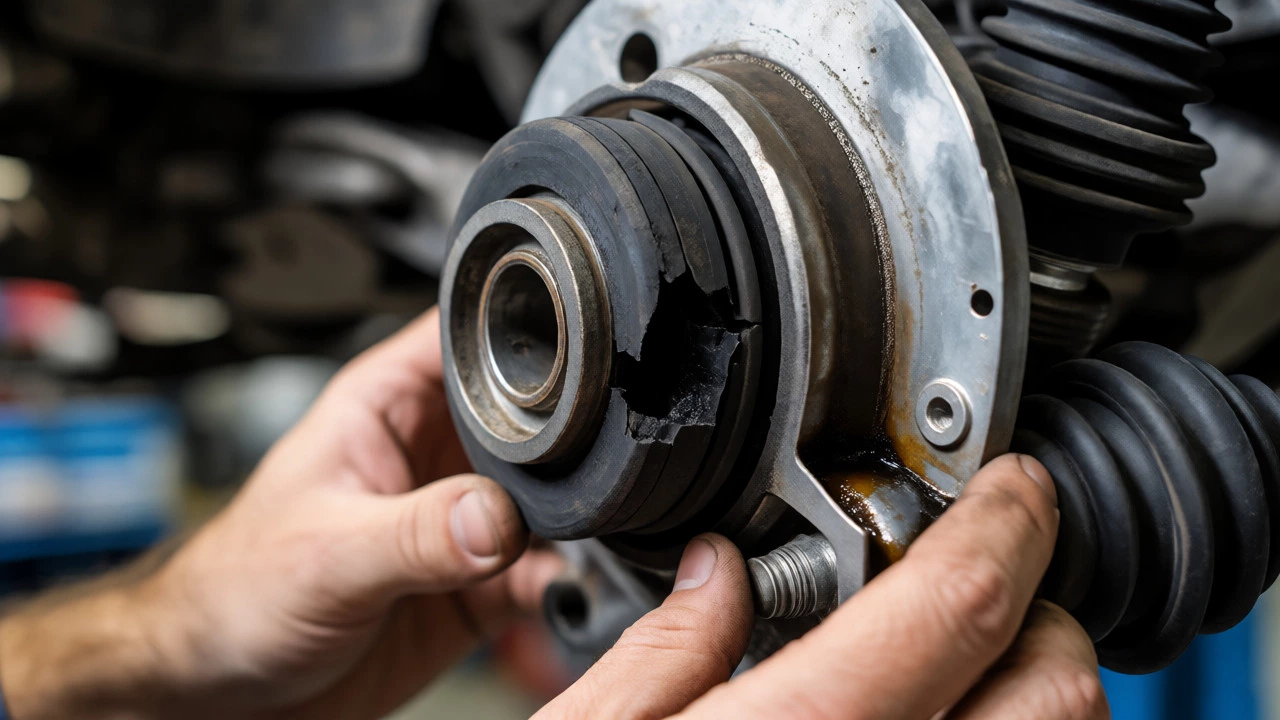
| Ball Joints | Torn rubber boots leaking grease | Dirt gets in, destroying the bearing quickly. |
| Bushings | Cracked, split, or missing rubber | Causes loose handling and metallic noises. |
Pay special attention to the tires. Uneven wear is the smoking gun. If the inner edges of both front tires are bald while the outer edges still have tread, your camber is negative beyond spec. This is classic behavior for sagging springs or worn control arm bushings. Check for "cupping," where dips appear around the tire circumference. This happens because the tire bounces up and down on the road instead of staying planted, chopping away bits of rubber with each impact.
The Bounce Test: A Simple DIY Check
This test is crude but effective for checking shock absorbers. Stand at the front corner of your car and push down hard on the bumper or fender. Let go abruptly.
A healthy suspension should rebound once and settle immediately. If the car bounces two, three, or four times, your dampers components that dissipate kinetic energy as heat to prevent oscillation are shot. They aren’t controlling the spring’s energy anymore. While this won’t diagnose every problem, a multi-bounce reaction confirms that your ride quality and braking distance are compromised.
Handling Changes: The Cornering Clue
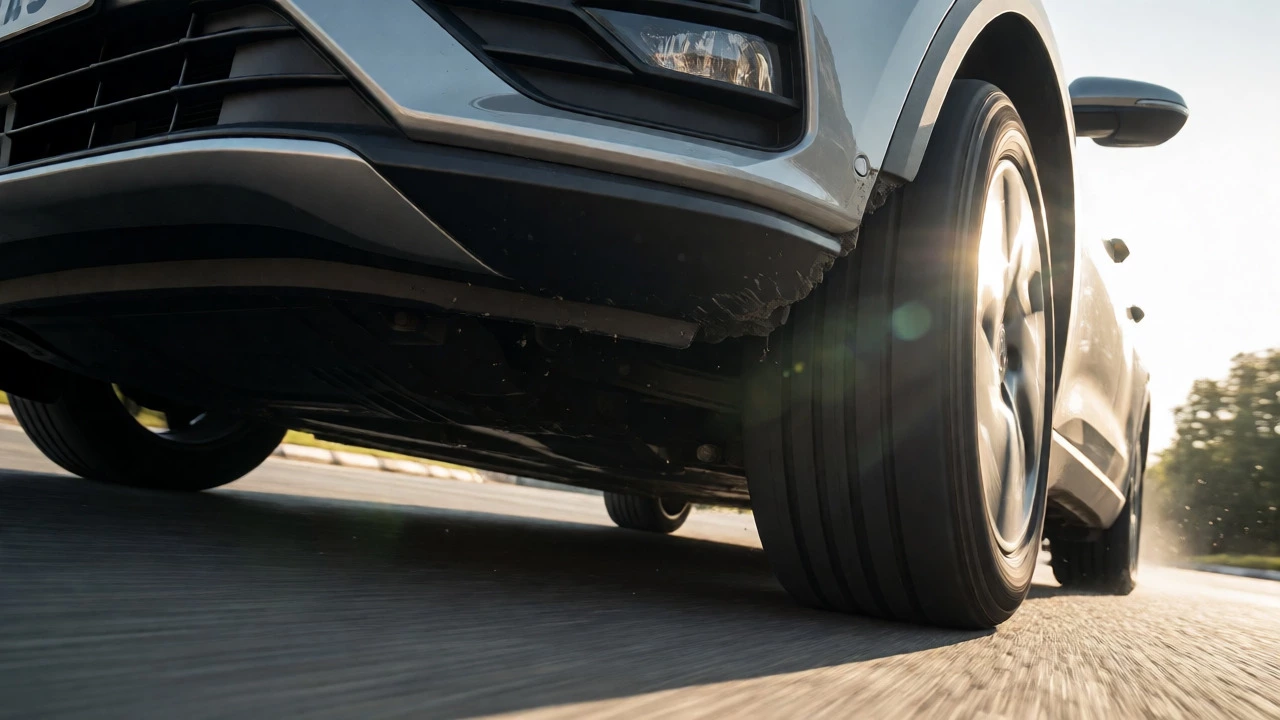
Take a familiar roundabout or a gentle curve. Does the car lean excessively? All cars lean a bit, but excessive body roll suggests weak stabilizer bars or soft, tired springs. More concerning is "nose dive" during braking. If the front end plunges toward the pavement when you tap the brakes, your weight transfer isn’t being managed properly. This shifts too much weight onto the front tires, potentially overwhelming them and increasing stopping distance.
Also, watch for instability during lane changes. If the car feels floaty or disconnected, especially in crosswinds, the suspension isn’t holding the chassis stable. This is particularly common in older vehicles where rubber components have hardened over time, losing their flexibility and damping properties.
When to Act Immediately
Not all suspension issues are created equal. Some can wait until your next service; others require immediate attention.
- Safe to Monitor: Minor squeaks, slight uneven tire wear, mild rattles from stabilizer links. Schedule a mechanic visit within a few weeks.
- Fix Soon: Visible oil leaks from shocks, pronounced pulling, significant nose dive. These affect safety margins.
- Stop Driving: Loud grinding noises, severe vibration, visible separation of parts, or a sudden change in steering feel. A failed ball joint can detach the wheel assembly, causing total loss of control.
Remember, the front suspension works harder than the rear. It carries more weight, handles steering forces, and manages braking torque. Ignoring early warnings leads to expensive repairs later. A $50 bushing replacement now saves you from replacing a $300 control arm and ruining a set of tires later.
Can I drive with a bad front suspension?
You can drive short distances with minor issues like worn bushings, but avoid highways and aggressive maneuvers. If you hear loud clunks or feel severe vibration, stop driving immediately. Components like ball joints can fail catastrophically without warning, leading to wheel detachment.
How long do front suspension parts last?
Typical lifespan ranges from 50,000 to 100,000 miles depending on driving conditions. Potholes, curbs, and heavy loads shorten this significantly. Shocks often wear out faster than springs, which may last the life of the car unless they snap.
Is it cheaper to replace struts or shocks?
Strut assemblies are generally more expensive because they include the spring mount and bearing. However, replacing complete strut assemblies often saves labor time compared to disassembling old struts. Always replace them in pairs to maintain balanced handling.
Do bad suspension parts affect fuel economy?
Yes, indirectly. Poor suspension increases rolling resistance and aerodynamic drag due to improper ride height and tire scrubbing. Additionally, inefficient engine braking and acceleration caused by unstable traction can lower mileage by 2-5%.
What causes cupping on tires?
Cupping is almost always caused by worn shock absorbers. As the damper fails, the tire bounces vertically rather than staying flush with the road. Each bounce chops away a patch of rubber, creating a wavy pattern on the tread surface.