
Spark Plug Health Diagnostic Tool
Use this tool to assess your vehicle's ignition system health. Select the symptoms you are experiencing or describe the physical appearance of your removed spark plug to get a diagnosis and recommended action.
Select Symptoms You Are Experiencing:
Diagnosis:
Describe Your Removed Spark Plug:
Likely Cause:
Recommended Action:
Estimate Next Replacement Interval:
Status:
You’re driving along, maybe heading out of Bristol towards the M5, when suddenly your car starts to stutter. It’s not a dramatic breakdown, just a slight hesitation when you press the gas pedal. Your first thought might be fuel quality or a sensor issue, but nine times out of ten, the culprit is sitting right there in your engine bay: spark plugs. These small components are the heart of your ignition system, responsible for igniting the air-fuel mixture that powers your vehicle. When they fail, your engine doesn’t just feel sluggish; it can suffer long-term damage if ignored.
Knowing how to test for bad spark plugs saves you money on unnecessary repairs and keeps your engine running smoothly. You don’t need a degree in automotive engineering to spot the signs. With a basic toolkit and a keen eye, you can diagnose issues before they leave you stranded. Let’s break down exactly what to look for, how to inspect them physically, and when it’s time to swap them out.
Key Takeaways
- Listen to your engine: Misfires, rough idling, and poor acceleration are the most common audible signs of failing spark plugs.
- Check your dashboard: A lit Check Engine Light often points directly to ignition system faults, specifically misfire codes (P0300 series).
- Inspect visually: Look for carbon buildup, oil fouling, or eroded electrodes. The color of the plug tells a story about your engine’s health.
- Test resistance: Use a multimeter to check if the spark plug’s internal resistor is within manufacturer specifications.
- Replace proactively: Don’t wait for total failure. Standard copper plugs last 30,000 miles, while iridium plugs can go up to 100,000 miles.
The Audible and Visual Signs of Trouble
Your car talks to you. If you listen closely, it will tell you when something isn’t right. A healthy engine runs with a consistent rhythm and delivers power instantly when you touch the throttle. When spark plugs begin to degrade, this harmony breaks down. The most obvious symptom is a rough idle. At traffic lights or when parked, the engine might shake more than usual or sound uneven. This happens because one or more cylinders aren’t firing correctly due to weak sparks.
Poor acceleration is another major red flag. Have you ever merged onto a motorway and felt the car struggling to pick up speed? That lag isn’t always a turbo issue; it’s often incomplete combustion. Weak sparks mean the fuel isn’t burning efficiently, so you lose power. You might also notice engine misfires, which feel like sudden jerks or hiccups during acceleration. These can be intermittent at first but tend to worsen as the plugs wear out.
Don’t ignore your fuel economy either. If you find yourself visiting petrol stations more frequently without changing your driving habits, inefficient combustion could be the cause. Bad spark plugs force the engine to work harder to generate the same amount of power, wasting fuel in the process. Finally, keep an eye on your dashboard. Modern cars have sophisticated sensors that detect misfires. If the Check Engine Light illuminates, it’s worth scanning the code immediately. Codes like P0301 through P0308 indicate misfires in specific cylinders, pointing straight to the ignition system.
Physical Inspection: Reading the Spark Plug
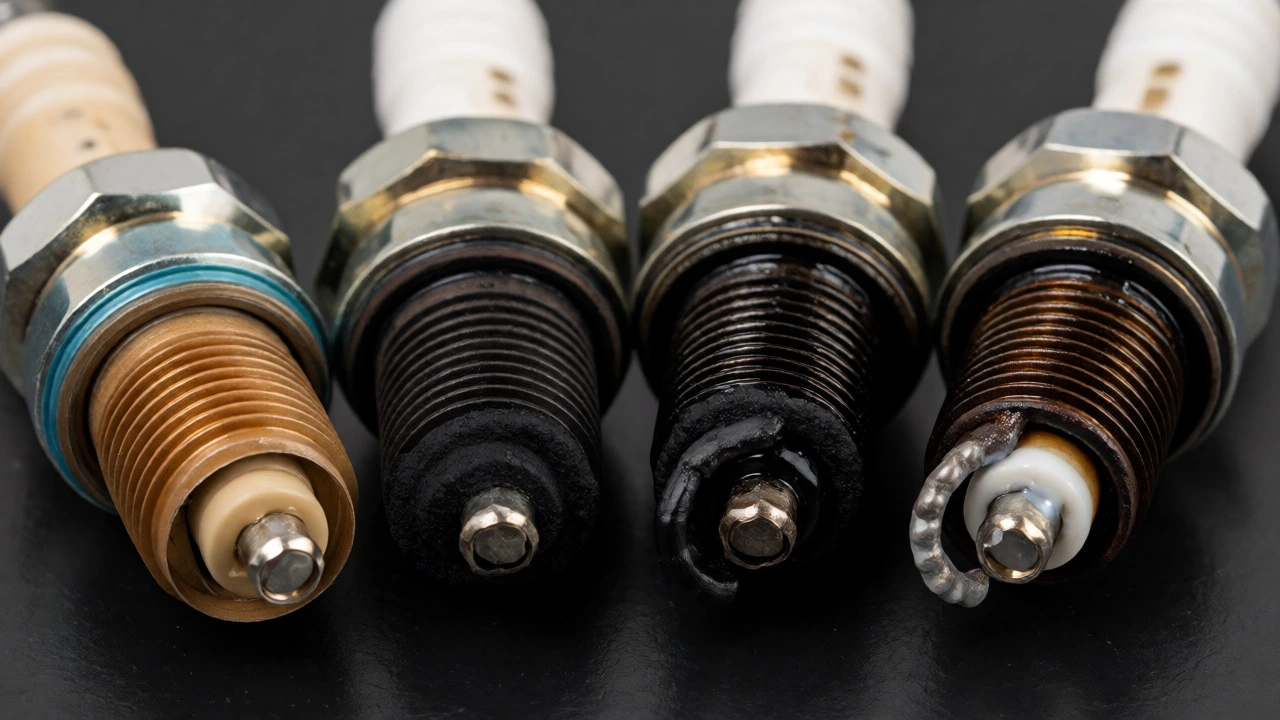
Once you’ve identified potential symptoms, it’s time to get hands-on. Pulling a spark plug is relatively simple for most vehicles, though some modern engines require removing plastic covers or coils. Once the plug is out, you have a diagnostic tool right in your hand. The condition of the electrode and insulator provides immediate feedback on what’s happening inside the cylinder.
A healthy spark plug typically has a light tan or greyish color on the ceramic insulator. This indicates proper combustion. However, deviations from this norm signal specific problems:
- Black Sooty Deposits: This usually means the plug is "fouled" by carbon. It suggests the engine is running rich (too much fuel) or has a weak spark that fails to burn all the fuel. It can also result from frequent short trips where the engine doesn’t reach optimal temperature.
- Oil Fouling: If the plug looks wet and black with oil, you likely have worn piston rings or valve stem seals allowing oil into the combustion chamber. This prevents the spark from jumping effectively.
- White Blistered Electrodes: This indicates overheating. It could be due to incorrect heat range plugs, advanced timing, or lean fuel mixtures. Overheated plugs can lead to pre-ignition, which is dangerous for your engine.
- Eroded Electrodes: Over time, the center electrode wears down. As the gap between the center and ground electrode widens, the voltage required to jump the gap increases. Eventually, the coil pack can’t supply enough energy, leading to misfires.
Pay attention to the electrode gap. Manufacturers specify a precise distance, usually between 0.7mm and 1.1mm depending on the model. If the gap is too wide, the spark may skip entirely. If it’s too narrow, the flame kernel size is reduced, affecting combustion efficiency. While many modern plugs are pre-gapped, checking this measurement ensures compatibility with your ignition system.
Using Tools for Accurate Diagnosis
Visual inspection is great, but sometimes you need data. A multimeter is an invaluable tool here. Most modern spark plugs contain an internal resistor to reduce electromagnetic interference. You can test this resistance by placing one probe on the terminal nut and the other on the center electrode. Compare the reading to the manufacturer’s specification, often found in your owner’s manual or online databases. If the resistance is infinite (open circuit) or zero (short circuit), the plug is faulty and must be replaced.
Another method involves swapping plugs. If your diagnostic scanner shows a misfire on Cylinder 4, move the spark plug from Cylinder 4 to Cylinder 1. Clear the error codes and drive the car briefly. If the misfire moves to Cylinder 1, you know the spark plug is the problem. If the error stays on Cylinder 4, the issue lies elsewhere, such as the ignition coil or fuel injector. This cross-testing technique isolates the variable quickly and cheaply.
| Condition | Appearance | Likely Cause | Action Required |
|---|---|---|---|
| Healthy | Light tan/grey insulator, clean electrodes | Proper air/fuel ratio, normal operation | No action needed |
| Carbon Fouled | Dry, black soot deposits | Rich mixture, weak spark, short trips | Replace plug, check air filter/sensors |
| Oil Fouled | Wet, black oily residue | Worn piston rings or valve seals | Engine repair likely needed |
| Overheated | White, blistered, or melted electrodes | Lean mixture, wrong heat range, timing | Verify plug type, check cooling system |
| Worn | Rounded edges, large gap | Normal wear over mileage | Replace immediately |

When to Replace vs. Clean
Can you clean a spark plug instead of replacing it? Technically, yes. You can use a wire brush or compressed air to remove carbon deposits. However, this is rarely a permanent fix. Cleaning removes the surface debris but doesn’t restore the electrical integrity of the electrode or the insulation properties of the ceramic. For standard copper plugs, cleaning might buy you a few thousand miles, but given their low cost, replacement is almost always the smarter choice.
For high-performance or long-life plugs like platinum or iridium, cleaning is generally discouraged. These materials are expensive and delicate. Aggressive cleaning can damage the fine-wire electrodes, rendering the plug useless. If you’re unsure, err on the side of caution. Replacing a set of four spark plugs costs significantly less than repairing a damaged catalytic converter caused by prolonged misfiring.
Consider your mileage. Most manufacturers recommend replacing spark plugs every 30,000 to 60,000 miles for standard types, and up to 100,000 miles for premium iridium versions. Even if the car seems fine, aging plugs can cause subtle performance drops that you might mistake for normal wear. Proactive replacement ensures peak efficiency and protects your ignition coils from excessive strain.
Step-by-Step Replacement Guide
If your tests confirm bad spark plugs, here’s how to replace them safely. Always ensure the engine is cool to avoid burns. Disconnect the negative battery terminal to prevent accidental shorts.
- Remove the Ignition Coils: On most modern cars, each plug has its own coil pack. Unclip the electrical connector and unscrew the bolt holding the coil in place. Pull the coil straight up gently to avoid damaging the rubber boot.
- Extract the Old Plugs: Use a spark plug socket with a rubber insert to grip the plug securely. Turn counter-clockwise to loosen. Be careful not to drop debris into the cylinder head.
- Gap New Plugs: Even new plugs should be checked. Use a feeler gauge to verify the gap matches your vehicle’s spec. Adjust carefully by bending the ground electrode if necessary.
- Install New Plugs: Thread the new plug by hand first to ensure it isn’t cross-threaded. Once seated, tighten with a torque wrench. Over-tightening can crack the ceramic insulator; under-tightening can cause blow-by and heat damage.
- Reassemble: Reinstall the ignition coils, ensuring the boots seat properly. Reconnect the battery and start the engine. Listen for smooth idling and take a test drive to confirm the issue is resolved.
How do I know which cylinder is misfiring?
You need an OBD-II scanner. Connect it to your car's diagnostic port (usually under the dashboard). Read the trouble codes. Codes starting with P03 followed by a number (e.g., P0304) indicate a misfire in that specific cylinder. Without a scanner, you can try disconnecting ignition coils one by one while the engine is idling; if the RPMs don't change when you unplug a coil, that cylinder was already misfiring.
Can I drive with a bad spark plug?
Short distances are usually okay, but prolonged driving is risky. A bad plug causes unburnt fuel to enter the exhaust system, which can overheat and destroy your catalytic converter-a repair costing hundreds of pounds. Additionally, severe misfires can wash oil off the cylinder walls, increasing engine wear. Limit driving until you can replace the plug.
What does a white spark plug mean?
A white or light grey insulator is actually a sign of good health, indicating the engine is running at the correct temperature. However, if the plug is bright white with blisters or melted spots on the electrodes, it indicates overheating. This could be due to a lean fuel mixture, incorrect ignition timing, or using a spark plug with the wrong heat rating.
How often should I change spark plugs?
It depends on the material. Copper core plugs typically last 30,000 miles. Platinum plugs can last up to 60,000 miles, and double-platinum or iridium plugs are designed for 100,000 miles. Always check your vehicle's owner manual for the manufacturer's specific recommendation, as some high-performance engines require more frequent changes.
Why is my spark plug covered in oil?
Oil on the spark plug threads or tip usually comes from two sources: leaking valve cover gaskets or worn internal engine components. If only the threads are oily, it's likely the valve cover gasket. If the tip itself is wet with oil, it suggests worn piston rings or valve stem guides are allowing oil to seep into the combustion chamber. This requires mechanical repair beyond just changing the plug.