
MERV Filter Suitability Checker
Awaiting Input
Configure your system details to see if a MERV 12 filter is the right choice.
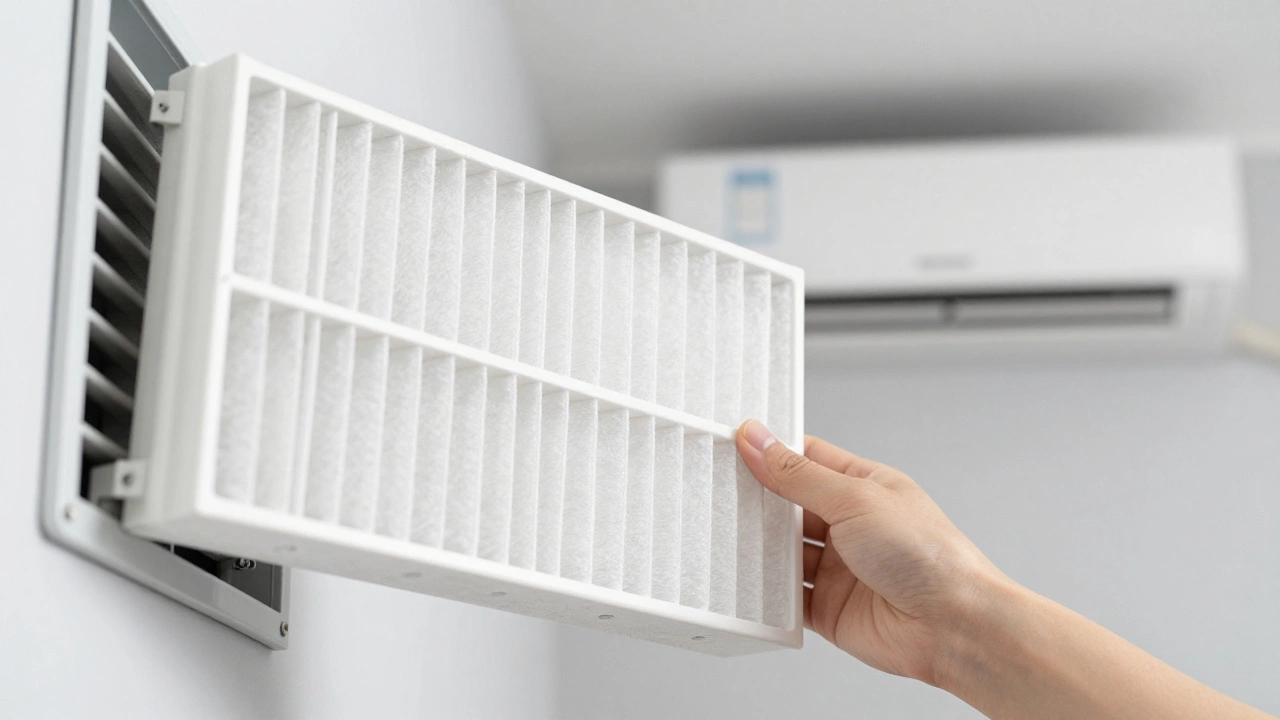
You just bought a brand-new MERV 12 air filter is a high-efficiency particulate air filter designed to capture smaller particles like pollen, mold spores, and pet dander. It looks impressive on the box, promising cleaner air for your home. But then you hear the rumor: "That filter is too dense. It will choke your air conditioner." You pause. Is your new filter actually going to damage your expensive HVAC unit?
The short answer is no. For most modern residential systems, a MERV 12 filter is not only safe; it’s often the sweet spot between filtration quality and airflow efficiency. However, if you have an older, single-stage system or a poorly maintained ductwork setup, pushing for higher ratings can cause issues. Let’s break down exactly what happens inside your walls when you swap out that basic fiberglass sheet for a denser pleated filter.
Understanding the MERV Rating Scale
To understand why MERV 12 causes debate, you first need to know what the number means. MERV stands for Minimum Efficiency Reporting Value. It was established by ASHRAE (American Society of Heating, Refrigerating and Air-Conditioning Engineers) to standardize how well filters trap particles.
The scale runs from 1 to 20. A MERV 1 filter catches almost nothing but large dust bunnies. A MERV 8 filter handles typical household dust and lint. As you climb the ladder, the filter gets better at catching microscopic stuff.
- MERV 1-4: Basic protection. Catches large particles like carpet fibers and dust mite debris. Cheap, but offers little health benefit.
- MERV 5-8: Standard residential grade. Good for general housekeeping. Catches mold spores and hair spray.
- MERV 9-12: High efficiency. This is where things get interesting. It traps bacteria, auto emissions, and fine dust. Ideal for allergy sufferers.
- MERV 13-16: Medical grade. Used in hospitals and clean rooms. Catches viruses and smoke. Very restrictive to airflow.
The key takeaway here is density. Higher MERV numbers mean tighter weaves. Tighter weaves mean more resistance to air moving through them. This resistance is called "static pressure." Your AC fan has to work harder to push air through a high-resistance filter. That’s the core of the problem people worry about.
Why MERV 12 Is Usually Safe for Modern ACs
If you own a central air system installed in the last 15 years, you likely don’t need to worry. Most manufacturers design their blowers to handle a certain amount of static pressure drop. They assume you’ll use a filter that provides some level of filtration, not just a bare screen.
A MERV 12 filter typically adds about 0.2 to 0.4 inches of water column (in. w.c.) of static pressure when it’s new. When it gets dirty, that number rises. Most residential systems are rated to handle up to 0.5 or even 0.75 in. w.c. of total external static pressure. This includes the friction from your ducts, coils, and registers, plus the filter.
Think of it like breathing through a straw. A wide straw (low MERV) is easy. A narrow straw (high MERV) requires more effort. But as long as the straw isn’t completely blocked, you can still breathe. MERV 12 is like a moderately narrow straw. It’s noticeable, but manageable for a healthy lung-or in this case, a healthy blower motor.
| Filter Type | Particle Size Caught | Static Pressure Impact | Best Use Case |
|---|---|---|---|
| Fiberglass (MERV 1-4) | Dust, Lint | Very Low | Budget-conscious, minimal maintenance |
| Pleated (MERV 8) | Pollen, Mold Spores | Low | Standard homes, seasonal allergies |
| Pleated (MERV 12) | Bacteria, Fine Dust, Pet Dander | Moderate | Allergy relief, pet owners, modern HVAC |
| HEPA-style (MERV 13+) | Viruses, Smoke, Bacteria | High | Hospitals, severe asthma, specialized systems |
Many HVAC technicians recommend MERV 12 as the gold standard for homeowners who want cleaner air without risking their equipment. It captures enough pollutants to make a difference in indoor air quality (IAQ) without strangling the airflow.
When MERV 12 Might Cause Problems
So, when should you be worried? There are three specific scenarios where a MERV 12 filter could become a liability.
1. Older Single-Stage Systems
If your air handler is over 20 years old, it might have a less powerful blower motor. These older motors operate at a fixed speed. They don’t adjust to compensate for increased resistance. If you install a MERV 12 filter in a system designed for a flimsy fiberglass sheet, the motor may struggle. You’ll notice the air coming out of your vents feels weaker. Over time, this strain can lead to overheating or premature motor failure.
2. Poorly Maintained Ductwork
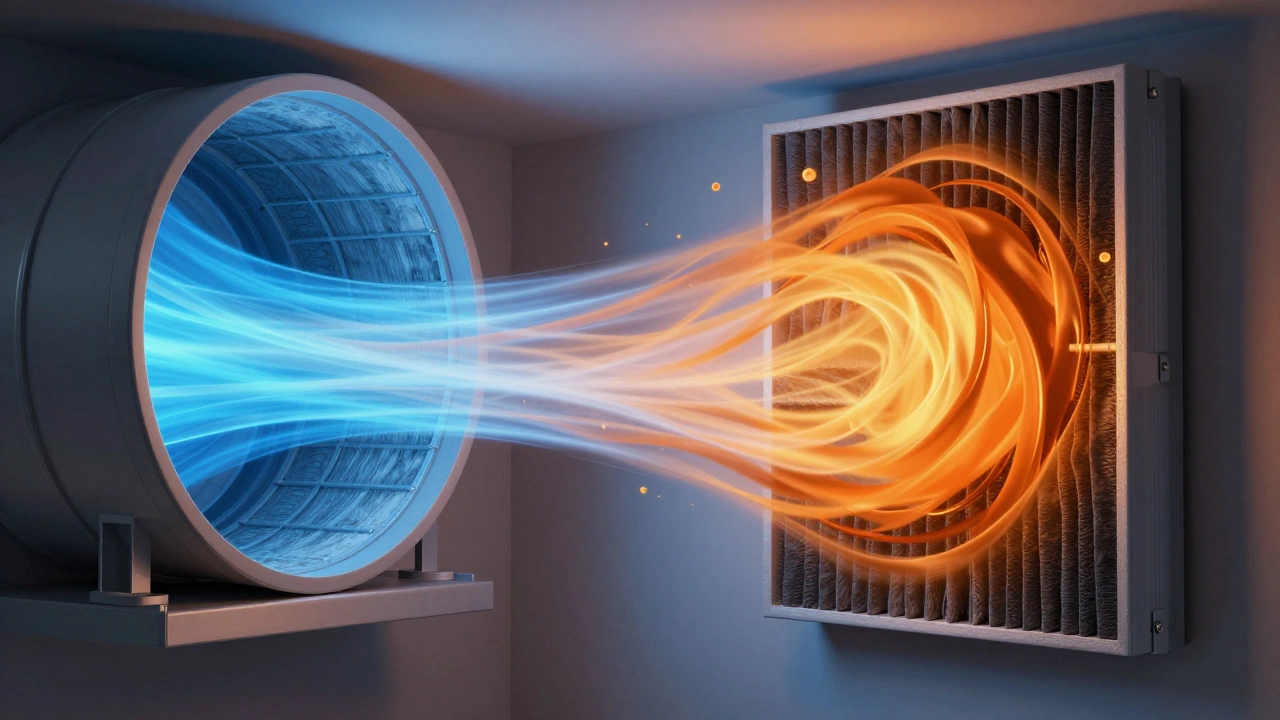
Your entire HVAC system is a circuit. If your ducts are clogged with decades of dust, or if you have closed-off vents in unused rooms, the static pressure is already high. Adding a restrictive MERV 12 filter pushes the total pressure over the limit. The system chokes. Ice forms on the evaporator coil because warm air isn’t flowing over it fast enough to absorb heat. Then the system shuts down.
3. Variable Speed Systems Not Calibrated Correctly
Modern variable-speed furnaces and air handlers are smart. They sense airflow and adjust the motor speed to maintain consistent volume. However, if the system hasn’t been properly balanced by a technician after installation, it might not recognize the added resistance of a MERV 12 filter immediately. In rare cases, this can cause the fan to run continuously at high speeds, wasting energy and wearing out bearings faster.
Signs Your AC Is Struggling With the Filter
You don’t need a degree in engineering to tell if your filter is causing trouble. Pay attention to these physical cues in your home.
- Reduced Airflow: Hold your hand near a supply vent. Does the air feel weak compared to last month? If the difference is drastic right after changing the filter, the rating might be too high for your specific setup.
- Noisy Operation: Listen to the air handler. A whistling or roaring sound indicates air is being forced through a tight space. This is turbulent airflow, which is inefficient and stressful for the system.
- Longer Runtime: Check your thermostat. Is the AC running longer cycles to reach the set temperature? If it’s struggling to cool the house, it’s working harder due to restricted airflow.
- Iced Coils: Look at the evaporator coil (usually behind the access panel). If you see frost or ice, shut the system off immediately. This is a classic sign of low airflow caused by a dirty or overly restrictive filter.
If you experience any of these symptoms, switch back to a MERV 8 filter temporarily. See if the performance improves. If it does, your system likely cannot handle the static pressure of a MERV 12.
How to Choose the Right Filter for Your Home
Choosing a filter isn’t just about picking the highest number on the shelf. It’s about balancing health needs with mechanical limits. Here is a practical decision tree.
Step 1: Check Your Manufacturer’s Recommendation.
Look at the sticker on your air handler or furnace. It often lists the maximum recommended static pressure or the suggested filter type. If it says "MERV 8 max," listen to it. Ignoring manufacturer specs can void warranties.
Step 2: Assess Your Health Needs.
Do you have severe allergies, asthma, or pets that shed heavily? If yes, MERV 12 is worth the slight increase in energy cost. The health benefits of removing pet dander and fine dust outweigh the minor strain on a modern system. If you’re generally healthy and live in a low-pollution area, MERV 8 is sufficient.
Step 3: Evaluate Your System Age.
Is your HVAC system under 10 years old? Go ahead with MERV 12. Is it over 15 years old? Stick to MERV 8 unless you’ve had a professional airflow test done.
Step 4: Consider Filter Depth.
This is a pro tip. A thin 1-inch MERV 12 filter is much more restrictive than a thick 4-inch or 5-inch MERV 12 filter. Thicker filters have more surface area. More surface area means air doesn’t have to squeeze through as tightly. If you want high filtration, consider upgrading to a media cabinet with a deep pleat filter. This maintains high efficiency while keeping static pressure low.
Maintenance Tips for High-Efficiency Filters
Using a MERV 12 filter changes your maintenance schedule. Because these filters catch more particles, they fill up faster than cheap fiberglass ones. A clogged MERV 12 acts like a solid wall. No air gets through.
Change your MERV 12 filter every 3 months. If you have pets or live in a dusty area, check it every 60 days. Don’t wait until the season ends. A neglected high-MERV filter is worse than no filter at all because it restricts airflow completely.
Also, ensure the filter fits snugly. Gaps around the edges allow unfiltered air to bypass the media. This defeats the purpose and can cause uneven airflow distribution within the blower assembly. Use filter tape if necessary to seal the edges.
Alternatives to High MERV Filters
If you find that MERV 12 is too restrictive for your system but you still want cleaner air, consider these alternatives.
Electronic Air Cleaners (EACs):
These devices use electrostatic charges to attract particles. They offer high filtration with very low static pressure. However, they require regular cleaning of plates and can produce small amounts of ozone, which some people prefer to avoid.
UV-C Light Systems:
Installed near the evaporator coil, UV lights kill mold, bacteria, and viruses. They don’t filter particles, so they don’t restrict airflow. Pairing a MERV 8 filter with a UV light gives you biological protection without the airflow penalty of a MERV 12.
Whole-House HEPA Systems:
For ultimate filtration, dedicated whole-house HEPA units exist. These are separate from your main AC loop and use their own fans. They recirculate air through a HEPA filter independently, providing medical-grade cleanliness without choking your primary HVAC blower.
Can I use a MERV 13 filter in my home AC?
Generally, no. MERV 13 filters create significant static pressure that most residential blowers cannot overcome. Using one can lead to reduced airflow, frozen coils, and higher energy bills. Reserve MERV 13 for commercial buildings or specialized hospital-grade setups unless your HVAC technician explicitly approves it.
Does a higher MERV rating save money on energy?
No, it usually costs more. A higher MERV rating increases resistance, forcing your blower motor to work harder and consume more electricity. While you save on cleaning costs due to less dust accumulation, the energy bill increase often offsets those savings. The trade-off is improved air quality, not energy efficiency.
How often should I replace a MERV 12 filter?
Every 3 months is the standard recommendation. However, if you have multiple pets, smokers in the house, or live in a construction zone, check it monthly. A visibly dark or clogged filter should be replaced immediately regardless of the timeline. Never wash or reuse disposable pleated filters.
What is the difference between MERV 8 and MERV 12?
MERV 8 filters catch larger particles like pollen, dust, and mold spores. MERV 12 filters go further, capturing finer particles such as bacteria, auto exhaust, and pet dander. Visually, MERV 12 filters are denser and thicker. Functionally, MERV 12 provides superior indoor air quality for allergy sufferers but creates more resistance to airflow.
Will using a MERV 12 filter void my HVAC warranty?
It depends on the manufacturer. Some warranties specify a maximum MERV rating. If you exceed that rating and the system fails due to airflow restriction, the claim may be denied. Always check your owner’s manual or consult your installer before switching to a higher-rated filter to ensure compliance with warranty terms.