Car Air Filter Diagnostic Tool
Select the symptoms you are experiencing below to determine if it's time to replace your engine or cabin air filters.
You’re driving along the M4, and suddenly the car feels sluggish. You press the accelerator, but instead of that familiar surge of power, you get a hesitant, wheezing response. It’s easy to blame your own foot on the pedal or assume the traffic is just heavy, but often, the culprit is something far simpler and cheaper than a new turbocharger. We are talking about air filters, specifically when they become clogged with dirt, dust, and debris.
Most drivers ignore their air filters until the engine starts making weird noises or the dashboard lights up like a Christmas tree. But waiting for that point costs you money in wasted fuel and potential long-term wear. Whether it’s the engine air filter keeping grit out of your cylinders or the cabin air filter keeping pollen out of your lungs, both have distinct warning signs if you know what to look for. Let’s break down exactly how a dirty filter messes with your car’s behavior, so you can spot the problem before it becomes expensive.
The Engine Air Filter: What Happens When It Clogs?
Your engine air filter is basically the mask for your car’s engine. Its job is simple: let clean air in, keep dirt out. Modern engines need a precise mix of air and fuel to burn efficiently. If the filter gets too dirty, airflow restricts. Think of it like trying to breathe through a thick wool sweater while sprinting. The engine has to work harder just to get the oxygen it needs.
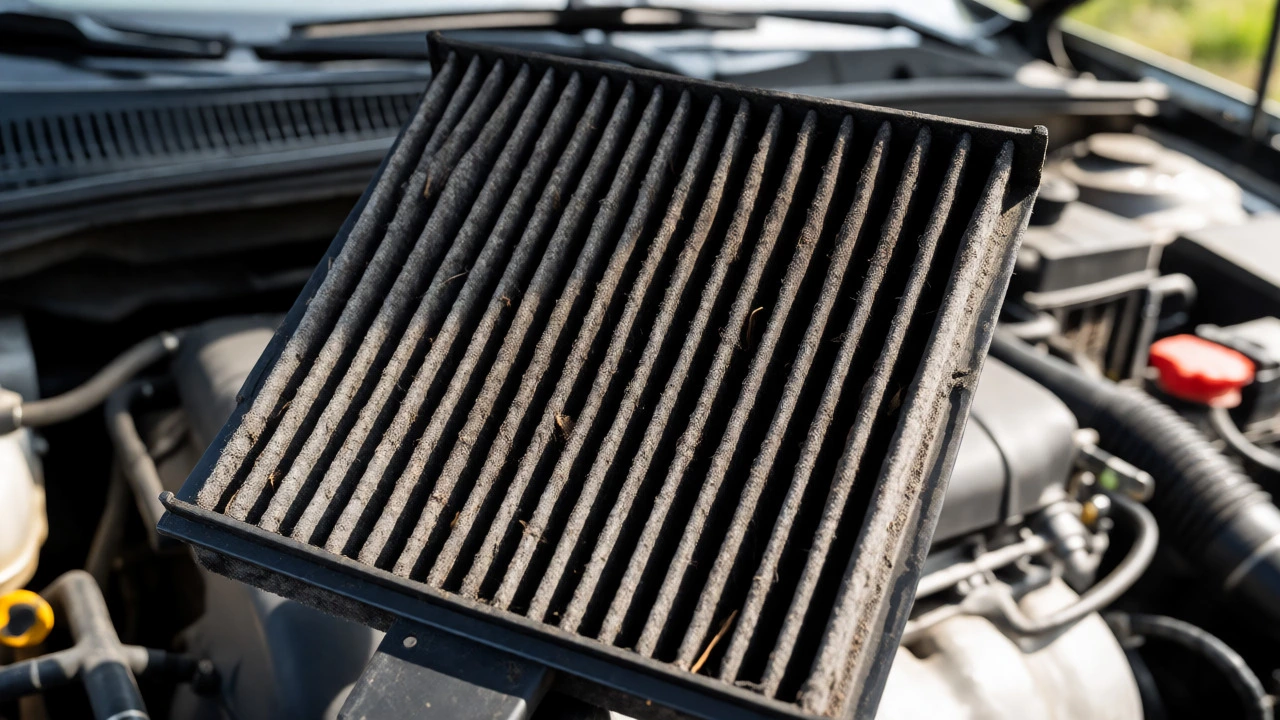
This restriction creates a cascade of problems. First, the air-to-fuel ratio gets thrown off. The engine control unit (ECU) tries to compensate by injecting more fuel, leading to incomplete combustion. This isn’t just bad for your wallet; it’s bad for the catalytic converter, which is one of the priciest parts under your bonnet. If you notice any of the following symptoms, grab a flashlight and pop the hood. You might find a filter that looks more like a charcoal briquette than a paper mesh.
- Reduced Acceleration: The car feels heavy or slow to respond, especially when merging onto motorways or climbing hills.
- Poor Fuel Economy: You’re visiting petrol stations more often without changing your driving habits.
- Unusual Engine Noises: A wheezing sound during acceleration or coughing/popping at idle indicates unfiltered air leaking into the intake.
- Check Engine Light: The ECU detects abnormal airflow sensor readings and triggers a fault code.
Cabin Air Filters: The Hidden Culprit for Smells and Foggy Windows
While the engine filter protects the machine, the cabin air filter protects you. Located behind the glovebox or under the windshield cowl, this filter cleans the air entering the ventilation system. In the UK, where we deal with damp weather, pollen, and road spray, these filters get filthy fast.
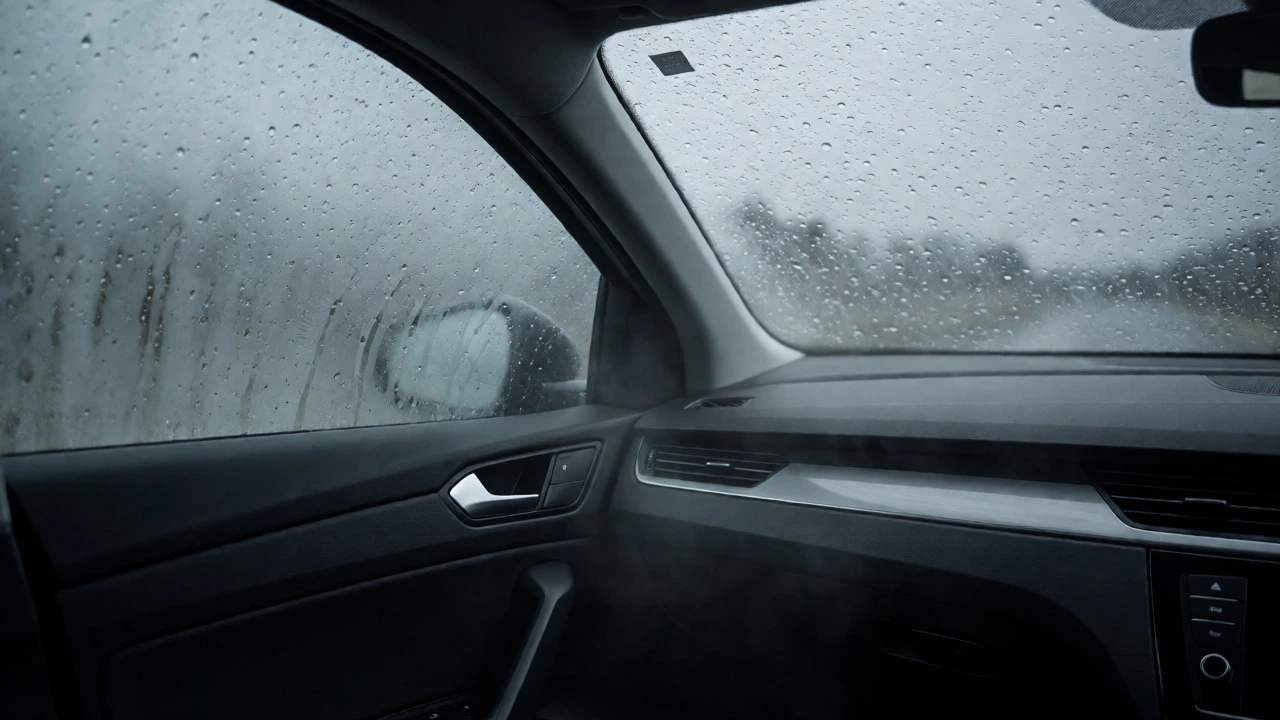
A dirty cabin filter doesn’t affect engine performance, but it makes the drive miserable. Have you ever noticed that your windows fog up way faster than usual? Or maybe the heater takes ages to warm up the interior? These are classic signs that airflow is blocked. The blower fan has to push against a wall of dirt, reducing its effectiveness. Worse yet, mold and bacteria can grow on the damp, dirty filter material, blowing spores directly into your face every time you turn on the AC.
| Symptom | Engine Air Filter Issue | Cabin Air Filter Issue |
|---|---|---|
| Performance Impact | High (sluggishness, misfires) | None (engine runs fine) |
| Fuel Consumption | Increases noticeably | No change |
| Smell | Burning smell (rare, severe cases) | Musty, sour, or exhaust-like odor inside car |
| Climate Control | No effect | Weak airflow, slow defrosting/heating |
| Health Effects | None directly | Allergy flare-ups, sneezing, headaches |
How to Spot a Dirty Filter Without Tools
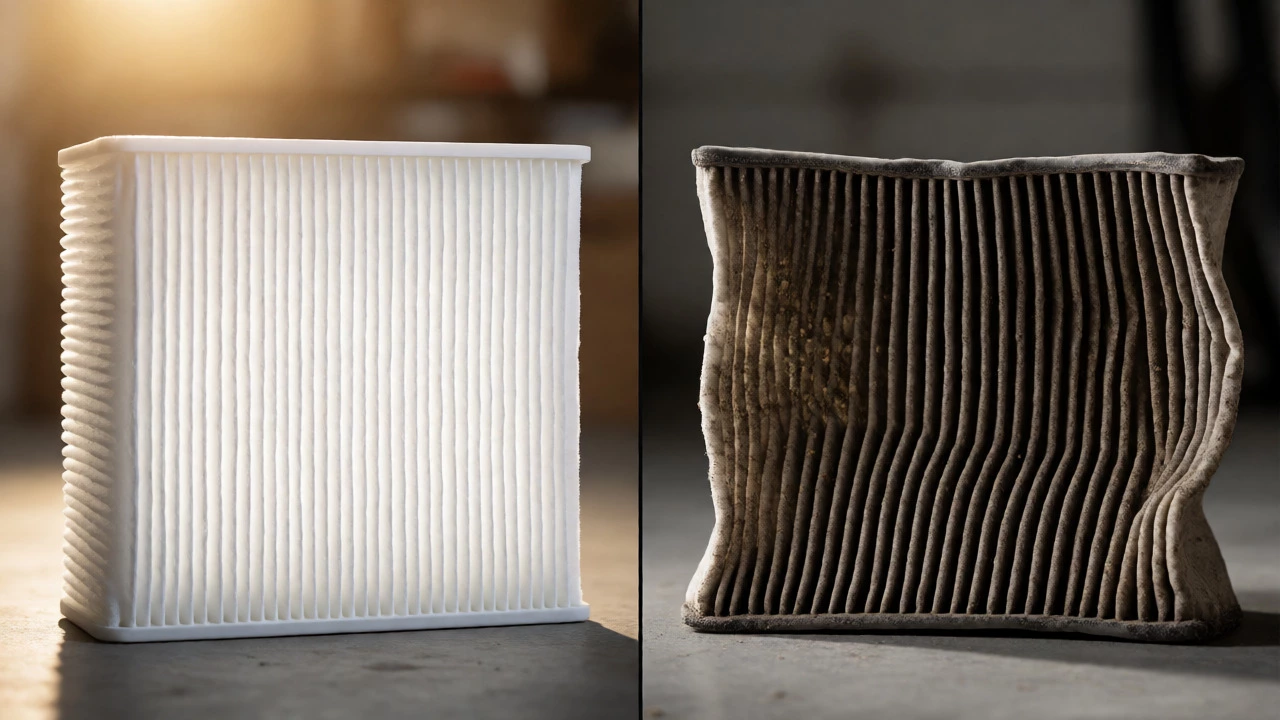
You don’t need a diagnostic scanner to check your filters. Visual inspection is usually enough. For the engine filter, open the air box (usually held by clips or screws). Lift the filter out. Hold it up to the sun or a bright torch. A healthy white or yellow paper filter will glow evenly. A dirty one will have dark grey patches, visible debris like leaves or insects, and won’t let much light through.
For the cabin filter, locate the access panel. Pull the filter out and give it a sniff. If it smells like wet dog or old gym socks, replace it immediately. Also, check the pleats (the folded layers). If they are collapsed or flattened, the structural integrity is gone, and it’s no longer filtering effectively. Don’t try to tap out the dirt and put it back unless you’re in an emergency. Once the fibers are saturated with oil and dust, they don’t clean well.
The Cost of Ignoring the Signs
Replacing an air filter is cheap. In the UK, a decent quality engine filter from brands like Mann-Filter, Bosch, or Mahle costs between £10 and £25. Labor, if you go to a garage, adds another £30-£50. Total cost? Maybe £60-£75. Now, compare that to the damage caused by ignoring it.
Driving with a severely clogged engine filter forces the turbocharger to work overtime to suck in air. This increases stress on the turbo seals and bearings. On older cars without turbos, you risk sucking unfiltered grit past the filter edges into the cylinders. That grit acts like sandpaper on piston rings and cylinder walls, leading to compression loss and oil consumption. A rebuild could cost thousands.
On the cabin side, a neglected filter overloads the HVAC blower motor. If that motor burns out because it’s struggling against resistance, you’re looking at a repair bill north of £200. Plus, if you suffer from hay fever-which affects millions in the UK-a fresh filter can significantly reduce sneezing fits during spring and summer.
When Should You Replace Them?
Manufacturer recommendations vary, but general rules apply. Most car makers suggest replacing the engine air filter every 15,000 to 30,000 miles (roughly 24,000 to 48,000 km). However, if you drive on dusty country lanes, gravel roads, or spend lots of time in stop-start city traffic, cut that interval in half. Check it at every service.
Cabin filters should be changed once a year, ideally in autumn after pollen season ends and before winter dampness sets in. If you live near coastal areas or construction sites, consider changing them twice a year. Salt spray and cement dust kill filters quickly.
Troubleshooting Other Issues
Sometimes, the symptoms mimic other problems. If your car is sluggish but the filter looks clean, check the Mass Air Flow (MAF) sensor. A dirty MAF sensor gives incorrect data to the ECU, causing similar drivability issues. Clean it with specialized MAF cleaner spray-never use brake cleaner or compressed air, which can damage the delicate wires.
If your cabin airflow is weak but the filter is new, check for blockages in the vents themselves. Leaves often accumulate in the scuttle area (under the wipers), blocking water drains and restricting air entry. Clearing this area is free and takes five minutes.
Can I drive with a dirty air filter?
Yes, you can drive short distances, but it’s not recommended for long trips. A dirty filter reduces performance and fuel efficiency. If it’s extremely clogged, it may allow unfiltered dirt into the engine, causing internal wear. Replace it as soon as possible.
How do I know if my cabin air filter is dirty?
Look for musty odors coming from the vents, reduced airflow from the heater or AC, and windows that fog up easily. If you see visible dirt or mold on the filter element itself, it definitely needs replacing.
Does a dirty air filter cause rough idling?
It can. A restricted air supply disrupts the air-fuel mixture, which can cause the engine to run roughly or stall at idle, especially in cold weather when the engine needs a richer mixture.
How much does it cost to replace an air filter?
Parts typically range from £10 to £25 depending on the vehicle make and model. Professional installation usually costs between £30 and £50. DIY replacement saves labor costs and takes less than 15 minutes for most cars.
Will a new air filter improve my MPG?
If the old filter was severely clogged, yes. Restoring proper airflow can improve fuel economy by up to 10% in extreme cases. For lightly dirty filters, the improvement might be marginal but still worth it for engine health.