Exhaust System Selector Tool
Configuration
Select your primary driving scenario:
Ready to Analyze
Select your driving style on the left to see our recommendation.
--
----
That low rumble you hear when a car passes by isn't just noise; it's the sound of an engine breathing. Your exhaust system is the network of pipes and components that carry waste gases away from your engine. It does more than make your car sound aggressive or sporty. It keeps you safe by removing toxic carbon monoxide, helps your engine run efficiently, and in many places, keeps you on the right side of the law regarding noise pollution.
If you've ever looked under a car and seen a maze of metal tubes, you might have wondered how they all fit together. There isn't just one type of exhaust. Whether you are driving a daily commuter sedan, a heavy-duty truck, or a track-ready sports car, the exhaust setup changes drastically based on what you need the vehicle to do. Let's break down the different types of exhaust systems, how they work, and which one actually makes sense for your wallet and your goals.
The Basic Anatomy: How Gas Gets Out
Before we dive into the specific types, it helps to know the path the gas takes. In almost every internal combustion engine, the process starts at the cylinder head. The burnt fuel mixes with air and creates hot, high-pressure gas. This gas needs somewhere to go, so it flows into the exhaust manifold (or header) first.
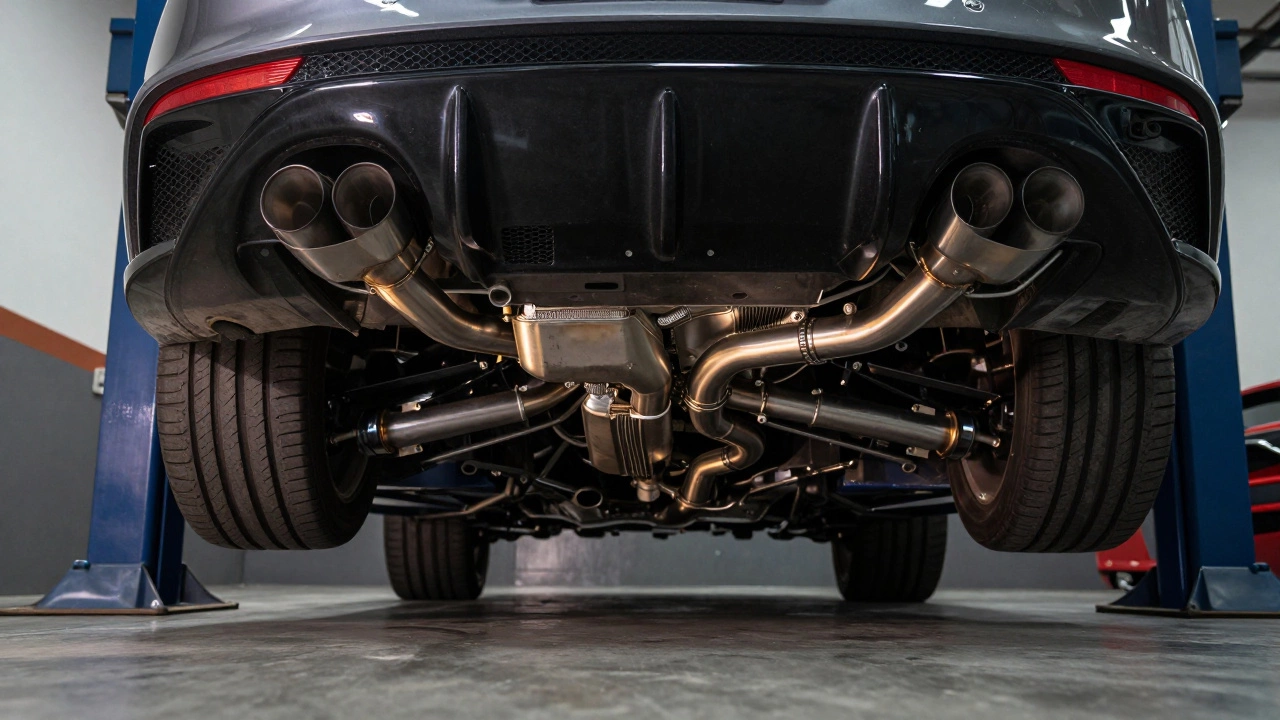
From there, the gas hits the catalytic converter, which is crucial for cleaning up harmful pollutants like nitrogen oxides and carbon monoxide. After cleaning, the gas moves through the resonator to smooth out harsh frequencies, then into the muffler to reduce volume, and finally exits through the tailpipe. Understanding this flow is key because "types" of exhaust usually refer to which part of this chain you are replacing or modifying.
OEM Exhaust: The Stock Setup
When you buy a new car, it comes with an Original Equipment Manufacturer (OEM) exhaust. This is designed for balance, not maximum performance. Engineers prioritize three things here: passing emissions tests, keeping noise levels comfortable for long highway drives, and minimizing manufacturing costs.
OEM systems often use thicker steel walls and smaller diameter pipes. Why? Smaller pipes create backpressure. While backpressure sounds bad, a little bit of it can help maintain torque at lower RPMs, which is great for city driving. However, these systems are rarely tuned for peak horsepower. If you want reliability and zero headaches, stock is fine. But if you feel your car is "choking" at high speeds, the OEM exhaust is likely the bottleneck.
Cat-Back Exhaust Systems
This is the most popular upgrade for everyday drivers who want a better sound without risking their warranty or legality. A cat-back exhaust replaces everything from the catalytic converter backward. That means you keep the factory manifold, headers, and catalytic converter intact.
Why choose this?
- Safety & Legality: Since you aren't touching the catalytic converter, you stay compliant with emissions laws in most regions, including the UK and US.
- Sound Change: You get a deeper, more aggressive tone without the excessive drone that plagues some cheaper mods.
- Easy Install: Most cat-back systems bolt directly onto the existing hangers and flanges.
Expect a modest power gain-usually 5 to 10 horsepower-mostly because the larger pipes allow gases to exit faster, reducing turbo lag in forced-induction engines. It’s the sweet spot for enthusiasts who drive their cars to work and to the track.
Header-Back Exhaust Systems
If a cat-back feels too conservative, you might look at a header-back exhaust. This setup replaces the entire exhaust system, starting from the engine block itself. It includes new headers (or manifolds), a new catalytic converter, resonators, mufflers, and piping.
This is a major overhaul. By replacing the restrictive factory headers with high-flow performance headers, you significantly improve exhaust scavenging-the process of pulling fresh air-fuel mixture into the cylinders. Combined with high-flow catalytic converters and large-diameter tubing, header-back systems can yield substantial horsepower gains, often 15 to 30+ HP depending on the engine.
The Catch:
- Cost: These are expensive. You're buying multiple components.
- Complexity: Installation is difficult and often requires cutting, welding, and custom fitting.
- Emissions Risk: Many high-performance catalytic converters used in these kits are not street-legal. Check local regulations carefully.
Straight Pipe Exhaust
You’ve probably heard the term "straight piped." It sounds simple: remove the muffler, remove the catalytic converter, and run a straight piece of metal pipe from the engine to the rear bumper. It’s the ultimate removal of restriction.
Does it add power? Technically, yes. Removing restrictions allows the engine to breathe as freely as possible. However, the real-world gains are often overstated unless the rest of the engine is heavily modified. The bigger issue is the noise. Without a muffler or resonator, a straight-pipe exhaust is deafening. We’re talking 100+ decibels, which can cause hearing damage over time and will definitely annoy your neighbors.
Furthermore, deleting the catalytic converter is illegal in most jurisdictions. It releases unburnt hydrocarbons and carbon monoxide directly into the atmosphere. In many places, failing an emissions test due to a missing cat will result in fines and a failed registration. I don’t recommend this for daily drivers unless you live in a rural area with no noise ordinances and don't care about environmental impact.
Performance Muffler Types
Even within aftermarket systems, the type of muffler matters. Not all mufflers work the same way. Here are the three main designs you’ll encounter:
| Muffler Type | How It Works | Sound Profile | Best For |
|---|---|---|---|
| Chambered Muffler | Uses internal baffles and chambers to reflect sound waves back on themselves, canceling them out. | Deep, muffled, traditional car sound. | Daily drivers, luxury sedans. |
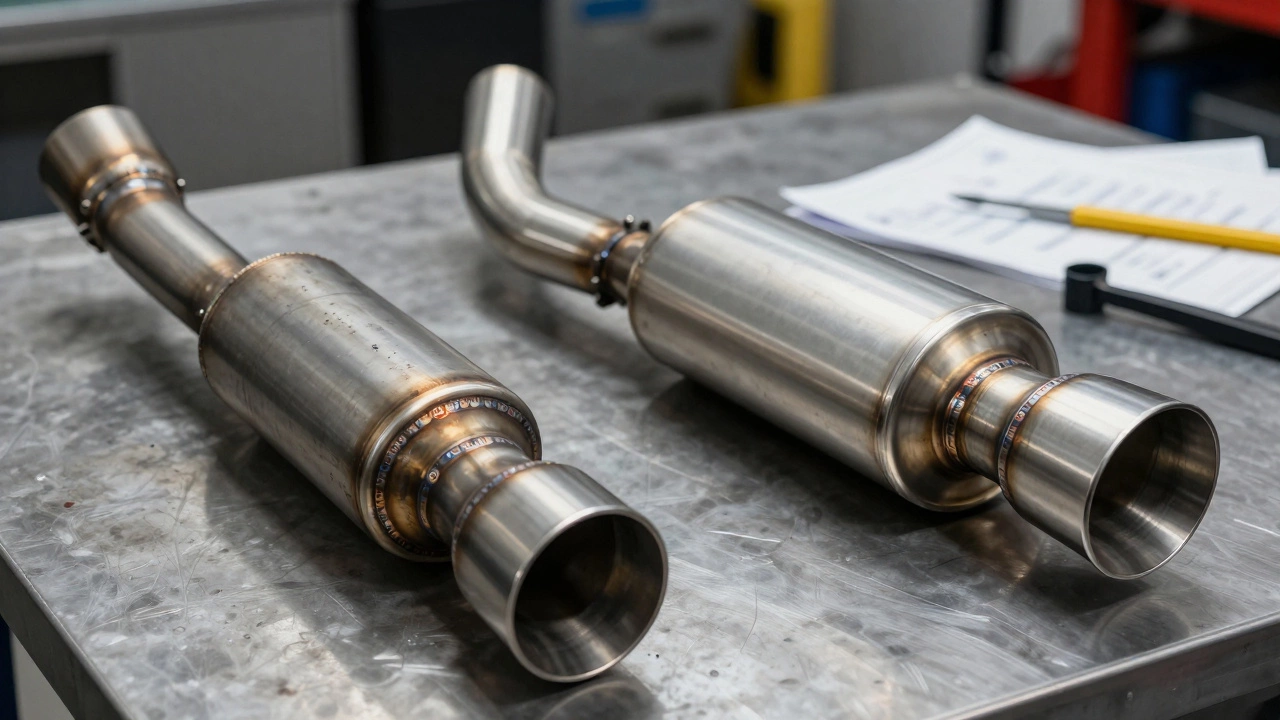
| Turbo/Straight-Through Muffler | Contains perforated tubes wrapped in packing material. Gas flows straight through while sound is absorbed by the packing. | Louder, raspier, sporty note. | Sports cars, muscle cars. |
| Glasspack Muffler | A central tube surrounded by fiberglass insulation. Sound dissipates into the glass fibers. | Raspy, raw, classic American muscle sound. | V8 engines, classic restores. |

Active Exhaust Systems
Modern technology has given us active exhaust systems. Found on many high-end vehicles from brands like BMW, Mercedes, and Porsche, these systems use electronic valves inside the muffler or piping. When you’re cruising quietly, the valves close, routing gas through the full muffling chambers. When you switch to "Sport" mode or floor the accelerator, the valves open, bypassing the mufflers for a direct, loud exit.
This offers the best of both worlds: quiet comfort for commuting and aggressive sound for spirited driving. However, they are complex and expensive to repair. If a valve actuator fails, you can be stuck with a permanently loud (or permanently quiet) exhaust.
Material Matters: Stainless vs. Aluminized Steel
The type of metal used in your exhaust system affects its lifespan and weight. Most stock exhausts use aluminized steel. It’s cheap but prone to rust, especially in areas where roads are salted in winter. Within 5 to 7 years, holes can form, leading to rattles and leaks.
Aftermarket performance exhausts typically use stainless steel, specifically grades like 304 or 409. Stainless steel resists corrosion much better and lasts significantly longer. For extreme applications, titanium is used. It’s lighter than steel and handles heat exceptionally well, but it comes with a premium price tag. If you live in a wet climate like Bristol, investing in stainless steel is non-negotiable for longevity.
Choosing the Right System for You
So, which one should you pick? It depends on your priorities.
- For the Daily Driver: Stick with OEM or a mild cat-back system. You want reliability, comfort, and legal compliance.
- For the Enthusiast: A cat-back or axle-back system with a turbo-style muffler gives you the sound you crave without breaking the bank or the law.
- For the Track Racer: Header-back systems with straight-through mufflers maximize airflow and horsepower. Just remember to swap back to a legal setup for street driving if required.
- For the Budget Conscious: Replace just the muffler. It’s the cheapest way to change the sound, though gains in performance will be negligible.
Always check local noise ordinances. What sounds cool to you might be a noise violation to your neighbor. And never underestimate the importance of proper installation. A loose clamp can lead to dangerous exhaust leaks entering the cabin, which is a serious health hazard due to carbon monoxide poisoning.
Does a bigger exhaust pipe always mean more power?
Not necessarily. If the pipe is too large for your engine's displacement, you lose exhaust velocity. This can actually reduce low-end torque and make the car feel sluggish in everyday driving. The pipe size must match the engine's airflow capacity. For example, a small 4-cylinder engine doesn't benefit from 3-inch pipes; it needs something closer to 1.75 or 2 inches to maintain pressure.
Is it illegal to remove the catalytic converter?
In most countries, including the UK and the US, it is illegal to remove or bypass the catalytic converter on a street-legal vehicle. Doing so violates emissions standards and can result in heavy fines and failed vehicle inspections. Some exemptions exist for race-only vehicles that are never driven on public roads.
What is the difference between a cat-back and an axle-back exhaust?
A cat-back system replaces everything from the catalytic converter to the tailpipe, including the mid-pipes and muffler. An axle-back system only replaces the section from the rear axle backward, typically just the muffler and tailpipes. Axle-backs are easier to install and cheaper but offer less performance gain and sound change than cat-backs.
Can a new exhaust fix a rattling noise?
If the rattle is coming from a broken hanger or a hole in the old muffler, yes, a new system will fix it. However, if the rattle is from loose heat shields or other engine components, a new exhaust won't solve the problem. Always diagnose the source of the noise before spending money on parts.
How long does a stainless steel exhaust last?
High-quality 304 stainless steel exhausts can last 10 to 15 years or more, even in harsh weather conditions. Lower-grade 409 stainless may last 5 to 7 years. Aluminized steel stock exhausts typically start showing signs of rust and failure within 3 to 5 years in salty climates.