
Suspension Health Diagnostic Tool
Select the symptoms you are experiencing to assess your suspension's condition:
Assessment Results
Risk Level
Based on severity of selected symptoms
Urgency
Likely Affected Components
Recommended Actions
Have you ever driven over a speed bump and felt like your teeth were about to rattle out of your head? Or maybe you noticed the front of your car dipping sharply every time you tap the brakes. These aren't just annoying quirks; they are loud, clear signals that your suspension system is failing.
A healthy suspension does more than keep you comfortable. It keeps your tires planted on the road, which is critical for braking distance and steering control. When it starts to go bad, safety becomes the primary concern, not just ride quality. Ignoring these warning signs can lead to expensive damage to other parts of your car, from your wheels to your alignment geometry.
The Nose Dive: Braking Instability
One of the most obvious signs of worn-out shocks or struts is the "nose dive." When you slam on the brakes, the weight of the car shifts forward. A good suspension compresses slightly but controls the movement. If your front end drops significantly, looking like the car is trying to do a wheelie in reverse, your dampers have lost their ability to control this motion.
This isn't just uncomfortable. It reduces the traction on your rear wheels, making the car more likely to skid during emergency stops. In wet conditions common here in Bristol, this loss of stability can be dangerous. If you feel the car pitching excessively under braking, your shock absorbers are likely leaking fluid or have internal valve failure.
Excessive Bouncing After Hitting a Bump
Think of your suspension like a door closer. When you push a door open, it should swing shut smoothly and stay there. It shouldn't bounce back and forth three times before stopping. Your car works the same way. Drive over a small pothole or speed bump at moderate speed (around 20-30 mph). Watch how the car reacts.
If the vehicle bounces up and down two or more times after hitting the bump, your springs might be okay, but your damping is gone. This "floaty" feeling means the energy from the impact isn't being absorbed; it's being transferred directly into the chassis. Over time, this constant bouncing stresses the mounting points and can crack subframes if left unchecked.
Uneven Tire Wear: The Silent Killer
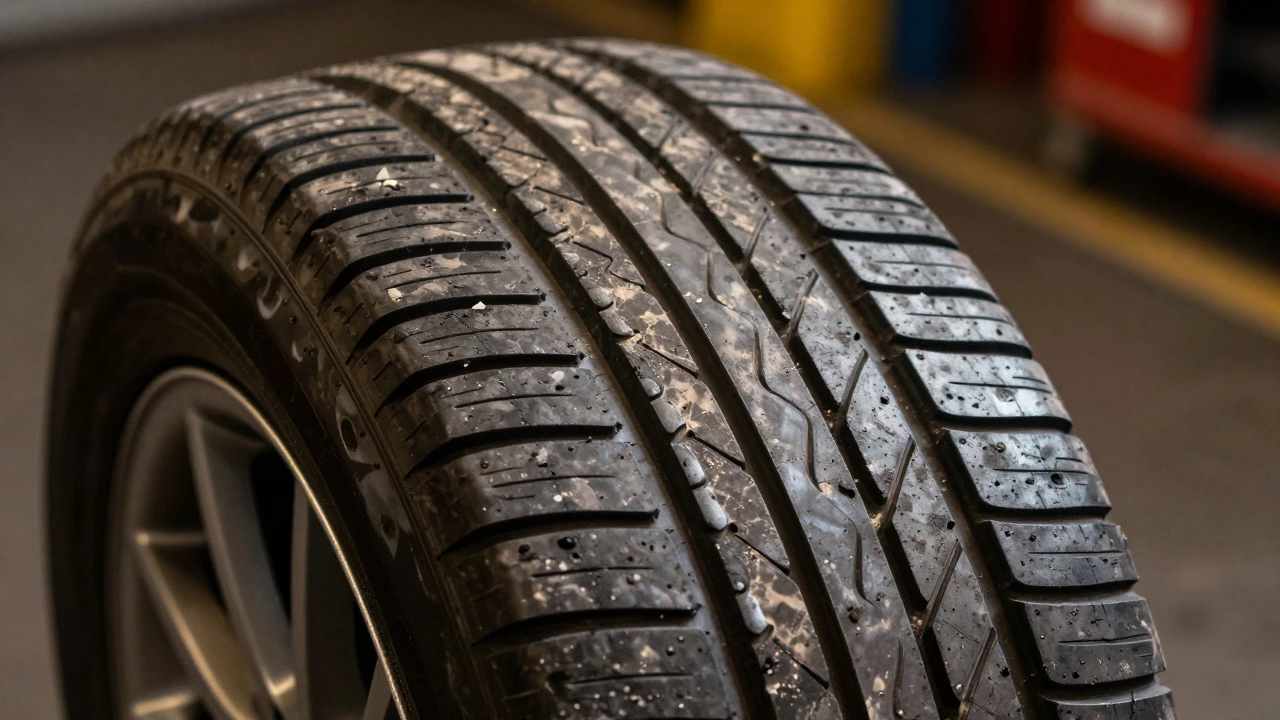
You don't need to drive badly to ruin your tires. A failing suspension causes uneven tire wear that looks suspicious even on brand-new rubber. Pop the hood and check your tread depth, but look closer at the pattern.
- Cupping or scalloping: This looks like dips or waves across the tread surface. It happens when a tire loses contact with the road briefly due to excessive bouncing. This is a classic sign of bad shocks.
- Inner or outer edge wear: If one side of the tire is worn down much faster than the other, your alignment is off. While alignment issues can happen independently, they are often caused by worn ball joints or tie rods, which are part of the suspension assembly.
Replacing tires without fixing the underlying suspension issue is throwing money away. The new tires will suffer the same fate within months.
Weird Noises: Clunks, Creaks, and Rattles
Your car should hum, not clunk. Listen carefully when driving over rough patches. Specific noises point to specific broken parts:
| Noise Type | Likely Culprit | Safety Risk |
|---|---|---|
| Clunking or banging | Worn bushings or loose strut mounts | High - Loss of control possible |
| Squeaking or creaking | Dry or cracked rubber bushings | Medium - Vibration transfer |
| Rattling | Loose sway bar links or end links | Low - Annoying but usually safe |
| Grinding | Worn ball joints | Critical - Wheel separation risk |
If you hear a grinding noise when turning the steering wheel, stop driving immediately. A failed ball joint can cause the wheel to detach from the vehicle entirely. This is not a repair you should delay.
Pulling to One Side
When you take your hands off the steering wheel on a flat, straight road, does the car drift to the left or right? While this can sometimes be an alignment issue, persistent pulling often indicates a mechanical problem in the suspension.
A collapsed spring on one side, a bent control arm, or a seized strut can create unequal resistance. This forces the driver to constantly correct the steering, leading to fatigue on long drives. If you recently hit a curb or a deep pothole and now the car pulls, assume structural damage until a mechanic proves otherwise.
Visual Inspection: What to Look For Underneath
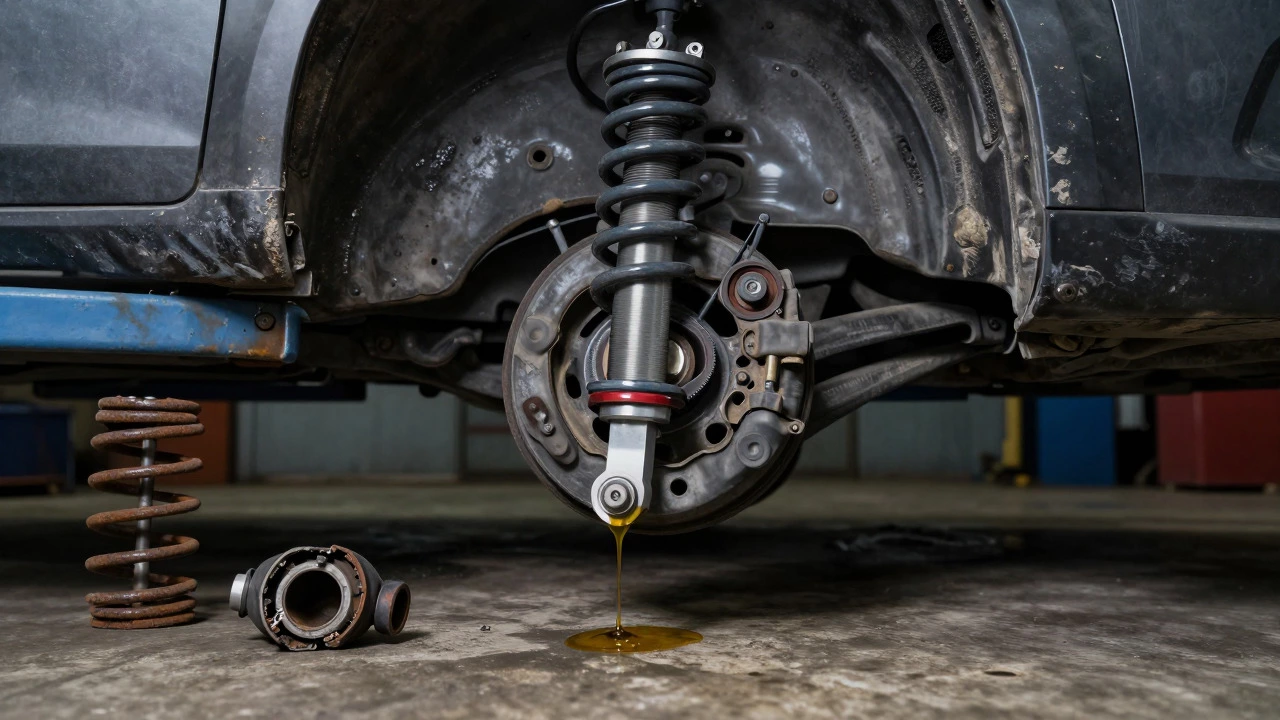
You don't need to be a mechanic to spot some issues. Jack up the car safely or use a lift, and look at your suspension components. Here is what indicates failure:
- Oil leaks: Shock absorbers contain hydraulic fluid. If you see wetness or dripping oil on the body of the shock or strut, the seal has failed. Once the fluid is gone, the shock provides zero damping.
- Cracked bushings: Rubber bushings isolate metal parts and absorb vibration. If you see large cracks, splits, or missing chunks of rubber, they need replacement. Dry rot is common in older vehicles.
- Corrosion: Rust on coil springs or control arms weakens the metal. Surface rust is normal, but flaking rust or visible pitting suggests the component is near its breaking point.
Steering Wheel Vibration
If your steering wheel shakes at certain speeds (usually between 50-70 mph), it’s often related to wheel balance or brake rotors. However, if the vibration persists even after balancing and braking checks, look at your suspension.
Worn wheel bearings or loose suspension components allow the wheels to wobble slightly. This shimmy travels up through the steering rack into your hands. It’s distracting and tiring, reducing your reaction time in emergencies.
When to Replace vs. Repair
In many cases, replacing individual parts like a single bushing or link is cost-effective. However, if multiple components are worn, it may be cheaper and safer to replace entire assemblies, such as strut cartridges or control arms.
Always replace shocks and struts in pairs (both front or both rear). Mixing old and new dampers creates an imbalance in handling, causing the car to pull to one side during cornering. An alignment service is mandatory after any suspension work to ensure your tires wear evenly.
How long do suspension parts last?
Shock absorbers typically last between 50,000 and 100,000 miles, depending on driving conditions. Bushings and ball joints can last longer, often 80,000 to 100,000 miles, but they degrade faster if you frequently drive on rough roads or carry heavy loads.
Is it safe to drive with bad suspension?
It depends on the severity. Minor wear might just be uncomfortable, but severe issues like leaking shocks or worn ball joints are unsafe. They increase stopping distances and reduce steering precision, raising the risk of accidents, especially in wet weather.
Can bad suspension affect fuel economy?
Yes. Uneven tire wear caused by poor suspension increases rolling resistance. Additionally, if the car is misaligned due to suspension damage, the engine works harder to maintain speed, leading to slightly higher fuel consumption.
What is the difference between shocks and struts?
Shocks only dampen the movement of the springs. Struts are a structural part of the suspension, holding the spring and acting as a pivot point for steering. Replacing struts is generally more labor-intensive than replacing shocks.
How much does suspension repair cost?
Costs vary widely. Replacing a pair of rear shocks might cost £200-£400 including labor. Front strut replacements can range from £400 to £800 per side, depending on the vehicle make and model. Always get a quote that includes alignment costs.