Head Gasket Symptom Checker
Check Your Symptoms
Select symptoms you're experiencing to determine if you might have a blown head gasket.
Critical Alert
This indicates a blown head gasket. Do not drive the vehicle further.
Contact a mechanic immediately to avoid expensive engine damage.
Caution Needed
This could indicate a developing issue. Monitor your vehicle closely.
Have it checked by a mechanic as soon as possible if symptoms persist.
No Signs Detected
No signs of a blown head gasket detected.
Continue routine maintenance and monitoring.
If your car suddenly starts overheating, loses coolant without any visible leaks, or belches white smoke from the exhaust, you’re not imagining things. These aren’t random glitches-they’re the early warning signs of a blown head gasket. And if you ignore them, you could end up with a destroyed engine that costs thousands to fix-or worse, leaves you stranded on a cold Bristol road in December.
White Smoke from the Exhaust
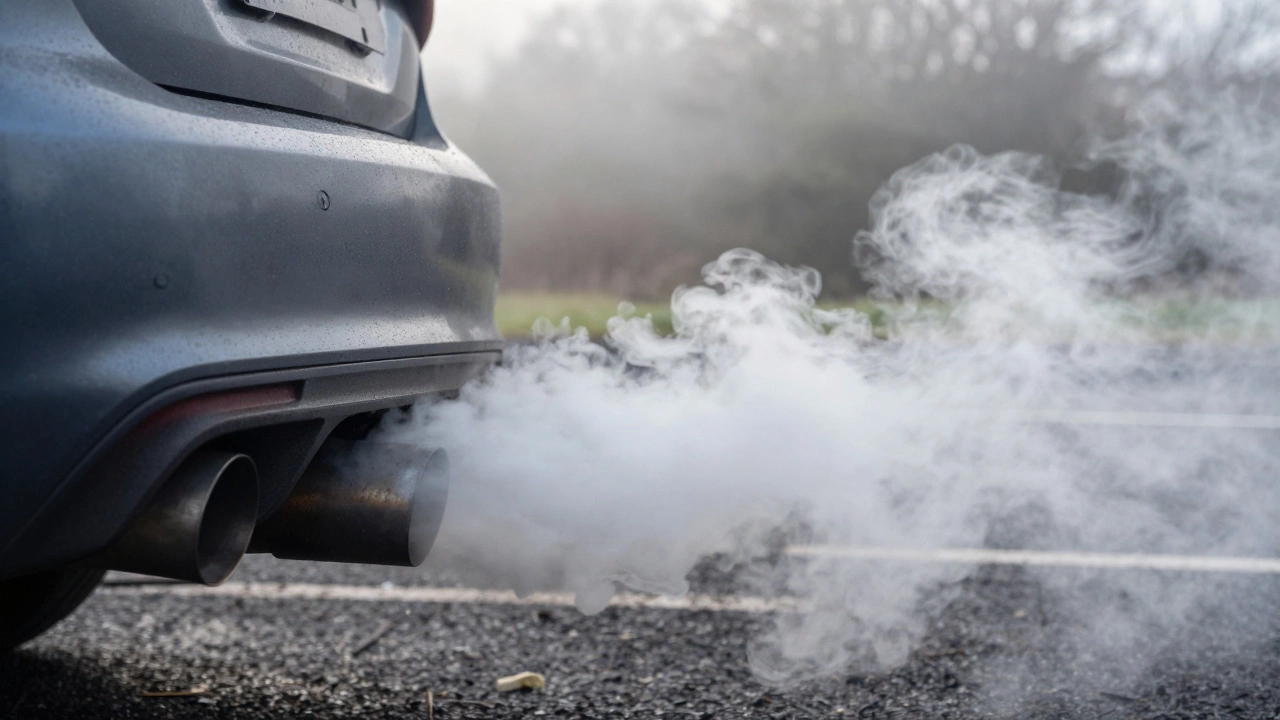
Most people think white smoke means water vapor, and they’re right-but not the kind you’d expect. On a cold morning, a little puff of white smoke is normal. But if you’re driving and the exhaust keeps puffing out thick, sweet-smelling white smoke that lingers in the air, that’s coolant burning inside the combustion chamber. The head gasket seals the cylinder head to the engine block. When it fails, coolant leaks into the cylinders, gets heated to over 2,000°F, and turns into steam. That steam exits as smoke. It smells like sweet, burnt antifreeze, not like burning oil. If you’ve ever smelled that smell after a short drive, you’re already dealing with a failing head gasket.
Engine Overheating-Even with a Full Radiator
Your radiator is full, the coolant level looks good, and the fan is running-but the temperature needle still climbs into the red. That’s because a blown head gasket doesn’t just leak coolant out; it lets air into the cooling system. Air pockets form in the coolant passages, stopping heat from flowing properly. The engine overheats, even though there’s plenty of liquid. You might notice the heater blowing cold air, too. That’s because the coolant isn’t circulating. It’s trapped in bubbles. This isn’t a thermostat issue. It’s not a faulty water pump. It’s the head gasket letting combustion gases sneak into the cooling system.
Coolant Losing Without a Leak
You top up the coolant every week. You check under the car. No puddles. No wet hoses. No drips from the radiator. Yet the reservoir keeps dropping. That’s classic head gasket failure. The coolant isn’t leaking outside-it’s leaking into the cylinders and burning off. Or it’s seeping into the engine oil. You might find a milky, mayonnaise-like sludge under the oil cap or on the dipstick. That’s coolant mixing with oil. It’s not normal. It’s not condensation. It’s a direct sign that the seal between the combustion chamber and the coolant passages has failed.
Milky Oil or Sludge Under the Oil Cap
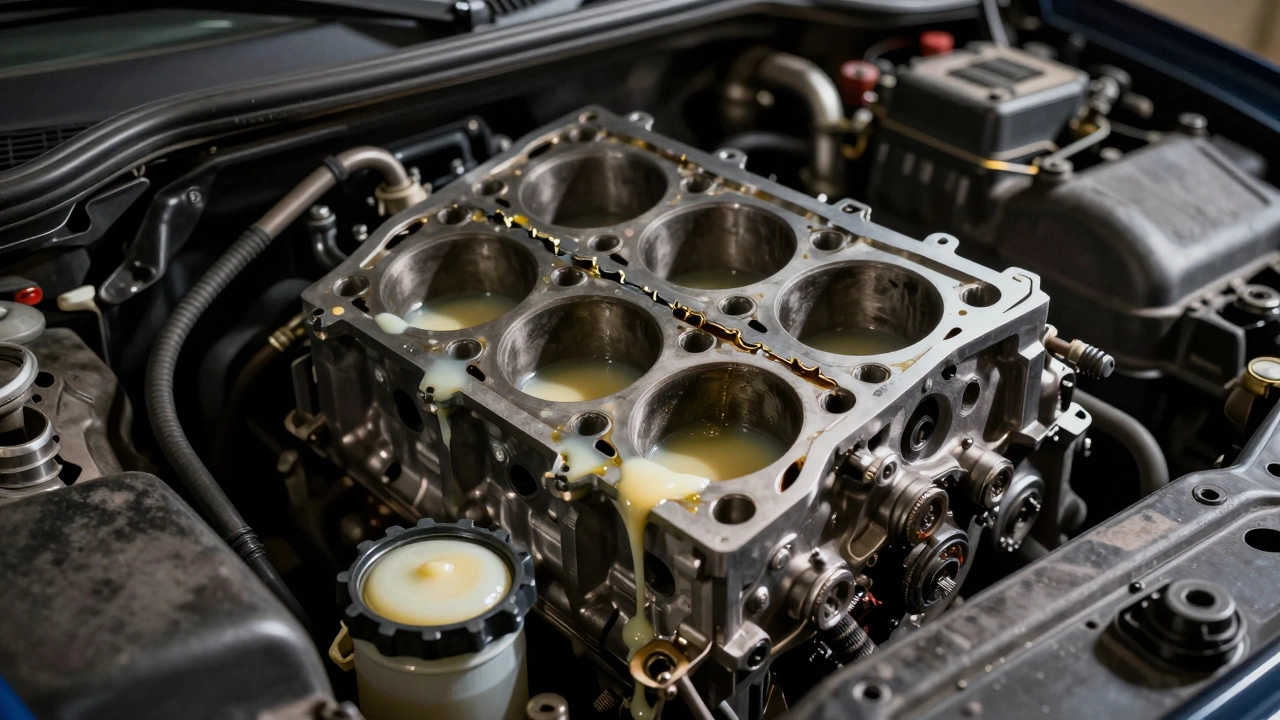
Take off your oil cap. Look at the underside. If you see a thick, creamy, light brown or white substance that looks like peanut butter or mayonnaise, you’ve got coolant in your oil. This happens when the head gasket fails between the oil passages and the coolant passages. The two fluids mix, and the result is a gunky mess that doesn’t lubricate the engine properly. Running your engine like this for even a few days can cause bearing failure, piston scoring, or a seized crankshaft. This isn’t a warning-it’s an emergency. If you see this, don’t drive the car any further than you have to.
Bubbles in the Radiator or Coolant Reservoir
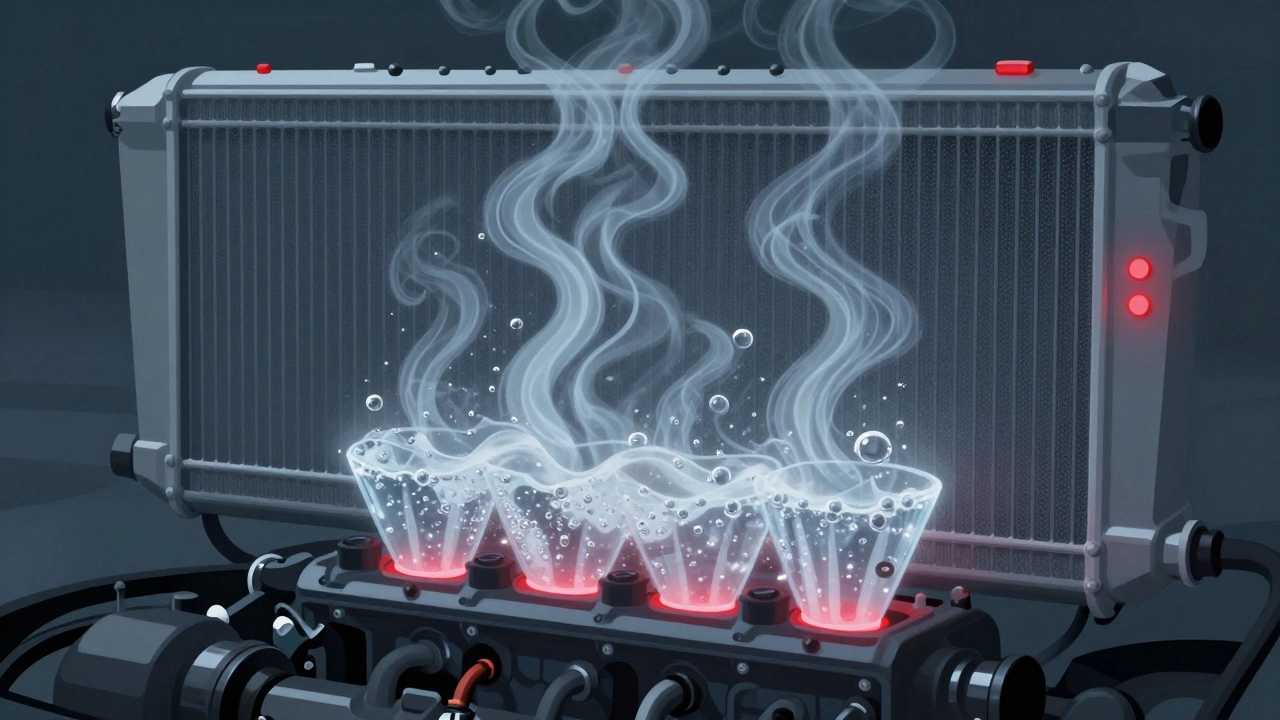
With the engine cold, remove the radiator cap (or reservoir cap if it’s pressurized). Start the engine. Watch the coolant. If you see constant bubbles rising up-like a fizzy drink-you’ve got combustion gases leaking into the cooling system. That’s the head gasket letting exhaust gases escape into the coolant. A healthy system stays calm. No bubbles. No fizzing. Just steady heat transfer. If you’re seeing bubbles, the seal between the cylinder and the coolant jacket is broken. This is one of the most reliable DIY tests you can do without special tools.
Loss of Power or Rough Idle
When a head gasket blows between two cylinders, compression leaks from one into the other. That means one cylinder isn’t firing properly. The engine misfires. It runs rough at idle. You might feel a hesitation when accelerating. It’s not a spark plug issue. It’s not a fuel injector problem. It’s a loss of compression because the head gasket can’t hold the pressure anymore. In some cases, you’ll hear a popping sound from the intake or exhaust. That’s air being sucked in or blown out through the damaged seal. A compression test will confirm it, but if your car suddenly feels lazy and sluggish, and you’ve ruled out the basics, the head gasket is the likely culprit.
Why This Happens
Head gaskets don’t just fail for no reason. They’re designed to last the life of the engine-but only if the engine runs cool. Overheating is the #1 killer. A single episode of severe overheating can warp the cylinder head, crushing the gasket. Poor maintenance-like letting coolant get old or dirty-leads to corrosion and hot spots. Low coolant levels expose parts of the gasket to extreme heat. Even using the wrong coolant type can break down the gasket material over time. Older cars with high mileage are more prone, but even newer models can fail if they’ve been abused.
What to Do Next
If you’re seeing two or more of these signs, don’t wait. Don’t keep topping up coolant. Don’t assume it’s a leaky hose. A blown head gasket won’t fix itself. It will only get worse. The longer you drive with it, the more damage you do to the engine block, cylinder head, or even the catalytic converter. Get the car checked by a mechanic who can do a block test-a chemical test that detects exhaust gases in the coolant. Or ask for a compression test. Both are cheap compared to replacing a ruined engine.
If you’re considering a repair, know this: replacing a head gasket isn’t a quick job. It takes 8-12 hours of labor. The gasket itself costs £50-£150. But the labor? £600-£1,200. That’s because the engine has to be partially disassembled. Sometimes the cylinder head needs resurfacing or replacing. If the block is warped or cracked, you’re looking at a full engine rebuild. That’s why catching it early matters. The sooner you act, the less it costs.
Can You Drive With a Blown Head Gasket?
Technically, yes. But you shouldn’t. Some people limp along for weeks, adding coolant every day. That’s a gamble. You’re risking catastrophic engine failure. The coolant mixing with oil can destroy bearings. The overheating can warp the head. The combustion gases can crack the block. In cold weather, like a Bristol winter, a seized engine means you’re stuck. And if your car dies on the motorway, you’re not just out a vehicle-you’re out of pocket for a tow, a rental, and possibly a new engine. It’s not worth the risk.
Prevention Is Simple
Keep your coolant fresh. Change it every 3-5 years, or as the manual says. Check the level monthly. Don’t ignore warning lights. If the temperature gauge creeps up, pull over and turn off the engine. Let it cool. Don’t open the radiator cap hot. And if you’ve ever had an overheating episode, get the head gasket checked-even if the car seems fine now. A small leak today becomes a big failure tomorrow.
Can a head gasket leak without overheating?
Yes, but it’s rare. A head gasket can fail slowly between the coolant and oil passages without causing immediate overheating. You might only see milky oil or coolant loss before the engine starts running hot. But if coolant is leaking into the combustion chamber, overheating will follow soon after. Early-stage leaks often show up as oil contamination or bubbles in the coolant before the temperature gauge reacts.
How much does it cost to fix a blown head gasket?
In the UK, expect £800-£1,800 total. The gasket itself costs £50-£150. Labor is the big part-£600-£1,200-because the engine has to be taken apart. If the cylinder head is warped, it needs resurfacing (£150-£300). If the block is cracked or the engine is damaged, you could be looking at £2,500+ for a rebuild or replacement. The sooner you act, the lower the cost.
Can you use a head gasket sealer instead of a repair?
Sealers like K-Seal or Blue Devil can work for tiny leaks, especially if the engine hasn’t overheated badly. But they’re a temporary fix at best. If the gasket is truly blown-meaning large sections are gone-sealers won’t hold. They can clog your radiator or heater core. They’re not a substitute for a proper repair. Use them only as a stopgap to get to a mechanic, not as a long-term solution.
Is it worth fixing a head gasket on an old car?
It depends. If the car is in good condition otherwise-solid body, good suspension, low mileage for its age-then yes. A £1,000 repair on a £2,000 car is still better than replacing it. But if the car has other major issues (transmission problems, rust, high mileage), it might be more economical to sell it for parts or scrap. Get a mechanic to assess the whole vehicle before deciding.
How long does a head gasket last?
Most modern head gaskets are designed to last 150,000-200,000 miles. But that’s only if the engine is maintained properly. Overheating, poor coolant quality, or running low on fluid can cut that lifespan in half. Cars that have had one overheating event are far more likely to fail early. Regular coolant changes and temperature monitoring are the best ways to make it last.
Final Thought
A blown head gasket isn’t a mystery. It’s a consequence. It’s what happens when you ignore the small signs-overheating, strange smells, coolant loss-because you think it’ll fix itself. The truth is, it won’t. The longer you wait, the more expensive it gets. And the more dangerous it becomes. Pay attention to your car. Listen to it. Smell it. Watch the gauges. Those early signs are your only warning. Don’t wait for the engine to die before you act.