Air Filter Savings Calculator
A clogged air filter restricts airflow, forcing your engine to work harder and burn more fuel. Use this tool to estimate how much a dirty filter is costing you annually.
Your Driving Profile
Financial & Mechanical Impact
Avoidable Repair Risks
- MAF Sensor Replacement ~£150
- Catalytic Converter Damage ~£500+
- Engine Rebuild Risk ~£2000+
You’re cruising down the M4 outside Bristol, and suddenly your car feels sluggish. It’s not taking off like it used to. You check the oil, but that’s fine. The culprit? Likely a clogged air filter a component designed to clean incoming air before it enters the engine's combustion chamber. Most drivers ignore this part until something breaks, but skipping its replacement triggers a chain reaction of costly problems.
| System Affected | Immediate Symptom | Long-Term Damage |
|---|---|---|
| Engine Combustion | Reduced acceleration | Cylinder wall scoring |
| Fuel System | Poor fuel economy | Sensor failure (MAF) |
| Emission Control | Check Engine Light | Catalytic converter damage |
The Immediate Hit on Performance
Your engine is basically a giant pump that needs air to burn fuel. When the air filter gets packed with dust, pollen, and road grit, it chokes the engine. Think of it like trying to breathe through a wet wool scarf while sprinting. You can do it, but you’re working much harder for less output. This restriction creates a vacuum in the intake manifold, forcing the engine to work overtime just to pull in enough oxygen.
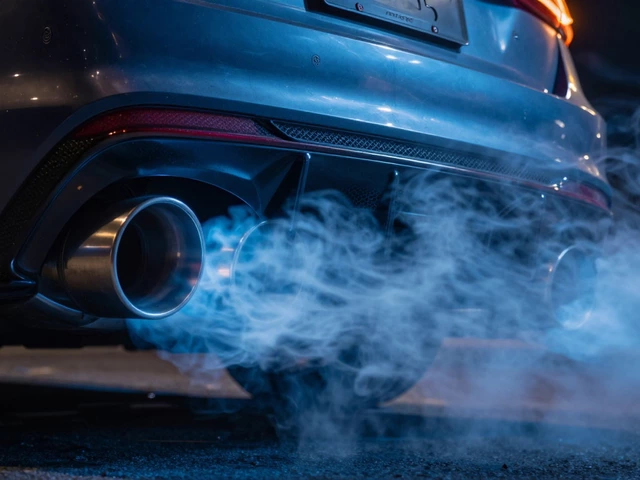
You’ll notice this first as a lack of power during overtaking or merging onto motorways. In older cars, you might see black smoke from the exhaust because the engine is running "rich"-too much fuel, not enough air. Modern cars with electronic fuel injection try to compensate by adjusting the mixture, but they have limits. Once those limits are hit, efficiency plummets. It’s not just about speed; it’s about responsiveness. A blocked filter makes the throttle feel dead and unresponsive.
Why Your Fuel Bill Spikes
Here is the math nobody tells you: restricted airflow means incomplete combustion. Unburnt fuel doesn’t just disappear; it either exits as pollution or fouls your spark plugs. To maintain the same speed, your engine computer often injects more fuel to keep the car moving, directly impacting miles per gallon. Tests by automotive research groups consistently show that replacing a severely clogged filter can improve acceleration time by up to 11% and fuel economy by 6-14%, depending on the vehicle type.
If you drive a diesel, which is common here in the UK, the effects can be even more pronounced. Diesel engines rely heavily on precise air-to-fuel ratios for efficiency. A dirty filter disrupts this balance, leading to higher consumption and increased particulate matter production. Over a year, driving 10,000 miles, that extra fuel cost adds up significantly. It’s cheaper to change a £15 filter than to pay an extra £100 at the pump annually.

Invisible Damage: The Sensor Trap
This is where things get expensive. Many modern vehicles use a Mass Air Flow (MAF) sensor an electronic device that measures the mass flow rate of air entering a fuel-injected internal combustion engine. This delicate wire sits right after the air filter housing. If your filter is old or damaged, debris can bypass it and coat the MAF sensor. Unlike a simple mechanical blockage, a dirty sensor sends incorrect data to the ECU (Engine Control Unit).
The ECU trusts this data blindly. If the sensor says there’s less air than there actually is, the ECU reduces fuel injection, causing lean conditions. Or, if it reads too high, it floods the engine. Replacing a MAF sensor costs between £80 and £200, plus labour. All because someone skipped a £10 air filter change. Regular inspection prevents this domino effect. Always check the condition of the sensor when you replace the filter.
Internal Engine Wear and Tear
Air filters aren’t just for keeping dirt out of the intake; they protect the internal components of the engine itself. As the filter media degrades, tiny particles can slip through into the cylinders. These abrasive particles act like sandpaper on critical surfaces:
- Piston Rings: Scratches lead to poor compression and oil burning.
- Cylinder Walls: Scoring causes permanent loss of seal integrity.
- Turbochargers: For turbocharged engines, debris can damage the turbine blades, leading to catastrophic failure.
Once cylinder walls are scored, no amount of new oil will fix the problem. You’re looking at an engine rebuild or replacement, costing thousands. This is particularly risky in dusty environments or if you frequently drive on unpaved roads. Even in city driving, brake dust and industrial fallout accumulate rapidly. The filter has a finite capacity; once it’s saturated, it stops filtering effectively and starts leaking contaminants.

Emissions and Legal Compliance
In the UK, MOT tests check for emissions compliance. A poorly maintained air filter contributes to higher levels of hydrocarbons (HC) and carbon monoxide (CO). While a slightly dirty filter might pass, a severely neglected one can cause the car to fail due to excessive smoke or irregular idle readings. Furthermore, prolonged rich running damages the catalytic converter an emission control device that converts harmful pollutants into less toxic gases.
Unburnt fuel entering the hot catalytic converter can overheat it, melting the internal honeycomb structure. Replacing a catalytic converter is one of the most expensive repairs on any modern car, often exceeding £500. By changing your air filter regularly, you protect this vital component and ensure your car stays legal for the road. It’s a small preventive measure against a major financial headache.
How Often Should You Actually Change It?
Manufacturer recommendations vary, but a general rule of thumb is every 12,000 to 15,000 miles or once a year, whichever comes first. However, this depends heavily on your driving conditions. If you live in a city with heavy traffic pollution or drive in rural areas with dry, dusty fields, you need to check it more often.
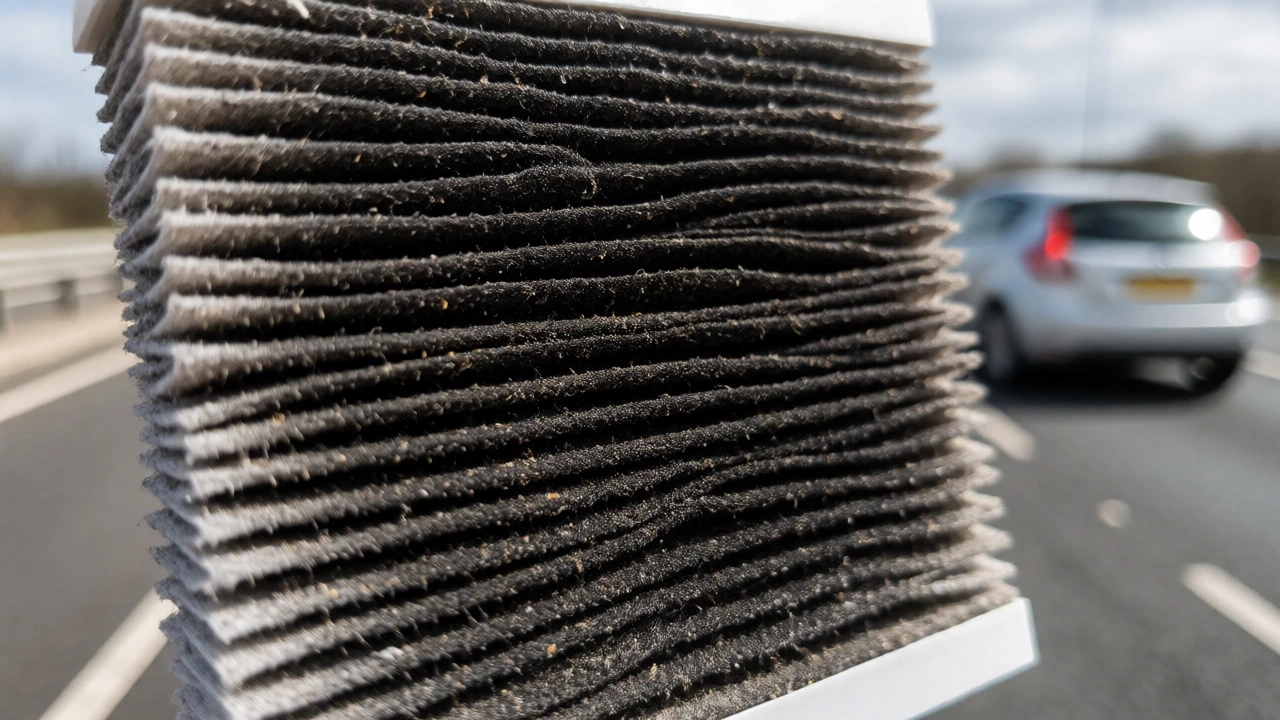
Don’t just trust the mileage counter. Open the bonnet and look. Hold the filter up to a bright light. If you can’t see light passing through the paper element, it’s done. Visual inspection is far more accurate than blind replacement schedules. Some high-performance filters are washable and reusable, extending their life, but standard paper filters are single-use. Check your owner’s manual to confirm which type your car uses.
Can I drive with a completely missing air filter?
Yes, you can physically drive, but it is highly inadvisable. Without a filter, large debris like leaves, insects, and gravel can enter the engine, causing immediate and severe damage to pistons and valves. Additionally, the engine may run poorly due to unmetered air affecting the air-fuel ratio sensors.
Does a dirty air filter affect AC cooling?
No, the engine air filter does not affect the cabin air conditioning system. The AC has its own separate cabin air filter located behind the glovebox. However, both should be replaced regularly for optimal performance and comfort.
How do I know if my air filter is dirty without opening the bonnet?
Look for signs like reduced acceleration, unusual engine noises (whistling or popping), decreased fuel efficiency, and a check engine light. Black smoke from the exhaust in petrol cars is also a strong indicator of a rich mixture caused by restricted airflow.
Is it safe to blow out a dirty air filter with compressed air?
You can temporarily extend the life of a moderately dirty paper filter by gently blowing compressed air from the inside out. However, this cannot remove embedded fine particles and may damage the paper fibers if the pressure is too high. It is not a substitute for replacement.
What happens if I install the air filter backwards?
Most filters are directional. Installing it backwards can reduce filtration efficiency and allow dirt to bypass the media. It may also cause the filter to collapse under suction, allowing large debris into the engine. Always check the arrows on the filter frame indicating airflow direction.