Exhaust Size Calculator for 200 HP Engines
Select your engine configuration and primary goal to find the recommended exhaust pipe diameter.
Configure settings to see results
Why This Matters
For a 200 HP engine, going too big kills low-end torque due to reduced gas velocity (scavenging loss). Going too small creates excessive back pressure, choking top-end power. Turbo engines can tolerate slightly larger pipes (up to 3") because they force more air volume, but always prioritize downpipe upgrades first. Naturally Aspirated engines usually stick to 2.25"-2.5".
You’ve just tweaked your engine. Maybe you added a cold air intake, remapped the ECU, or swapped in a higher-flow catalytic converter. Now you’re staring at a pile of stainless steel pipes, wondering which one to buy. It’s a common headache: go too small, and you choke your power gains; go too big, and you lose low-end torque, making your car feel sluggish around town. So, what size exhaust do you actually need for a 200 horsepower engine?
The short answer isn’t a single number. It depends on whether you want maximum top-end speed or daily drivability. But there is a sweet spot. For most naturally aspirated engines producing around 200 hp, a 2.5-inch (63mm) system is the gold standard. If you’re running forced induction-like a turbo or supercharger-that same 200 hp might be better served by a 3-inch system because turbos generate more exhaust volume. Let’s break down why this matters and how to pick the right pipe so you don’t waste money.
The Physics: Why Pipe Diameter Changes Power
Think of your exhaust system like a straw. If you try to drink a thick milkshake through a tiny coffee stirrer, it takes forever. That’s high back pressure the resistance to gas flow within the exhaust system. Engines need to expel burnt gases quickly so they can suck in fresh air and fuel. If the exhaust can’t get out fast enough, the engine has to work harder to push it out, stealing power from your wheels.
But here’s the catch: you can’t have zero back pressure. You actually need some resistance to keep the exhaust gases moving fast. This velocity helps scavenge the next cylinder’s exhaust pulse. If the pipe is too wide, the gases slow down, cool off, and linger. This kills low-RPM torque, which is exactly where you spend 90% of your driving time. A 200 hp engine is modest. It doesn’t produce the massive volume of gases that a 400 hp V8 does. Oversizing the exhaust is a classic mistake that turns a peppy hatchback into a gutless commuter car below 3,000 RPM.
Naturally Aspirated vs. Turbocharged: The Critical Difference
Not all 200 hp engines are created equal. The method used to make that power dictates the exhaust requirements significantly.
If you have a naturally aspirated an internal combustion engine that draws its intake air solely from the surrounding atmosphere 2.0-liter or 1.6-liter engine, it relies on atmospheric pressure to fill the cylinders. These engines move less air per second than forced induction setups. For these cars, sticking to 2.25 inches or 2.5 inches is usually best. Going larger than 2.5 inches often results in a noticeable dip in acceleration when you’re not flooring the throttle.
Now, consider a turbocharged 1.4-liter or 2.0-liter engine making 200 hp. The turbo forces extra air into the engine, creating denser exhaust pulses and higher volumes. Turbos also benefit from lower back pressure to spin up faster (reduce lag). In this scenario, a 2.5-inch system is still safe, but a 3-inch system might unlock better mid-range response without hurting daily driveability as much as it would on a non-turbo car. However, if you go to 3.5 inches on a 200 hp turbo, you’ll likely hear a drone and feel a lack of punch off the line.
The Ideal Exhaust Sizes for 200 HP Engines
To make this practical, let’s look at specific recommendations based on engine type and usage. Remember, consistency matters. Don’t mix sizes arbitrarily. Use reducers only where necessary for fitment.
| Engine Type | Primary Goal | Recommended Pipe Size | Expected Outcome |
|---|---|---|---|
| Naturally Aspirated (NA) | Daily Driving & Torque | 2.25" - 2.5" (57-63mm) | Strong low-end pull, minimal drone. |
| Naturally Aspirated (NA) | Track / High RPM | 2.5" (63mm) | Slight top-end gain, slight low-end loss. |
| Turbocharged | Balanced Street Use | 2.5" (63mm) | Good spool, good cruise manners. |
| Turbocharged | Max Flow / Lag Reduction | 3.0" (76mm) | Faster spool, potential low-end dip. |
| Diesel | Torque Focus | 2.5" - 3.0" (63-76mm) | Diesels tolerate larger pipes better due to torque curve. |
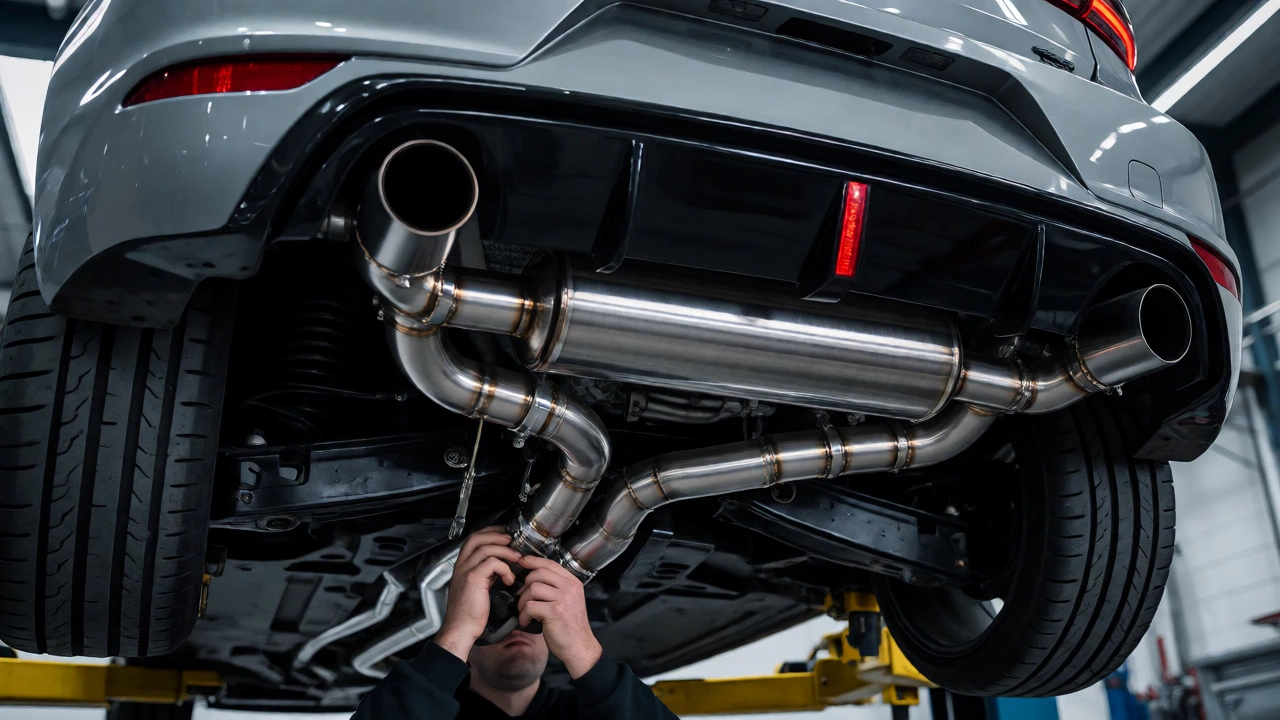
Mufflers and Resonators: More Than Just Noise
Pipe size is half the battle. The other half is what happens inside the muffler. Many people buy a straight-piped system thinking it frees up power, but a poorly designed muffler can create turbulent flow that hurts performance more than a restrictive pipe.
For a 200 hp car, you generally want a straight-through a type of muffler design that allows exhaust gases to pass directly through with minimal obstruction or a chambered muffler. Avoid large, bulky glasspacks unless you enjoy the sound; they add weight and can restrict flow if the internal core is too dense. A resonator placed before the main muffler can help cancel out cabin drone without adding significant restriction. This is crucial for keeping the car comfortable while maintaining that sporty exhaust note.
If you are modifying an older car, check the condition of your existing flex joints. A cracked flex joint can leak exhaust gases before they even reach the cat-back section, messing up your oxygen sensor readings and throwing off your engine management system. Always replace worn flex joints when installing a new exhaust.
Cat-Back vs. Full System: What Do You Actually Need?
Most enthusiasts start with a "cat-back" exhaust. This replaces everything from the rear of the catalytic converter to the tailpipes. It’s cheaper and easier to install. For a 200 hp engine, a well-designed cat-back system with 2.5-inch piping will typically yield 5-10 horsepower if combined with an ECU tune. Without a tune, you might see little change, or even a slight loss, because the factory ECU may not adjust fuel trims correctly for the new flow characteristics.
A full system includes headers (or manifolds), the catalytic converter, and the exhaust. If your current catalytic converter is clogged or inefficient, upgrading the whole system makes sense. However, swapping the catalytic converter requires attention to emissions laws, especially in the UK where MOT testing is strict. Ensure any new catalyst is compliant with Euro standards if you plan to keep the car street-legal long-term.

Common Pitfalls to Avoid
Buying the wrong size is frustrating, but there are other mistakes that cost money and time.
- Ignoring the Downpipe: On turbo cars, the downpipe is the biggest bottleneck. Upgrading the cat-back to 3 inches while leaving a restrictive stock downpipe is like widening the highway but keeping the on-ramp narrow. Spend your budget on the downpipe first.
- Inconsistent Pipe Sizes: Using a reducer to go from 2.5 inches to 2.25 inches and then back to 2.5 inches creates turbulence. Keep the diameter consistent throughout the cat-back section if possible.
- Skipping the Tune: Modern engines rely heavily on sensors. Changing exhaust flow changes oxygen levels. A custom tune ensures the engine runs optimally with the new hardware.
- Material Matters: Mild steel rusts. Stainless steel (T304 grade) lasts longer and looks better. Aluminum aluminized steel is a middle ground but corrodes faster than stainless. For a Bristol winter, invest in quality stainless.
How to Measure Your Current Setup
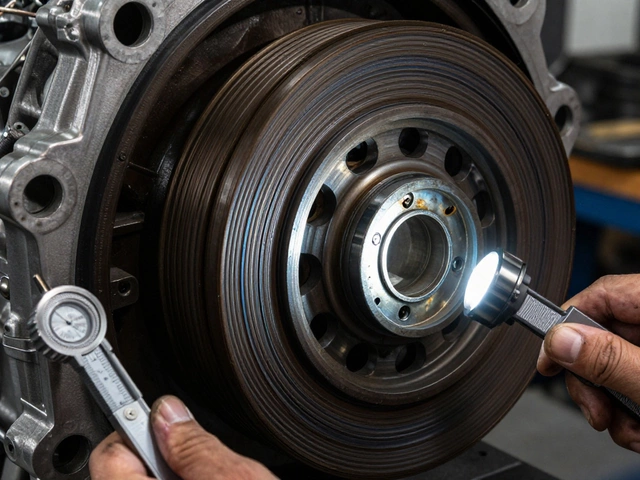
Before buying anything, measure what you have. Sometimes, factory systems are already close to optimal. Use calipers to measure the outer diameter (OD) of your current pipes. Subtract the wall thickness (usually 1-2mm) to find the inner diameter (ID). Most aftermarket parts are sold by ID, but some list OD. Confirm with the manufacturer.
If your current system is 2.0 inches and feels restrictive at high RPM, moving to 2.25 inches is a safe step up. If you’re already at 2.5 inches, going to 3.0 inches is unlikely to help a 200 hp NA engine and might hurt it. Listen to your car. Does it sound raspy or hollow? That could indicate a leak or a mismatch in resonance frequencies between the pipe length and diameter.
Final Verdict
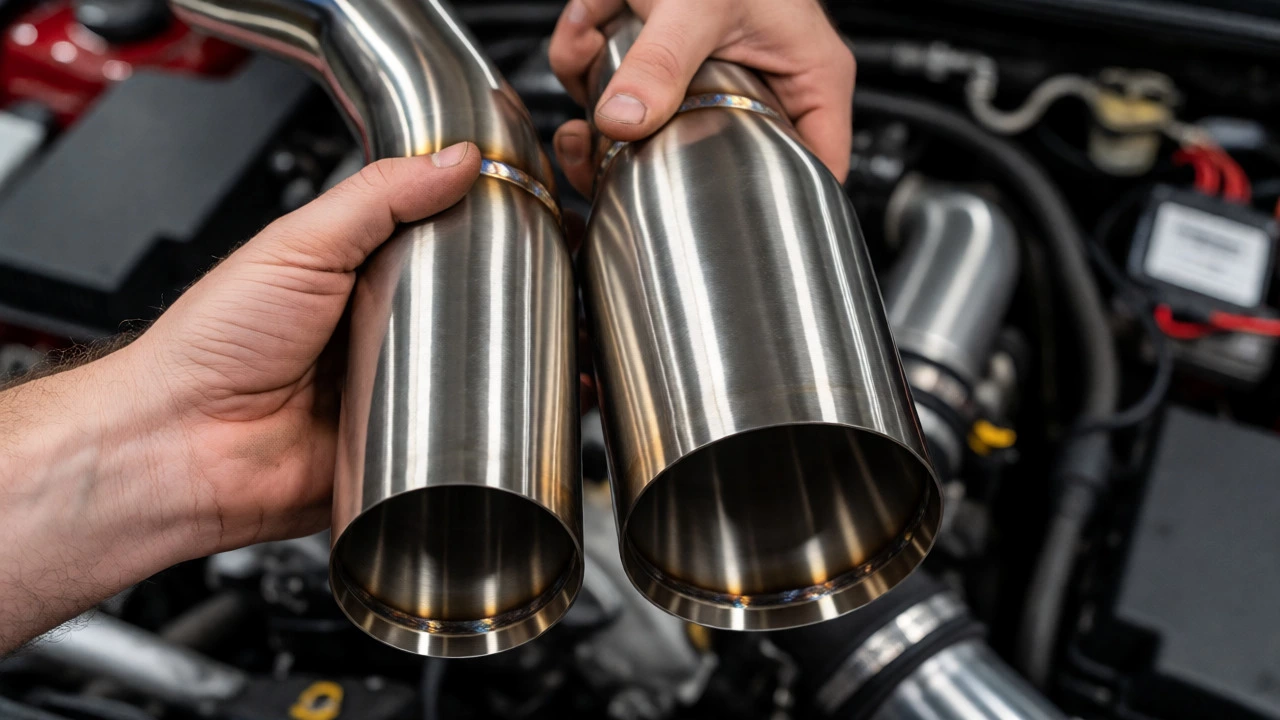
For the vast majority of 200 hp engines, a 2.5-inch exhaust system an exhaust configuration with a nominal pipe diameter of 2.5 inches, balancing flow and velocity offers the best compromise between performance, sound, and cost. It provides enough flow to support peak power without sacrificing the low-end torque needed for real-world driving. Turbocharged vehicles can cautiously experiment with 3-inch systems, but should prioritize downpipe upgrades first.
Remember, exhaust sizing is part of a broader tuning strategy. Pair your new pipes with a proper ECU remap, and you’ll extract every bit of power from your modifications. Don’t chase numbers on a dyno sheet if it ruins the fun of driving your car.
Does a bigger exhaust always mean more power?
No. If the exhaust is too large for the engine's displacement and airflow capacity, exhaust gas velocity drops. This reduces scavenging efficiency, leading to a loss of low-to-mid range torque. Power may increase slightly at high RPM, but overall drivability suffers.
Will a 3-inch exhaust hurt my 200 hp car?
It likely won't damage the engine, but it will probably make the car feel slower in everyday driving scenarios. You may experience a flat spot in the rev range and increased cabin drone. For a 200 hp engine, 3 inches is generally considered oversized unless it is a highly tuned turbo setup.
Do I need a tune after changing the exhaust size?
Ideally, yes. While a simple cat-back swap might run okay without a tune, the engine's oxygen sensors will detect changes in exhaust flow. A custom tune adjusts fuel maps and ignition timing to match the new flow characteristics, ensuring optimal performance and preventing lean conditions.
Is stainless steel worth the extra cost over mild steel?
Yes, especially in the UK. Mild steel exhausts rust quickly due to road salt and moisture. T304 stainless steel resists corrosion, maintains structural integrity longer, and keeps the car looking good. Over a 5-10 year ownership period, stainless is often cheaper than replacing rusted mild steel systems multiple times.
Can I mix different pipe diameters in my exhaust?
You can, but it's not ideal. Reducers and expanders create turbulence, which disrupts smooth gas flow. Try to keep the diameter consistent through the cat-back section. If you must reduce, place the reducer near the end of the section rather than in the middle to minimize disruption to gas velocity.