
Straight Pipe Modification Risk Analyzer
Evaluate the legal, mechanical, and financial risks of straight piping your vehicle based on UK regulations.
Analysis Results
There is a specific sound that every car enthusiast knows well. It is the deep, aggressive roar of an engine with no muffler. For some, it sounds like freedom. For everyone else within a two-mile radius, it sounds like a violation of their peace and quiet. If you have ever considered swapping your factory exhaust for a straight pipe, you are likely chasing that raw power and sound. But before you pick up a wrench, you need to understand why this modification is banned in most places, including the United Kingdom.
Removing your catalytic converter and muffler isn't just about making noise. It breaks federal and local environmental laws, fails safety inspections, and can actually hurt your engine's performance in ways you might not expect. This guide explains the legal, mechanical, and practical reasons why straight piping your car is a bad idea.
The Legal Reality: Why It Is Banned
In the United Kingdom, modifying your exhaust system to increase noise or emissions is strictly regulated. The primary law governing this is the Road Vehicles (Construction and Use) Regulations 1986. Under these regulations, any vehicle must be equipped with an efficient silencing device. A straight pipe, by definition, has no silencing device. Therefore, it is illegal from the moment you install it.
But the law goes deeper than just noise. When you straight pipe a car, you almost always remove the catalytic converter. This component is designed to reduce harmful pollutants in the exhaust gases. Removing it violates the Environmental Protection Act 1990. In the eyes of the law, you are tampering with pollution control equipment. This makes your vehicle non-compliant with type-approval standards set by the manufacturer.
If you are caught driving a straight-piped car, the consequences are real. Police officers can issue a Fixed Penalty Notice for excessive noise. More seriously, they can mark your vehicle as having a dangerous defect. This means your car will fail its next MOT test immediately, and you may be prohibited from driving it until it is repaired. In severe cases, repeated offenses can lead to court appearances and significant fines.
The MOT Test: The Hard Stop
For many UK drivers, the annual MOT test is the ultimate gatekeeper. Since 2018, MOT testers have been required to check vehicles against their original type-approval specifications. This means if your car left the factory with a catalytic converter, it must still have one during the test. A straight pipe setup will fail on multiple counts:
- Noise Level: Testers use decibel meters to ensure your exhaust does not exceed the manufacturer's specified limits. A straight pipe will consistently register far above these limits.
- Emissions: Without a catalytic converter, your exhaust will emit higher levels of carbon monoxide, hydrocarbons, and nitrogen oxides. These readings will flag the vehicle as defective.
- Physical Inspection: Testers visually inspect the exhaust system. They look for missing components, such as the catalytic converter housing. If it is gone, the test ends there.
You cannot "beat" the MOT with a straight pipe. There is no workaround. To pass, you must reinstall a compliant exhaust system that includes all original emission control devices.
Environmental Impact: More Than Just Noise
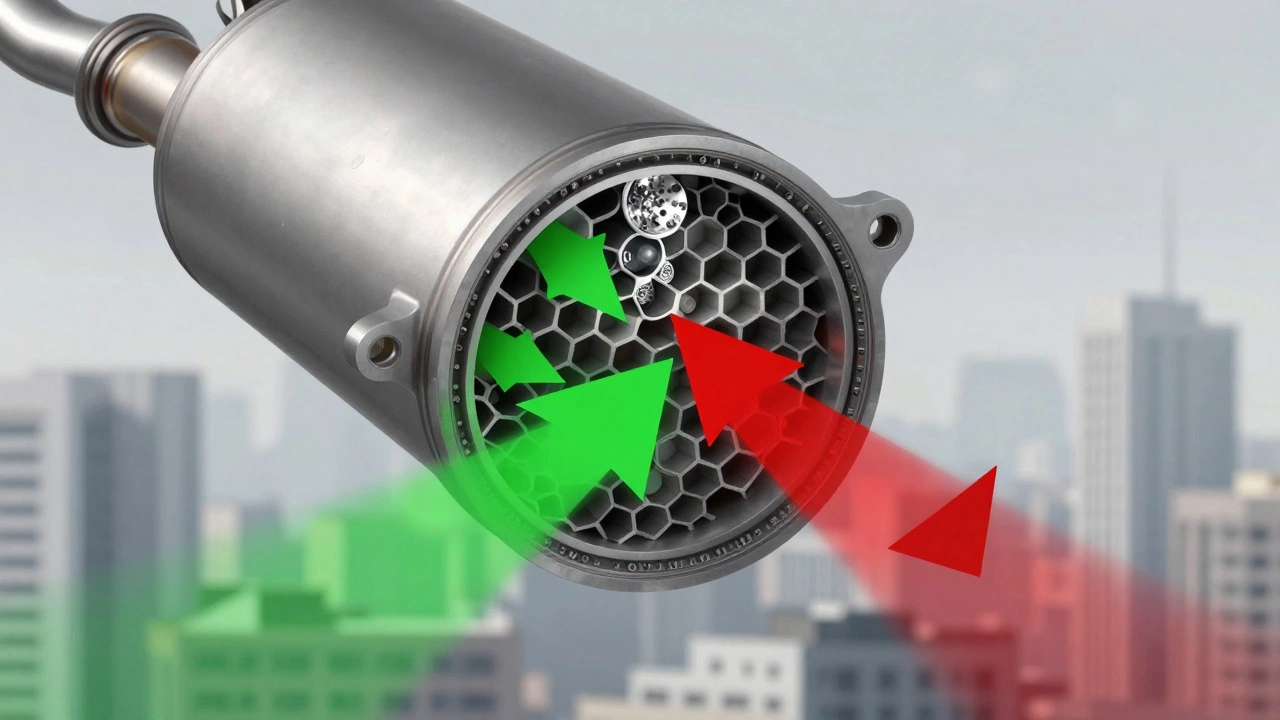
The ban on straight pipes is not just about annoyance; it is about public health. Modern cars produce exhaust gases that contain toxic substances. The catalytic converter uses precious metals like platinum, palladium, and rhodium to convert these toxins into less harmful substances like carbon dioxide, water vapor, and nitrogen.
When you remove this converter, you release unburned hydrocarbons and carbon monoxide directly into the atmosphere. Carbon monoxide is odorless and colorless but can be deadly at high concentrations. Hydrocarbons contribute to smog and respiratory problems. By straight piping your car, you are increasing your personal contribution to urban air pollution. In cities like Bristol, where air quality is already a concern, this impact is magnified.
Furthermore, modern engines are calibrated to work with the backpressure created by the exhaust system. Removing the muffler and converter disrupts this balance, often leading to incomplete combustion. This means more fuel is wasted, and more pollutants are produced per mile driven.
Mechanical Risks: Does It Actually Help Performance?
A common myth is that straight piping a car increases horsepower significantly. While removing restrictions can improve airflow, the reality is more complex. Most modern engines are tuned to operate with a certain amount of backpressure. This backpressure helps maintain scavenging efficiency, which pulls exhaust gases out of the cylinders effectively.
Without proper tuning, a straight pipe can actually reduce low-end torque. You might feel a slight increase in top-end power, but you will lose responsiveness in everyday driving situations, such as overtaking or accelerating from a stop. Additionally, the lack of a muffler allows heat to radiate back toward the engine bay. This can raise under-hood temperatures, potentially damaging sensitive electronics or hoses over time.
Another issue is oil contamination. In some engine designs, crankcase ventilation systems rely on exhaust pressure to function correctly. Altering this pressure can cause oil vapors to enter the intake system, leading to sludge buildup and reduced engine life.
| Feature | Stock Exhaust | Straight Pipe |
|---|---|---|
| Legality (UK) | Legal | Illegal |
| MOT Compliance | Passes | Fails |
| Noise Level | Low/Moderate | Very High |
| Emissions Control | Full (Catalytic Converter) | None |
| Engine Tuning | Optimized | Requires Remap |
| Cost | High (Replacement) | Low (Installation) |

Better Alternatives for Enthusiasts
If you want a deeper sound and slightly better performance without breaking the law, there are legal options. Many aftermarket companies offer sport exhaust systems that are designed to meet regulatory standards while improving flow and acoustics.
These systems often include larger diameter pipes and less restrictive mufflers, but they retain the catalytic converter and use resonators to manage noise levels. Some even come with MOT certificates, guaranteeing compliance. Another option is a remapped engine management system. This software update can optimize fuel delivery and ignition timing, providing noticeable gains in power and throttle response without any physical modifications to the exhaust.
Remember, the goal is to enhance your driving experience, not to create legal headaches. Investing in a high-quality, compliant exhaust system ensures you get the sound you want while keeping your car road-legal and environmentally responsible.
Conclusion
Straight piping your car might seem like an easy way to get more power and attention, but the risks far outweigh the benefits. It is illegal, fails MOT tests, harms the environment, and can damage your engine. Instead, explore legal alternatives that offer performance gains without compromising compliance. Your wallet, your neighbors, and the planet will thank you.
Is it illegal to straight pipe a car in the UK?
Yes, it is illegal. The Road Vehicles (Construction and Use) Regulations 1986 require all vehicles to have an efficient silencing device. Additionally, removing the catalytic converter violates the Environmental Protection Act 1990. Driving a straight-piped car can result in fines and MOT failure.
Will a straight pipe help my car pass the MOT?
No, a straight pipe will cause your car to fail the MOT. Testers check for the presence of a catalytic converter and measure noise levels. A straight pipe lacks both, resulting in immediate failure due to excessive noise and high emissions.
Does straight piping increase horsepower?
It may provide a slight increase in top-end power, but it often reduces low-end torque. Modern engines are tuned for specific backpressure. Without proper engine remapping, a straight pipe can lead to inefficient combustion and reduced overall performance.
What are the penalties for driving a straight-piped car?
Penalties can include Fixed Penalty Notices for noise violations, prohibition notices preventing you from driving the vehicle, and failing your MOT. Repeated offenses may lead to court appearances and higher fines.
Are there legal alternatives to straight piping?
Yes, you can install aftermarket sport exhaust systems that retain the catalytic converter and meet noise regulations. Engine remapping is another legal way to improve performance without modifying the exhaust hardware.