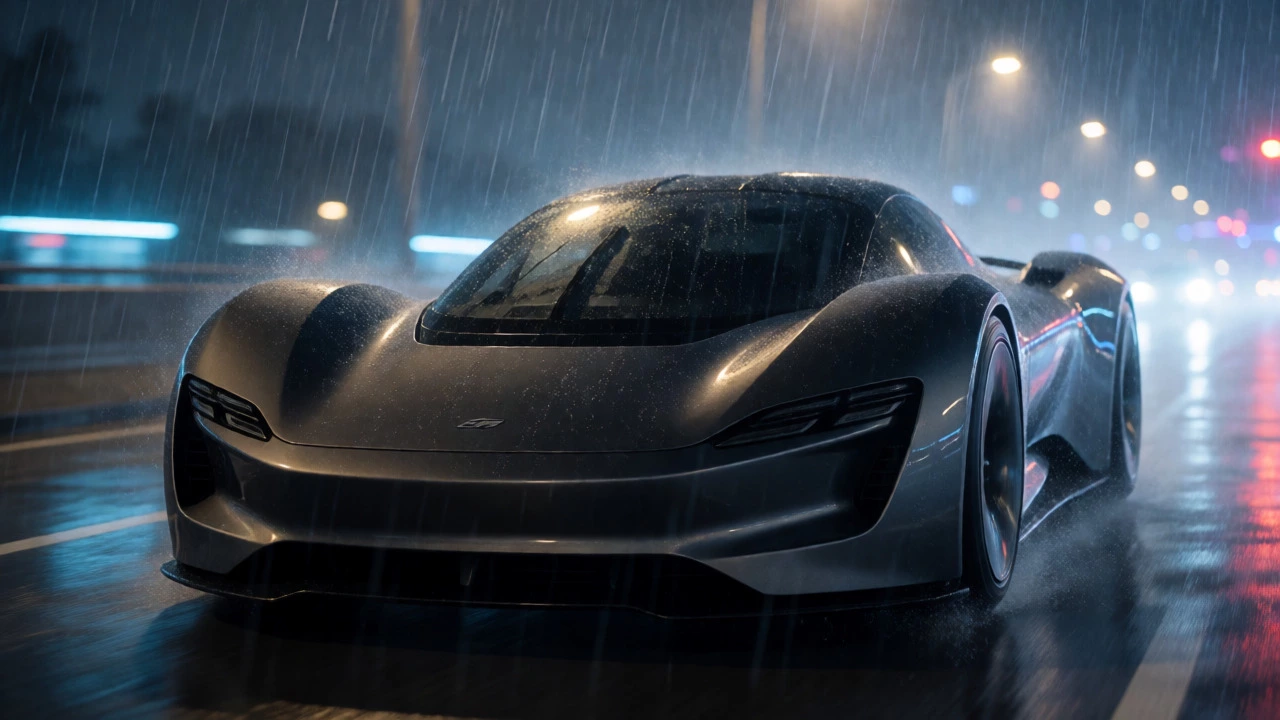
Windscreen Cleaning Tech Simulator
Discover which windscreen cleaning solution is optimal for your driving scenario. Adjust the sliders below to simulate real-world conditions.
Driving Conditions
Adjust settings and click analyze to see the recommended technology.
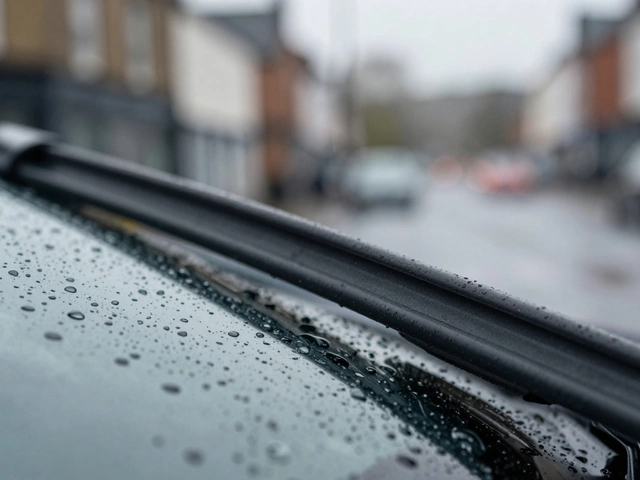
You are driving down the motorway in a heavy downpour. Rain hammers against your windscreen wipers and a system of arms and blades that clear rain, snow, and debris from the windshield to ensure visibility for the driver. You swipe them on, maybe turn on the headlamps, and keep going. It is such a mundane part of driving that we rarely think about it. But what if you looked at the next generation of concept cars or specific high-performance prototypes and noticed something missing? No rubber blades slapping against the glass. No motor humming under the hood. Why would engineers remove one of the most critical safety features from a vehicle?
The answer isn't that these cars ignore the rain. It's that they solve the problem of wet glass in completely different ways. From laser-based cleaning systems to hydrophobic coatings and radical aerodynamic shapes, the absence of traditional wipers signals a shift in how we view automotive design. Let's look at why some cars ditch the wiper arm entirely.
Aerodynamics and the Drag Coefficient
For most daily drivers, wind resistance is an afterthought. You might care about fuel economy, but you probably don't obsess over every millimeter of drag. For hypercars and electric vehicles (EVs) chasing maximum range or top speed, however, air resistance is the enemy. Traditional wipers create turbulence. When the wipers are parked, they sit in the airflow, creating noise and drag. When they move, they disrupt the smooth flow of air over the front of the car.
Consider the Tesla Model S Plaid or the Lucid Air. These cars are designed with incredibly low drag coefficients-some dipping below 0.20 Cd. To achieve this, designers often use flush-mounted cameras and sensors instead of protruding elements. While many current EVs still have wipers hidden under the bonnet lip, future concepts aim to eliminate them entirely. If you can stop water from sticking to the glass, you don't need to push it off. This saves energy, reduces wind noise, and cleans up the visual profile of the vehicle.
| Feature | Traditional Wipers | Laser Cleaning System | Hydrophobic Coating |
|---|---|---|---|
| Maintenance | High (blade replacement) | Low (no moving parts) | Medium (re-application needed) |
| Energy Use | Low-Medium (motor power) | Medium (laser pulse energy) | None |
| Visibility in Heavy Rain | Excellent | Good (experimental) | Poor (if overwhelmed) |
| Cost | Low | Very High | Low |
Laser Technology: The Audi Approach
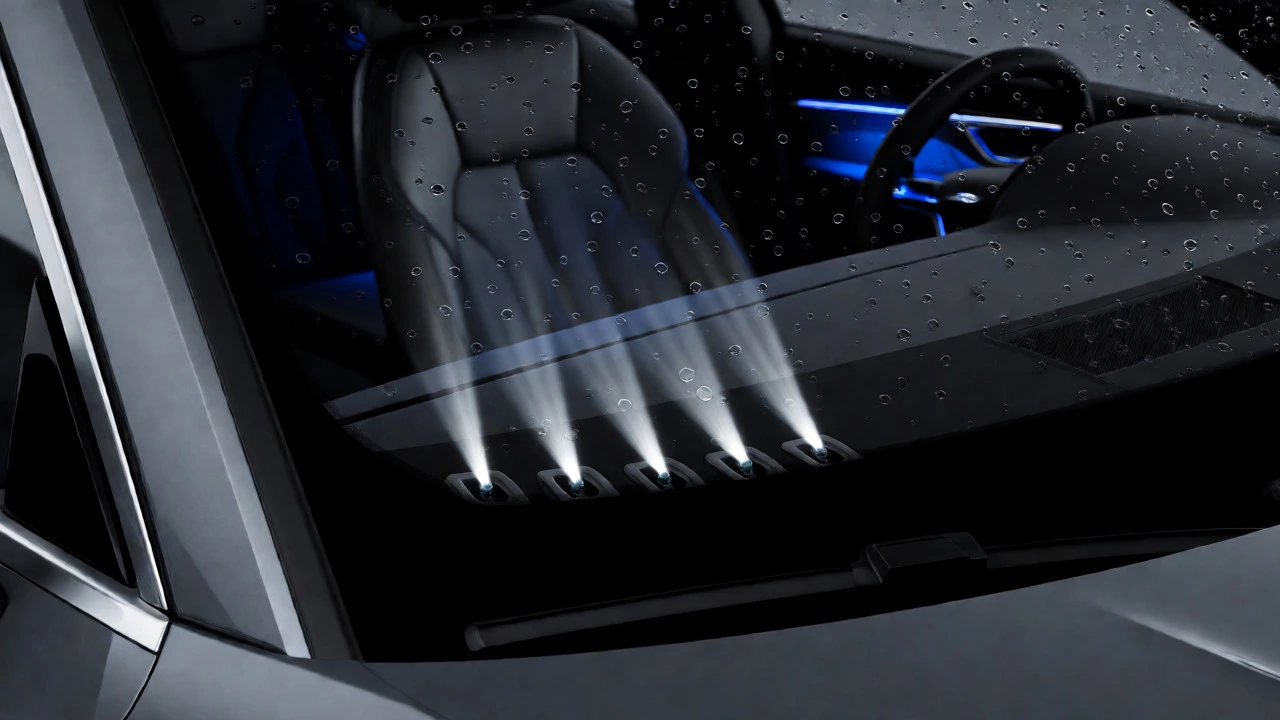
In 2023, Audi unveiled a technology that sounds like science fiction: laser-powered wiperless windscreens. Instead of mechanical arms, the system uses a series of lasers mounted near the base of the windscreen. These lasers fire pulses of light at the glass surface. When a water droplet absorbs the laser energy, it heats up instantly and vaporizes. The result? The water disappears into steam before it can obscure your view.
This system relies on LIDAR and optical sensors to detect when raindrops land on the glass. It’s precise, silent, and has no moving parts to wear out. However, it comes with caveats. First, it consumes significant battery power. Second, while it handles light rain beautifully, heavy storms might overwhelm the vaporization rate. Third, the cost is prohibitive for mass-market cars right now. But for luxury brands looking to differentiate their tech stack, it’s a compelling option. It also eliminates the risk of wipers freezing to the glass in winter-a nightmare for anyone who has lived through a Bristol frost.
Hydrophobic Coatings and Nano-Technology
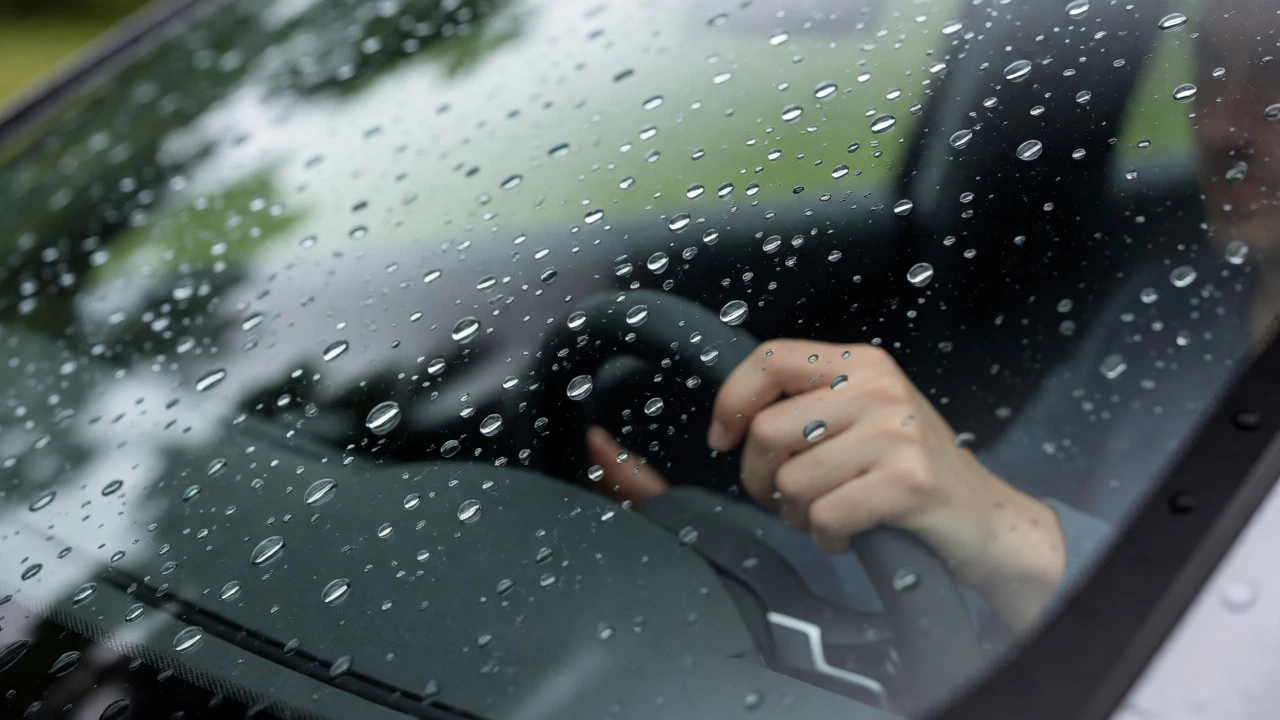
If lasers are too expensive, what about chemistry? Many modern cars come factory-treated with hydrophobic coatings. These are nano-scale layers applied to the windscreen that make water bead up rather than spread out. Because the water forms tight spheres, gravity does the work for you. As soon as the car starts moving, the wind shears the beads off the glass.
You’ve likely seen this in action. In a light drizzle, you don’t even need to touch the wiper stalk. The water just rolls away. Manufacturers like BMW and Mercedes offer these treatments as options or standard features on higher trims. The catch is durability. These coatings degrade over time due to UV exposure and abrasion from dirt. A typical coating lasts 6-12 months. Once it wears off, you’re back to needing wipers-or paying to re-coat the glass. It’s a maintenance trade-off: less hassle day-to-day, more periodic upkeep.
The Role of Autonomous Driving Sensors
Here is a controversial idea: do self-driving cars actually need windscreen wipers for the passengers? In fully autonomous scenarios, the primary user of the windscreen isn’t the human eye-it’s the camera and sensor suite. Companies like Waymo and Cruise rely on computer vision algorithms to interpret the road. These systems can be programmed to filter out rain artifacts digitally, much like noise cancellation in headphones.
However, redundancy is key in safety-critical systems. If the digital filters fail, humans still need to take over. That means visibility must remain physical. So, while a robotaxi might not *need* wipers for its AI brain, it needs them for the rare case where a human passenger needs to intervene. Until Level 5 autonomy is flawless and universally trusted, removing wipers entirely remains a risky bet for consumer vehicles. The law in the UK, governed by the MOT inspection standards, currently requires functional wipers for any car carrying passengers.
Design Purity and Concept Cars
Sometimes, the reason is purely aesthetic. Concept cars are meant to showcase vision, not practicality. Designers hate clutter. A black rubber blade resting against a sleek, curved piece of glass breaks the line. It looks cheap, utilitarian, and dated. By hiding the wipers or eliminating them in renderings, designers promise a cleaner, more futuristic silhouette.
Take the McLaren Speedtail, for example. Its teardrop shape is all about flowing lines. Protrusions are minimized. While production versions often compromise for legality and safety, the initial design intent was to reduce visual noise. If you can integrate the cleaning mechanism into the bodywork-perhaps using air jets from the bonnet vents-you maintain that pure shape. Air jets blow water off the glass, similar to how side mirrors on some trucks use compressed air to stay clean. It’s noisy, though, and requires a powerful compressor, which adds weight and complexity.
Practical Challenges: Ice, Snow, and Mud
Rain is easy. Snow and mud are hard. Laser systems struggle with ice because they heat the water, but if the temperature is well below freezing, the water turns to ice faster than it evaporates. Hydrophobic coatings lose effectiveness in slushy conditions because dirt fills the nano-pores. Mechanical wipers, despite their flaws, are robust. They scrape. They force contact. They work when physics fails.
This is why, even in 2026, no mainstream production car has completely abandoned mechanical wipers. The reliability factor is too high. Imagine being stuck in a snowstorm in the Scottish Highlands with a laser system that can’t melt ice fast enough. You’d be blind. Mechanical wipers are dumb, simple, and effective. Engineers know that sometimes, the simplest solution is the best one. That said, hybrid systems are emerging. Some cars use wipers only for heavy precipitation and rely on coatings for light rain, extending blade life and reducing noise.
What Does This Mean for Your Next Car?
If you are shopping for a new car today, you won’t find one without wipers unless it’s a very niche prototype. But you will see more advanced integration. Hidden wipers under the bonnet lip are becoming standard to improve aerodynamics. Heated windscreen threads are replacing the need for scraping ice, which indirectly supports the move toward fewer mechanical interventions.
Keep an eye on electric vehicles. As battery efficiency improves, the energy cost of running lasers or air jets becomes negligible. We might see the first mass-produced wiper-free car within the next decade, likely starting in luxury segments before trickling down. For now, though, those rubber blades are staying put. They are cheap, legal, and they work. Don’t let anyone tell you otherwise.
Is it illegal to drive without windscreen wipers in the UK?
Yes, generally speaking. Under the Road Vehicles Lighting Regulations and MOT test standards, a vehicle must have a functioning windscreen washer and wiper system if it is used on public roads. Failure to have them can result in a fine and penalty points, as they are considered essential for maintaining visibility in adverse weather.
How do laser wipers work?
Laser wipers use pulsed infrared lasers directed at the windscreen surface. When the laser hits a water droplet, the energy is absorbed and converted to heat, causing the droplet to vaporize instantly. Sensors detect the presence of water and trigger the laser pulses automatically, clearing the view without any moving mechanical parts.
Do electric cars need windscreen wipers?
Currently, yes. Even though EVs prioritize aerodynamics, they still operate in real-world weather conditions. Most EVs use conventional wipers, often hidden under the bonnet line to reduce drag. Future models may adopt alternative technologies like lasers or advanced coatings, but regulatory requirements for human visibility mean wipers remain mandatory for now.
Can I retrofit my car with hydrophobic coating?
Absolutely. Products like Gtechniq C1 or Aquapel are popular aftermarket solutions. You apply them to a clean, dry windscreen. They cause water to bead and roll off at speeds above 40 mph. While they don’t replace wipers in heavy rain, they significantly improve visibility during light showers and reduce the frequency of wiper usage.
Why don't buses have wipers?
Some modern electric buses and specialized vehicles do experiment with wiperless designs, particularly those with flat-fronted, steeply angled windscreens where airflow naturally clears rain. However, most commercial buses still use large, heavy-duty wipers because they operate at lower speeds where airflow isn't sufficient to clear water, and they carry many passengers requiring guaranteed visibility.