
Fuel Pump Diagnostic Decision Tool
What symptom are you experiencing?
Select the issue that best describes your car's problem.
Step 1: The Hum Test
Turn your key to the "On" position (before starting). Have someone listen near the rear of the car where the fuel tank is located.
Did you hear the hum?
Step 2: Check Fuses and Relays
Before assuming the pump is bad, let's rule out simple electrical issues.
Fuse Check
Locate the fuse box (under hood or inside cabin) and find the fuel pump fuse.
Relay Swap Test
Swap the fuel pump relay with an identical one (like horn or AC relay).
Step 3: Electrical Power Test
Do you have access to a multimeter? You can borrow one from AutoZone through their Tool Rental Program.
Have you tested for voltage at the fuel pump connector?
Your Diagnostic Result
Estimated Cost Range:
Recommended Next Steps
Your car cranks but won't start. You hear that familiar clicking sound from the starter, maybe a faint hum from the tank, and then silence. It’s frustrating, expensive to guess wrong, and leaves you stranded. Before you drop hundreds of dollars on a new part, you need to know if the fuel pump is the component responsible for delivering pressurized fuel from the tank to the engine injectors actually dead or just acting up.
The short answer to whether AutoZone is a major American retailer of aftermarket auto parts and accessories can test your fuel pump is: mostly no, not directly. They don’t have a magic box where you plug in your car and it tells you if the pump is bad. However, they do offer free diagnostic tools and services that can help you narrow down the problem significantly. Understanding what they *can* do versus what you need to do yourself saves time and money.
What AutoZone Actually Offers for Diagnostics
When you walk into an AutoZone store, you are walking into a retail environment, not a full-service repair shop. Their staff consists of parts specialists, not certified mechanics with lift-equipped bays. This distinction matters because testing a fuel pump requires more than just looking at a code.
Here is what you can expect from their free services:
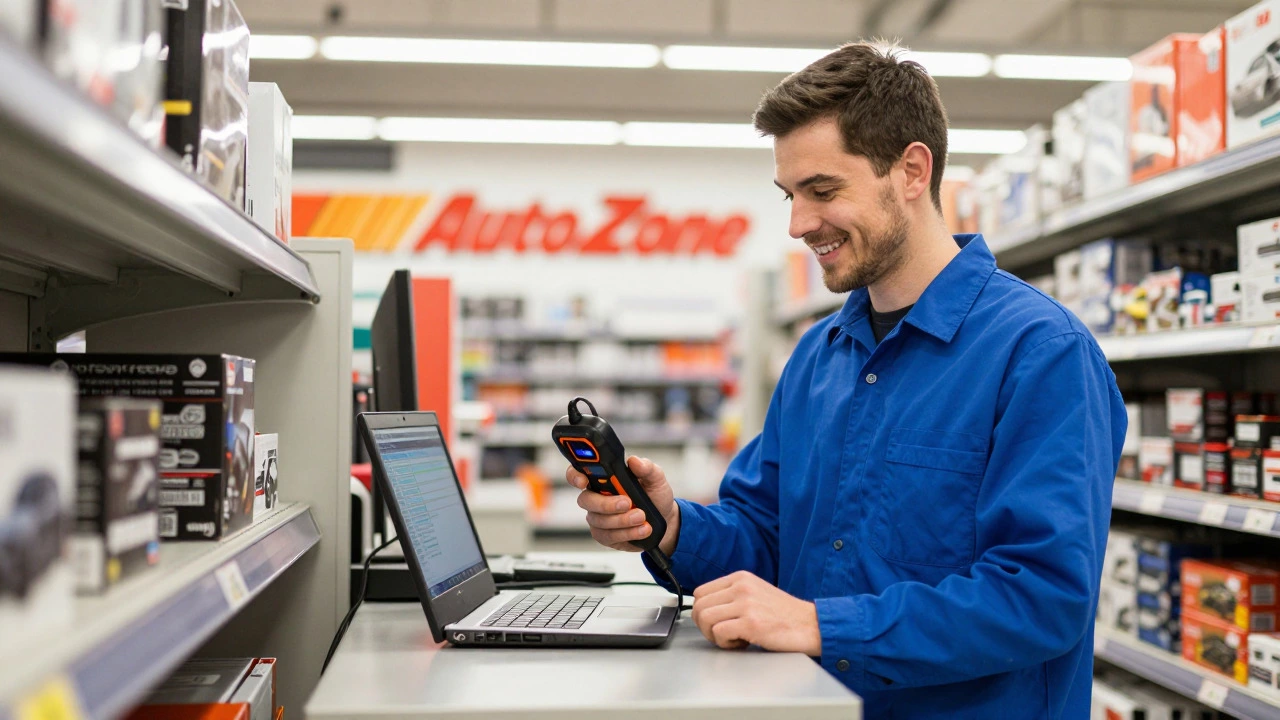
- Check Engine Light Scanning: If your dashboard light is on, they will plug in a scanner and read the OBD-II codes. Codes like P0087 (Fuel Rail/System Pressure Too Low) or P0190 (Fuel Rail Pressure Sensor Circuit Malfunction) point toward fuel delivery issues. This doesn't confirm a bad pump, but it gives you a strong lead.
- Battery Testing: A weak battery can cause low voltage, which makes a fuel pump struggle to spin up. They will test your battery's health for free. If the battery is dying, fix that first before blaming the pump.
- Alternator Testing: Similar to the battery, if your alternator isn't charging properly, electrical components like the fuel pump relay may fail intermittently.
If you ask them to "test the fuel pump," the honest employee will likely tell you they can check for power at the connector. This is a crucial distinction. Checking for power means verifying that electricity is reaching the pump. It does not mean measuring how much fuel is being pushed or at what pressure. If there is no power, the problem could be a blown fuse, a bad relay, or a wiring issue-not necessarily the pump itself.
Why Direct Fuel Pump Testing Is Hard at Retail Stores
Fuel pumps are submerged in the gas tank. To test them properly, you need to measure pressure and volume. This requires specialized equipment called a fuel pressure gauge and a flow meter. Most AutoZone locations do not keep these tools available for customer use because they require disassembly of the fuel system, which involves depressurizing lines and removing panels under the rear seat or trunk floor.
Furthermore, liability is a huge factor. If an employee hooks up a gauge and the line bursts, or if they remove the access panel incorrectly and crack the tank, the store is liable. Therefore, their policy generally restricts hands-on mechanical diagnosis to simple electrical checks and code reading.
However, this doesn't mean you are stuck. You can borrow some of the necessary tools from AutoZone through their Tool Rental Program is a service allowing customers to borrow professional-grade automotive tools for a small fee. While they rarely rent out fuel pressure gauges specifically, they often have multimeters, which are essential for the electrical tests you can perform yourself.
How to Diagnose a Fuel Pump Yourself (The Right Way)
If AutoZone confirms your battery is good and the codes suggest fuel pressure issues, it is time to get your hands dirty. You don't need to be a master mechanic to rule out a fuel pump failure. Follow these steps safely.
Step 1: Listen for the Hum
Modern cars with electric fuel pumps make a distinct whirring noise when you turn the key to the "On" position (before starting). Sit in the driver's seat, have a helper stand near the rear of the car (where the tank is), and turn the key. You should hear a 2-3 second hum. If you hear nothing, the pump might be dead, or it might not be getting power.
Step 2: Check the Fuse and Relay
Before tearing into the gas tank, check the easy stuff. Locate your fuse box (usually under the hood or inside the cabin). Consult your owner's manual to find the fuel pump fuse. Pull it out and inspect it. If the metal filament inside is broken, replace it. It costs less than $5. Next, locate the fuel pump relay. These are often interchangeable with other relays in the box (like the horn or AC relay). Swap the fuel pump relay with a known-good one and try starting the car. If it starts, you bought a cheap fix instead of a $500 pump.
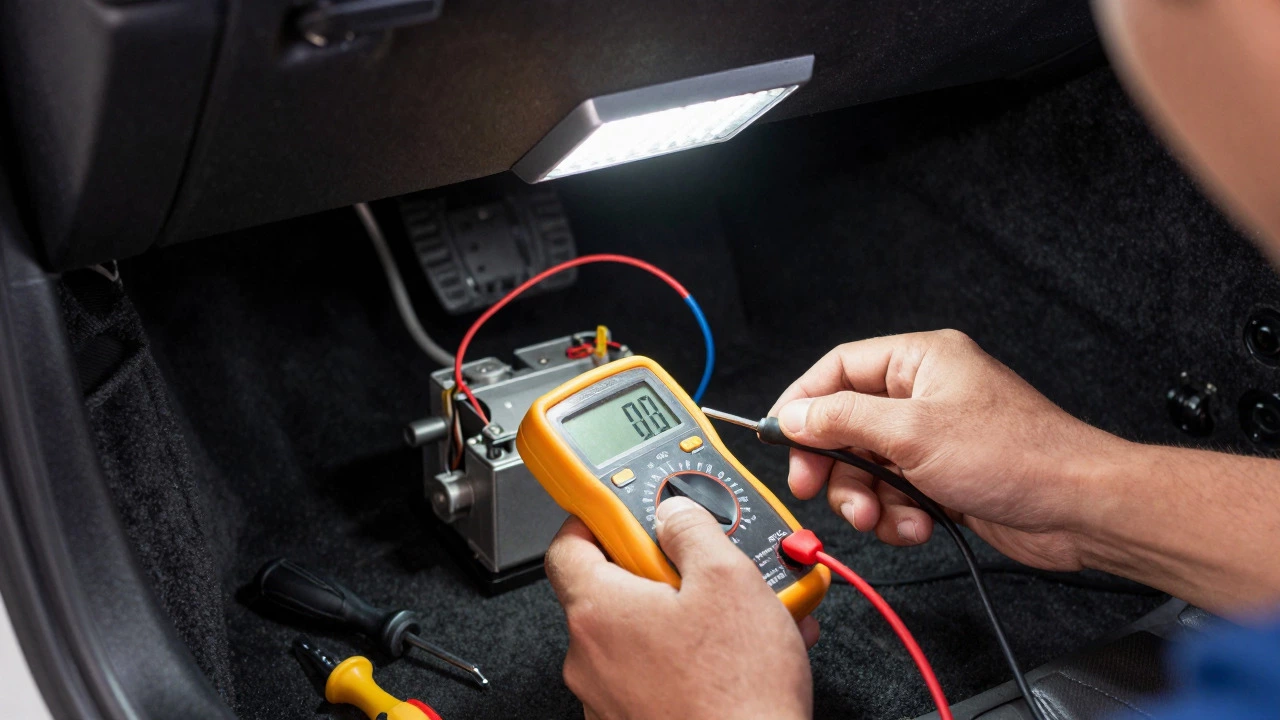
Step 3: Test for Power at the Connector
This is where a multimeter comes in. You need to access the electrical connector for the fuel pump. This usually requires lifting the rear seat or removing a panel in the trunk. Once exposed, back-probe the wires with your multimeter set to DC Volts. Have someone turn the key to "On." You should see 12 volts. If you see 12V but no hum, the pump motor is likely burned out. If you see 0V, the problem is upstream (fuse, relay, or wiring).
Step 4: Measure Fuel Pressure (Advanced)
If you have access to a fuel pressure gauge (you can buy one online or sometimes rent it), connect it to the Schrader valve on the fuel rail under the hood. Turn the key on. Compare the reading to your vehicle's specification (found in a repair manual like Haynes or Chilton). If the pressure is zero or drops rapidly after turning the key off, the pump or its check valve is faulty.
| Method | Difficulty | Cost | Accuracy | Who Does It? |
|---|---|---|---|---|
| Listen for Hum | Easy | $0 | Low (Preliminary) | Owner |
| Fuse/Relay Swap | Easy | $0 - $10 | Medium | Owner |
| Multimeter Voltage Check | Medium | $0 (if you have tool) | High (Electrical) | Owner/Mechanic |
| Fuel Pressure Gauge | Hard | $30+ (Gauge cost) | Very High | Mechanic/Prosumer |
| AutoZone Code Scan | Easy | Free | Low (Indirect) | AutoZone Staff |
Signs Your Fuel Pump Is Failing
Sometimes the symptoms are obvious. Other times, they mimic other problems. Knowing the specific signs helps you avoid replacing the wrong part.
- Sputtering at High Speeds: If the car runs fine at idle but sputters or loses power when you accelerate onto the highway, the pump may be struggling to maintain pressure under load.
- Surging: An unexpected increase in speed without touching the gas pedal can indicate air bubbles in the fuel line due to a failing pump.
- Engine Overheating: Lean fuel mixtures (too much air, not enough fuel) caused by low pressure can cause the engine to run hot.
- Complete Failure to Start: The most common symptom. No spark, no fuel = no go. If you have spark (checked via spark plugs) but no fuel pressure, the pump is the prime suspect.
Alternatives to AutoZone for Professional Diagnosis
If you are uncomfortable doing the electrical tests yourself, or if the multimeter shows power but the car still won't start, you need a professional who has a lift and a fuel pressure tester.
Independent Mechanics are private garage owners who specialize in general automotive repair are often cheaper than dealerships. Many offer a flat-rate diagnostic fee. Ask if the diagnostic fee is waived if you proceed with the repair. A proper diagnosis includes checking fuel pressure, volume, and return line operation.
Dealership Service Centers are official service departments affiliated with vehicle manufacturers provide the most accurate diagnosis using manufacturer-specific software. They can monitor real-time fuel trim data, which shows exactly how the computer is compensating for fuel delivery issues. This is ideal for complex electronic fuel injection systems but comes at a premium price.
Avoid quick-lube shops for this issue. They focus on oil changes and basic maintenance. They rarely have the tools or expertise to diagnose fuel delivery systems accurately.
Replacing the Fuel Pump: What to Expect
If your diagnosis confirms a bad pump, replacement is inevitable. Labor varies wildly depending on your car. In some vehicles, the pump is accessible under a panel in the trunk. In others, you must drop the entire fuel tank, which is labor-intensive and requires jacking up the car safely.
When buying a replacement, consider OEM (Original Equipment Manufacturer) parts versus aftermarket. OEM parts, often sold by brands like Denso or Bosch, guarantee fit and performance. Aftermarket parts are cheaper but may have shorter lifespans or inconsistent pressure outputs. For a critical safety component like a fuel pump, spending extra on quality is usually worth it to avoid being stranded again in six months.
Don't forget to replace the fuel filter if your car has an external one. While you're working on the system, changing the filter ensures clean fuel flows to the new pump, extending its life.
Preventing Future Fuel Pump Failures
Fuel pumps are cooled and lubricated by the gasoline flowing through them. Running your tank frequently below a quarter tank exposes the pump to heat and allows sediment from the bottom of the tank to enter the pump mechanism. Try to keep your fuel level above 1/4 tank whenever possible.
Also, use high-quality fuel. Contaminants in low-grade gas can clog the pump screen. Using a fuel system cleaner occasionally can help remove varnish and deposits from injectors and lines, reducing strain on the pump.
Does AutoZone loaner tools include a fuel pressure gauge?
Rarely. Most AutoZone locations do not stock fuel pressure gauges for rent. They typically offer multimeters, code readers, and basic hand tools. It is best to call your local store ahead of time to confirm availability, as inventory varies by location.
How much does it cost to test a fuel pump at a mechanic?
Diagnostic fees typically range from $100 to $150 for an hour of labor. Some shops waive this fee if you authorize the repair. Dealerships may charge higher rates, often between $150 and $200.
Can a bad fuel pump trigger the Check Engine Light?
Yes. Common codes include P0087 (Fuel Rail Pressure Too Low), P0088 (Fuel Rail Pressure Too High), and P0190 (Fuel Rail Pressure Sensor Circuit). These codes indicate the engine control module detects pressure outside the expected range.
Is it safe to drive with a failing fuel pump?
Not really. A failing pump can cause sudden loss of power, especially at high speeds or during acceleration, which is dangerous in traffic. It can also lead to engine damage due to lean running conditions. Repair it as soon as symptoms appear.
What is the average lifespan of a fuel pump?
Most fuel pumps last between 100,000 and 150,000 miles. However, poor driving habits, such as running on empty, or contaminated fuel can shorten this lifespan significantly.
Can I spray starting fluid to jump-start a car with a bad fuel pump?
Yes, spraying carburetor cleaner or starting fluid into the intake throttle body can help start the engine temporarily if the fuel pump is dead. This confirms the issue is fuel-related. However, it is only a temporary fix to get you to a repair shop, not a long-term solution.
Does AutoZone install fuel pumps?
No. AutoZone is a parts retailer, not a repair shop. They sell the parts and offer installation guides, but you must perform the installation yourself or take the part to a mechanic.